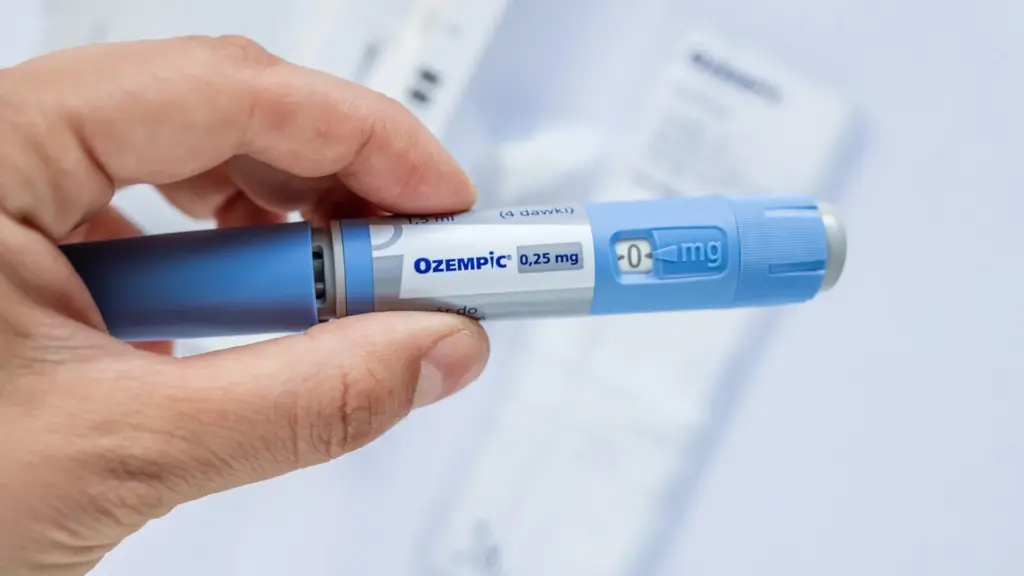
The current medical landscape has been fundamentally reshaped by the rapid rise of GLP-1 receptor agonists, a class of medications that includes popular semaglutide drugs like Ozempic and Wegovy, alongside tirzepatide treatments such as Mounjaro and Zepbound. Initially developed to manage type 2 diabetes, these powerful therapeutics have seen an unprecedented surge in public demand due to their remarkable efficacy in promoting significant weight loss. With approximately one in eight U.S. adults now utilizing these medications, public health attention has increasingly focused on their secondary benefits, most notably their capacity to protect the cardiovascular system. However, a major new study reveals a sobering reality regarding these heart-protective advantages: they may fade surprisingly fast once a patient stops taking the medication.
Researchers at the Washington University School of Medicine in St. Louis recently completed a comprehensive evaluation tracking more than 333,000 U.S. veterans diagnosed with type 2 diabetes over a three-year period. Their findings indicate that interrupting or completely terminating GLP-1 treatment for a duration as brief as six months correlates directly with a meaningful escalation in the risk of major adverse cardiovascular events, especially when compared to patients who maintain an unbroken regimen of the medication.
The investigation, which was published in BMJ Medicine, demonstrates that the magnitude of cardiovascular risk is directly proportional to the duration of time a patient spends off the therapy. After remaining without GLP-1 therapy for two years, individuals experienced an increase in the risk of severe medical emergencies—including heart attacks, strokes, and death—by up to 22 percent compared to those who maintained their continuous treatment schedules. This alarming increase effectively neutralizes the vital cardiovascular protection accumulated over the course of taking the drugs.
These outcomes suggest that the ramifications of discontinuing GLP-1 medications extend far beyond the well-documented phenomenon of weight regain. They also underscore the critical importance of uninterrupted therapeutic adherence for individuals aiming to safeguard their long-term heart health.
The Reality of Metabolic Whiplash
According to the researchers, the public discourse surrounding these medications has heavily favored the initial excitement of starting treatment while largely ignoring the clinical realities of cessation.
"There is enormous exuberance about starting GLP-1 drugs, but not nearly enough attention to what happens when people stop," said senior author Dr. Ziyad Al-Aly, a clinical epidemiologist at WashU Medicine and chief of the Research and Development Service at the VA Saint Louis Health Care System. "Many quit after a few months because of cost, side effects or shortages. When they stop, it’s not just weight that comes back; they experience a resurgence in inflammation, blood pressure, and cholesterol. Weight regain is visible; the metabolic reversal is not."
Al-Aly further emphasized the physiological toll this cessation takes on the human body. "Our data suggest this metabolic whiplash is detrimental to heart health," he added. "Restarting the medication helped restore some protection, but only partially, showing that discontinuation leaves a lasting scar."
Given that approximately half of all individuals prescribed GLP-1 medications discontinue their use not long after initiating therapy, Al-Aly and his research team sought to map out the precise trajectory of cardiovascular health following the cessation of treatment.
Examining a Large-Scale Veteran Cohort
To conduct the study, investigators focused on major adverse cardiovascular events as primary health indicators, specifically tracking heart attacks, strokes, and overall mortality. The research team analyzed extensive healthcare data encompassing 333,687 veterans with type 2 diabetes. Within this large cohort, 132,551 patients had been prescribed GLP-1 receptor agonists, while a comparison group of 201,136 patients had been prescribed sulfonylureas, a more traditional class of diabetes medications.
The sulfonylureas utilized for comparison included commonly prescribed drugs such as glipizide, marketed under names like Glucotrol, as well as glimepiride and glyburide. The entire participant pool was followed for a maximum duration of three years, during which researchers systematically reassessed the treatment status of GLP-1 users at regular six-month intervals.
During the observational window, 26 percent of the patients originally prescribed GLP-1 medications stopped taking them entirely. An additional 23 percent experienced significant treatment gaps lasting at least six months before they eventually managed to resume their therapy.
Continuous Treatment Produced the Greatest Benefit
The data revealed a stark contrast in clinical outcomes depending on the consistency of the drug regimen. The clearest and most substantial cardiovascular advantages were observed among individuals who managed to remain on their GLP-1 medications continuously throughout the entire three-year study duration.
When measured against the participants taking sulfonylureas, those who consistently maintained their GLP-1 therapy experienced an 18 percent lower risk of suffering major cardiovascular events. In practical terms, this protective effect translated to roughly four fewer major cardiovascular episodes for every 100 people observed over the course of three years.
Participants who maintained their GLP-1 treatment for two years or two-and-a-half years before ultimately stopping for the remainder of the study also registered meaningful reductions in their overall risk, showing drops of 7 percent and 15 percent, respectively. Conversely, individuals who discontinued their GLP-1 therapy before reaching the 18-month mark showed no statistically significant reduction in cardiovascular risk by the end of the study when compared directly to those taking sulfonylureas.
Treatment Gaps Weakened Heart Protection
The study also highlighted the detrimental impact of temporary interruptions in care. Interrupting treatment and subsequently restarting it appeared to diminish the robust cardiovascular benefits associated with the drug class.
While individuals who remained on GLP-1 drugs continuously for three years enjoyed an 18 percent risk reduction, patients who stopped temporarily and later resumed treatment saw a more modest average risk reduction of just 12 percent. Even a relatively brief six-month gap in treatment prior to resumption proved sufficient to erode the therapeutic advantage. Compared to continuous use, those six-month gaps were associated with a 4 percent to 8 percent increase in overall cardiovascular risk.
Longer durations away from the medication were predictably linked to even more pronounced losses of physiological protection. Individuals who halted GLP-1 treatment for an entire year without restarting faced a 14 percent higher risk of cardiovascular events compared to continuous users. For those who spent two years off the medication, that increased risk surged to 22 percent.
This consistent pattern indicates that the cardiovascular benefits built up gradually through the administration of GLP-1 therapy can be forfeited relatively quickly once the pharmaceutical intervention is removed.
Restarting May Not Fully Restore Lost Benefits
These findings strongly reinforce the necessity of uninterrupted treatment protocols for patients and clinicians who wish to preserve the profound cardiovascular effects tied to GLP-1 therapies. Furthermore, the data suggests that minimizing treatment interruptions is vital for maximizing the heart-protective qualities of these drugs.
"Clinicians should treat adherence to GLP-1 treatment as an important outcome in its own right — not an afterthought," Al-Aly stated. "Health systems need plans in place to help people continue their medication indefinitely, recognizing that GLP-1s treat chronic conditions. That includes proactive management of side effects, candid conversations about the long-term nature of treatment, infrastructure to identify and support patients at risk of stopping and addressing the cost barriers that make GLP-1 therapy unsustainable for many."
Al-Aly noted that this institutional and clinical vigilance is particularly critical because the cardiovascular protection conferred by GLP-1 treatment appears to accumulate slowly over time while dissipating at a much faster rate. For the participants in the study, spending a mere year off the medication was enough to forfeit health benefits that had required years of continuous treatment to establish. While restarting the drug did manage to restore a portion of that lost protection, it was unable to recover it entirely.
The research was supported and funded by the United States Department of Veterans Affairs. Federal funding entities played no role in determining the study design, nor did they participate in the collection, analysis, or interpretation of the data, the drafting of the report, or the final decision to submit the manuscript for publication. The contents and conclusions of the study represent the findings of the researchers and do not necessarily reflect the official views of the U.S. Department of Veterans Affairs or the United States Government.