

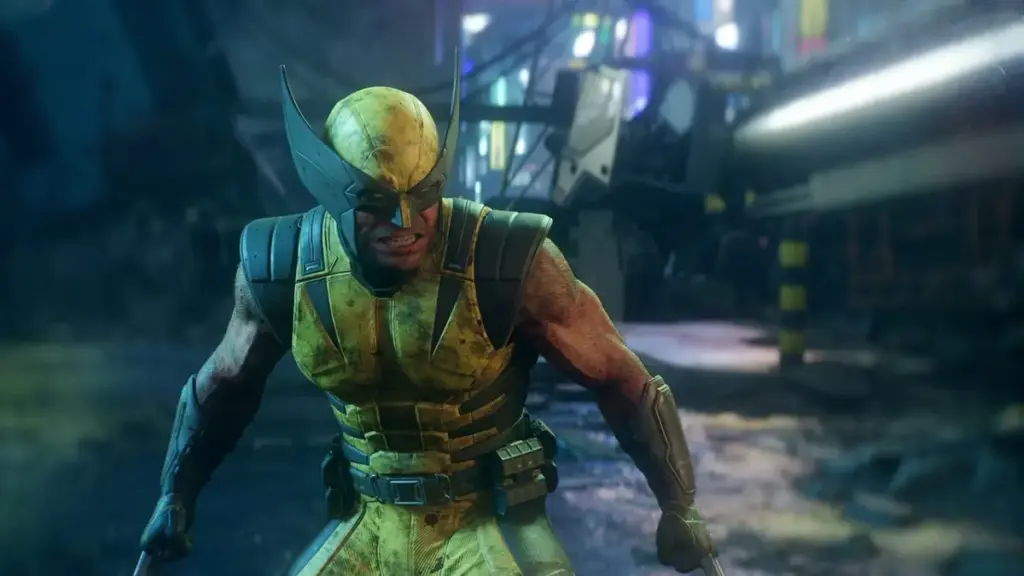
"I love the size difference," says Walt Williams as he addresses fan discourse, character design choices, and the psychological roots of rage in Insomniac’s latest PlayStation 5 blockbuster.
Now that Marvel’s Wolverine is out in the wild and firmly in the hands of players worldwide, the viral discourse surrounding Insomniac Games’ latest superhero venture has taken several unexpected turns. Aside from community discussions revolving around scent trails, Sentinel boss fights, and audio sense indicators, Logan’s fundamental characterization has quickly become a prominent talking point across social media. While many players have embraced the studio’s storytelling ambitions, a vocal group of online critics has argued that Insomniac’s version makes the legendary mutant feel too "soft," claiming that their portrayal fails to tap fully into his signature, unbridled rage.
Speaking recently with journalist Gene Park on the Low Power Mode podcast, Walt Williams, the narrative director of Marvel’s Wolverine, opened up about why it was crucially important to him that Logan was intentionally designed to be significantly shorter than his hulking, imposing counterpart, Sabretooth. Furthermore, Williams discussed why exploring the complex emotional underpinnings of their relationship was essential to giving the game its narrative weight.
Addressing the criticisms head-on, Williams explained how the creative team approached the psychological drivers behind the violent outbursts typically associated with the character. Rather than relying on superficial displays of anger, the team sought to uncover the root causes of the hostility between the two iconic mutants.
“Anger and rage is a response to something,” Williams said during the podcast appearance. “It’s usually a response to some feeling of loss or a perceived feeling of loss. It is an attempt to fill something that is missing in you, whether it’s momentary, whether it’s rational or irrational. Simply trying to present the traditional Logan-Sabretooth relationship as antagonistic simply because it is, simply as an alpha male kind of a thing — as archetypal as that is for the characters — did not fit what we were trying to reveal about Logan, about the depth of his feelings.”
Williams elaborated on this dynamic by describing Sabretooth not merely as a brute force enemy, but as a crucial thematic foil for the protagonist. By treating Sabretooth as a dark mirror to Logan, the narrative team aimed to foster genuine empathy from the audience regarding Logan’s entire emotional journey.

“Because Sabretooth is a dark mirror of Logan. If we’re telling a story where we’re trying to make people truly understand how much this character feels and become empathic towards his entire emotional journey, that means Sabretooth also has to feel just as deeply as Logan,” Williams explained. “He also has to have the same feelings of yearning and tenderness and loss. They just express themselves in the darker side of that. Logan feels that yearning. He gets scared and pulls away. Sabretooth feels that yearning and it makes him hurt, and he wants to lash out to exert that hurt outward.”
To bring this psychological depth to life, the development relied heavily on strong performances from the cast. Williams offered high praise for Sabretooth’s voice and motion capture actor, Brett Gipson, noting that Gipson brought an undeniable presence to the set. According to Williams, Gipson delivered his absolute favorite interpretation of the classic mutant character he had ever witnessed, a sentiment that naturally led to discussions regarding the physical scale of the characters within the digital space.
That creative alignment also extended to the physical dimensions of the characters, which required specific technical and artistic choices from the character design department. In the traditional Marvel X-Men comic books, Sabretooth stands at a towering six feet, six inches tall, while Logan is famously depicted as much shorter at five feet, three inches tall. Capturing this stark contrast was a priority for the creative team to ensure authenticity to the source material.
“Full props to our character department, too, because what they did with his model, I love. I love the size difference, because early on I was like, ‘Guys, let’s be honest. Wolverine needs to be like five feet tall,’” Williams added.
This faithful adherence to the classic comic book proportions has not gone unnoticed by the community. Following the game’s release, many fans took to social media to praise Insomniac for respecting the established lore rather than scaling Logan up to modern action-hero heights. However, achieving this visual dynamic presented a unique behind-the-scenes challenge for the developers.
Because Logan’s in-game performance and motion capture were handled by actor Liam McIntyre—who stands at six feet, one inch tall in real life—the development team had to manually adjust the character models’ sightlines. These adjustments ensured that during cinematic sequences and gameplay interactions, Sabretooth and other towering adversaries would visibly look down at Logan, while Logan would have to look up at them, preserving the intended physical disparity on screen regardless of the real-world actors’ measurements.
Marvel’s Wolverine is available now, exclusively on the PlayStation 5.