
For modern dog owners, the pet care landscape is filled with a nearly endless array of subscription boxes, novelty items, and premium treats. Among these, BarkBox has long stood as one of the most prominent names in the industry. Yet, for consumers looking to balance their household budgets against their desire to pamper their canine companions, a fundamental question remains: Is BarkBox actually worth the monthly investment, or are pet parents better off shopping a la carte at local pet stores?
To answer this question, we bypassed standard corporate spec sheets and conducted a hands-on, practical evaluation of the service. By unboxing a physical shipment, photographing the contents, analyzing the build quality of the toys, and testing them with a real dog, we have compiled an honest, data-driven breakdown of the service’s costs, plans, and overall value proposition.
The box selected for this evaluation was the size large BARK x Flavortown collaboration—a themed box designed in partnership with culinary personality Guy Fieri. Our findings reveal that for most households with a dog that actively enjoys toys, the subscription model offers a compelling mix of convenience, quality, and financial savings, provided owners select the correct tier for their dog’s specific play style.
Unboxing the Experience: What Arrives on Your Doorstep
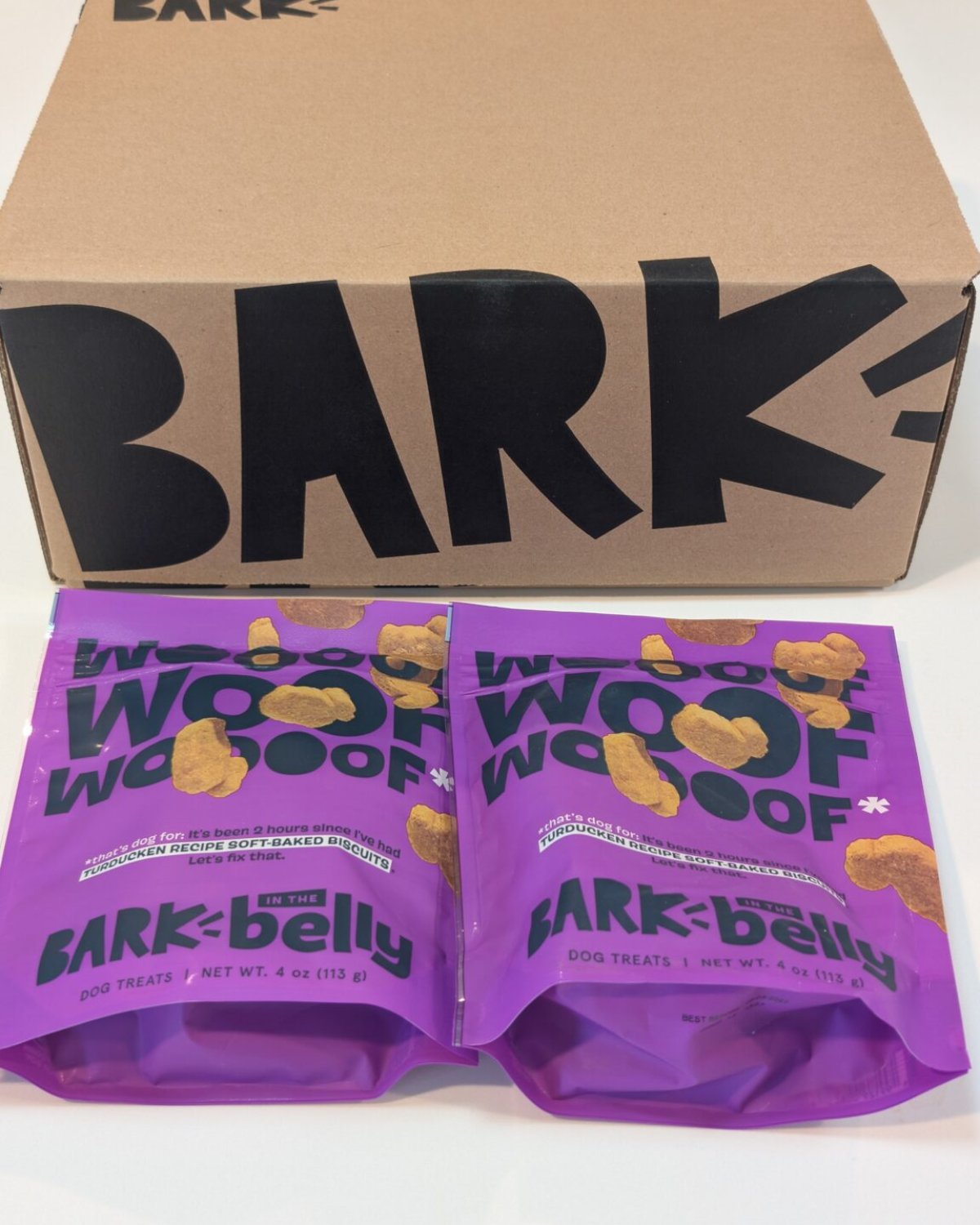
The appeal of a subscription service like BarkBox relies heavily on the physical experience of receiving and opening the delivery. Our test box arrived in BarkBox’s signature brown kraft carton, prominently stamped with the BARK wordmark across the lid. Sized specifically for a large dog (categorized as 50 pounds and up), the package was tightly sealed, with two bags of soft-baked treats positioned neatly at the top of the opening.
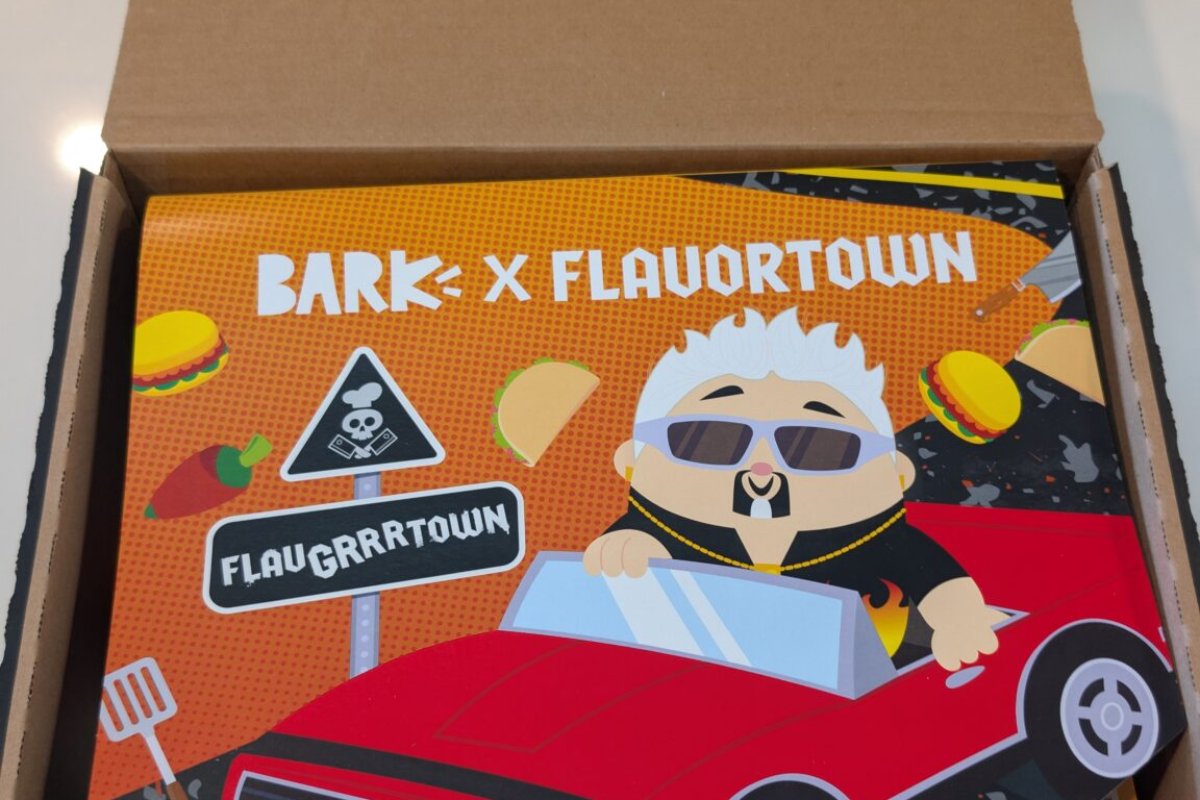
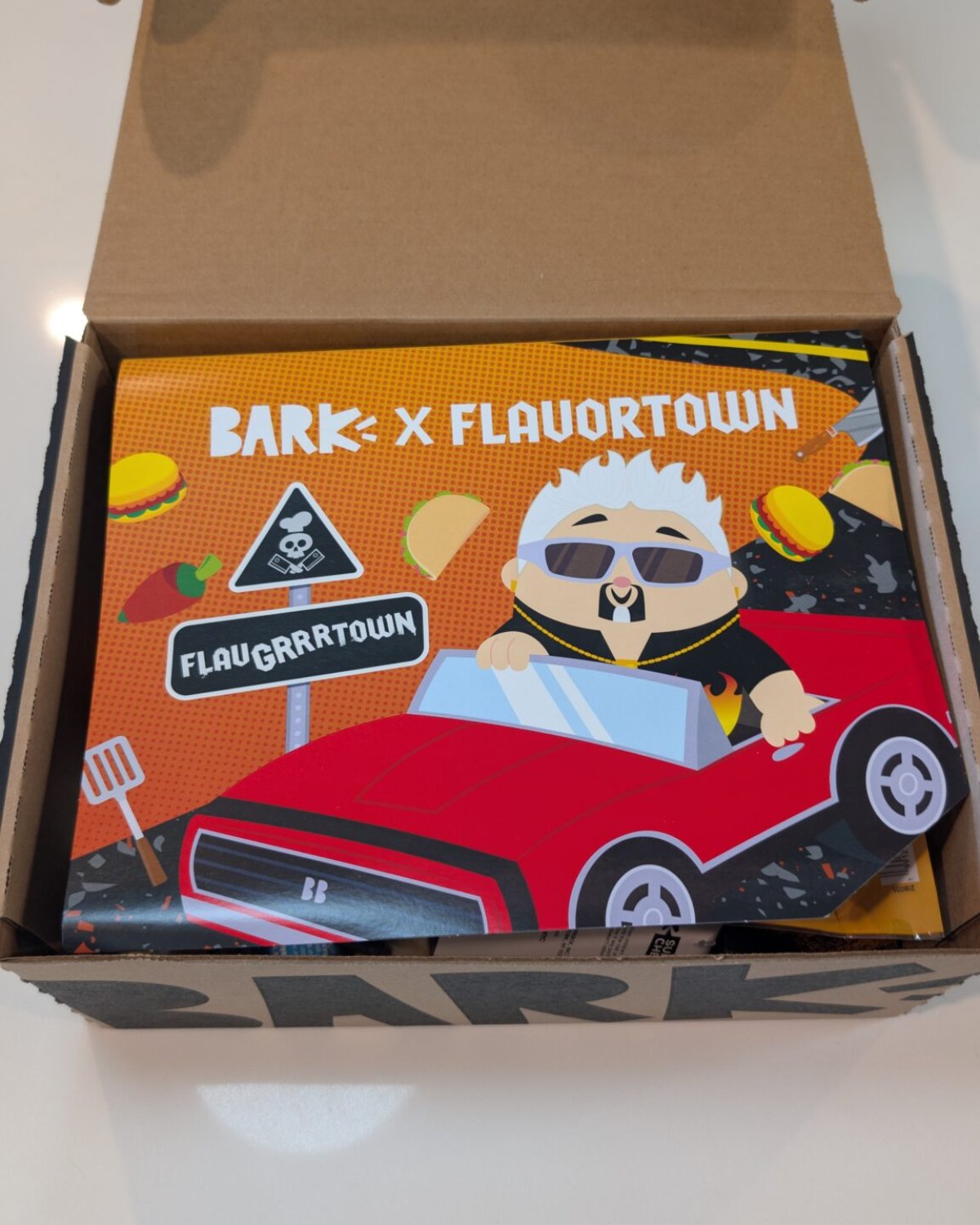
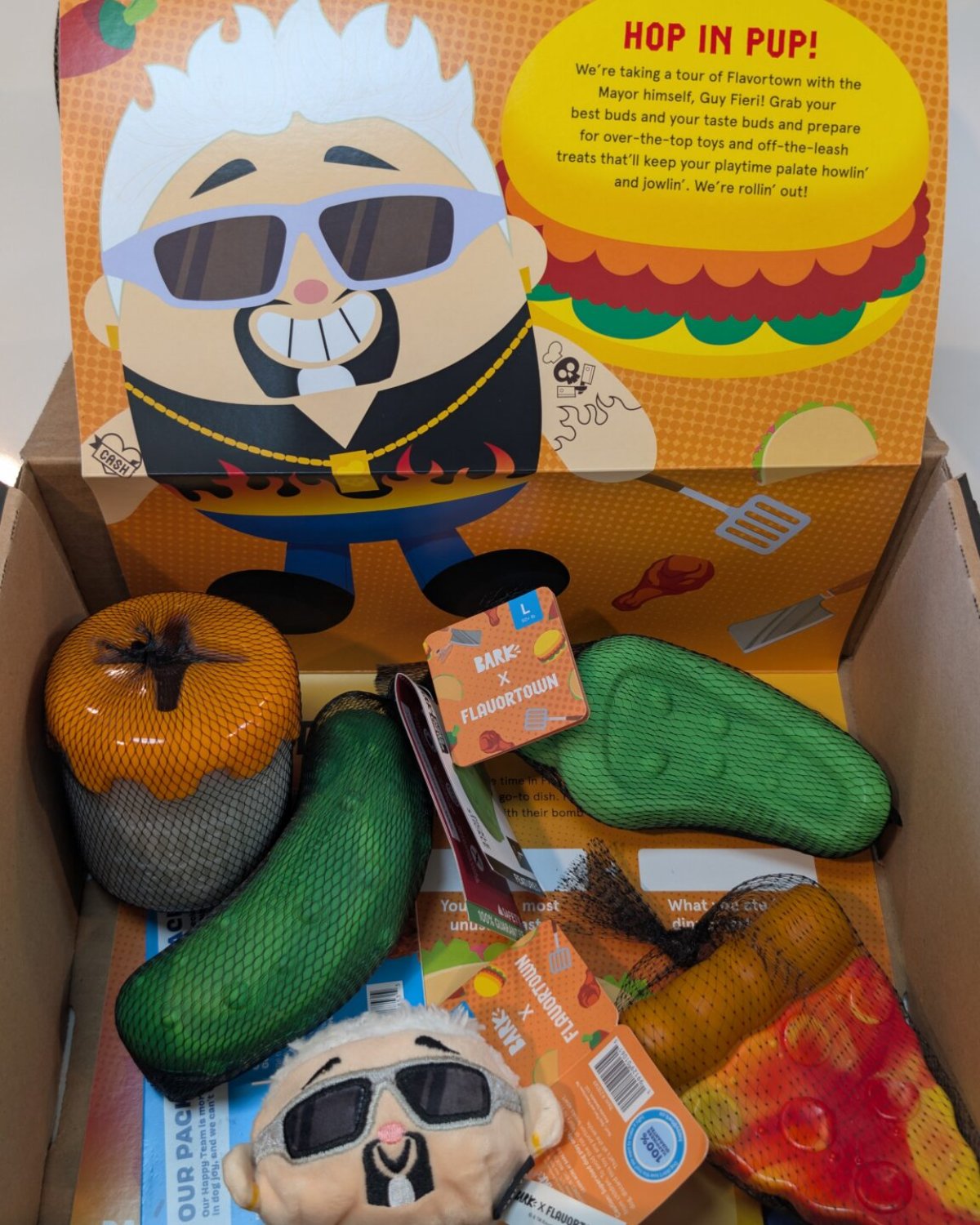
Upon lifting the main flaps of the carton, the first item that greets the subscriber is a colorful, themed card. For this delivery, the card introduced the BARK x Flavortown theme, complete with a cartoon illustration of Guy Fieri as the "Mayor of Flavortown" driving his iconic red convertible. While a theme card might seem like a minor addition, it plays a significant role in elevating the delivery from a simple utility shipment to an engaging monthly event for the household.
Beneath the theme card lay the core contents of the box. In this specific collaboration box, we found a total of six themed toys, each individually wrapped in a protective mesh sleeve with a size-large hang tag and a "100% Happy Guarantee" sticker. The toys included:
- A cheese-drizzled dome toy
- A long, textured green pickle
- A green chili pepper
- A plush representation of Guy Fieri’s head, complete with his signature sunglasses
- A ridged, fried food item
- A detailed slice of plush pizza
It is important to establish a baseline expectation here: a standard monthly "Classic" BarkBox typically contains two toys, two bags of treats, and one chew. Themed collaboration boxes, such as this Flavortown edition, often feature expanded contents or special promotional items. Therefore, while a six-toy haul represents an exceptional month, it should be viewed as a high-end variation rather than the standard monthly minimum.
Deconstructing the Design: Toy Quality and Mental Enrichment
One of the most critical factors in determining the value of any dog toy is its construction. Standard, mass-produced plush toys found in supermarket aisles often consist of basic fabric shapes stuffed with synthetic fiber and a single, low-grade squeaker.
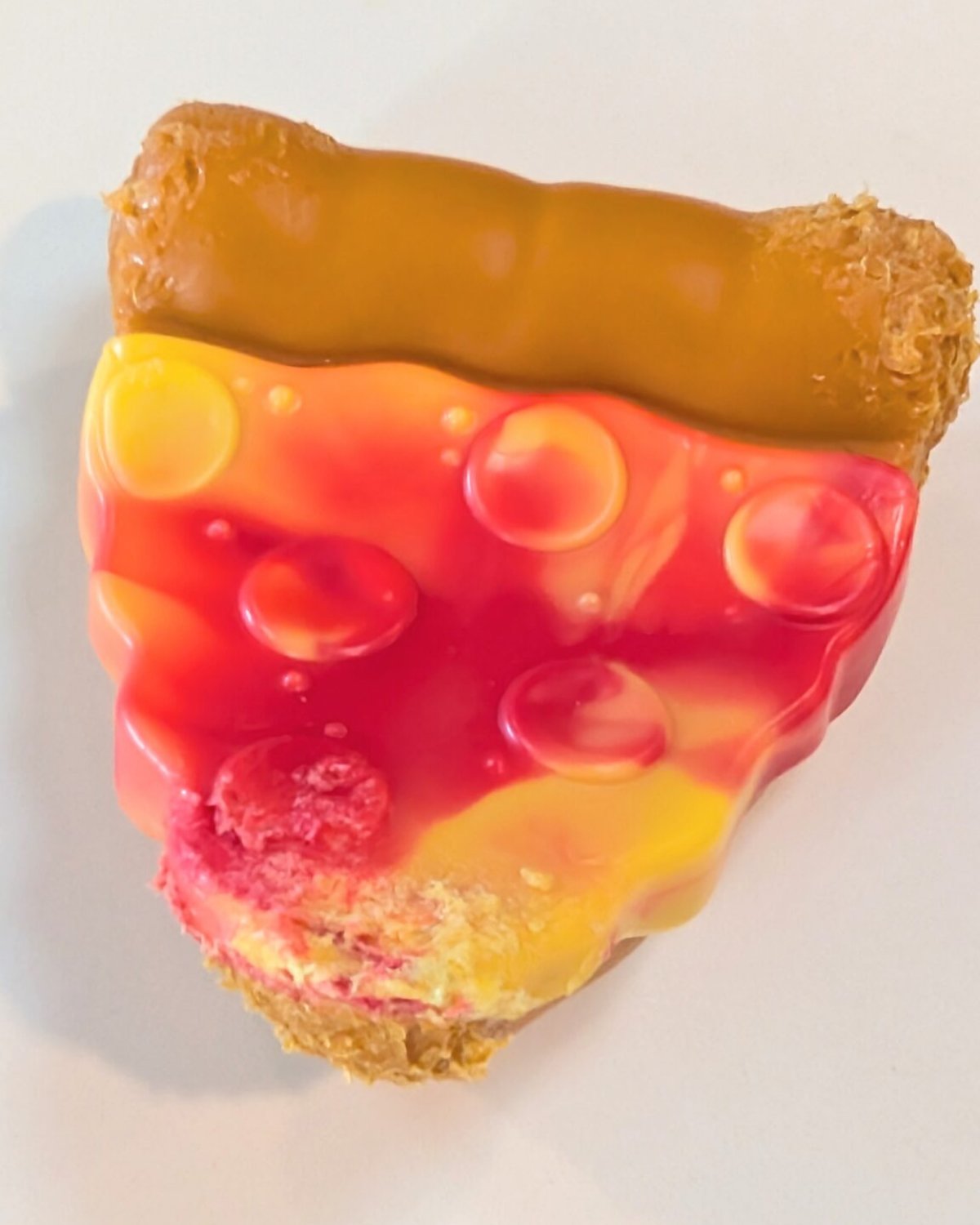
Close inspection of the BarkBox toys reveals a much higher level of design and engineering. The pizza slice toy, for example, features a multi-textured design with a molded, fabric-wrapped crust, a glossy fabric layer representing sauce, and raised, tactile bubbles that mimic toppings. This level of detail is not merely aesthetic; the varying textures provide important sensory stimulation for a dog’s mouth and paws, which helps sustain their interest far longer than a flat, uniform fabric toy.
The collaboration also highlighted the brand’s focus on cognitive enrichment. The "Trash Can Doggos" toy—a playful nod to Guy Fieri’s famous trash can nachos—is designed as a firm, treat-dispensing canister. It features a molded plastic lid topped with a plush "nacho cheese" detail and a cross-cut rubber opening at the top.
Unlike a standard plush toy meant for shaking or fetching, a treat dispenser of this style serves a distinct behavioral purpose. It requires the dog to figure out how to manipulate the toy to release dry kibble or broken treats, effectively slowing down fast eaters and turning a brief snack into several minutes of focused, self-soothing mental work. For intelligent or easily bored dogs, this type of play is essential for redirecting destructive chewing habits away from household furniture.
Nutritional Transparency: The Treat Lineup
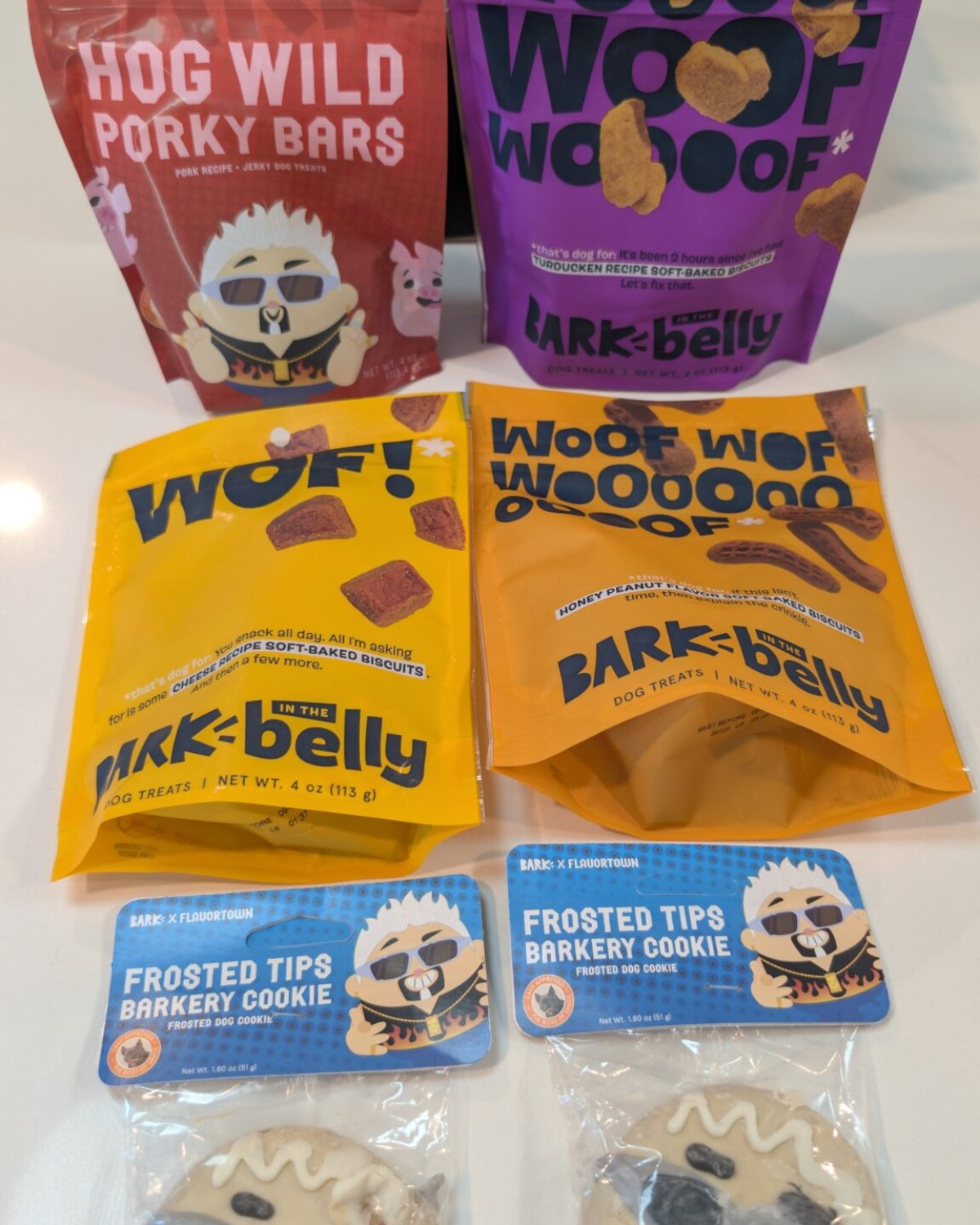
A subscription box is only as good as what goes into your dog’s body, making ingredient quality a major component of the overall value math. The treat selection in our test box consisted of four resealable bags and two specialty bakery cookies. The lineup included:
- Hog Wild Porky Bars: A natural pork jerky strip designed for chewing.
- Three soft-baked biscuit bags: Offered in high-value flavor profiles including turducken, cheese, and honey peanut.
- Two Frosted Tips Barkery Cookies: Hand-iced treats shaped to resemble the Mayor of Flavortown.
BarkBox manufactures its proprietary line of treats in the United States and Canada, utilizing clean, all-natural recipes. Crucially for dogs with sensitive stomachs or food intolerances, the formulas are free from common fillers such as wheat, corn, and soy. The soft-baked treats are sized appropriately for training rewards, allowing owners to easily break them into smaller pieces for positive reinforcement sessions without overloading their dogs with empty calories.
The Financial Breakdown: Subscription Pricing and Plans
Understanding whether BarkBox is a sensible financial decision requires looking closely at the cost structure. The price of a monthly subscription is directly tied to the length of the commitment an owner is willing to make. Choosing a longer-term plan significantly lowers the cost of each individual box.
As of mid-2026, the pricing structure for the standard Classic BarkBox is as follows:
- Month-to-Month Plan: $35 per box. This option offers the highest flexibility, allowing subscribers to cancel at any time without penalty, though it carries the highest per-box cost.
- 6-Month Plan: $25 per box. This mid-tier commitment balances a lower per-box cost with a moderate commitment period.
- 12-Month Plan: $22 per box. This is the most cost-effective option for committed toy-loving households, offering the lowest price per delivery.
For owners of dogs with high-intensity chewing habits, BarkBox offers the "Super Chewer" tier, which replaces plush toys with highly durable rubber and nylon alternatives. The pricing for the Super Chewer plan runs slightly higher across all tiers:
- Month-to-Month Plan: $39 per box.
- 6-Month Plan: $29 per box.
- 12-Month Plan: $26 per box.
Shipping costs are calculated separately at checkout, generally starting around $5 per shipment, though BarkBox frequently waives shipping fees for subscribers who opt for the 6-month or 12-month commitments. Because these plans are set to renew automatically at the end of their respective terms, the per-box price locked in at registration remains consistent unless the subscriber actively changes or cancels their plan through their online account settings.
The Value Math: Is BarkBox a Good Deal?
To determine if BarkBox is a genuine bargain, we must compare the subscription cost against the retail prices of comparable items purchased individually at a national pet chain.
An independent market comparison reveals that a single high-quality, uniquely designed plush toy from a reputable pet brand typically retails for $12 to $15 at a brick-and-mortar store. High-quality, all-natural, grain-free treat bags generally cost between $6 and $9 each, while premium single-source chews regularly retail for $3 to $5.
If we calculate the retail value of a standard Classic box containing two designed toys, two bags of natural treats, and a single chew, the individual items would easily cost between $45 and $50 at retail.
- Against the $22 per box rate of a 12-month plan, the subscriber saves more than 50% off retail prices.
- Even on the $35 month-to-month plan, the total cost of the box remains lower than purchasing the items individually.
When analyzing the specific BARK x Flavortown collaboration box we opened, the financial value was even more pronounced. With six custom-designed toys, four bags of premium treats, and two specialty bakery cookies, purchasing these items individually at a standard retail outlet would easily exceed the cost of even the most expensive single-month subscription tier.
Beyond the direct retail math, there is an indirect financial benefit that is often overlooked: the conservation of time and resources. Driving to a pet store involves spending money on fuel and exposes owners to the temptation of impulse buys. By delivering a curated, pre-sized box directly to the doorstep every month, the subscription model eliminates these hidden costs.
Classic vs. Super Chewer: Selecting the Right Tier
The success of a BarkBox subscription often hinges on a single decision made at checkout: choosing the correct tier for your dog’s chewing style. Choosing the wrong tier can lead to ruined toys or, conversely, a dog that is entirely uninterested in toys that are too hard.
The Classic Plan is designed specifically for gentle to average chewers. These dogs enjoy carrying toys around, shaking them, playing fetch, and gently squeaking them. The toys in this tier are constructed from soft plush fabrics, often incorporating internal crinkle paper, multiple squeakers, and interactive elements like pull-through ropes.
The Super Chewer Plan is engineered for power chewers—dogs that view a plush toy as a puzzle to be shredded and gutted within minutes. Super Chewer boxes entirely eliminate plush fabrics, replacing them with solid, heavy-duty rubber and dense nylon toys. Instead of the standard chew found in the Classic box, the Super Chewer option includes two durable toys and two full-sized bags of treats.
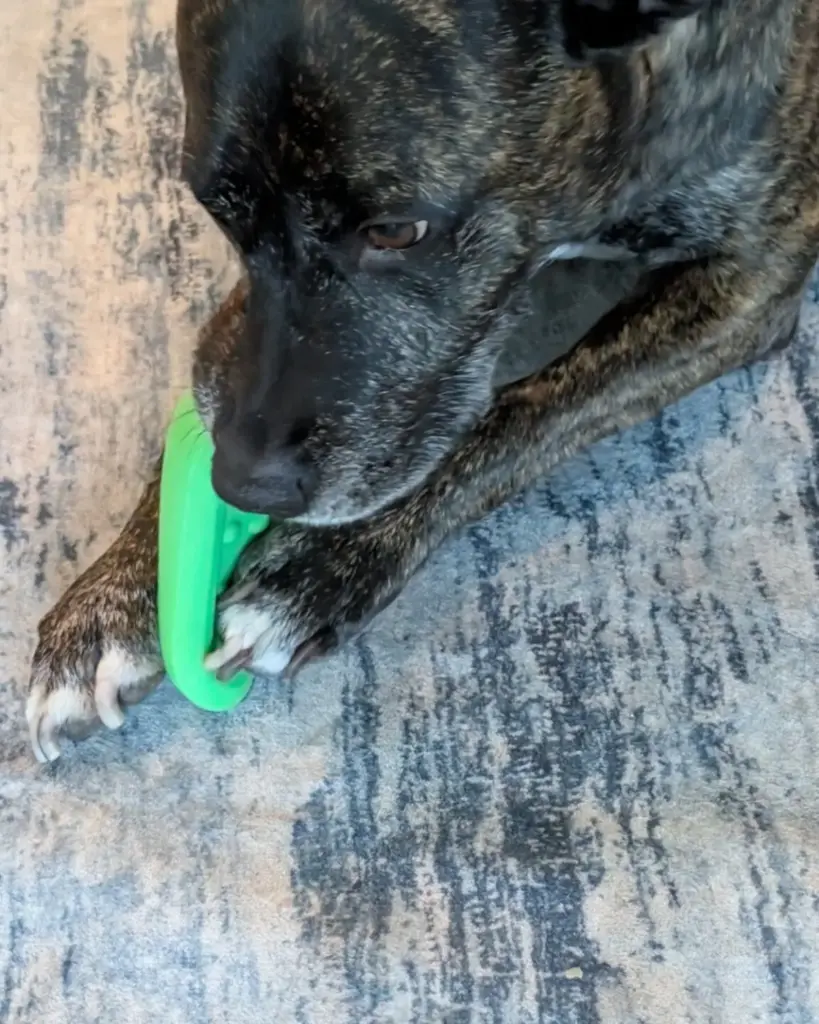
During our practical testing, we observed this play-style dynamic firsthand. When presented with a mix of plush and firm rubber toys, our test dog bypassed the soft plush options entirely, immediately grabbing the firm green rubber toy. The dog pinned the toy securely between both front paws and began methodically working his back molars along the textured edge. This behavior is the exact play style the Super Chewer tier is built to satisfy. For a dog with this level of jaw strength, a Classic plush toy would be destroyed in minutes, making the Super Chewer plan the only logical and cost-effective choice.
Risk Mitigation: Customization and the 100% Happy Guarantee
Two specific policies help minimize the financial risk of a BarkBox subscription: the brand’s extensive customization options and its replacement guarantee.
First, BarkBox recognizes that dogs are individuals with distinct dietary needs and physical limitations. During the checkout process, owners can specify common food allergies—such as sensitivities to chicken, turkey, or beef—and the system will automatically filter out treats containing those proteins. For more complex dietary restrictions, subscribers can contact customer support to request highly specific adjustments, such as soft-baked treats only for senior dogs with dental issues, or even a "toys-only" box configuration for dogs that do not eat commercial treats.
Second, the service is backed by BARK’s "100% Happy Guarantee." If a dog manages to destroy a toy from either tier, or if a dog simply shows no interest in a particular item, the company will ship a replacement toy free of charge, with no requirement to return the original item. This policy effectively removes the financial risk of buying toys that your dog might destroy or ignore, ensuring that every dollar spent translates into usable entertainment for your pet.
For owners who prefer to avoid monthly subscriptions entirely, BARK also sells its proprietary toys individually through the online BARK Shop. While purchasing individual toys lacks the bulk discount of the monthly subscription, it remains an excellent alternative for owners who want to pick out specific designs or replace a single, well-loved toy.
Final Verdict
For the vast majority of households with toy-motivated dogs, BarkBox represents a highly practical and cost-effective service. It successfully bridges the gap between premium product design and affordable pricing, backed by a generous guarantee that protects owners from the financial sting of destroyed toys.
To get the most out of the service, owners simply need to make an honest assessment of their dog’s chewing habits at checkout—opting for the heavy-duty Super Chewer tier for power chewers, or the engaging, multi-textured Classic tier for more gentle play styles. When matched correctly to your dog’s needs, BarkBox easily justifies its cost, delivering high-quality play and nutrition directly to your door month after month.