Integrating a probiotic powder into a dog’s daily feeding routine has become a popular method for pet owners seeking to support their dog’s digestive and overall health. The process appears straightforward: measure the designated serving, mix the powder with wet food or moistened kibble, and verify that the dog consumes the entire supplemented portion. However, commercial probiotic powders differ significantly in their formulation, intended purpose, and active ingredient profile. While certain products focus exclusively on gastrointestinal health, others incorporate probiotic strains into comprehensive daily wellness supplements.
According to veterinary insights from Athena Gaffud, DVM, selecting the appropriate powder requires evaluating label specifics, dosage scaling, organism strains, and additional active ingredients. Among current commercial options, PetLabCo.® DF-14 Daily Foundation serves as a prominent example of a broad-spectrum, multifunctional powder, whereas products such as Native Pet Probiotic and Zesty Paws Probiotic Powder represent gut-exclusive formulations. Understanding these distinctions allows dog owners to choose a formula tailored to their pet’s age, dietary requirements, and specific health needs.
Comparing Leading Canine Probiotic Powders
A comprehensive assessment of commercial probiotic powders relies on analyzing four core parameters: label transparency regarding specific organisms and Colony-Forming Units (CFUs), clear weight-adjusted serving guidelines, age minimums established by manufacturers, and the overall functional purpose of the formula. None of the products analyzed were subject to independent hands-on testing; instead, ranking and comparison are based strictly on manufacturer product specifications.
1. PetLabCo.® DF-14 Daily Foundation
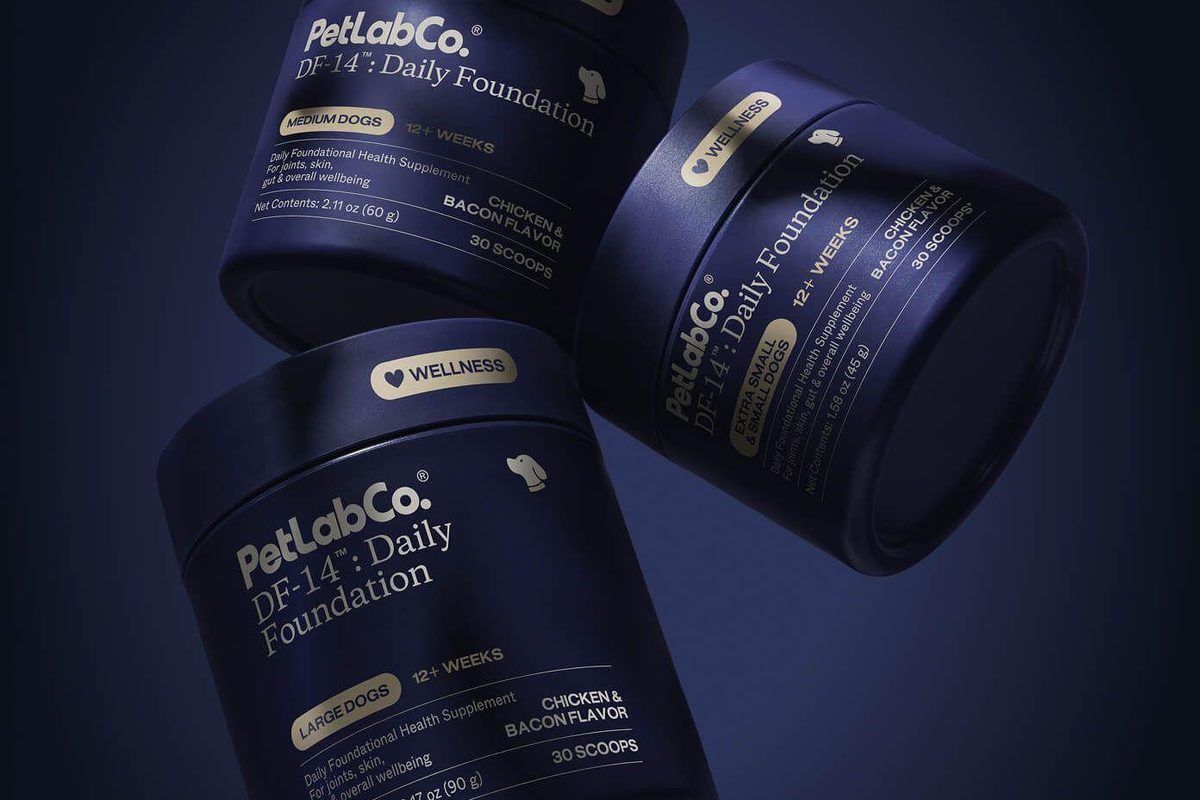
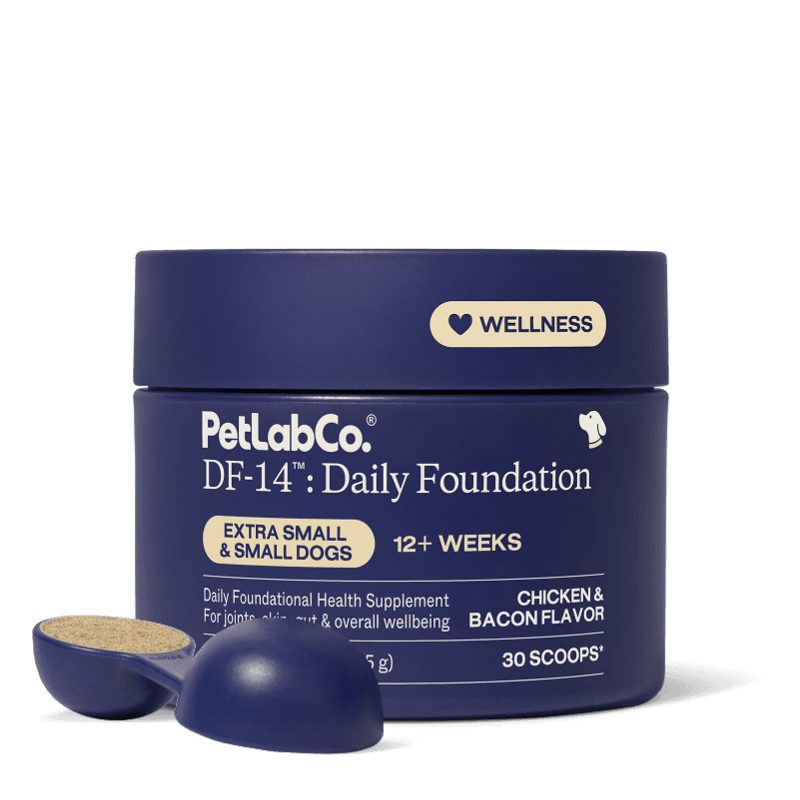
PetLabCo.® DF-14 Daily Foundation is designed as a broad-spectrum, multifunctional daily powder rather than an isolated gastrointestinal supplement. Formulated to provide support across 14 areas of canine health, its probiotic component contains a blend of three distinct microorganisms: Bacillus subtilis, Bifidobacterium animalis subsp. lactis, and Saccharomyces boulardii. Depending on the specific tub size and measuring scoop used, the formula delivers between 14.5 million and 100 million CFUs per serving.
Surrounding its probiotic core, DF-14 incorporates 11 additional active ingredients intended to support joint, cardiac, dermatological, dental, and immune health. These actives include krill, glucosamine, chondroitin, taurine, L-carnitine, astragalus, sodium hexametaphosphate, a postbiotic yeast blend, fructooligosaccharides (FOS), cranberry, lactoferrin, vitamin C, vitamin E, and beta-carotene.
The product utilizes a weight-specific serving architecture across Small, Medium, and Large tubs, featuring dedicated scoops to ensure accurate administration even for toy breeds under 4 pounds. The manufacturer establishes a clear minimum age threshold of 12 weeks. Because the formula features a chicken-and-bacon flavor derived from hydrolyzed chicken liver along with crawfish-derived glucosamine and bovine chondroitin, dog owners should review the complete ingredient list with a veterinarian, particularly if the dog is on a restricted diet or already taking joint or multivitamin supplements.
2. Native Pet Probiotic
Native Pet Probiotic is formulated specifically as a targeted gastrointestinal and prebiotic powder. The product contains four listed bacterial strains: Bacillus coagulans, Enterococcus faecium, Bifidobacterium animalis, and Bifidobacterium bifidum, supplying a potent count of 6 billion CFUs per scoop.
To support microbial activity, the formula includes prebiotic fiber sourced from organic Jerusalem artichoke inulin and organic pumpkin seeds, all set within a dehydrated beef-broth base. Dosing is structured strictly by weight, calling for one 4-gram scoop (approximately half a tablespoon) per 50 pounds of body weight daily. The manufacturer approves the product for dogs aged 3 months and older.
While Native Pet offers a high CFU count and multiple bacterial strains in a specialized gut-focused format, a higher CFU count does not inherently guarantee clinical superiority over lower-CFU formulas. Additionally, the inclusion of a beef-broth base requires consideration for canine patients maintained on novel or restricted protein diets.
3. Zesty Paws Probiotic Powder for Dogs
Zesty Paws Probiotic Powder for Dogs provides a gut-focused probiotic option delivered in single-serve sachets rather than a tub-and-scoop format. Built around Bacillus subtilis DE111 and Saccharomyces boulardii, each sachet supplies 800 million CFUs. The formula is rounded out with organic inulin, flaxseed, and pumpkin powder, presented in a pumpkin flavor.
The brand markets this sachet format primarily for adult and senior dogs seeking digestive and immune maintenance. The primary practical limitation of the product label is a relative lack of detailed dosing specificity; the product page does not specify a minimum age requirement, exact serving weight in grams, or weight-tier dosage scaling, relying instead on a single sachet serving regardless of dog size.
Framework for Evaluating Probiotic Powder Formulas
Evaluating probiotic supplements requires prioritizing the specific health objectives identified by a pet owner or attending veterinarian. When a clinician recommends gastrointestinal support for a specific medical context, a targeted gut-only supplement may be indicated. Conversely, when an owner seeks overall daily maintenance that includes digestive ingredients alongside joint or heart support, a multifunctional powder represents a different category of product altogether.
There is no single probiotic product that qualifies as universally superior for all dogs. Comparing products strictly by ingredient list length or total CFU count can be misleading. Colony-Forming Units quantify viable, live microorganisms at the time of manufacture, but high CFU counts alone do not establish efficacy or suitability for an individual animal.
Distinguishing Serving Preparation from Actual Intake
Evaluating a powder supplement routine involves recognizing the distinction between the measured serving placed in the bowl and complete meal consumption. While measuring powder with a supplied scoop determines the exact quantity offered, observing the dog during mealtime confirms whether the supplement was entirely ingested.
When powders are used as dog food toppers, leftover food in the bowl results in unquantifiable dosing, introducing uncertainty regarding how much active ingredient the dog actually received.
Formulation versus Physical Delivery Format
The term "powder" describes only the physical delivery system of a supplement, not its physiological efficacy compared to soft chews, tablets, or capsules. Expert guidelines from Cornell University’s Riney Canine Health Center emphasize that the specific strains, viability, and complete formulation dictate a product’s influence on intestinal health, rather than its physical state.
Furthermore, scientific literature concerning specific, proprietary bacterial strains cannot be generalized to an entire species of bacteria listed on a commercial label. For instance, research conducted on a heavily studied, strain-identified bacterium does not automatically validate uncharacterized strains of the same species. Dog owners should consult veterinarians to assess how scientific evidence aligns with specific commercial formulations.
Calculating True Daily Value and Cost
To compare the value of different supplement options accurately, pet owners must evaluate the labeled daily serving requirement relative to the dog’s weight rather than relying solely on container volume or retail price. A large tub may contain fewer total daily servings for a giant-breed dog than a smaller container supplies for a toy breed. Similarly, when comparing powders to soft chews, cost comparisons should be based on the total number of chews required daily to match the recommended weight dose.
In-Depth Analysis of PetLabCo.® DF-14 Daily Foundation
PetLabCo.® DF-14 Daily Foundation is engineered to address 14 distinct areas of daily canine health within a single powder matrix. Its multi-system profile combines digestive support ingredients with functional compounds including taurine and L-carnitine for cardiac and metabolic support, glucosamine and chondroitin for structural joint care, and systemic antioxidants.
The digestive components of DF-14 include live microorganisms (Bacillus subtilis, Bifidobacterium animalis subsp. lactis, and Saccharomyces boulardii), prebiotics (fructooligosaccharides, or FOS), and a postbiotic yeast blend. While probiotics introduce live beneficial microbes and prebiotics provide non-digestible fibers that nourish beneficial flora, postbiotics consist of inanimate microorganisms or cellular components that confer health benefits. Because DF-14 bundles these diverse elements, it must be evaluated as a complete, comprehensive supplement rather than a standalone probiotic.
Weight-Tiered Tub and Scoop System
DF-14 utilizes a precise tub-and-scoop system categorized by dog weight to maintain consistency across different dog sizes:
- Dogs Under 4 lbs: Utilizes the Small Tub with 1 little scoop, delivering 0.75 grams of powder and 14.5 million CFUs of its probiotic blend per daily serving.
- Dogs Weighing 4 to 24.9 lbs: Utilizes the Small Tub with 1 big scoop, delivering 1.5 grams of powder and 29 million CFUs per daily serving.
- Dogs Weighing 25 to 75 lbs: Utilizes the Medium Tub with 1 standard scoop, delivering 2.0 grams of powder and 66 million CFUs per daily serving.
- Dogs Weighing Over 75 lbs: Utilizes the Large Tub with 1 standard scoop, delivering 3.0 grams of powder and 100 million CFUs per daily serving.
These specified amounts represent the product’s standardized daily label claims. They do not constitute a universal dosing baseline for all probiotic products, as products utilizing different microbial strains or functional goals operate under distinct formulation logic.
Ingredient Profile and Allergen Considerations
DF-14 features a palatability enhancement system based on a chicken-and-bacon flavor profile, incorporating hydrolyzed chicken liver flavor. Additional animal-derived components include krill meal, crawfish-derived glucosamine, bovine chondroitin, and lactoferrin.
For dogs undergoing elimination diet trials, managing severe food allergies, or maintaining strict dietary control for inflammatory conditions, these animal proteins must be reviewed carefully by a veterinarian. Furthermore, reviewing the label with a veterinarian prevents accidental nutrient duplication if the dog is already receiving separate joint supplements or daily multivitamins.
Best Practices for Serving and Administering Powders
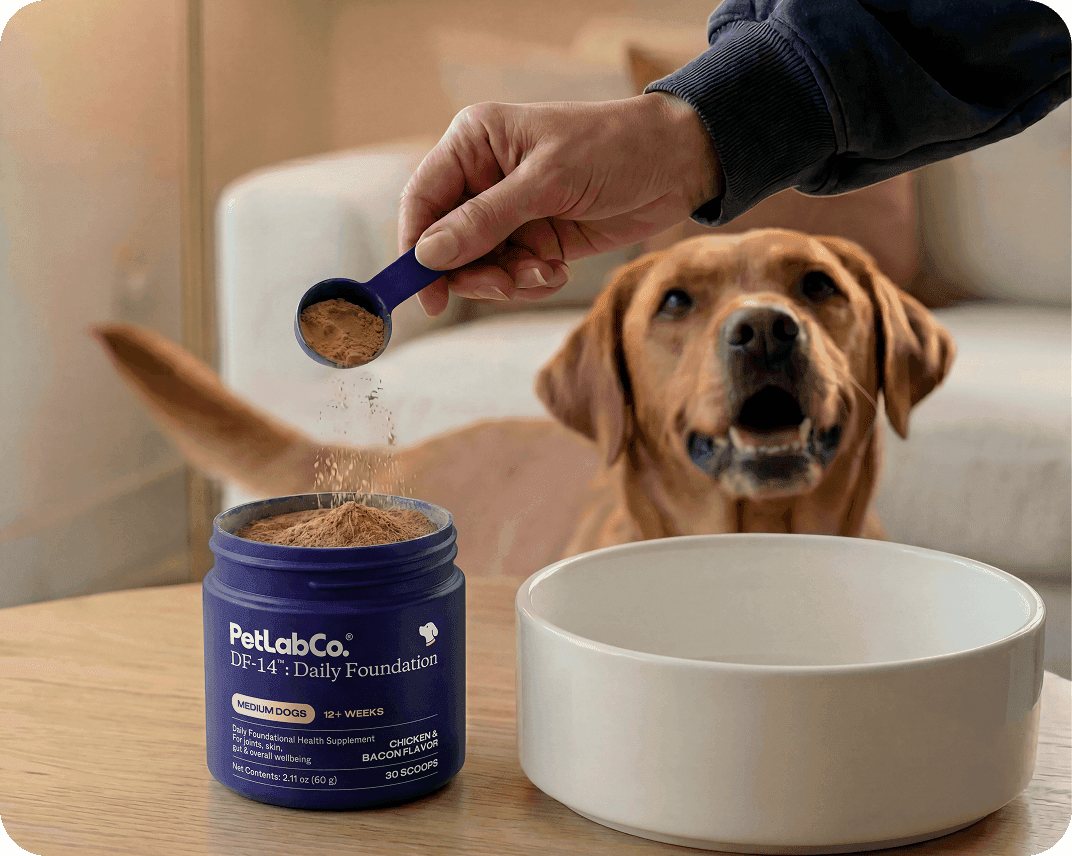
Establishing a successful powder supplement routine requires accurate measurement, proper mixing, and systematic observation of eating habits. DF-14 manufacturer directions recommend thoroughly mixing the calculated dose once daily into wet food or kibble that has been slightly moistened with water.
To preserve dosing accuracy, scoops must remain paired with their original container size. In multi-dog households where pets fall into different weight brackets, interchanging scoops between different tubs will lead to incorrect dosing.
Establishing Mealtime Routines
To ensure safe and consistent administration, pet owners should follow a clear mealtime protocol:
- Select a consistent daily feeding time where an owner can directly observe the dog eating.
- Measure the exact serving using the specific scoop provided with the corresponding weight-tier tub.
- Mix the powder thoroughly into wet food or moistened kibble until evenly distributed.
- Separate feeding areas in multi-pet households to prevent bowl swapping and ensure the intended dog consumes the full serving.
- Confirm that the food bowl is emptied completely.
If a dog fails to eat the full portion, owners should not guess the amount consumed or immediately offer a second supplemented portion, as this can result in over-supplementation. If food refusal persists, consult a veterinarian regarding alternative delivery methods.
Eliminating Confounding Variables
When introducing a new supplement, keep all other aspects of the dog’s diet stable, including primary food brands, treat types, and feeding schedules. Changing multiple dietary factors simultaneously makes it difficult to determine whether subsequent changes in stool consistency, gas, or appetite are driven by the supplement or by unrelated dietary modifications. Keeping a brief written record of the start date, product batch, exact serving, and physical observations provides valuable data for future veterinary visits.
Proper Product Storage and Packaging Care
Probiotic products contain sensitive organisms and biological actives that require specific environmental conditions. DF-14 should be stored in a cool, dry location, shielded from direct sunlight, and tightly sealed after every use. Powder should remain in its original, fully labeled container rather than being transferred to unmarked storage canisters, ensuring that safety warnings, batch codes, expiration dates, and dosing tables remain accessible.
Efficacy, Scientific Context, and Health Considerations
While appropriate probiotic supplementation can play a supportive role in canine digestive management, physical powder formats do not automatically grant superior therapeutic properties. Efficacy depends entirely on strain selection, microbial viability, formulation integrity, and correct clinical application.
Ingredient Research versus Whole-Product Evidence
Certain ingredients within commercial formulations have been evaluated in scientific literature. For example, Saccharomyces boulardii, a non-pathogenic yeast included in DF-14, was evaluated in a controlled 2018 canine study investigating its utility as an adjunctive therapy for dogs diagnosed with chronic enteropathy.
However, scientific studies on individual strains do not constitute clinical trial proof for complex, multi-ingredient commercial products containing those strains. Pet owners must distinguish between preliminary scientific research on isolated ingredients and verified clinical claims for finished consumer products.
Recognizing Limitations and Medical Priorities
Supplements are designed to support physiological function in healthy animals or serve as complementary support under veterinary guidance. They cannot replace balanced nutrition, fresh water, or primary medical diagnostics. Clinical signs such as persistent or severe diarrhea, recurrent vomiting, hematochezia (blood in stool), anorexia, or pronounced lethargy require immediate veterinary evaluation rather than informal trial periods with over-the-counter dietary supplements.
Age Guidelines, Sensitivities, and Drug Interactions
Age appropriateness is a critical safety consideration when selecting a probiotic powder. DF-14 specifies a strict age minimum of 12 weeks, while Native Pet establishes a 3-month lower limit. Puppies younger than 12 weeks possessing immature digestive systems require direct veterinary supervision before receiving non-prescription supplements.
Medication Timing and Safety Warnings
The product label for DF-14 notes that simultaneous oral administration with prescription medications may delay drug absorption. Pet owners should consult their veterinarian regarding appropriate time intervals between administering the powder and giving daily oral prescription drugs. Additionally, safe use in pregnant, lactating, or breeding animals has not been established by standard trial protocols, requiring explicit veterinary consultation prior to use in those populations.
Managing Gastrointestinal Reactions
The introduction of new dietary fibers, prebiotics, or microbial strains can occasionally cause transient mild gas or soft stools as the intestinal microbiota adapts. While these signs often resolve, they should be logged carefully. If gastrointestinal upset persists, worsens, or is accompanied by changes in general behavior, discontinue use and consult a veterinarian to determine whether the reaction stems from supplement intolerance or an underlying medical condition.
Choosing Between Powder and Soft Chew Formulations
Determining whether to utilize a powder topper or a soft chew depends on household routine, feeding behavior, and formula goals. Neither physical format is inherently superior; each presents specific operational advantages.
Powders integrate seamlessly into established mealtimes for dogs that eat wet or moistened meals predictably and finish their portions entirely. This format avoids introducing extra treat items into the daily routine and allows easy mixing for pets accustomed to food toppers.
Conversely, soft chews offer distinct benefits for free-feeding dogs, meal-grazers, or pets that leave food behind. A soft chew can be administered as a standalone item, allowing the owner to verify full ingestion immediately without monitoring a food bowl over extended periods. However, transitioning from a broad-spectrum powder like DF-14 to a gut-only soft chew involves altering the active ingredient profile, changing systemic support ingredients as well as physical format. Owners should evaluate both the label contents and practical routine requirements when selecting or altering their dog’s supplement format.