

Transitioning a Greyhound from active racing to family life involves significant changes in physical activity, environment, and daily routine. While a retired racer’s feeding history provides a valuable starting point, it does not establish a permanent calorie allowance for a pet dog living in a home setting. Nutritional requirements shift as activity levels change, making tailored feeding strategies essential for maintaining long-term health.
The optimal diet for a Greyhound provides complete and balanced nutrition suited to the dog’s specific life stage, health status, and current lifestyle. Achieving this requires moving beyond fixed volumetric measurements—such as standard cups—and calculating daily portions based on energy density and physical assessment.
Sponsored by JustFoodForDogs, this analysis examines four distinct fresh-food formulations, detailing how calorie density, ingredient composition, and storage formats affect daily meal planning. By tracking baseline records, distinguishing body fat from muscle condition, and calculating portions using exact caloric data, dog owners and veterinary teams can construct consistent, adaptable feeding routines.
What Kind of Food Is Best for a Greyhound?
Determining the ideal food for a Greyhound requires evaluating the individual dog rather than relying on breed generalizations. A companion Greyhound does not automatically require specialized racing rations, raw feeding regimens, or arbitrary volumetric portions simply because another sighthound thrives on those plans. Instead, the focus must remain on providing a complete and balanced diet appropriate for the dog’s specific life stage.
When evaluating pet food options, examine the full nutritional adequacy statement and energy density of each specific recipe. Products manufactured by the same company can vary substantially in caloric density and life-stage eligibility. A detailed understanding of ingredient selection versus overall nutrient profile is critical; as highlighted in Vetstreet’s guide to reading dog food labels, an ingredient list alone does not fully represent a diet’s complete nutritional value. The adequacy statement and caloric density are the key metrics that turn a chosen recipe into a practical daily feeding plan.
While these principles
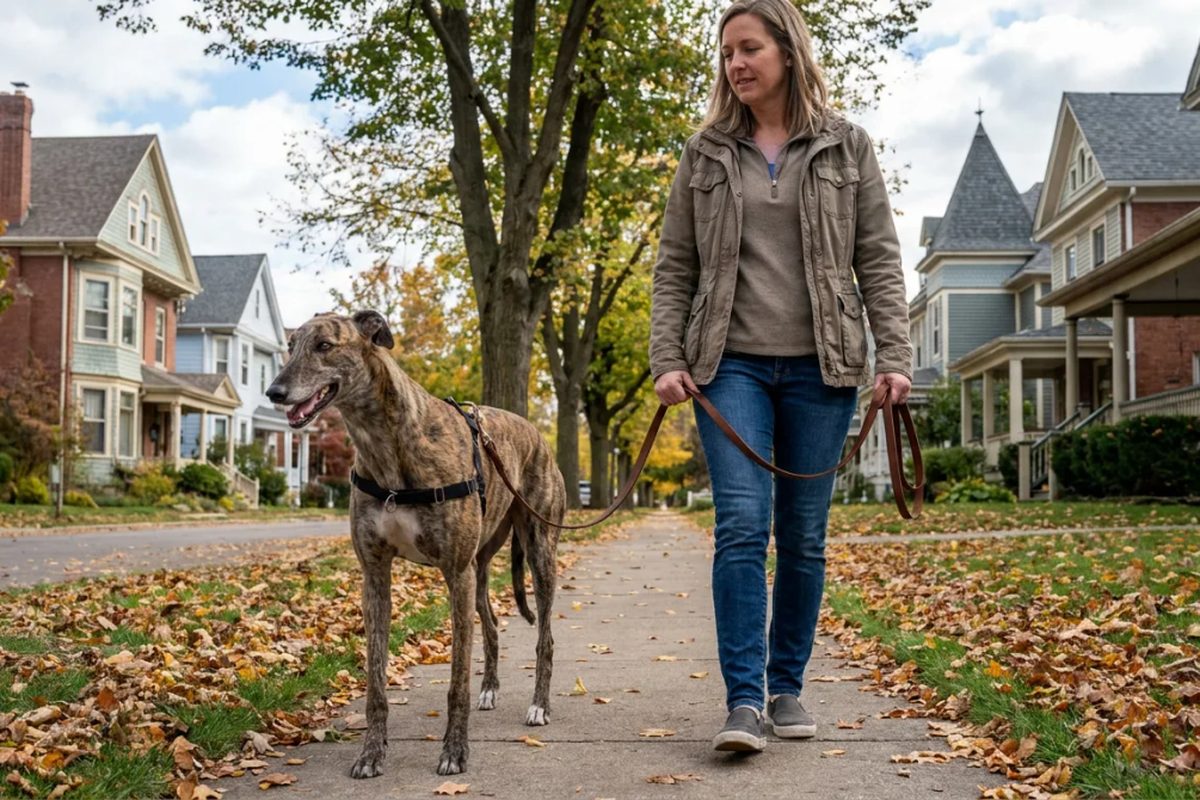
apply broadly to full-sized Greyhounds, individual physical history remains more consequential than general breed descriptions. Factors such as athletic history, past medical issues, and present living conditions directly influence how a dog processes energy and maintains lean tissue.
Comparing Four JustFoodForDogs Formulations
Commercial fresh-food recipes offer diverse choices in ingredient composition, growth eligibility, calorie density, and storage formats. Manufacturer information for four JustFoodForDogs recipes illustrates how these factors influence daily diet selection.
+-------------------------------+-----------------------------------+-------------------+-------------------------------------------------------------+
| Recipe                        | Life-Stage Fit                    | Calories Per Gram | Practical Reason to Consider It                             |
+-------------------------------+-----------------------------------+-------------------+-------------------------------------------------------------+
| Chicken & Rice                | All life stages, including growth | 1.530 kcal/g      | A grain-inclusive fresh option for puppies or adults        |
| Fish & Sweet Potato           | All life stages, including growth | 0.922 kcal/g      | A fish-based option offering a larger physical portion      |
| Beef & Russet Potato          | Adult maintenance                 | 1.559 kcal/g      | A complete fresh beef formulation for adult dogs            |
| JustFresh Home-Cooked Chicken | Adult maintenance                 | 1.254 kcal/g      | Pantry-stable storage simplifying long-term supply planning |
+-------------------------------+-----------------------------------+-------------------+-------------------------------------------------------------+
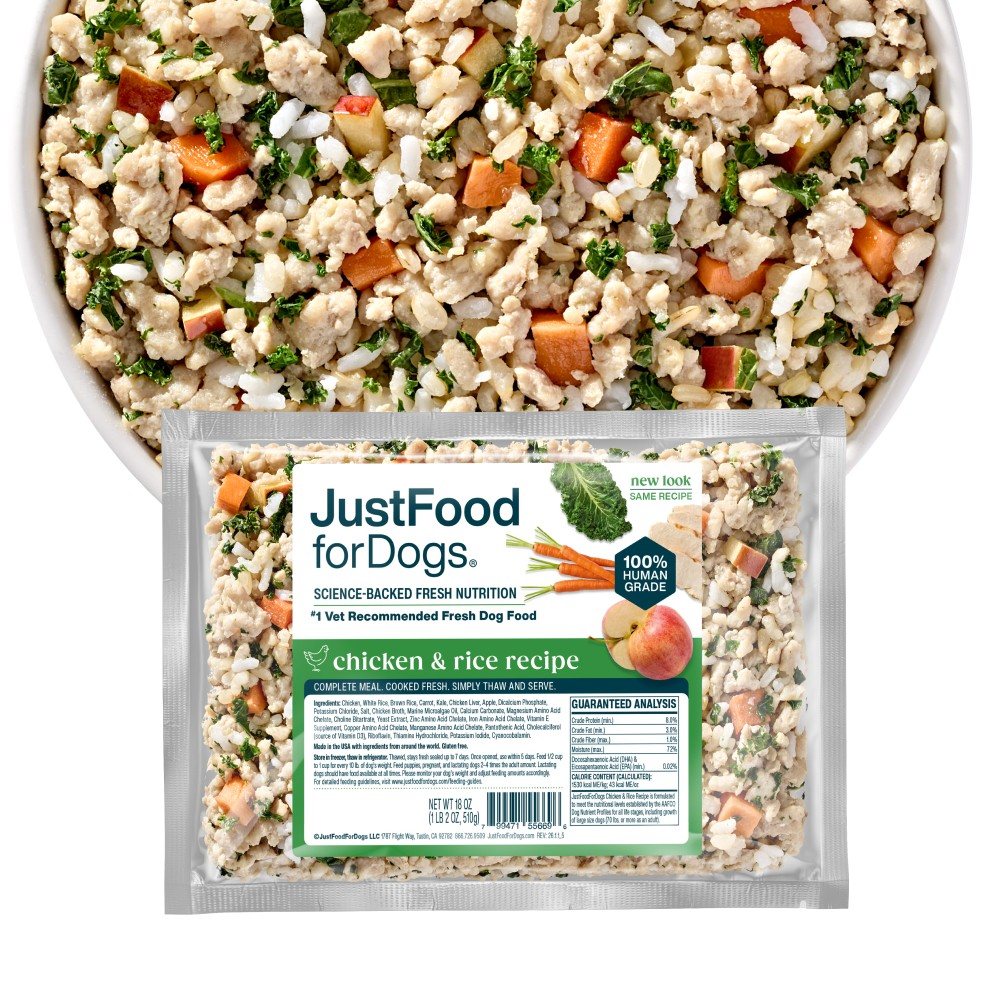
JustFoodForDogs Chicken & Rice
JustFoodForDogs Chicken & Rice is a fresh-frozen, grain-inclusive recipe formulated with chicken, white rice, and brown rice. It is suitable for households seeking a complete diet appropriate for growing puppies as well as adult dogs.
Current manufacturer data lists the recipe’s caloric density at 1,530 kcal per kilogram, which translates to 1.530 calories per gram. Its all-life-stages designation includes approval for the growth of large-breed dogs expected to weigh 70 pounds or more as adults. However, growth eligibility does not mean adult dogs should receive puppy-sized energy allocations, nor should serving sizes remain static as a dog’s activity level changes over time. Additionally, because this recipe is formulated to meet complex profile standards, a simple home-cooked meal of plain chicken and rice does not replicate its underlying nutritional balance.
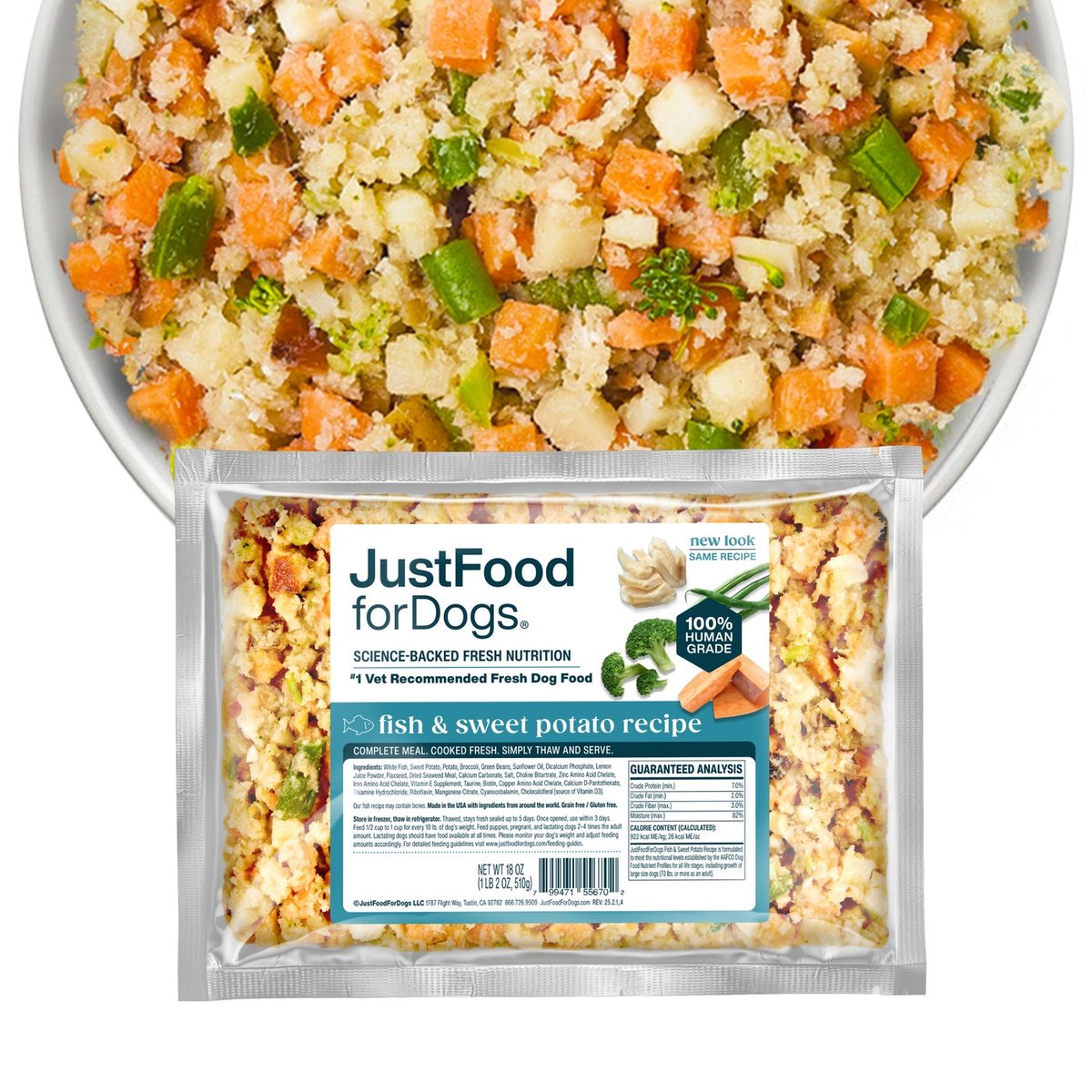
JustFoodForDogs Fish & Sweet Potato
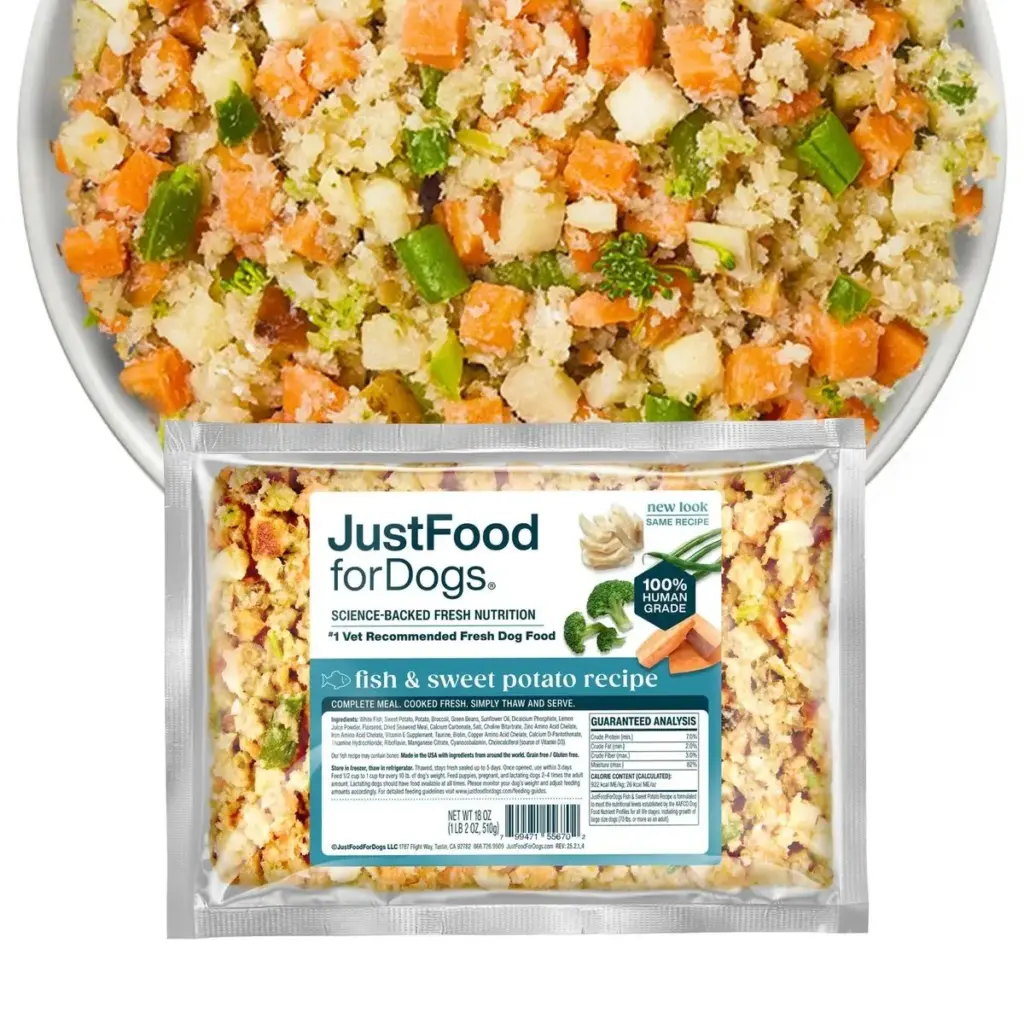
JustFoodForDogs Fish & Sweet Potato offers a fish-based alternative that is also formulated for all life stages, including growth. Its marine protein source comprises a blend of cod, pollock, and haddock.
The reported energy density for this recipe is 922 kcal per kilogram, or 0.922 calories per gram. Because this energy density is substantially lower than the other three options, a Greyhound assigned a specific daily calorie intake will consume a physically larger meal by weight. While this larger portion can alter kitchen preparation routines and package utilization rates, lower energy density does not mean the diet is nutritionally inferior or specifically designed for weight loss. Furthermore, while the recipe utilizes fish protein, it is a standard commercial diet rather than a prescription veterinary food designed to diagnose or manage complex adverse food reactions.

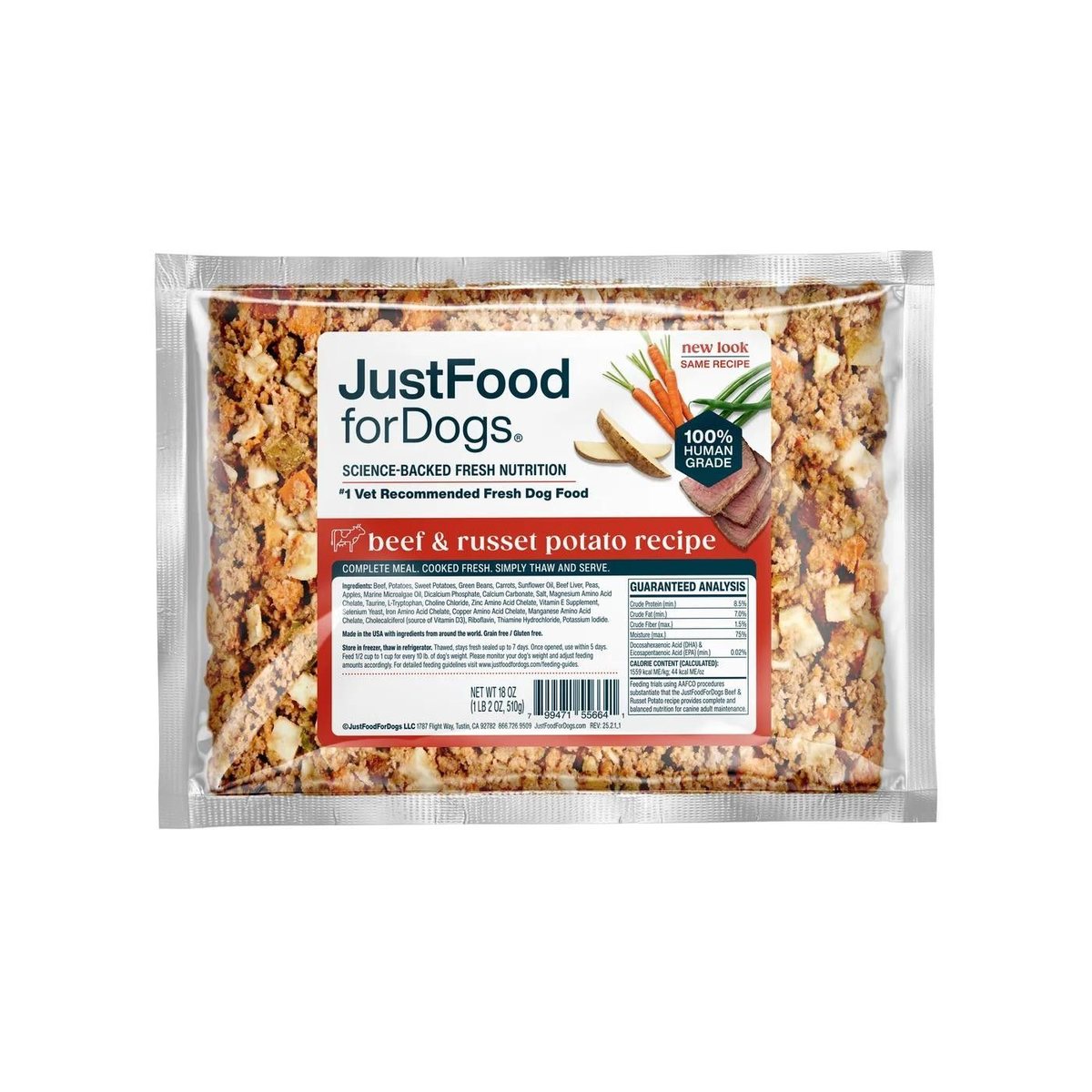
JustFoodForDogs Beef & Russet Potato
JustFoodForDogs Beef & Russet Potato is formulated specifically for adult maintenance and is substantiated through standard Association of American Feed Control Officials (AAFCO) feeding trial protocols. It is not intended for growing puppies.
With a listed energy density of 1,559 kcal per kilogram (1.559 calories per gram), this formulation represents the highest caloric density among the four compared recipes. However, this higher energy density does not automatically position it as an athletic performance diet for companion dogs. A retired Greyhound’s current baseline energy expenditure remains the primary metric for portion sizing. If a dog is already maintaining excellent physical health on a balanced diet, transitioning to a beef formulation is an elective choice that requires recalculating daily weight portions rather than an essential step in post-racing adjustment.
JustFoodForDogs JustFresh Home-Cooked Chicken
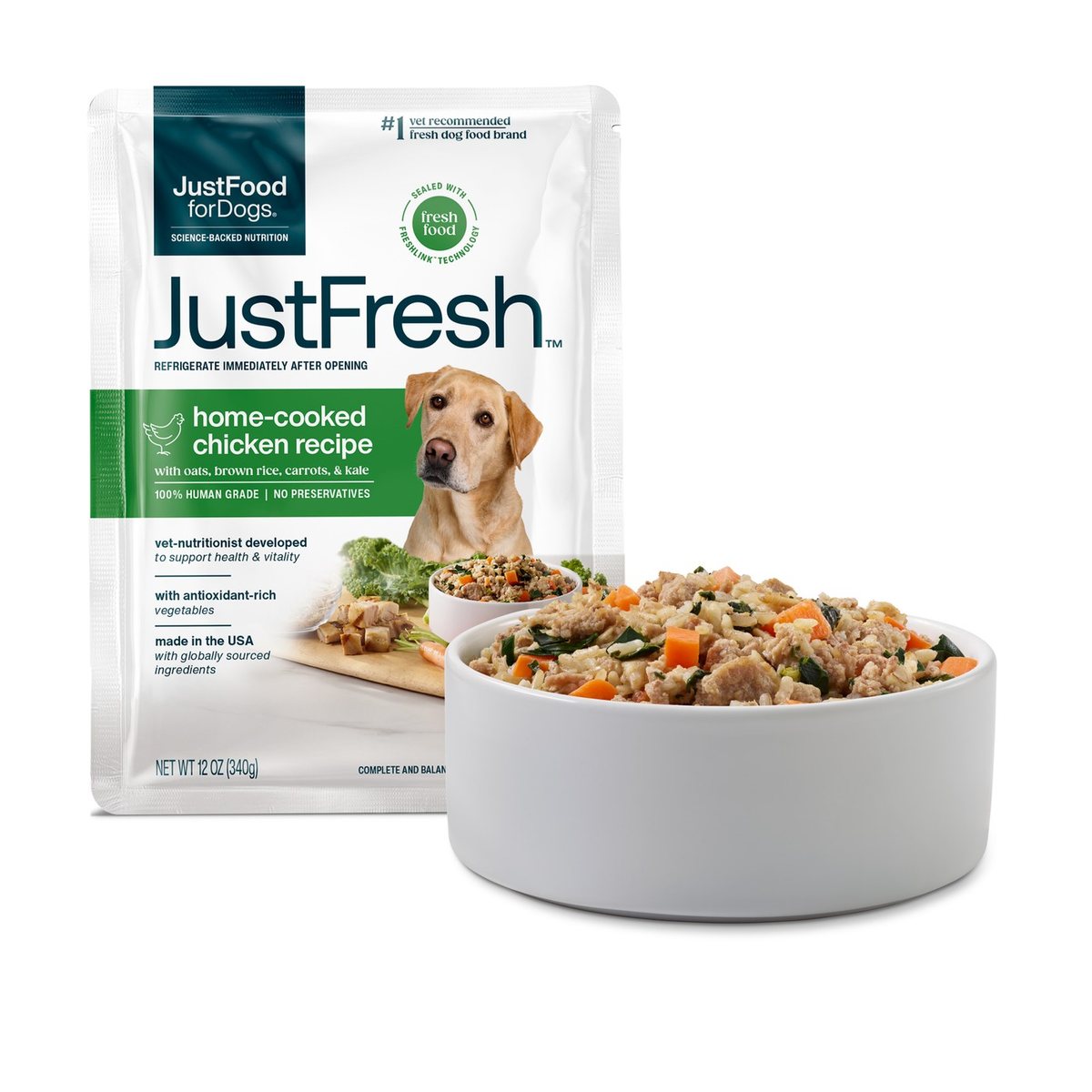
JustFoodForDogs JustFresh Home-Cooked Chicken provides adult-maintenance nutrition with shelf-stable packaging prior to opening, making it convenient for homes with limited freezer space. Its recipe includes oats and brown rice alongside chicken.
The product’s energy density is 1,254 kcal per kilogram, equivalent to 1.254 calories per gram. This formulation is distinct from the fresh-frozen Chicken & Rice recipe and is not suitable for growing puppies. While unopened pantry storage simplifies supply management, opened packaging requires prompt refrigeration, and daily rations must still be calculated by weight.
Starting with the Feeding History of a Retired Racing Greyhound
Establishing an effective feeding program for a retired racing Greyhound begins with continuity. Obtaining complete diet records and serving instructions from the dog’s former handler, rescue organization, or foster home helps ease the transition into a permanent household. The food the dog currently thrives on may well remain the best option during the initial adoption phase.
To build an accurate baseline, owners should gather precise details from prior caregivers, including:
- The exact brand name and specific formula previously fed
- The measured quantity offered per meal and per day
- The dog’s actual voluntary intake (whether meals were consistently finished or partially left)
- All extra foods, including treats, training rewards, table scraps, or food used to administer medication
- Historical body weight records alongside recent scale readings
- The dog’s recent daily physical routine and activity level
Because track performance records reflect past athletic conditions rather than current domestic needs, recent foster history is often a more relevant guide for pet routines. Owners should document this transition using a structured baseline feeding card.
Creating an Adoption-Baseline Feeding Record
A comprehensive baseline card centralizes past routines and current targets, helping owners work effectively with their veterinarians. This record should log the date and source of information, distinguishing past instructions from current guidelines. It should detail the full name of the previous food, the exact measured portion in grams or weight ounces, actual historical intake, and all extra treats or medications administered in food.
The record must also track current body weight, scale details, veterinary assessments of body and muscle condition, and recent physical activity levels. When selecting a new recipe, document its complete name, adequacy statement, and exact calorie density per gram. Finally, list the calculated daily target in grams, how meals are split across the day, and set a specific review date to re-evaluate the dog’s progress.
If certain historical details are unknown, leave those fields blank rather than estimating. A baseline can then be established in consultation with an adoption group or veterinarian. Vague statements like "one scoop twice a day" should be clarified through direct weighing before attempting to calculate energy intake.
Translating Informal Instructions into Measured Values
Handover instructions often rely on informal language, such as "a heaped cup" or "a bowl of kibble." These approximations vary significantly depending on the container used.
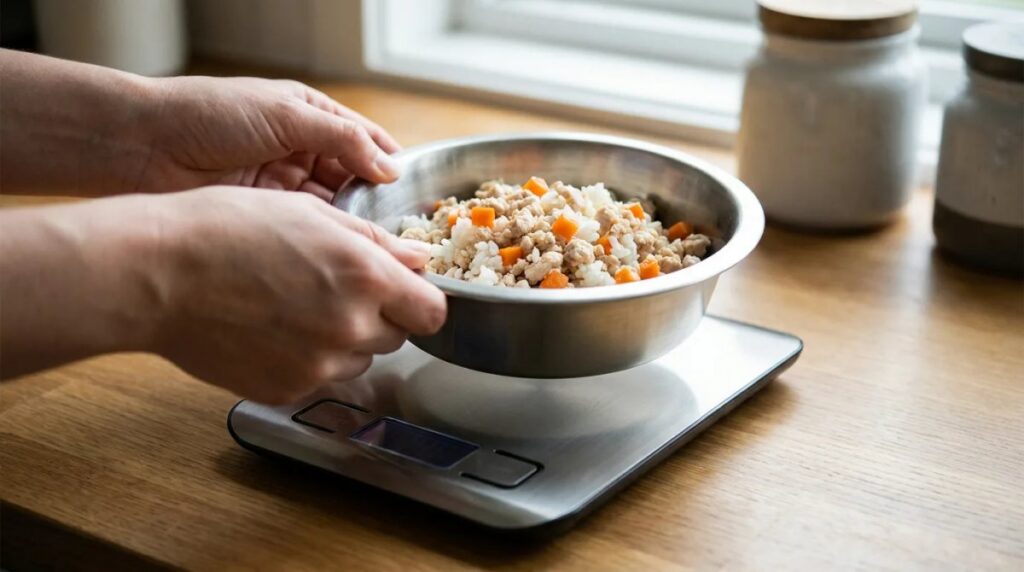
Whenever possible, ask former caregivers to weigh an average serving on a kitchen scale or demonstrate the portion size directly. Weighing the physical food removes ambiguity, establishing a clear starting point in grams and preventing accidental overfeeding or underfeeding during the dog’s initial weeks in a new home.
Using Historical Data Without Treating It as a Rigid Target
Former racing weights and previous calorie allocations provide helpful context, but they should not be treated as permanent ideal targets for a domestic companion. Former athletic weights reflect high-intensity training environments that differ completely from life as a household pet.
Owners should discuss historical records with a veterinarian during initial health exams to establish a realistic target weight and body condition. The focus should remain entirely on the individual dog’s current health, structural frame, and daily lifestyle rather than attempting to recreate a historic racing weight.
Evaluating Body Condition and Muscle Condition Separately
Evaluating a Greyhound’s physical form requires assessing fat cover and muscle mass as two separate metrics. Because Greyhounds possess a naturally lean, deep-chested anatomy, relying solely on scale weight or visual appearance can lead to misinterpretations.
The World Small Animal Veterinary Association (WSAVA) provides distinct nutritional assessment guidelines that separate Body Condition Score (BCS), which measures fat accumulation, from Muscle Condition Score (MCS), which evaluates muscle mass. An athletic dog can have low body fat while maintaining full, healthy muscle mass; conversely, a dog may lose muscle tissue while accumulating excess subcutaneous fat.
Establishing Repeatable Physical Assessments
Pet owners can learn to perform consistent physical evaluations at home between veterinary visits. Standard canine body condition charts evaluate fat cover over the ribs, the definition of the waist when viewed from above, and the extent of the abdominal tuck from the side.
When evaluating a Greyhound at home, make observations under consistent conditions—such as standing on a flat, even surface before meals. Record physical changes descriptively (e.g., "ribs feel more prominent to the touch this month") rather than attempting to adjust rations based on photos of other dogs. Because frame size, height, and biological sex vary widely, generic breed weight ranges cannot substitute for individual, hands-on evaluations.
Recognizing Triggers for Dietary Review
A structured feeding plan should include regular review points, but certain physical or behavioral changes warrant an immediate re-evaluation with a veterinarian. Important triggers include:
- Unexplained weight gain or progressive weight loss
- Changes in voluntary food intake, such as leaving meals unfinished
- Noticeable muscle wasting along the spine, hips, or shoulders
- Changes in coat quality, energy levels, or stool consistency
- Major changes in daily exercise routines or overall mobility
A detailed feeding log allows veterinarians to determine whether physical changes stem from actual intake variations, recipe adjustments, or underlying health conditions.
Reassessing Senior Greyhound Nutritional Requirements
As Greyhounds age, their nutritional needs must be reassessed based on current physical condition and mobility. Aging does not automatically dictate a lower calorie intake, reduced protein levels, or an immediate switch to a senior-formula food.
Some senior dogs maintain their weight well on established adult diets simply by adjusting daily gram portions. Others may require specialized nutritional strategies to address age-related muscle loss, joint disease, or metabolic shifts. At a senior health review, owners should provide updated weight histories, current daily feeding logs, and observations regarding appetite and activity.
Calculating Daily Portions from Recipe Calorie Density
Determining the correct daily portion for a Greyhound requires matching the dog’s target daily calorie allowance to the energy density of the chosen food. Because different formulas vary significantly in caloric content, volumetric measurements like cups are imprecise.
A recommended starting point for adult dogs in ideal condition can be derived from WSAVA healthy-adult calorie guidelines. Once a target daily calorie value is established by a veterinarian, the daily portion in grams is calculated using a straightforward formula:
$$textDaily Grams = fractextTarget Daily CaloriestextCalories Per Gram of Food$$
To convert a manufacturer’s listing of kcal/kg into calories per gram, divide the value by 1,000. For example, a recipe containing 1,530 kcal/kg provides 1.530 calories per gram.
Comparing Caloric Density Over Volume
To illustrate how caloric density impacts portion size by weight, consider a hypothetical daily allocation of 1,000 calories met exclusively by a single recipe.
+-------------------------------+--------------------------+-----------------------------------+
| Recipe                        | Calculation              | Approximate Portion for 1,000 kcal |
+-------------------------------+--------------------------+-----------------------------------+
| Chicken & Rice                | 1,000 ÷ 1.530            | 654 grams                         |
| Fish & Sweet Potato           | 1,000 ÷ 0.922            | 1,085 grams                       |
| Beef & Russet Potato          | 1,000 ÷ 1.559            | 641 grams                         |
| JustFresh Home-Cooked Chicken | 1,000 ÷ 1.254            | 797 grams                         |
+-------------------------------+--------------------------+-----------------------------------+
These calculations demonstrate why portion sizes must be recalculated whenever switching foods. Switching a dog from Fish & Sweet Potato to Beef & Russet Potato while feeding the same weight portion would inadvertently increase the dog’s daily calorie intake by more than 60 percent.
Managing Extras and Treats in Daily Allocations
A dog’s total daily intake includes all treats, training rewards, dental chews, and food items used for medication delivery. According to American Animal Hospital Association (AAHA) nutritional guidelines, calories from treats and non-complete food items should not exceed 10 percent of a dog’s total daily caloric allowance.
To maintain balanced nutrition, structure daily allowances in this sequence:

- Determine the dog’s total target daily calories with a veterinarian.
- Deduct the calories contributed by daily treats and extras (ensuring they remain under 10 percent of the total).
- Assign the remaining calories to the complete and balanced primary food.
- Calculate the required daily portion in grams based on the primary food’s energy density.
Structuring Whole-Day Mixed Feeding Plans
Some owners choose to combine a fresh diet with a complete dry kibble. In a mixed feeding scenario, the combined calories from both complete foods plus treats must equal the daily target intake.
Consider a hypothetical adult Greyhound with an established daily target of 1,100 calories:
- Treats/Extras: 50 calories allocated (under 5 percent of total daily intake).
- Fresh Food (Chicken & Rice): 650 calories allocated. At 1.530 kcal/g, $650 div 1.530 = 425text grams$.
- Dry Kibble: 400 calories allocated. Assuming an illustrative kibble density of 4.0 kcal/g, $400 div 4.0 = 100text grams$.
In this scenario, the fresh food and dry food complement each other within the overall 1,100-calorie limit. Neither item is simply added on top of a full daily ration of the other.
Calculating True Daily Food Costs
Evaluating the cost of a pet food format requires looking beyond the purchase price of the package. A larger or heavier bag does not necessarily supply more feeding days if the food has a lower caloric density.
To calculate the true cost per day based on a dog’s specific caloric needs, use the following formula:
$$textDaily Cost = textPackage Price times left( fractextDaily Gram PortiontextTotal Package Weight in Grams right)$$

This calculation provides an accurate financial comparison between different recipes and packaging options, ensuring budget decisions are based on usable energy rather than gross package weight.
Scheduling Daily Meals and Managing Health Risks
For adult Greyhounds, dividing the total daily ration into at least two separate meals is a standard, practical routine. Dividing the daily allowance helps prevent large volume intake in a single sitting while establishing predictable feeding patterns.
Cornell University’s Riney Canine Health Center highlights meal division as a key management practice when considering Gastric Dilatation-Volvulus (GDV), commonly known as bloat. While splitting daily rations across multiple meals is recommended, meal frequency alone does not eliminate bloat risk.
A consistent meal schedule allows owners to monitor appetite, coordinate exercise timing, and ensure accurate food delivery across different household members. Using a shared kitchen chart or log prevents accidental double-feeding and ensures treats are accurately accounted for each day.
Implementing Safe Food Transitions and Storage Protocols
When changing a dog’s diet, transitioning gradually helps prevent digestive upset and allows for accurate tracking of energy intake. Unless a veterinarian prescribes an immediate therapeutic diet change, phase new foods in over several days using calculated caloric ratios rather than visual estimates.
Proper handling and storage of fresh dog food are essential for food safety and quality:
- Refrigeration Limits: According to JustFoodForDogs guidance, opened fresh-frozen meals (non-fish) should be used within five days of refrigeration. Fish-based meals and opened JustFresh packaging should be used within three days.
- Thawing Guidelines: Packages should be thawed in the refrigerator. An 18-ounce package typically requires up to 24 hours to thaw fully, while a 72-ounce package may take up to 48 hours.
- FDA Safety Guidelines: The U.S. Food and Drug Administration recommends keeping refrigerators at or below 40°F (4°C) and promptly refrigerating or discarding uneaten moist pet food. Feeding dishes and utensils should be washed thoroughly after each meal.
Common Greyhound Feeding Considerations
Should Greyhounds Eat from Raised Bowls?
There is no universal requirement for Greyhounds to use elevated food bowls, and raised stands should not be viewed as a preventative measure for GDV. Research referenced in Cornell’s GDV guidance identifies elevated feeding stations as a potential risk factor for bloat in certain dogs. Unless a veterinarian specifically prescribes a raised dish to accommodate a spinal condition, neck pain, or mobility impairment, Greyhounds can safely eat from stable, clean bowls placed at ground level.
What Household Foods Are Toxic to Greyhounds?
Greyhounds share the same metabolic vulnerabilities as all domestic dogs regarding hazardous human foods. The FDA highlights common dangerous items, including chocolate, grapes, raisins, onions, garlic, xylitol (birch bark extract), and macadamia nuts. If toxic ingestion is suspected, owners should immediately contact a veterinarian or a dedicated pet poison control hotline.
Can Greyhounds Eat Bananas as Treats?
Plain, peeled banana pieces can be given as an occasional treat, provided the dog tolerates them and the calories are accounted for within the daily treat allowance. UC Davis Veterinary Medicine includes bananas in its list of safe treat options. Bananas should be fed in moderation, strictly adhering to the rule that all treats combined remain under 10 percent of the dog’s total daily caloric intake.
Does Rib Visibility Mean a Greyhound Is Underfed?
Visible rib contours do not automatically mean a Greyhound requires additional food. Sighthound anatomy naturally features lighter subcutaneous fat layers than many other breeds. The correct approach is to evaluate the individual dog using hands-on palpation to assess rib coverage, spinal tissue cover, and muscle mass, rather than relying solely on visual rib counts or comparisons to other dogs.
Should Retired Greyhounds Remain on Racing Feeds?
A retired Greyhound’s dietary requirements should reflect its current lifestyle as a companion animal rather than its former athletic career. Active racing diets are formulated for high-intensity physical exertion and may contain higher calorie levels than an average house pet requires. Transitioning to a balanced maintenance diet formulated for companion dogs helps support long-term health and weight management.