

Published September 22, 2026, 1:08 PM
In the rich tapestry of Greek mythology, the hero Achilles remains legendary for his unmatched prowess during the Trojan War. According to the myth, his mother dipped him as an infant into the sacred waters of the river Styx, rendering his entire body impervious to enemy weapons. Yet, she held him securely by the heel during the immersion, leaving that single area untouched by the magic. That single oversight proved fatal when a poisoned arrow ultimately struck him in the tendon that now bears his name.
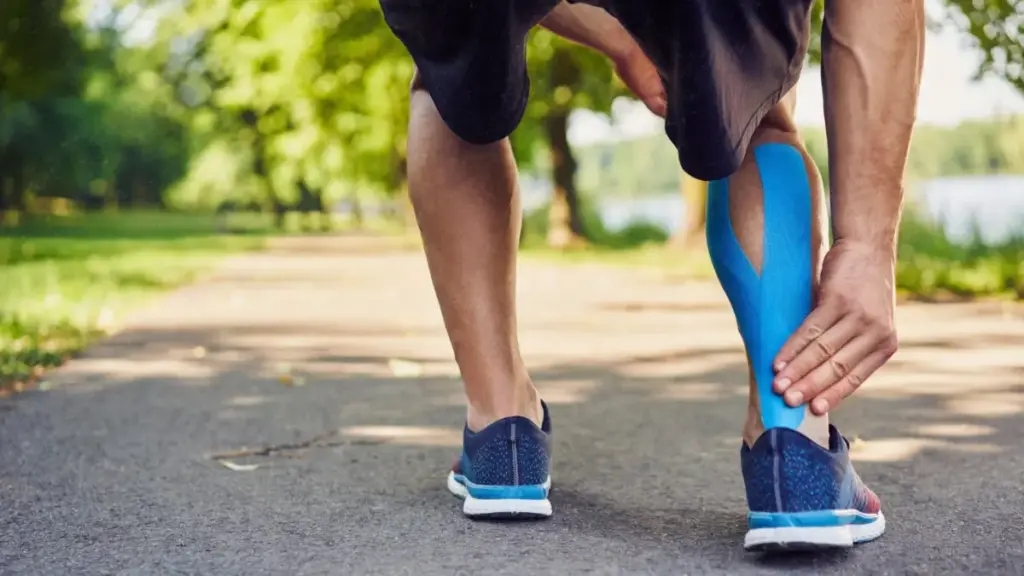
While the ancient story carries numerous symbolic lessons, it holds a particular resonance for modern runners. Long before the era of high-tech footwear and sports science, the ancient Greeks recognized that the robust tendon anchoring the lower leg to the foot was a crucial vulnerability. Today, sports medicine professionals note that this timeless anatomical weak link continues to trouble athletes across the globe, increasingly drawing scrutiny from researchers and physical therapists alike.
Achilles Tendon Injuries Are the Most Common Type of Injury in Runners
Achilles tendon disorders rank persistently among the most frequent and debilitating overuse injuries in distance running. According to recent data from a Czech scientific study, the risk escalates in tandem with mileage; runners who push beyond 25 miles or 40 kilometers per week face a significantly higher probability of developing chronic Achilles issues.
In recent months, however, sports medicine practitioners have observed a wider phenomenon. Beyond traditional Achilles tendinopathy, clinics are seeing a distinct surge in stubborn, slow-to-resolve calf muscle strains. Because the complex architecture of the calf muscles directly connects to the Achilles tendon, both structures share identical biomechanical loads and forces during the repetitive cycle of distance running, meaning an issue in one frequently cascades into the other.
Modern Shoe Design Can Be Contributing to Calf and Ankle Pain
This troubling uptick in lower-leg injuries first became apparent to observers early in the year. Conditions that previously responded well to a brief period of relative rest and a week or two of reduced mileage began lingering for months, affecting multiple athletes simultaneously within local training groups. Matt Klein, an assistant professor of physical therapy at George Fox University in Newberg, Oregon, confirms that he has witnessed a parallel trend in his own clinical practice, noting that recurrent calf strains have noticeably multiplied over the past couple of years.
While the exact root causes remain multifactorial and complex, investigators are increasingly eyeing modern trends in running shoe engineering. Contemporary footwear has undergone a radical transformation, driven by innovations intended to maximize energy return and cushioning. Several specific design characteristics, however, may inadvertently place unprecedented stress on the lower leg.
Stiff Footwear and Its Demands on the Lower Leg
The first major factor involves the overall rigidity of current running models. According to Klein, the prevailing trajectory in the athletic footwear industry centers on significantly increasing structural stiffness. Even in models that omit a full carbon-fiber plate, manufacturers have substantially stiffened the chassis of everyday trainers.
This shift creates a distinct biomechanical challenge for the calves and the Achilles tendon. As a shoe grows stiffer, it resists the natural bending motion of the foot during the propulsive phase of the stride. Consequently, the runner’s calf muscles must work significantly harder to overcome that resistance and achieve a clean toe-off, placing an elevated cumulative workload on tissues that are already operating near their capacity during high-mileage blocks.
Foam Technology and the Paradox of Cushioning
Another emerging concern involves the advanced, highly resilient super-foams utilized in contemporary footwear. While these materials offer exceptional shock absorption, they can create unintended biomechanical consequences, particularly for heel strikers. Extensive research demonstrates that a large proportion of runners naturally land on their heels, regardless of their perceived strike pattern.
Shoe specifications such as drop and stack height are typically measured under static conditions that change dramatically once a runner is in motion. When an athlete lands forcefully on an intensely plush, highly compressible heel, the material compresses deeply under the impact. This compression effectively reduces the functional heel-to-toe drop of the shoe by the exact magnitude of the foam’s collapse.
For runners utilizing zero-drop shoes while maintaining a heel-strike pattern, this dynamic compression can inadvertently transform their footwear into a negative-drop shoe. Placing the ankle into an aggressively dorsiflexed position, with the toes pointed upward at initial contact, demands the absolute maximum force production from the calf complex. Attempting to circumvent this by consciously shifting to a forefoot strike merely trades one set of problems for another, forcing the runner onto a less stable platform where muscles must expend extra energy simply to stabilize the foot in addition to generating forward propulsion. Ultimately, runners find themselves in a difficult compromise when utilizing aggressively soft footwear.
The Role of Curved Bases and the Search for Alternatives
To mitigate these forces, modern super shoes frequently incorporate a heavily curved base, commonly known as a rocker geometry. This design encourages the foot to roll smoothly forward through each stride, mimicking the action of a rocking chair. While this geometry introduces its own unique set of trade-offs, a rocker properly tailored to an individual’s stride eliminates the need to aggressively flex the shoe against excessive cushioning during toe-off. Instead, the shoe facilitates the transition into the next step.
When these modern geometries fail to harmonize with a runner’s natural biomechanics, however, viable alternatives have become surprisingly scarce on the commercial market. Traditional training models available in standard retail inventories are often markedly inflexible compared to equivalents from previous decades. While fully minimalist footwear remains accessible, finding a reliable semi-minimalist shoe has grown increasingly difficult for athletes seeking a more traditional feel.
What the Latest Research Says About Footwear and Injury
Despite these compelling mechanical hypotheses, researchers emphasize that direct causation between modern shoe design and the rise in calf and Achilles injuries remains unproven. Daniel Jandacka, a kinesiologist at the University of Ostrava in the Czech Republic, notes that while the connection is certainly a hypothesis worthy of rigorous scientific investigation, his own team’s studies have not yet identified footwear as a primary independent risk factor.
At the same time, Jandacka is careful to clarify that a lack of direct statistical correlation does not mean footwear has no effect. The reality, he explains, is that running injuries are inherently multifactorial. While shoes likely play a contributing role, variables such as abrupt spikes in training load, inadequate recovery protocols, baseline tissue capacity, individual running biomechanics, and personal anatomical adaptation are equally critical pieces of the puzzle.
Individual experiences often underscore the profound impact that footwear can have on structural health. Many athletes observe that subtle changes in shoe wear patterns immediately manifest as localized joint or tendon discomfort, whether through familiar patterns of knee pain or acute irritation of the iliotibial band during even short trial runs.
Strengthening the Foot Beyond the Shoe
Yet, sports science experts caution that simply purchasing a different pair of shoes will not automatically resolve persistent calf or Achilles pathology. Jay Dicharry, a professor at Oregon State University-Cascades and author of the book Running Rewired: Reinvent Your Run for Stability, Strength, and Speed, argues that runners must look beyond footwear to address the fundamental mechanics of how their feet function under load. Shoes certainly influence where mechanical forces are distributed across the lower extremity, but they cannot single-handedly correct underlying functional deficits.
Addressing these vulnerabilities requires targeted physical conditioning rather than passive reliance on gear technology. Dicharry advocates for foundational foot-strengthening movements designed to improve intrinsic muscle activation, simulating the functional demands that the foot must successfully manage while absorbing the rigorous impact of running. Whether athletes incorporate specific balance and stability drills into their routines or utilize specialized training tools like the MOBO board, the overarching objective remains clear: developing robust, adaptable tissue capacity capable of withstanding the demands of modern training miles without relying entirely on external equipment for protection.