

For generations, wrapping potatoes in aluminum foil has been a standard practice in household kitchens and restaurants alike, ostensibly to speed up cooking times and retain moisture. Yet, culinary experts point out that this method traps steam, which inadvertently renders the potato skin soft and soggy rather than achieving the desired crispness. To secure the ultimate crispy skin, professionals recommend baking scrubbed russet potatoes directly on the oven grate at a relatively high temperature. To elevate the texture and flavor even further, home cooks can rub the potatoes with vegetable oil and apply a generous coating of salt, a technique that transforms the outer layer into something reminiscent of a potato chip.
A common misconception among home cooks is that baking potatoes dry at high temperatures without foil will compromise the fluffiness of the interior. In reality, achieving a light, airy interior comes down to internal temperature rather than external moisture trapping. According to culinary tests, a potato achieves its ideal fluffy texture when its internal temperature reaches at least 212 degrees Fahrenheit. While checking a potato with a meat thermometer may seem unconventional to some, food experts argue it is a fail-safe route to the most enjoyable culinary result.
The attention to detail does not stop when the potato emerges from the oven; the method used to open the baked potato significantly impacts its final texture. Divergent schools of thought exist regarding this crucial step. Organizations such as the Idaho Potato Commission have long advocated for eschewing a knife entirely, favoring a fork to gently poke a plus sign into the surface of the potato. This gentle approach is believed to preserve the integrity of the flesh better than a sharp blade.
Other notable figures in the culinary world have championed even more dramatic approaches. Beloved food writer Nigel Slater has famously advocated for a kinetic method reminiscent of martial arts. In a piece published in The Guardian, Slater described bringing one’s hand down fast and sharp as if executing a karate chop, but only with enough force to crack open the potato skin. Whether a cook chooses to attempt this dramatic feat or stick to more conventional tools remains entirely in their own hands, though comprehensive kitchen testing has found that a single fork-pricked line down the length of the spud is ultimately the most effective and reliable method.
Once the potato has been properly opened, it transforms from a simple side dish into a versatile canvas capable of accommodating a wide array of hearty fillings. While traditional toppings often lean toward butter, sour cream, and chives, a baked potato can easily support substantial, globally inspired meals ranging from classic tuna salad to cheesy baked beans.
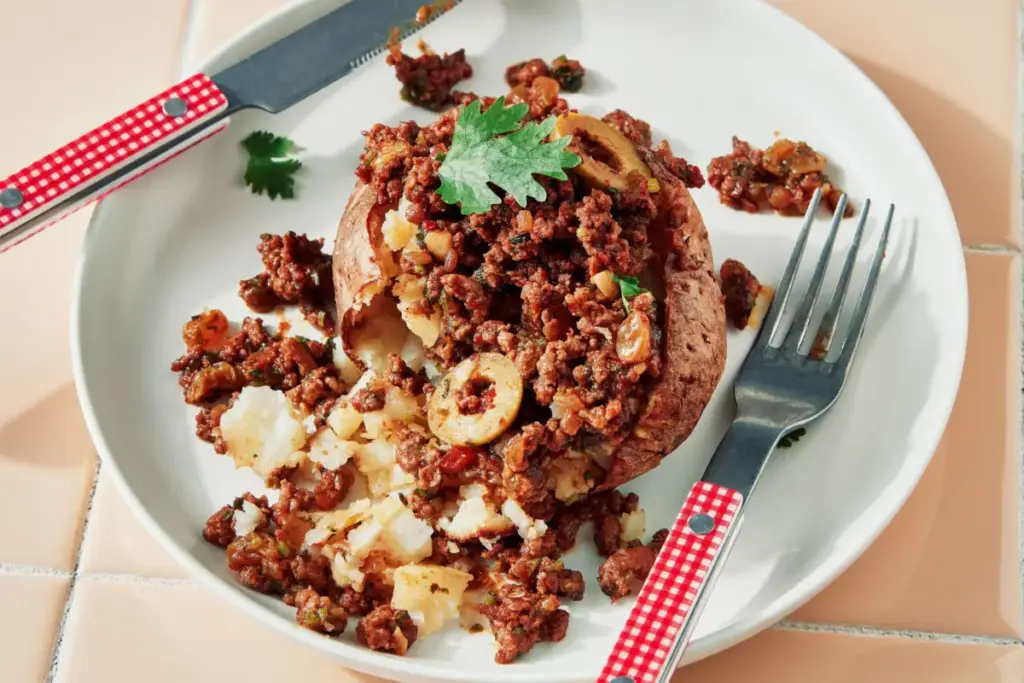
Recent culinary developments highlight a picadillo-inspired mixture utilizing ground beef as a robust, protein-rich filling. Packed with iron and creatine, the ground beef—though ground turkey or chicken serve as viable alternatives for those seeking different flavor profiles or dietary options—is adorned with golden raisins and stuffed olives to create a complex balance of savory, sweet, and briny notes. Accompanying this mixture is a spicy tomato sauce designed to slowly soak into the steaming potato interior, further seasoning the starch with every passing minute it sits. Culinary experts advise utilizing a chili powder that features a balanced blend of spices, such as genuine chiles, cumin, oregano, and garlic, rather than relying exclusively on dried ground chiles, to ensure depth of flavor in the sauce.
These culinary refinements form part of a broader ongoing conversation about the perception and preparation of everyday ingredients. Healthy cooking, as emphasized by culinary publications and test kitchen professionals, does not have to be overly complicated. In fact, many food editors argue that the simpler a dish is, the better it tends to taste when fundamental techniques are properly executed.
This philosophy extends to the nutritional value of the ingredients themselves. White potatoes, which have occasionally been mischaracterized in popular diet culture as empty calories, are increasingly recognized by nutrition and culinary experts as a wholesome component of a balanced diet. Rich in essential nutrients and versatile enough to anchor a nutritious, protein-packed meal, the standard white potato continues to prove its enduring value both on the dinner table and in professional test kitchens. Through careful attention to baking temperatures, crisping methods, and thoughtful flavor pairings, the humble baked potato remains a timeless staple capable of infinite reinvention.