

The stock market has once again found itself in familiar territory, surprising investors as it climbs to record valuations. This upward trajectory, heavily fueled by the contemporary artificial intelligence boom, has naturally triggered anxiety among retirees and everyday investors who fear an impending market correction akin to the dot-com crash of the early 2000s or the 2008 global financial crisis.

Addressing these widespread anxieties, veteran financial independence commentator and early retirement advocate Mr. Money Mustache has shared insights drawn from more than two decades of post-work life. Originally delivered as a presentation at Camp FI Midwest and slated for an expanded address at the upcoming Bogleheads conference in November, the commentary tackles the psychological intersection of market volatility, technological disruption, and human fear.

Will the AI Bubble Ruin Our Retirement?
Reflecting on 21 years of early retirement, the author notes that friends and followers frequently ask how he manages to sleep at night amid continuous global uncertainty. In the current economic and geopolitical climate, worriers point to a formidable list of concerns: volatile international politics, persistent inflation, escalating national debt, geopolitical conflicts, and the rapid, disruptive rise of artificial intelligence.

However, historical perspective offers a grounding counter-narrative. A similar conversation held twenty years ago in 2006 revealed a nearly identical catalog of anxieties. Back then, investors worried about different geopolitical leaders, conflicts in the Middle East, national debt, inflation, outsourcing to developing nations, and the looming threat of "peak oil." Despite those severe concerns, a diversified stock investment made in 2006 would have weathered both the Great Financial Crisis and the COVID-19 pandemic to see substantial long-term growth.

Beyond financial charts, the broader world experienced remarkable human progress over that same twenty-year span. Global extreme poverty rates dropped significantly, infant mortality rates were cut in half, clean energy technologies like solar power became exponentially cheaper and more widespread, and electric vehicle adoption surged globally.

This historical resilience points to a fundamental economic truth often overlooked by financial media: true prosperity does not originate from abstract numbers on a computer screen within the financial system, but rather from tangible productivity.

Productivity, Prosperity, and Human Happiness
Economic history demonstrates that capitalism is inherently volatile, characterized by choppy waters and wild market swings. Beneath those surface waves, however, real people continue to perform real work and invent practical solutions. Financial systems and economies are fundamentally human inventions; if a system breaks under the weight of market sentiment, society regularly recalibrates and moves forward.

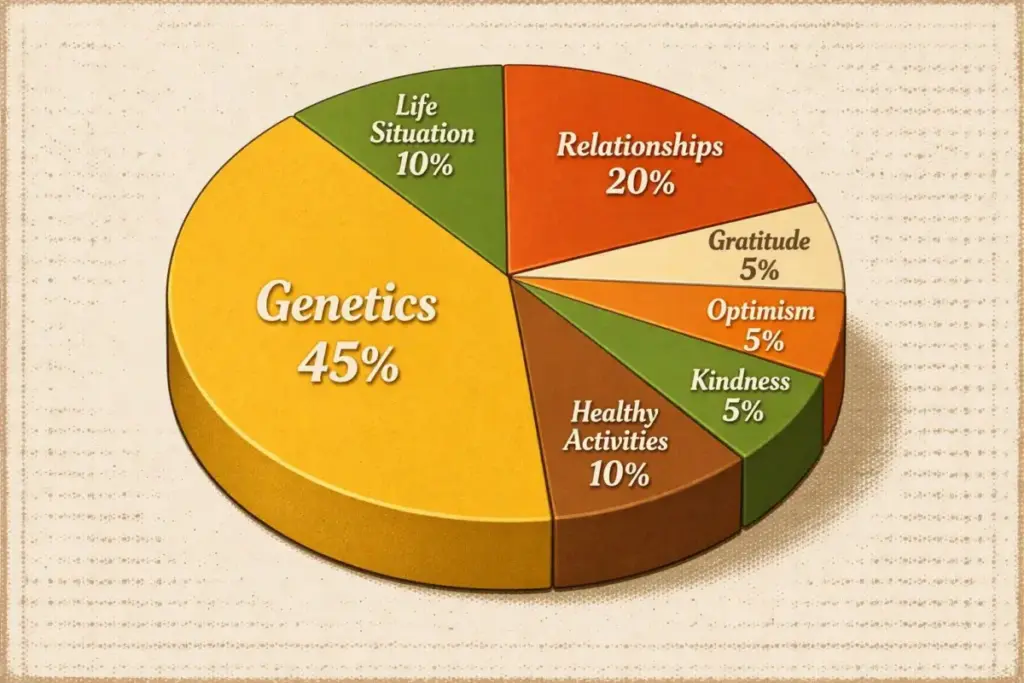
Standard of living and economic growth are inextricably linked to productivity. Yet, once a society achieves a baseline level of material comfort, further increases in wealth yield diminishing returns regarding human happiness. Psychological well-being is largely driven by factors outside of pure finance, including genetics, strong personal relationships, gratitude, optimism, and an active lifestyle spent outdoors.

Despite these reassuring realities, background fear remains a persistent challenge for many individuals. Humans evolved as danger-detection machines, a biological trait designed to protect against immediate physical threats. Once literal survival concerns like predators, disease, and immediate scarcity are resolved, this cognitive machinery often redirects its focus toward new targets, shifting goalposts from basic survival to social status, homeownership regulations, and complex tax strategies.
Overcoming Fear Through Action and Perspective
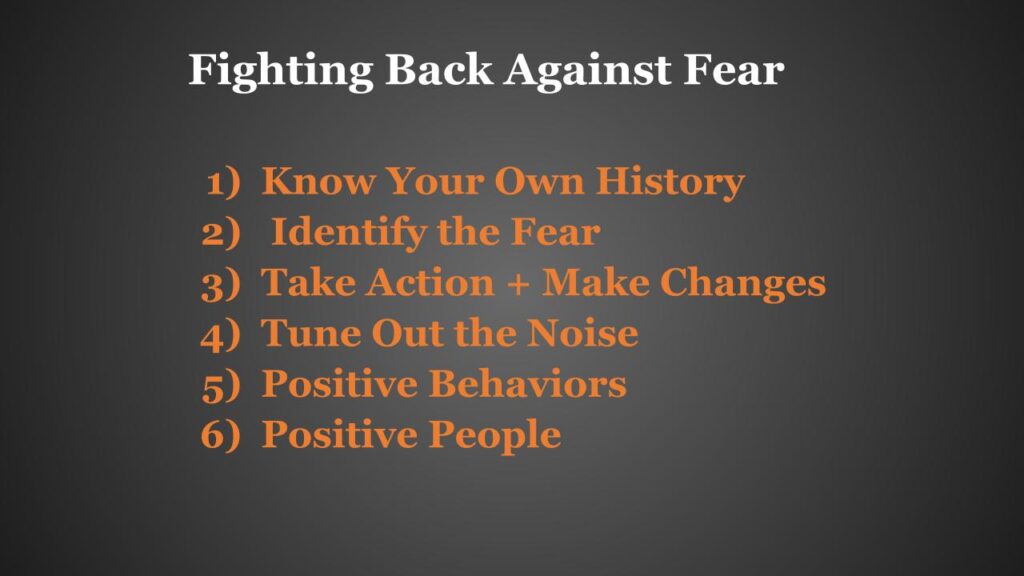
Combating pervasive financial anxiety requires self-awareness and an understanding of personal history. Fears regarding scarcity or financial ruin frequently stem from childhood experiences or generational trauma, such as growing up during periods of economic depression or family financial stress. Identifying the root causes of these fears and evaluating worst-case scenarios rationally helps dismantle irrational anxieties.

Action serves as an effective antidote to fear, transforming the unfamiliar into the familiar and building resilience. When individuals develop mental, physical, and emotional adaptability, uncertainty loses its paralyzing grip. Furthermore, curating a healthy mental diet by tuning out sensationalized daily news—which disproportionately highlights alarming stories—allows individuals to focus their energy on positive behaviors and tangible problem-solving.
Adopting an experimental mindset can fundamentally change how people approach life transitions, whether changing jobs, moving to a new home, or embarking on early retirement. Viewing life events as experiments rather than high-stakes trials removes much of the associated emotional distress.

Artificial Intelligence as a Cognitive Tool
This experimental framework applies directly to the current artificial intelligence boom, a technological shift that generates considerable anxiety among the workforce. Rather than succumbing to doom-scrolling and apprehension, understanding the underlying mechanics of AI reveals its potential as a powerful driver of efficiency and productivity.

Artificial intelligence can be conceptualized as a cognitive nail gun—a sophisticated tool designed to amplify human capability. While it will undoubtedly displace certain entry-level office, administrative, and transportation roles, similar technological revolutions throughout history have ultimately lowered service costs and catalyzed entirely new industries, much like the advent of the internet and mobile computing.
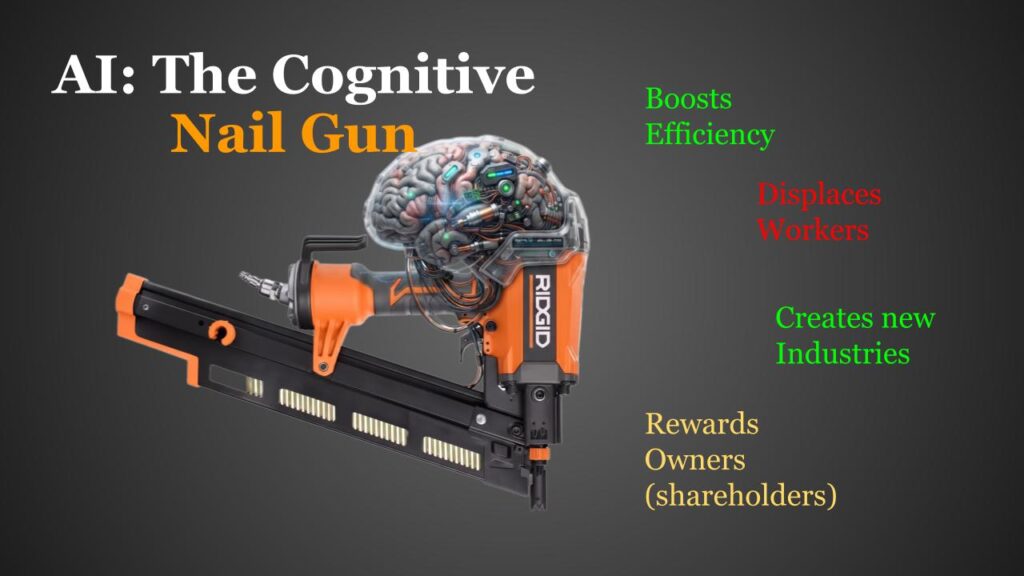
Inevitably, these technological leaps tend to concentrate immediate financial rewards among business owners and shareholders, contributing to market growth that directly benefits diversified investors. Ultimately, artificial intelligence represents another major technological evolution, presenting individuals with choices regarding how they respond. By shifting focus away from irrational fear and toward continuous learning, proactive behavior, and rational adaptation, investors can navigate market bubbles and future uncertainties with confidence.