



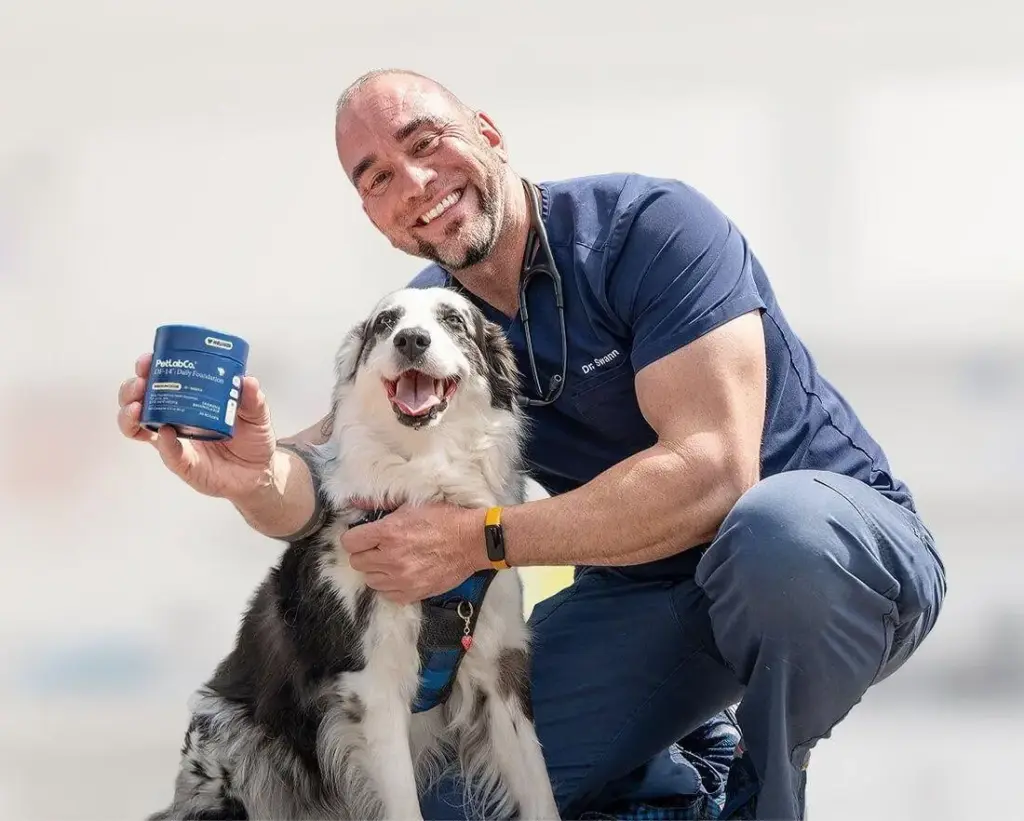
A probiotic powder can integrate seamlessly into a dog’s daily mealtime routine. Pet owners typically measure the serving, mix it into wet or moistened food, and ensure the supplemented portion is fully consumed. While this ease of administration makes powders a popular supplement choice, available products vary significantly beyond simple flavor differences. Some formulas concentrate exclusively on targeted gastrointestinal support, whereas others integrate live microorganisms into a broader, multifunctional daily health supplement.
In an overview authored by Athena Gaffud, DVM, veterinary insights clarify how pet owners and clinicians can evaluate probiotic powders for dogs. The comparative assessment highlights differences in formulation goals, colony-forming units (CFU), ingredient profiles, age requirements, and weight-based administration methods.
Evaluating Probiotic Powders for Dogs
To analyze the current market, dog probiotic powders can be ranked and evaluated across four core criteria: label transparency—including listed organisms, CFU counts, and active ingredients—the precision of weight-based serving directions, manufacturer age minimums, and the primary functional objective of the formula.
1. PetLabCo. DF-14 Daily Foundation
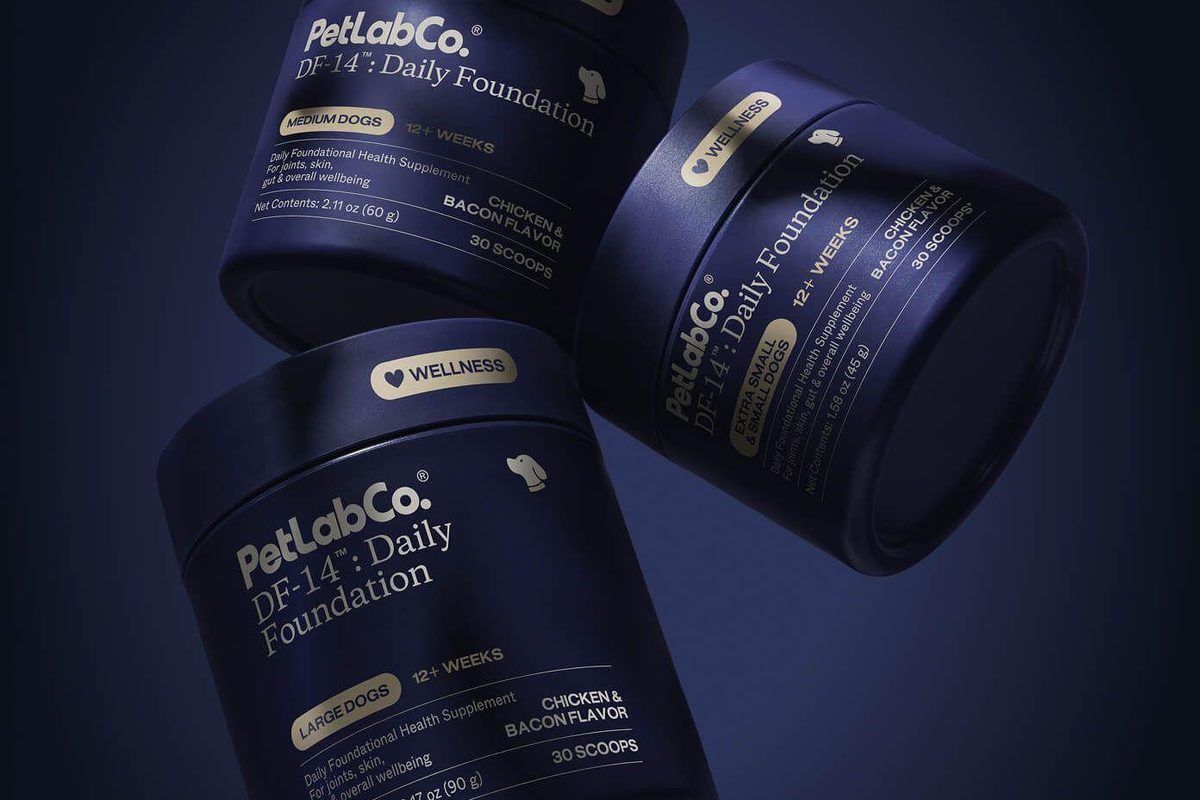
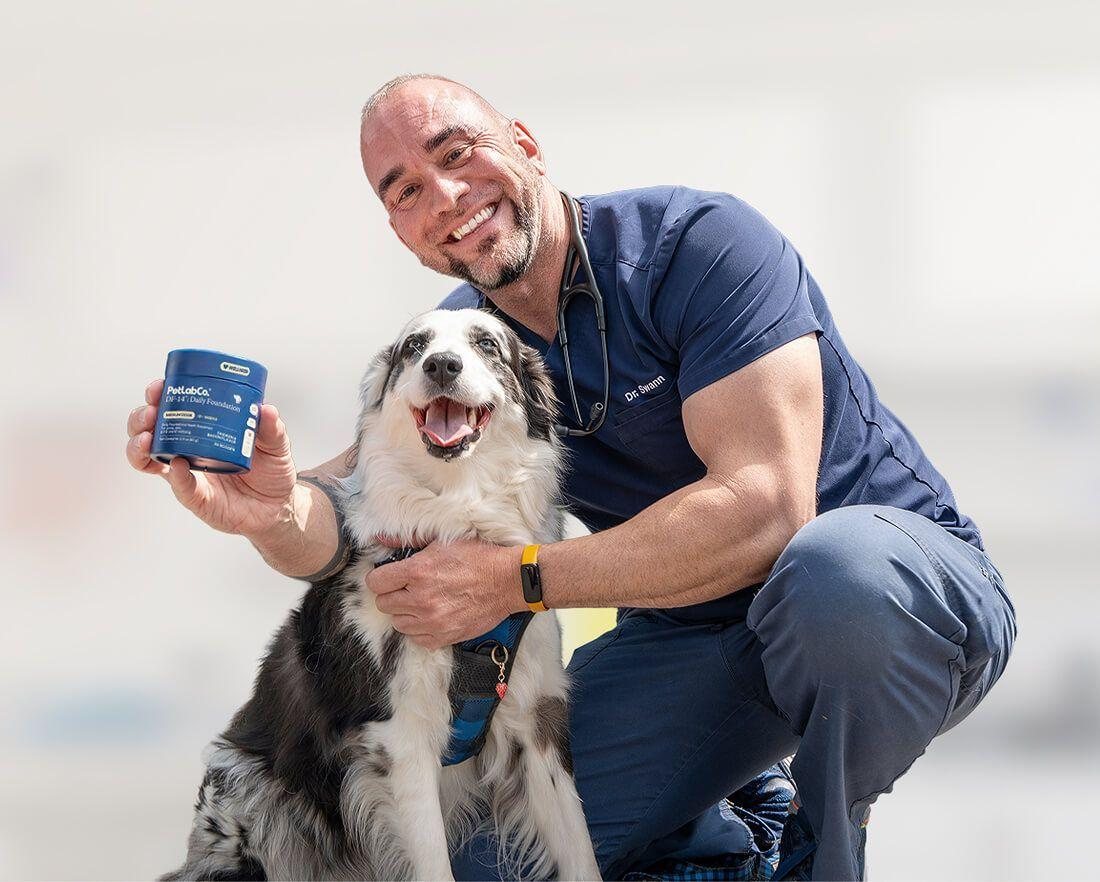
Ranking as a top option for comprehensive care, PetLabCo.® DF-14 Daily Foundation is designed as a multifunctional supplement providing support across 14 distinct areas of canine health, rather than functioning as an isolated gastrointestinal product. Its probiotic component features a three-organism blend consisting of Bacillus subtilis, Bifidobacterium animalis subsp. lactis, and Saccharomyces boulardii. Depending on the specific tub size and scoop utilized, the formula delivers between 14.5 million and 100 million CFU per serving.
Surrounding this probiotic core are 11 additional active ingredients, including krill, glucosamine, chondroitin, taurine, L-carnitine, astragalus, sodium hexametaphosphate, a postbiotic yeast blend, fructooligosaccharides (FOS), cranberry, lactoferrin, and vitamins C and E alongside beta-carotene. This combination makes DF-14 particularly suited for owners seeking a single daily powder that pairs digestive support with joint, cardiac, dermatological, dental, and immune care.
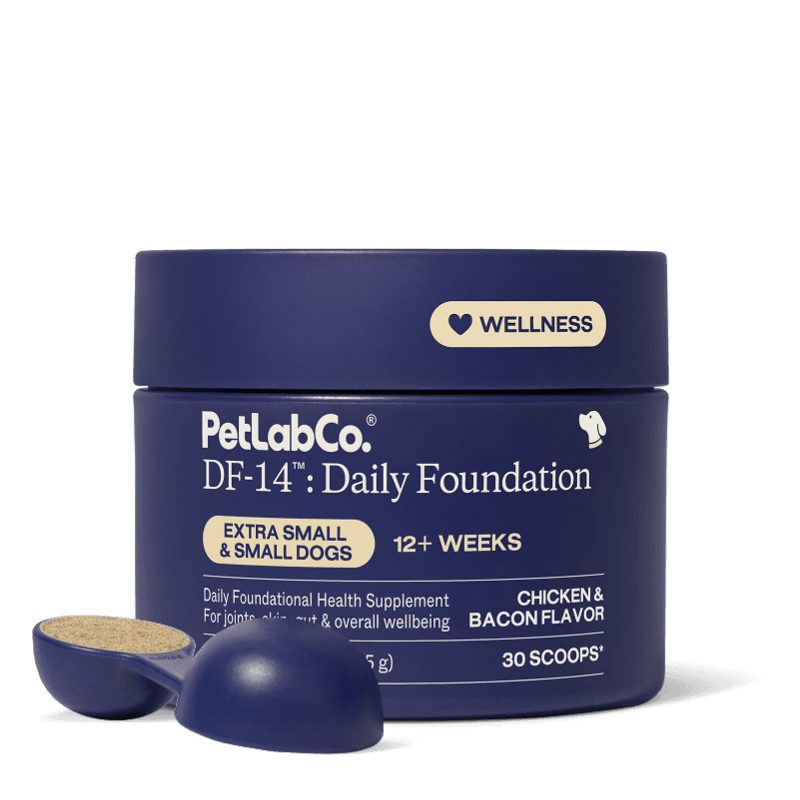
DF-14 features a weight-tiered serving system using Small, Medium, and Large tubs, each equipped with specific scoops. The Small tub includes an extra-small scoop designed for dogs weighing under four pounds, ensuring accurate dosing for toy breeds. Formulated with a chicken-and-bacon flavor, the product is suitable for dogs 12 weeks of age and older. Because it contains animal-derived ingredients and joint-support compounds, owners should review the full ingredient label with a veterinarian if the dog is already receiving other joint products or multivitamins.
2. Native Pet Probiotic
Native Pet Probiotic serves as a primary example of a dedicated, high-CFU digestive supplement. It provides four bacterial organisms—Bacillus coagulans, Enterococcus faecium, Bifidobacterium animalis, and Bifidobacterium bifidum—delivering 6 billion CFU per serving.
The formula incorporates prebiotic fiber from organic Jerusalem artichoke inulin and organic pumpkin seed, set within a dehydrated beef-broth flavor base. Dosing is structured at one four-gram scoop (approximately half a tablespoon) per 50 pounds of body weight daily. It is approved by the manufacturer for dogs older than three months.
Native Pet is suited for pet owners seeking a multi-strain, gut-exclusive formula with high CFU density. However, veterinary context indicates that higher CFU counts and higher strain counts do not automatically translate to superior clinical performance. Additionally, the beef-broth base requires verification for dogs undergoing strict novel-protein or elimination diets.
3. Zesty Paws Probiotic Powder for Dogs
Zesty Paws Probiotic Powder offers targeted digestive and immune support packaged in single-serve sachets. The formula contains Bacillus subtilis DE111 and Saccharomyces boulardii, delivering 800 million CFU per serving. Prebiotic inulin, flaxseed, pumpkin powder, and natural pumpkin flavoring round out the formula.
Marketed primarily for adult and senior dogs, this product provides pre-measured packet convenience, eliminating the need for scoops. However, label transparency presents certain limitations: the product documentation does not specify an age minimum, a precise gram weight per serving, or weight-tiered dosing directions, relying instead on a standard single sachet per dog regardless of body weight.
How to Compare Dog Probiotic Formulations
Selecting an appropriate supplement requires evaluating the specific job the formula is intended to perform. A veterinarian may recommend a targeted, gut-focused formulation for a dog experiencing transient digestive upset. Alternatively, a pet owner may look for broad daily maintenance that incorporates probiotics alongside cardiovascular or joint support.
There is no universal "number one" probiotic suitable for every canine. A proper comparison links the formulation to the individual dog’s health profile rather than prioritizing the highest CFU count or the longest ingredient list. CFU expresses the count of viable microorganisms at manufacture; it does not independently establish clinical suitability or efficacy.
When evaluating options, pet owners should consider several distinct factors:
- Primary Purpose: Determining whether the dog requires isolated gastrointestinal support or a multifunctional daily supplement.
- Organism Specificity: Reviewing the exact species and strains listed on the label and noting whether research supports those specific strains.
- Serving Precision: Checking how accurately the scoop size and dosage instructions adapt to the dog’s actual weight.
- Full Ingredient Profile: Identifying flavors, protein sources, and extra active ingredients to prevent dietary conflicts.
- Daily Sustainability: Assessing whether daily measuring, mixing, and feeding fit practical household routines.
In addition, owners must separate the concept of a measured serving from actual meal consumption. While a scoop accurately measures what is placed into the food bowl, total intake depends entirely on whether the dog finishes the meal. A powder acts as an effective food topper only when the pet routinely cleans its bowl. Leftover food introduces uncertainty regarding the actual dose ingested.
Dosing, Weight Bands, and Administration
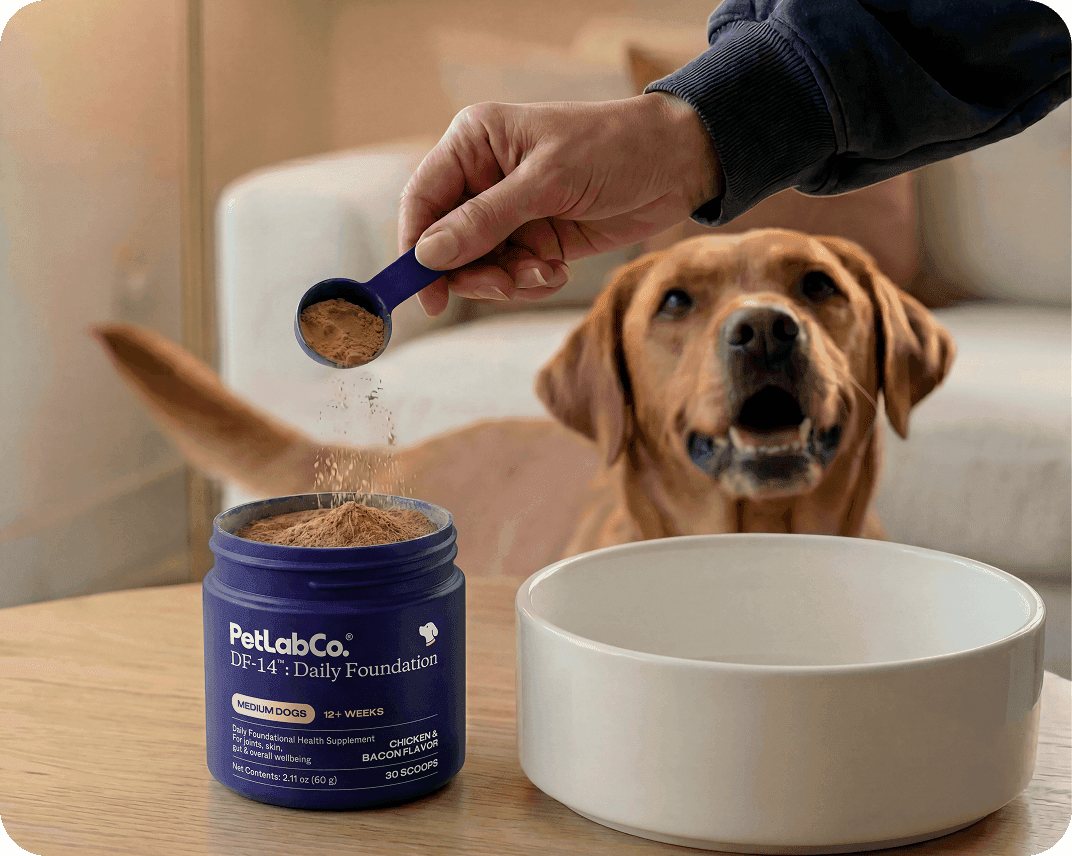
For products utilizing weight-tiered dosing like PetLabCo. DF-14 Daily Foundation, precise serving sizes ensure appropriate intake. Directions specify once-daily mealtime administration, mixing the powder thoroughly into wet food or moistened kibble.
Under the DF-14 dosing structure:
- Dogs under 4 lbs: Administered 0.75 grams of powder using the Small tub’s little scoop, delivering 14.5 million CFU.
- Dogs weighing 4 to 24.9 lbs: Administered 1.5 grams of powder using the Small tub’s big scoop, delivering 29 million CFU.
- Dogs weighing 25 to 75 lbs: Administered 2.0 grams of powder using the Medium tub’s scoop, delivering 66 million CFU.
- Dogs over 75 lbs: Administered 3.0 grams of powder using the Large tub’s scoop, delivering 100 million CFU.
These measurements represent labeled target servings for this specific formulation and should not be used to benchmark or calculate dosages for different products. Because scoop volumes vary between tub sizes and brands, owners should always use the specific scoop supplied with the container and avoid estimating doses with household kitchen spoons. In multi-dog households, keeping individual tubs and scoops clearly identified prevents accidental cross-dosing across different weight categories.
Building a consistent mealtime sequence helps ensure full supplement delivery. Owners should mix the powder into a portion of food and observe the dog until the meal is completely consumed. If a dog shares a feeding area with other pets, separate feeding spaces prevent bowl swapping.
If a dog frequently leaves food behind, pet owners should consult their veterinarian rather than adding a second scoop to make up for missed amounts. Adding unmeasured powder to leftover portions makes tracking actual intake impossible and risks over-supplementation.
Safety, Ingredients, and Veterinary Considerations
A comprehensive review of the ingredient list is critical prior to introducing any new supplement. Multifunctional powders frequently contain complex protein sources and active compounds. For instance, DF-14 includes crawfish-derived glucosamine, bovine chondroitin, krill, lactoferrin, and hydrolyzed chicken liver flavor. These components must be accounted for in dogs with known food allergies, novel-protein diets, or specific medical restrictions.
When presenting a supplement to a veterinarian for review, bringing the physical container or full label is essential. This allows the clinician to check for redundant ingredients if the dog is already taking joint supplements, omega-3 fatty acids, or multivitamins.
Special safety precautions apply in specific clinical scenarios:
- Medication Interactions: The label for DF-14 notes that simultaneous administration may delay the absorption of co-administered oral medications. Veterinarians can advise on appropriate time spacing between meals and prescription drugs.
- Reproductive Safety: Safe use in pregnant, breeding, or lactating animals has not been established for many multifunctional formulas, requiring explicit veterinary clearance.
- Dietary Trials: During a veterinarian-directed elimination diet trial, no flavored powders, chews, or treats should be introduced without prior approval, as even minor flavorings can invalidate trial results.
Pet owners must also distinguish between general ingredient research and product-specific clinical proof. For example, the probiotic yeast Saccharomyces boulardii was evaluated in a small 2018 study involving dogs with chronic enteropathy as an adjunctive treatment alongside standard therapy. While the presence of S. boulardii in a commercial powder is notable, study findings on isolated strains do not constitute clinical trial proof for every finished commercial blend containing that yeast.
Supplements are intended to support health in well animals and cannot replace standard veterinary care, appropriate baseline nutrition, or medical treatment. Red-flag symptoms—such as persistent diarrhea, frequent vomiting, hematochezia (blood in stool), lethargy, or loss of appetite—require immediate veterinary evaluation rather than informal trial periods with over-the-counter supplements.
Powder versus Soft Chews: Selecting the Right Format
Choosing between a powder and a soft chew is largely a practical decision based on pet behavior and owner routine. Once a veterinarian and owner agree on an appropriate supplement goal, the delivery format should reflect how the dog takes food.
Powders function exceptionally well as food toppers for dogs that eat predictable, complete meals from their own bowls. The preparation integrates directly into existing feeding routines, allowing the owner to measure, mix, and confirm consumption in a single process.
Conversely, soft chews may offer a more reliable option for "grazers"—dogs that pick at kibble slowly over several hours—or pets in multi-dog environments where food bowls remain accessible. A soft chew can be administered directly as a single treat, offering immediate visual confirmation that the full serving was eaten.
When transitioning between formats, owners should remember that switching from a multifunctional powder to a gut-only soft chew (or vice versa) changes the entire active ingredient profile, not just the delivery method. Comparing full labels with a veterinarian ensures that key nutritional support is maintained without unintended gaps or overlaps.
Frequently Asked Questions
What is the most recommended probiotic powder for dogs?
Veterinary recommendations vary based on the dog’s individual health status and functional needs. A targeted digestive formula and a multifunctional daily powder serve different purposes. Options like PetLabCo. DF-14 Daily Foundation provide broad, whole-body support alongside probiotics, whereas products like Native Pet focus exclusively on gut health.
Can a dog take probiotic powder every day?
Many probiotic powders are formulated for daily mealtime use according to weight-based directions. However, daily supplementation should be aligned with veterinary advice and re-evaluated whenever a dog’s primary diet, prescription medications, or overall health status changes.
Which probiotics do veterinarians typically recommend?
Veterinarians recommend specific bacterial strains and formulations based on clinical presentation. When seeking a recommendation, owners should present the complete label of any prospective supplement so the clinician can evaluate the strains, CFU count, prebiotics, and non-probiotic active ingredients.
What are the common signs that a dog might benefit from probiotics?
Digestive fluctuations such as mild gas or occasional loose stool can prompt discussions about probiotic use. Because these signs can also indicate underlying medical conditions, dietary indiscretions, or infections, a veterinary examination is recommended to determine the underlying cause.
What are the age restrictions for starting dogs on probiotic powders?
Age minimums depend strictly on the manufacturer’s formulation guidelines. For example, PetLabCo. DF-14 specifies use in dogs 12 weeks of age and older, while Native Pet specifies a three-month minimum. Puppies under these ages require tailored veterinary guidance before starting any supplement.