
When it comes to the vast and highly competitive landscape of fast-food pizza, finding a major national chain that does not offer some variation of the supreme pizza is nearly impossible. This enduring menu staple stands as a true testament to its widespread popularity and culinary longevity. Among the fierce contenders dominating the market, Pizza Hut and Papa Johns remain at the very top, each vying for supremacy in the loaded-pie category.
Although the exact historical origins of the supreme pizza remain a subject of debate among culinary historians, Pizza Hut is widely credited with introducing the concept to the United States in 1977. The heavily loaded pie was an immediate commercial success upon its debut, and its appeal has scarcely waned in the decades since. While Pizza Hut holds the historical claim to the genre, Papa Johns has carved out its own formidable legacy in the category with its distinct version, aptly named "The Works," which has enjoyed immense success across its nationwide franchises.
The fundamental appeal of a supreme pizza lies in its efficiency for maximalist diners. For consumers who prefer a generous array of toppings rather than a simple one- or two-ingredient pie, ordering a supreme serves as a symbiotic culinary hack. It eliminates the tedious process of custom-building a pizza and avoiding the cumulative upcharges that typically accompany individual add-ons. Furthermore, ordering a la carte runs the risk of creating a jarring combination of flavors, whereas a pre-designed supreme offers a balanced, albeit heavily packed, flavor profile. To determine which national brand reigns supreme, a rigorous side-by-side evaluation of both chains’ flagship loaded pizzas was conducted, scrutinizing every individual element from the dough to the finishing toppings.
Methodology
Despite the universal popularity of the supreme pizza, not all jam-packed pies are created equal. Because these recipes incorporate a multitude of components, they introduce a high number of variables into the cooking and assembly process. Simply put, there are significantly more ways for a kitchen to compromise a supreme pizza than a traditional, minimalist pepperoni pie.
To account for these complexities, the taste test relied on a strict side-by-side comparison that scrutinized every single component independently. Evaluators also factored in overarching standards such as pricing, portion sizes, overall flavor cohesiveness, and any unique stylistic details characteristic of each brand.
To assess the individual components methodically, the pies were broken down into five distinct categories: bread, meat, cheese, sauce, and vegetables. Unified standards were applied later by observing the holistic qualities of each pie, including structural integrity and heat retention. By checking off items against this comprehensive evaluation criteria, a clear picture emerged regarding how Pizza Hut and Papa Johns stack up in the high-stakes race for supreme pizza dominance.
Bread
Evaluating the bread foundation is paramount, as a supreme pizza features a massive quantity of heavy toppings that require a sturdy structural base. Right away, the side-by-side comparison revealed that Pizza Hut and Papa Johns approach their crusts and doughs with entirely different philosophies.
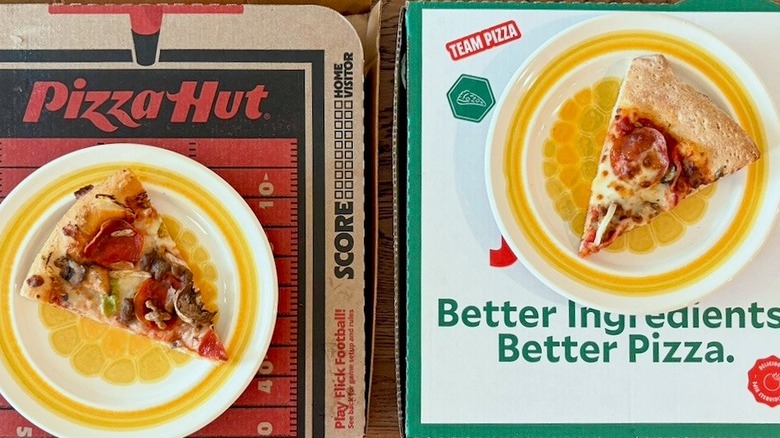
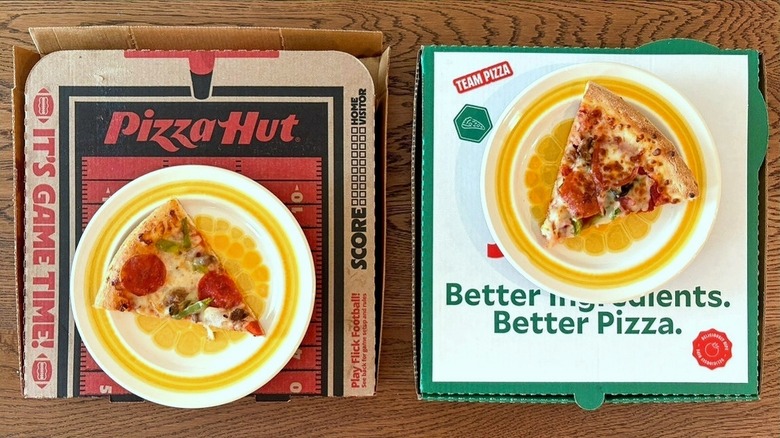
Pizza Hut’s bread was notably soft, cushy, and substantial throughout the entire slice. The base dough successfully held the heavy load of meats and vegetables in place without becoming overly dense, tough, or chewy. The crust proved to be a particular highlight, offering a fluffy, doughy interior paired with a savory exterior seasoning reminiscent of the brand’s signature seasoning dust. Additionally, the outer edge featured a pleasant, light crispness on top. While casual pizza eaters often overlook or discard the crust entirely, Pizza Hut’s rendition proved genuinely compelling.
In contrast, Papa Johns presented a starkly different profile, characterized by a flat, rigid crust and bread that exhibited very little inherent flavor—or perhaps suffered from a noticeable staleness. The texture leaned heavily toward the dry and chewy side. While thin crusts certainly have their dedicated fanbase and appropriate culinary contexts, the stale quality of the Papa Johns base made it difficult to appreciate.
Despite these divergent experiences with the dough, both chains managed one critical feat: neither base became soggy or structurally compromised under the immense weight of the toppings. Given the sheer volume of moisture released by supreme pizza toppings during baking, both brands deserve credit for maintaining basic structural integrity.
Meats
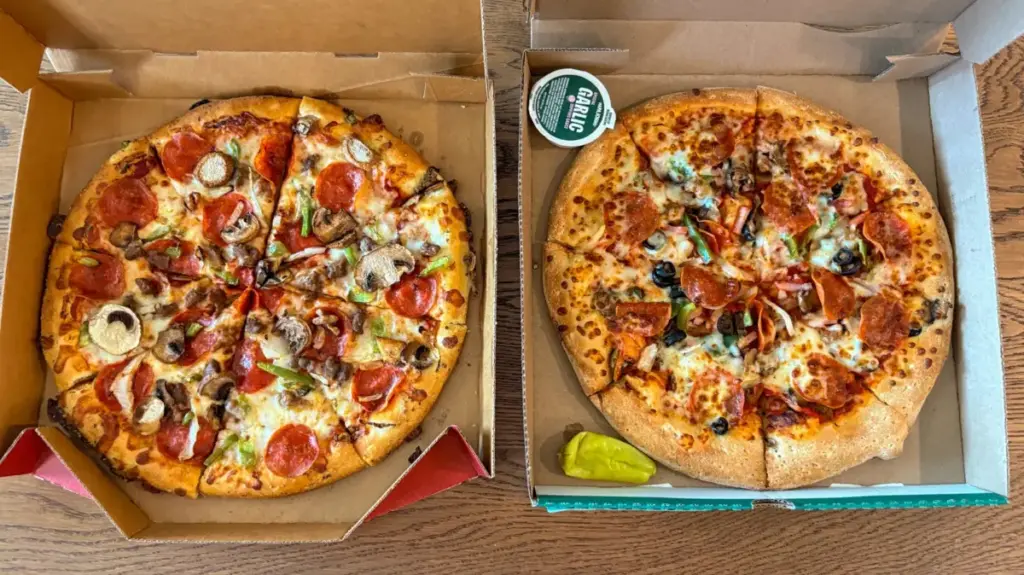
Moving on to the meat toppings, both chains presented a distinct mix of advantages and drawbacks. Pizza Hut immediately pulled ahead in the pepperoni category. Its slices were thick, moist, and generously scattered across the pie, imparting a robust, savory flavor profile. The pepperoni was notably juicy, whereas the Papa Johns pepperoni possessed an unmistakably processed taste. The texture of the Papa Johns pepperoni leaned rubbery, and its flavor fell relatively flat, failing to elevate the surrounding ingredients.
Conversely, Papa Johns redeemed itself in the sausage category, outperforming Pizza Hut’s version. Utilizing a thoughtful blend of herbs and spices, the fennel-infused sausage boasted a distinctly elevated, artisanal quality. Pizza Hut’s sausage was passable, but it tended to blend into the background rather than standing out among the rich mosaic of flavors.
Ultimately, the meat category came down to a delicate balance between quality and quantity. While Papa Johns delivered a superior sausage, Pizza Hut offered higher overall quality and a more generous distribution of its meat options across the entire pie.
Cheese
For diners with strong preferences regarding dairy, cheese can make or break a fast-food pizza. Fortunately, both national chains performed reasonably well in this department, avoiding the common pitfalls of patchy coverage or bare spots on individual slices.
Papa Johns introduced an interesting structural technique by incorporating a base layer of cheese alongside a secondary, lighter layer sprinkled over the top of the other ingredients. This ingenious method not only maximized the cheese content but also anchored the loose meats and vegetables in place, preventing them from sliding off the slice. Pizza Hut’s supreme lacked this dual-layer approach, which resulted in some drifting among the upper toppings.
When it came to flavor and texture, however, Pizza Hut emerged as the clear victor in the dairy department. Its cheese possessed an authentic, pleasant flavor profile, steering clear of the waxy consistency that frequently plagues commercial pizza chains. The texture was exceptionally smooth, adding a rich mouthfeel that enhanced the overall slice, while its mild, subtle undertones added depth without overwhelming the other ingredients.
Papa Johns’ cheese, on the other hand, felt somewhat nondescript. While not actively unpleasant, it lacked a punchy flavor profile and the ooey-gooey consistency expected from a loaded pie. Ultimately, Pizza Hut won the day for taste and texture, though it could have benefited from the structural security of Papa Johns’ double-layered cheese application.
Sauce
A direct side-by-side comparison of the tomato sauces revealed stark differences in formulation, seasoning, and application between the two competitors. Pizza Hut’s sauce struggled in the flavor department, offering minimal acidity, salinity, or spice to elevate the slice. Furthermore, the application was inconsistent; initial bites suggested an absence of sauce entirely, only for the diner to encounter large, concentrated globs accumulated near the crust. Because an excess of wet sauce can quickly ruin the mouthfeel of a slice, balanced distribution is essential.
Papa Johns approached its sauce with a significantly more assertive profile in terms of flavor, texture, and volume. The sauce featured a mild, spicy kick that injected much-needed complexity into the pie. While the overall quantity was perhaps slightly heavy-handed, it did not cross the line into unappetizing territory. It is worth noting, however, that the Papa Johns sauce bore a flavor profile closely resembling traditional Italian spaghetti sauce—a characteristic that may not appeal universally to every pizza consumer.
Veggies
Vegetables represent the category with the most pronounced variation between the two chains’ supreme offerings. The most immediate difference lay in the onion preparation: Pizza Hut opted for ultra-thin slivers that virtually vanished into the background, whereas Papa Johns utilized substantial, chopped chunks of onion that retained a pleasant crunch and prominent flavor.
The mushroom components proved largely comparable, with both chains utilizing chunky, fresh, and savory slices that provided the expected earthy umami notes. However, Pizza Hut’s mushrooms struggled to stay adhered to the slice during handling. Green bell peppers were virtually identical across both brands in terms of flavor, texture, and crispness.
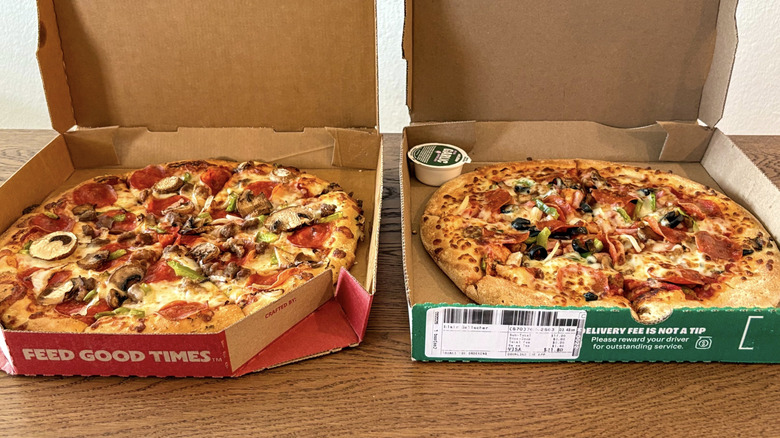
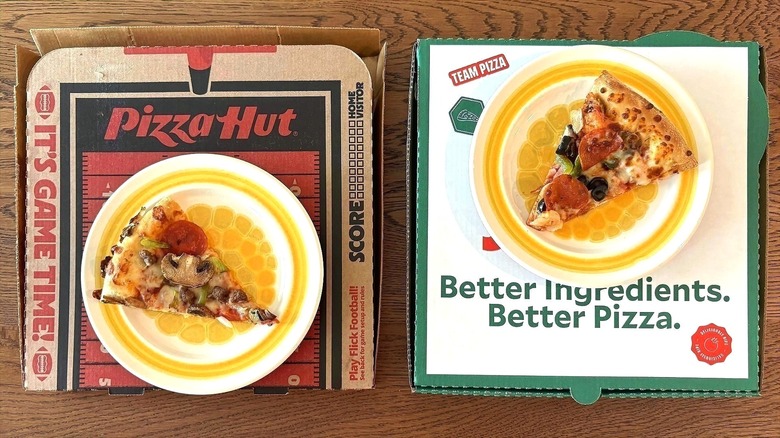
The most notable divergence in the produce department involved olives. Papa Johns included salty black olives as a standard component of its supreme pie, whereas Pizza Hut omitted them entirely. For diners who view black olives as an indispensable element of a traditional supreme pizza, their absence from the Pizza Hut box was a notable omission. Overall, both chains successfully delivered fresh, crisp vegetable components that contributed positively to the complexity of the pies.
Overall Comparison
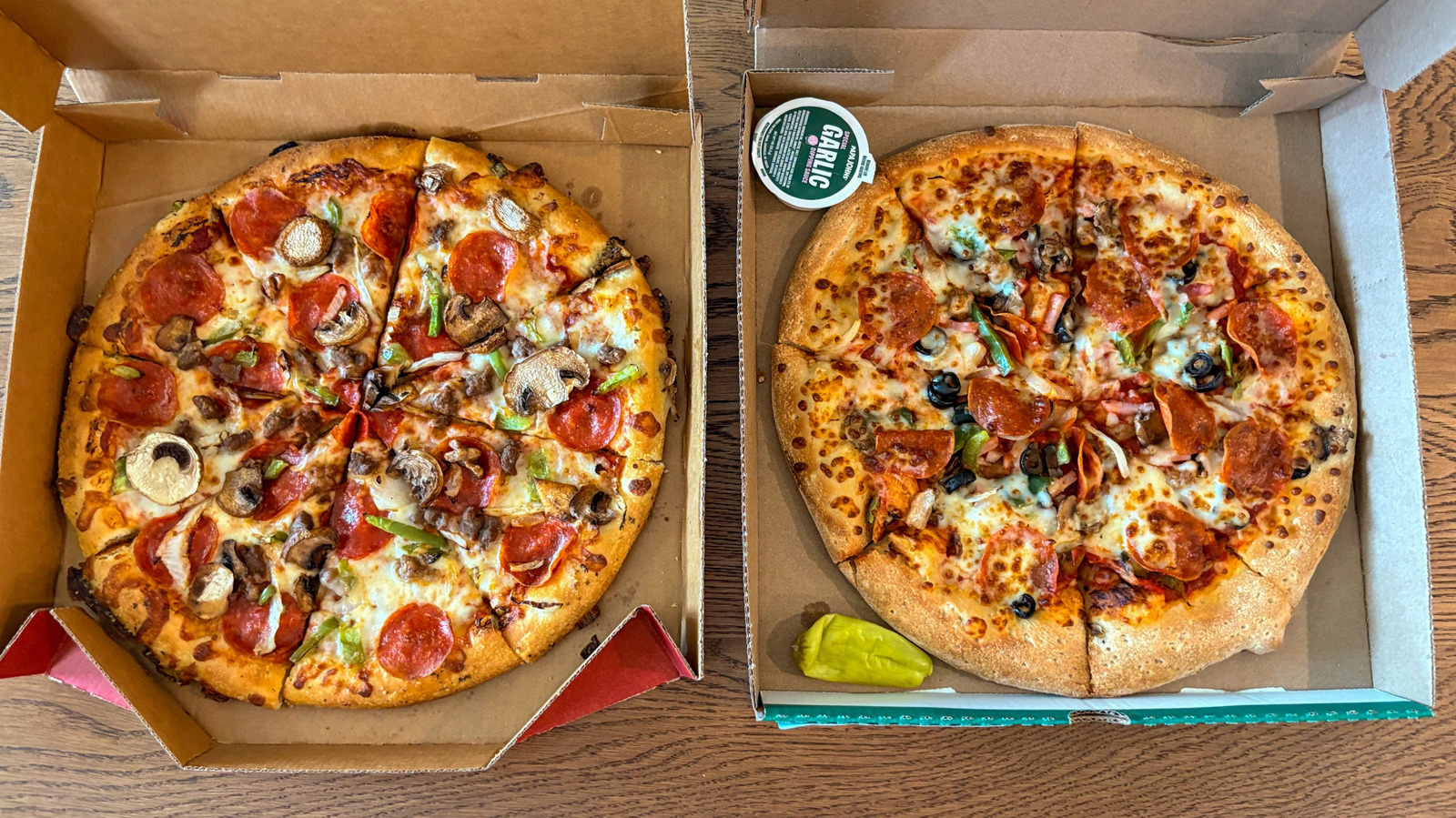
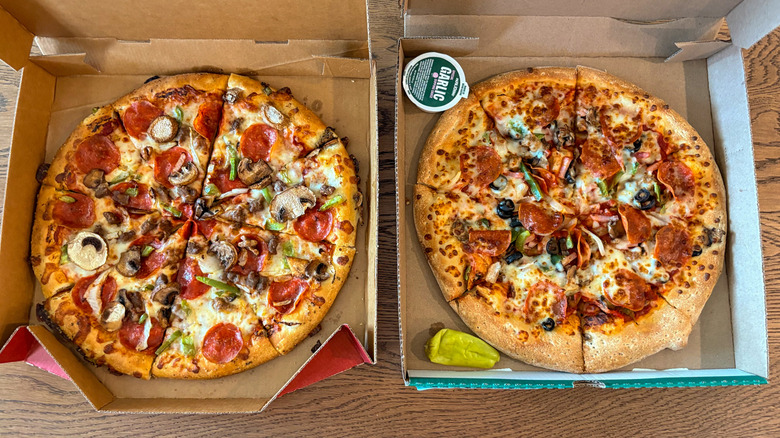
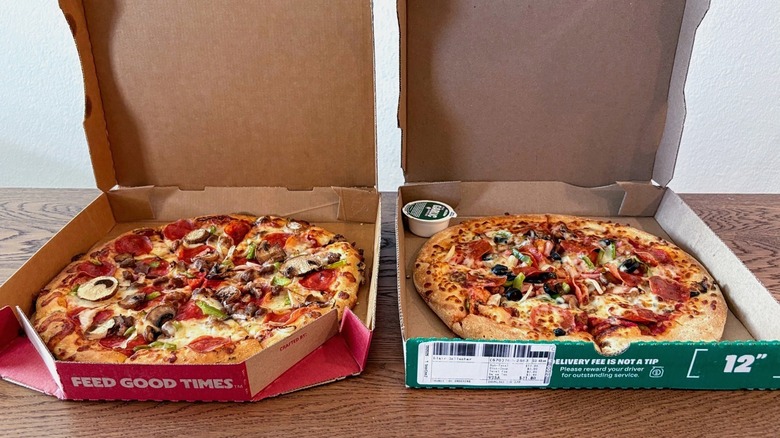
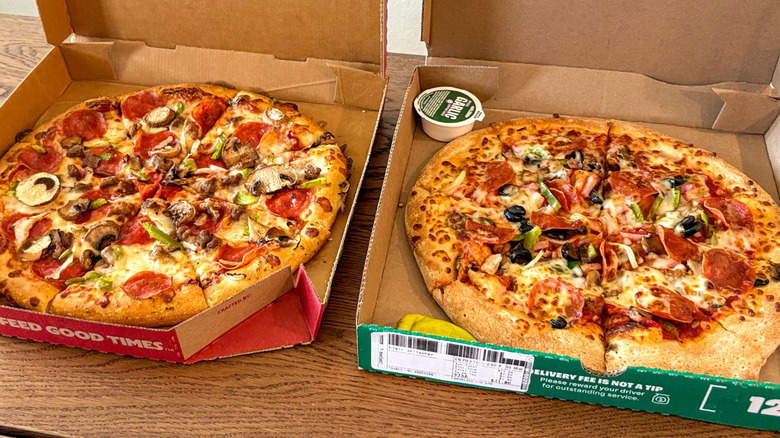
Beyond the individual components, several macro-level differences emerged during the evaluation. A visual inspection revealed a clear disparity in physical dimensions: Pizza Hut’s supreme pie was noticeably larger, whereas the Papa Johns pie was smaller, flatter, and carried a slightly higher price tag.
Distribution of toppings also proved critical. Pizza Hut managed a more even dispersion of ingredients across the entire surface of the pie. Papa Johns loaded its pizza adequately, but the majority of the toppings were concentrated toward the center, resulting in imbalanced individual slices where the edge crusts were largely devoid of toppings. Additionally, Pizza Hut maintained more consistent portion sizing across its cut slices.
External box inclusions also factored into the overall brand experience. Papa Johns continues its long-standing tradition of bundling its pizzas with a signature pepperoncini pepper and a tub of its popular garlic dipping sauce—additions that enhance the meal and offer tangible value. Pizza Hut’s packaging included the pizza alone, offering no additional accompaniments.
Final Verdict
Weighing all the evaluated metrics, Pizza Hut ultimately secures the title for producing the superior supreme pizza. The supreme category inherently caters to diners seeking a heavy, loaded pie featuring chunky toppings and structural height. Pizza Hut delivered a large, filling pizza where every individual slice was thoroughly adorned from the outer crust to the pointed tip, utilizing hearty, high-quality ingredients that evoked the feel of an artisanal pizzeria, all at a generous price-to-value ratio.
While Papa Johns brought a commendable sausage, double-layered cheese structure, and popular dipping sauces to the table, its flat, dry bread, inconsistent topping distribution, and slightly higher price point hindered its overall performance. With Pizza Hut priced at $17.61 and Papa Johns at $18.81, the narrow price gap favors Pizza Hut, which ultimately delivers a superior combination of quality, quantity, and overall dining execution.