



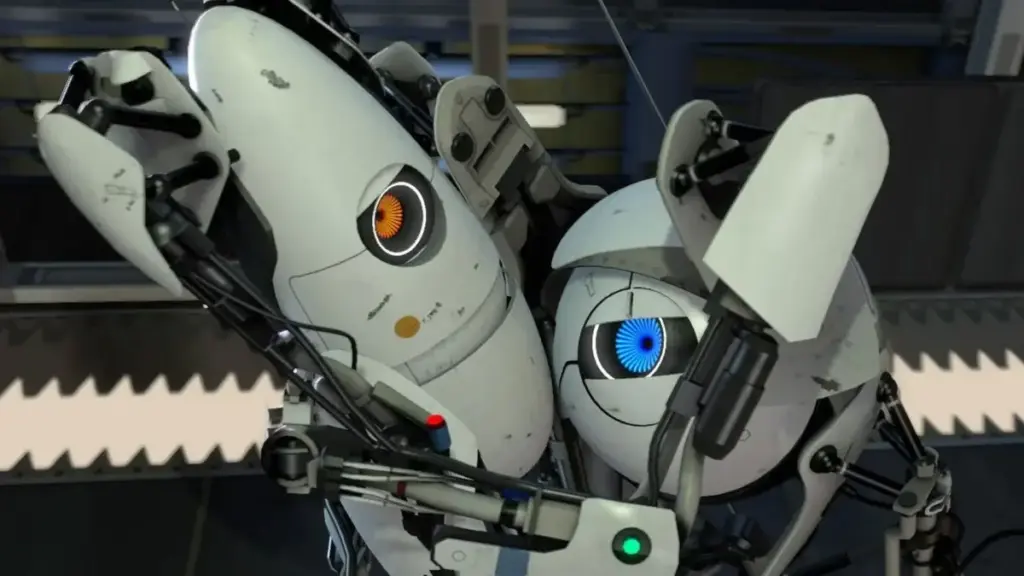
Filmmaker Kane Parsons has addressed ongoing speculation regarding his relationship with legendary video game developer and publisher Valve. While confirming that he has indeed held direct meetings with the company, the Backrooms director made it clear that he has no intention of moving forward with any adaptation of their intellectual properties unless it can be executed to the highest possible standard of quality.
The comments came during an appearance on an October episode of The Kyle Buchanan Show, where Parsons was spotted wearing a distinct Valve hoodie. The wardrobe choice immediately caught the attention of the host, prompting an inquiry into Parsons’ recent, highly publicized visits to Valve’s corporate offices. Following the breakout success of his viral Backrooms found-footage horror series on YouTube, the young director had previously admitted in interviews that he held strong ambitions to helm a movie adaptation of Portal. Those aspirations turned into a subject of intense online speculation when Parsons subsequently shared documentation of his trips to Valve’s headquarters via social media.
While Parsons carefully avoided confirming or denying any concrete, finalized projects currently in development between himself and the studio, he openly acknowledged that preliminary conversations have taken place. However, he emphasized that his participation hinges entirely on creative integrity and mutual artistic vision rather than a rush to capitalize on recognizable gaming franchises.
Elaborating on the nature of his discussions with the studio, Parsons explained that the corporate philosophy at Valve closely mirrors his own approach to creative production. They operate largely through experimentation, a methodology that resonates deeply with his background as an independent digital creator who built his reputation largely through independent 3D animation using Blender.
"They work in experiments, and I like that, because that tends to be how I work," Parsons noted during the podcast appearance. He added that he harbors no desire to sensationalize whatever conversations may or may not be happening behind closed doors. Instead, the dialogue has centered around fundamental creative questions: Is it genuinely possible to make something compelling that satisfies both parties? What ideas do they want to explore, and what concepts are genuinely viable on the table?

Crucially, Parsons stressed that a partnership is far from guaranteed, and he would fully support a scenario where a collaboration ultimately does not materialize. Rather than rushing into a high-profile production just for the sake of the milestone, he described the interactions as abstract creative conversations capable of flowing in dozens of different directions. He also pointed out that Valve’s internal culture heavily prioritizes experimentation for its own sake over public-facing announcements. Consequently, he noted that if anything genuinely compelling ever emerges from these talks, the public will likely find out organically.
The confirmation of these meetings follows a series of recent disclosures by Parsons regarding his future career trajectory. Earlier, the director revealed that he is actively working on three distinct "dream projects." These secretive endeavors have led fans and industry observers to speculate heavily about a potential formal collaboration with Valve, especially given his long-standing fandom for the company’s catalog.
Despite his entry into major-studio adjacent spaces, Parsons has previously distanced himself from other massive corporate franchises. He has noted that he holds little to no personal interest in helming massive properties like Star Wars. Instead, his creative ambitions for adaptations are largely concentrated on a select handful of foundational properties from his childhood—chief among them being Valve’s iconic games.
Whether a cinematic adaptation of Portal or any other Valve property will ever actually make it to the silver screen remains to be seen. However, fans of the developer’s beloved franchises will likely take solace in knowing that Parsons appears committed to respecting the source material rather than hastily appropriating it. Although Valve has not released a mainline entry in the Portal series since Portal 2 in 2011, consumer and community interest in the puzzle-platformer franchise remains remarkably durable.
A well-crafted film adaptation could theoretically spark renewed mainstream interest in the universe, potentially even inspiring Valve to revisit the franchise. Alternatively, Parsons’ deep familiarity with industry-standard 3D tools like Blender means he possesses the technical acumen to collaborate directly with the game developers in interactive spaces rather than purely traditional filmmaking. For now, however, the young director remains measured, choosing to prioritize artistic integrity over forced corporate partnerships as he evaluates his next moves.