

Determining the ideal dietary routine for a Greyhound requires moving past broad breed generalizations and establishing an individualized feeding strategy based on precise caloric science, life-stage requirements, and documented physical condition. While retired racing Greyhounds carry unique athletic histories, their transition into domestic life demonstrates that a former racing diet does not constitute a permanent nutritional template. Veterinary guidelines emphasize that an effective dietary plan relies on understanding a food’s exact caloric density, tracking daily energy intake, and continuously evaluating both body condition and muscle mass.
Through formulated fresh-food options such as those developed by JustFoodForDogs, pet owners can analyze specific recipe profiles to construct measured portions tailored to a dog’s current daily routine. Understanding how calorie content dictates serving weight, how to manage dietary transitions safely, and how to maintain meticulous feeding records allows caregivers and veterinarians to collaborate effectively on long-term canine health.
Nutritional Requirements for Greyhounds Across Life Stages
The optimal diet for a Greyhound is fundamentally defined as a complete and balanced recipe formulated for the animal’s specific life stage, underlying health status, and current level of physical activity. A common misconception among adopters is that Greyhounds inherently require specialized racing rations, raw food diets, or fixed volumetric servings simply due to their athletic heritage or sight-hound physiology. However, individual metabolic requirements vary significantly based on lifestyle changes, age, and spay or neuter status.
When evaluating dog food formulations, veterinary nutritionists stress the importance of examining individual recipe profiles rather than relying solely on brand reputation or general headline ingredients. Two products produced by the same manufacturer may possess drastically different caloric densities and distinct Association of American Feed Control Officials (AAFCO) life-stage adequacy statements. For instance, an adult maintenance diet cannot fulfill the nutritional demands of a rapidly growing puppy, nor should a high-calorie growth formulation automatically be fed in unadjusted quantities to a sedentary adult.
As highlighted in pet nutrition literature, including guidance from Vetstreet, ingredient lists alone do not fully reveal a food’s nutritional value. A dog food label’s official adequacy statement confirms whether the recipe provides complete nutrition for growth, adult maintenance, or all life stages. Meanwhile, the listed caloric density provides the necessary mathematical basis for turning a chosen product into an accurate, daily feeding schedule. For full-sized Greyhounds—including former track athletes—evaluating individual physical condition and current daily energy expenditure remains far more reliable than relying on generic breed-wide feeding recommendations.
Evaluating Four Distinct Fresh Food Options
Different commercially prepared fresh-food options provide distinct nutritional profiles, caloric concentrations, and packaging formats. Comparing four specific JustFoodForDogs formulations illustrates how varied caloric densities alter actual serving weights, even when aiming to satisfy the exact same daily energy target.
JustFoodForDogs Chicken & Rice
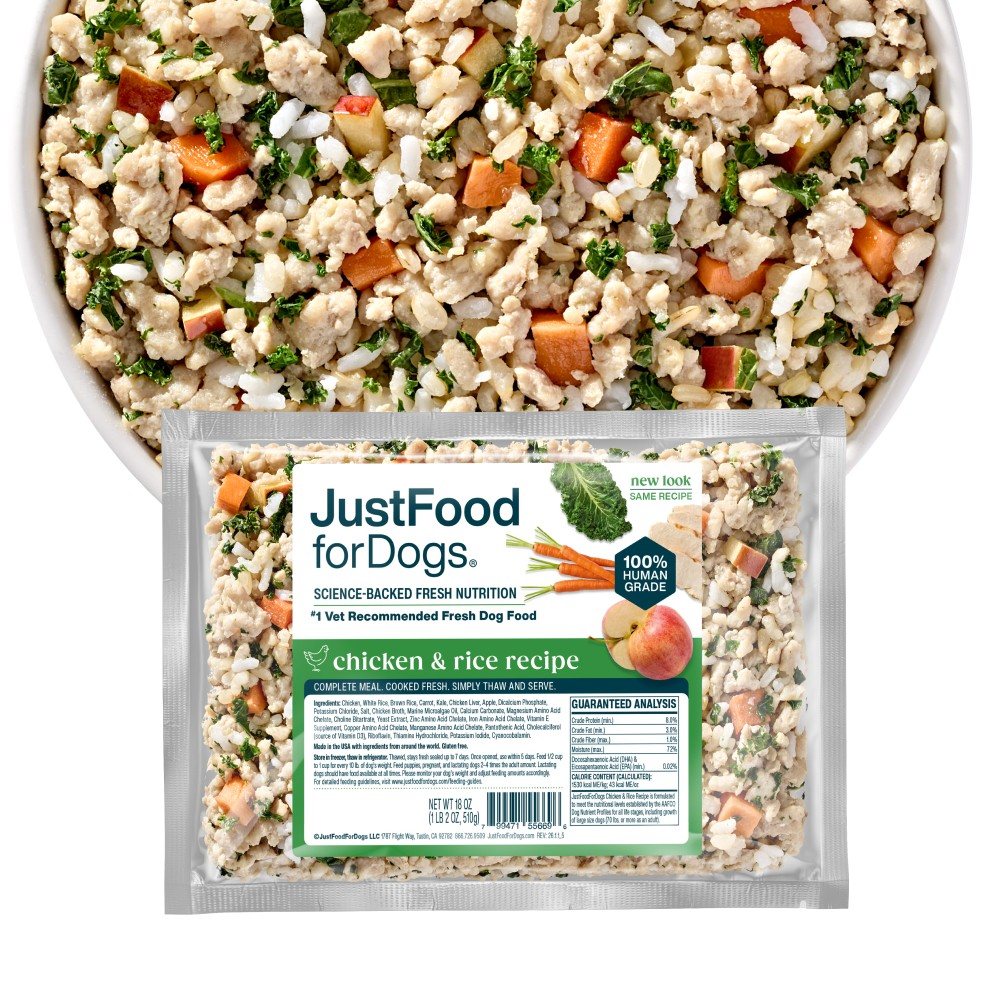
The JustFoodForDogs Chicken & Rice recipe is a fresh-frozen, grain-inclusive formulation appropriate for both growing puppies and adult dogs. Its ingredient composition features chicken combined with white and brown rice. According to official manufacturer specifications, this recipe supplies a caloric density of 1,530 kilocalories per kilogram, which translates directly to 1.530 calories per gram.
Because its AAFCO adequacy statement covers all life stages, including the growth of large-breed dogs expected to reach 70 pounds or more as adults, it offers flexibility for young, developing Greyhounds as well as mature dogs. However, growth eligibility does not imply that an adult Greyhound should receive puppy-sized caloric allocations, nor should a portion remain static when an adult dog’s activity level or body composition changes. While home-prepared chicken and rice dishes are frequently used for temporary digestive upset, they lack the verified vitamin and mineral balance of a fully formulated commercial product like this complete diet.
JustFoodForDogs Fish & Sweet Potato
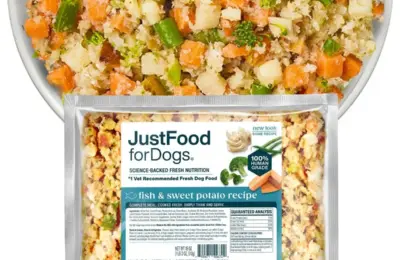
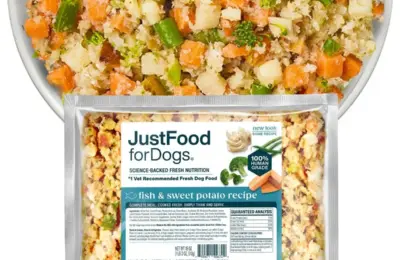
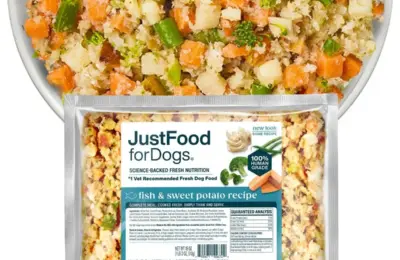
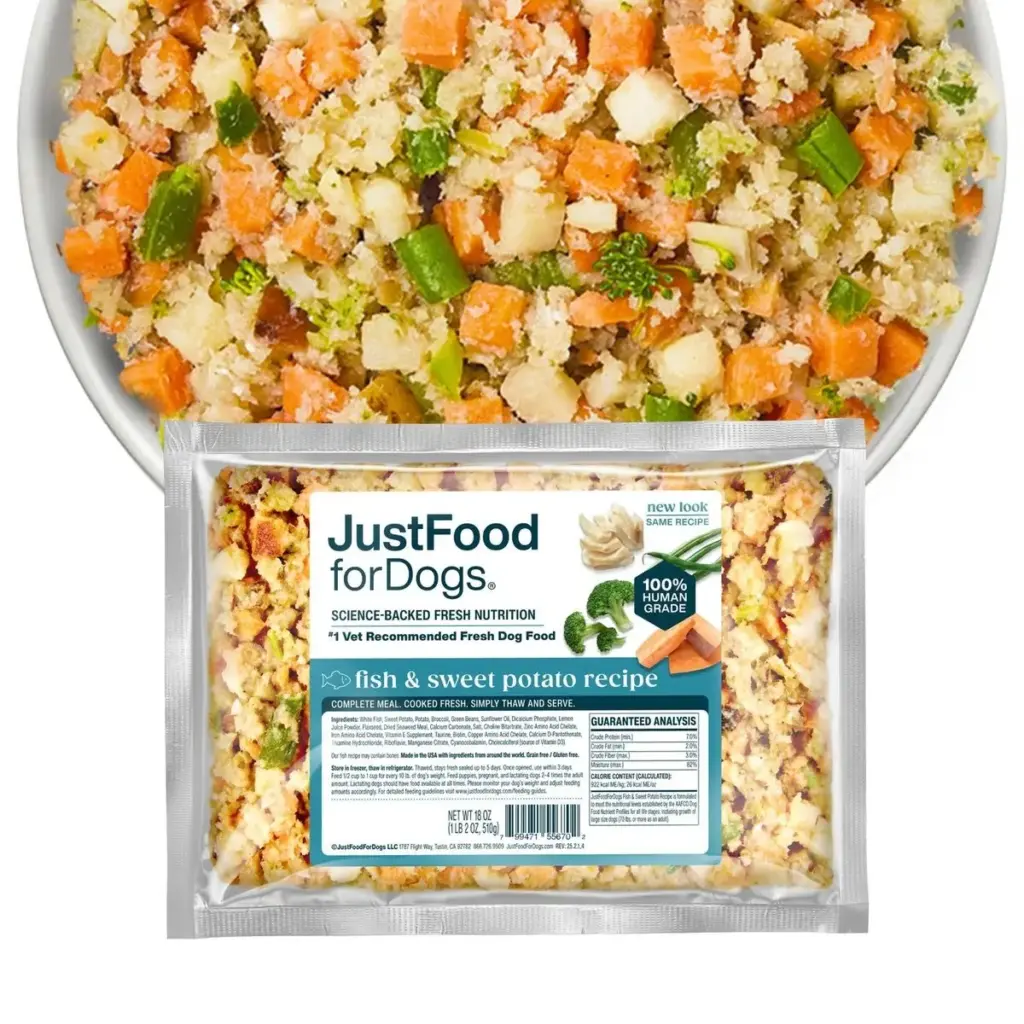
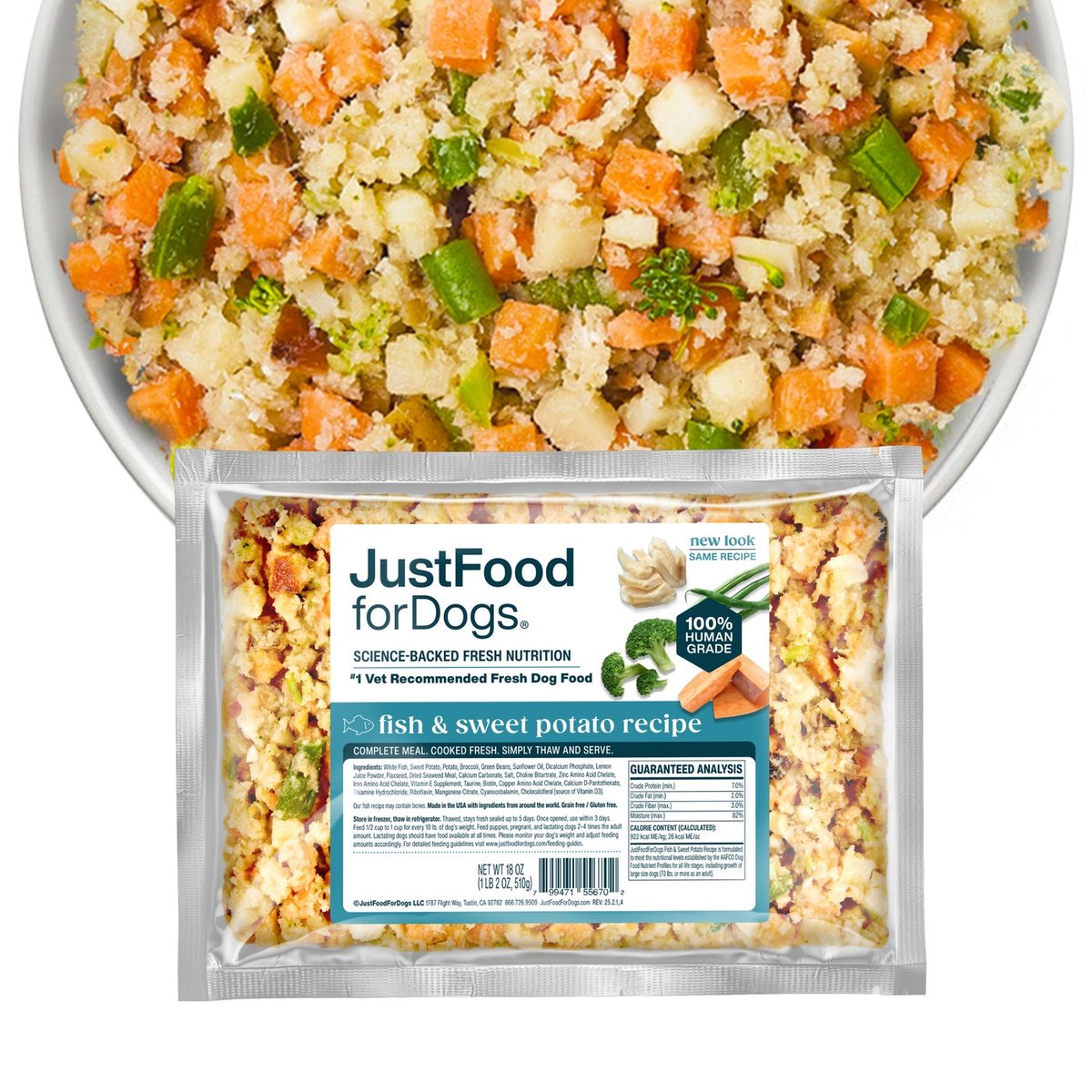
The Fish & Sweet Potato recipe offers an alternative all-life-stages formulation suitable for both growth and adult maintenance. The protein composition in this formulation includes a blend of wild-caught fish—specifically cod, pollock, and haddock—paired with sweet potato.
This recipe features a lower energy density compared to traditional fresh options, registering at 922 kilocalories per kilogram, or 0.922 calories per gram. Consequently, a dog assigned a specific daily calorie intake will require a larger total weight in grams when consuming this recipe compared to higher-density alternatives. This increased volumetric serving can influence kitchen preparation routines and storage needs, but it does not mean the food is nutritionally deficient. Furthermore, while lower caloric density allows for larger physical portions, it should not be categorized strictly as a therapeutic weight-loss diet without veterinary oversight. Similarly, the inclusion of fish ingredients does not automatically qualify a standard recipe as a prescription treatment for diagnosed food allergies.
JustFoodForDogs Beef & Russet Potato
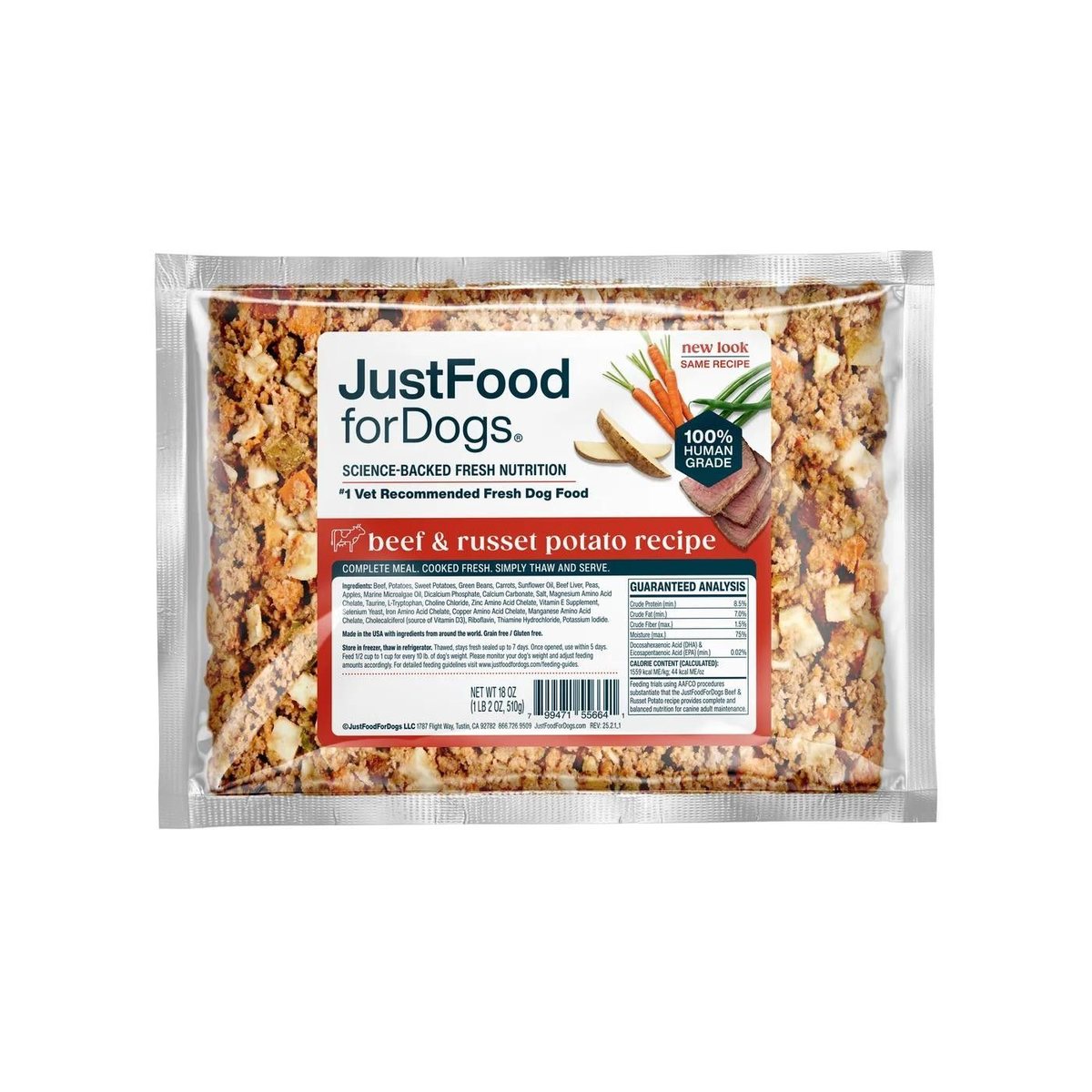
Formulated specifically for adult maintenance, the JustFoodForDogs Beef & Russet Potato recipe is tailored for mature dogs that have completed their growth phase. It is not intended to meet the complete nutritional needs of a growing Greyhound puppy. Its adequacy for long-term adult maintenance has been verified through standardized AAFCO feeding trials.
This formulation carries an energy density of 1,559 kilocalories per kilogram, equivalent to 1.559 calories per gram. Representing the highest caloric density among the four evaluated recipes, a smaller total mass in grams is required to deliver a given number of calories. Despite its higher energy concentration, this comparison does not automatically designate the recipe as a specialized athletic performance diet. For a retired pet Greyhound, current daily caloric expenditure remains the primary factor in portion sizing. If a dog is already thriving on an appropriate diet, switching to a beef-based recipe should be a deliberate, measured decision rather than an assumed requirement of post-racing retirement.

JustFoodForDogs JustFresh Home-Cooked Chicken
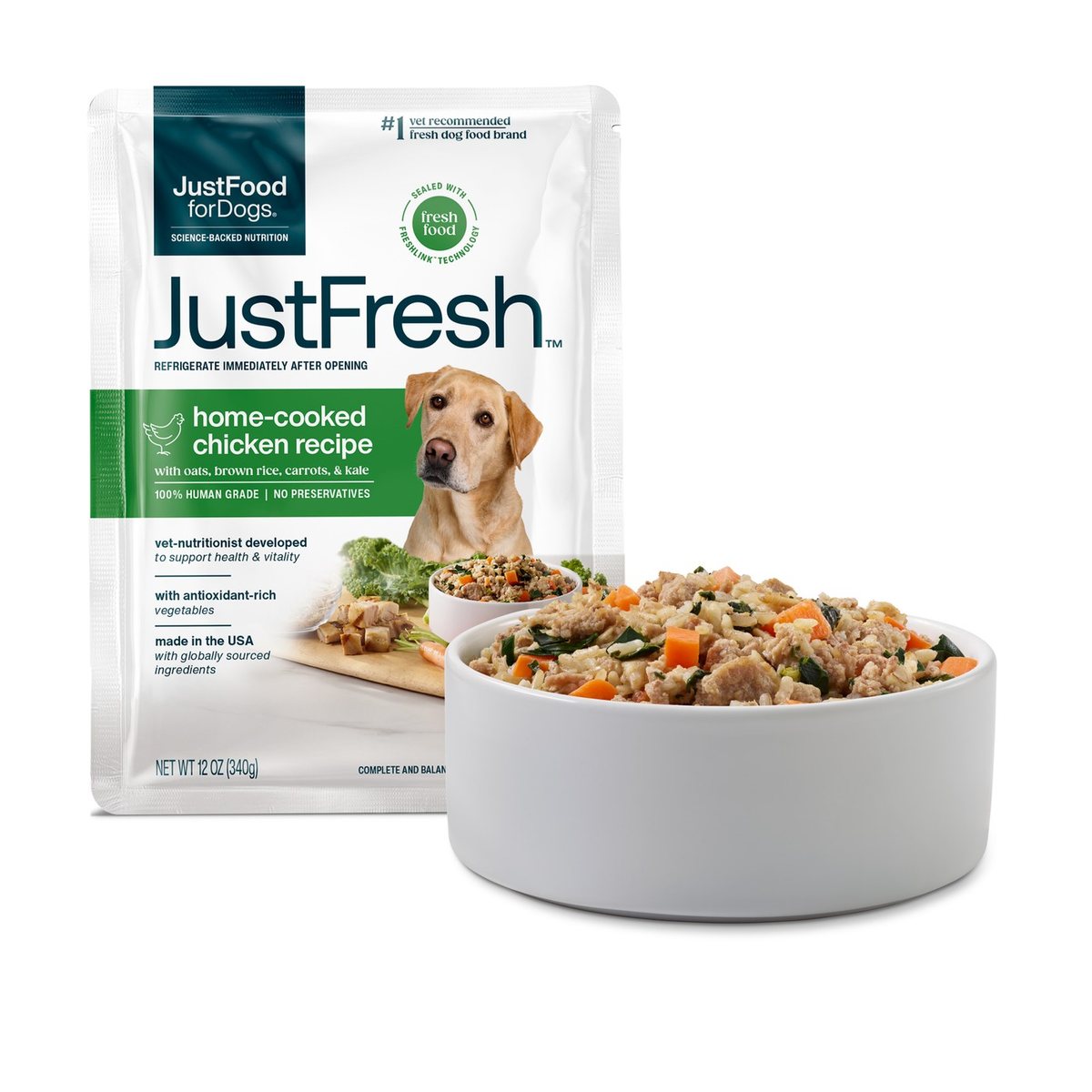
The JustFresh Home-Cooked Chicken formulation provides an adult-maintenance option designed for ambient, unopened shelf storage, offering practical convenience for households with limited freezer space. Its recipe incorporates chicken alongside oats and brown rice.
The official product data lists an energy density of 1,254 kilocalories per kilogram, or 1.254 calories per gram. It is important to distinguish this shelf-stable product from the fresh-frozen Chicken & Rice recipe, as JustFresh is formulated exclusively for adult maintenance and is not suitable for growing puppies. While shelf stability simplifies long-term pantry storage, it does not remove the necessity of weighing portions carefully or managing opened packages in accordance with refrigeration safety rules.
Establishing an Adoption Baseline and Feeding History
Constructing a safe and effective feeding plan for a newly adopted Greyhound—particularly one coming directly from a racing career, foster home, or rescue organization—requires establishing an accurate historical baseline. Before changing a dog’s diet, owners should secure complete details regarding the animal’s recent feeding history, including exact product names, historical serving sizes, and observed eating habits.
The most suitable diet for a newly adopted ex-racer is frequently the diet it is currently consuming without issue. While transitioning to a new fresh-food recipe may ultimately be desirable, knowing the precise starting point reduces the risk of gastrointestinal disruption or unintended weight fluctuations. Caregivers should compile complete records containing the source and date of prior feeding instructions, full brand names of current foods, precise historical serving weights, and actual consumption patterns, noting whether the dog typically finishes its entire portion or leaves food behind.
It is equally vital to record all auxiliary calories, such as training treats, dental chews, table scraps, or foods used for medication administration, alongside scale measurements of the dog’s weight, professional assessments of body condition, and realistic evaluations of current activity levels. A dog’s former racing schedule does not reflect its current energy demands as a domestic pet. Recognizing recent changes in daily exercise prevents owners from feeding high-calorie performance rations to a dog living a low-activity household lifestyle.
To bridge the transition from an adoption organization to the home, owners should create a centralized adoption-baseline record card. This document should cleanly separate documented facts from rough estimates. Vague instructions such as "a scoop twice daily" or "a heaped bowl" should never be converted into assumed calorie numbers without first weighing the physical food and verifying its packaging details. If historical intake details are unavailable, the baseline should be formally logged as unknown, and a fresh starting ration should be developed in consultation with a veterinarian. Preserving an accurate historical baseline ensures that if a dog subsequently gains or loses weight, owners can determine whether the change stems from a shift in recipe formulation or an inadvertent alterative in total caloric intake.
Translating informal household terminology into standardized weight measurements prevents early feeding errors. Kitchen terms like "a handful" or "one dish" vary significantly between caregivers. If possible, adopters should ask the foster parent or shelter representative to physically weigh a typical serving on a gram scale. Furthermore, a dog’s historic track weight or previous intake should not be treated as an immutable lifelong target. A veterinarian must evaluate the dog’s current skeletal structure, muscle tone, and overall health to establish a realistic target weight, rather than relying on historical racing programs or generic breed averages.
Separating Body Condition from Muscle Condition
Evaluating a Greyhound’s physical status requires assessing body condition and muscle condition as two entirely separate health parameters. Greyhounds possess a naturally lean, deep-chested anatomy with minimal subcutaneous fat, making routine visual checks uniquely easy to misinterpret.
As outlined in World Small Animal Veterinary Association (WSAVA) global nutrition guidelines, a Body Condition Score (BCS) evaluates fat stores, whereas a Muscle Condition Score (MCS) evaluates muscle mass. An athletic dog can possess ideal fat coverage while simultaneously suffering from muscle wasting due to age, injury, or illness. Conversely, a dog’s scale weight may remain static even as it loses lean muscle tissue and gains adipose fat.
Accurately applying the WSAVA canine body condition chart requires hands-on physical palpation rather than visual inspection alone. Owners should feel for rib coverage, assess the tuck of the abdomen, and examine the waistline behind the ribs. Ribs should be easily felt under a thin layer of fat without sharp, prominent bone exposure, but they should not be buried beneath heavy tissue. When checking muscle condition, caregivers should gently feel the bone structures over the head, shoulder blades, spine, and hips.
Monitoring physical condition should be conducted consistently under similar circumstances, such as weighing the dog at the same time of day on a calibrated scale before meals. Visible rib definition should not automatically trigger an immediate increase in daily food rations. Because Greyhounds naturally exhibit a lean physique, relying on arbitrary visual benchmarks—such as demanding that a precise number of ribs be visible—can lead to underfeeding or overfeeding.
A formal nutritional reassessment with a veterinarian should be prompted if a Greyhound demonstrates unexpected weight loss, leaves meals unfinished, exhibits muscle loss over the back or hips, experiences chronic loose stools, or shows noticeable shifts in energy levels. A documented feeding record allows the veterinarian to determine whether a physical change stems from a medical issue or an unmeasured variance in household feeding practices.
This diagnostic clarity becomes particularly critical when managing senior Greyhounds. Aging dogs undergo shifts in metabolic rate, digestion, and mobility, but an advanced age label on a pet food bag does not automatically mean every senior Greyhound requires immediate reduction in calories or protein. Some senior dogs require higher caloric intake to maintain lean muscle mass, while others require tailored dietary adjustments to manage diagnosed health conditions. When conducting a senior dietary review, owners should bring complete historical feeding logs, weight trends, and notes regarding daily appetite to assist the veterinarian in making evidence-based adjustments.
Calculating Daily Portions and Calorie Distribution
Determining the exact weight of food a Greyhound requires each day depends entirely on matching the individual dog’s targeted energy requirement against the specific calorie density of the selected food. Relying on standardized volumetric cup measurements across different recipes often leads to severe portion errors, as fresh diets and dry kibbles vary widely in weight and caloric concentration.
To establish a baseline target, veterinarians frequently consult WSAVA healthy-adult calorie guidelines, which calculate Resting Energy Requirements (RER) and Maintenance Energy Requirements (MER) based on ideal body weight. Once a daily caloric allowance is assigned by a veterinarian, the total required food mass is calculated using a straightforward formula:
Daily food weight in grams = Total assigned daily calories ÷ Calories per gram of the recipe
To determine calories per gram from a package label listed in kilocalories per kilogram (kcal/kg), divide the stated value by 1,000. For example, the JustFoodForDogs Chicken & Rice recipe lists 1,530 kcal/kg, which yields 1.530 calories per gram.
Comparing Portions Across Different Formulas
To understand how caloric density dictates physical bowl volume, consider a hypothetical Greyhound assigned a target daily allowance of 1,000 calories derived entirely from a single complete recipe.
- A 1,000-calorie daily allotment supplied by Chicken & Rice (1.530 kcal/g) requires approximately 654 grams of food per day.
- The same 1,000-calorie allotment met by Fish & Sweet Potato (0.922 kcal/g) requires approximately 1,085 grams per day.
- A 1,000-calorie allotment met by Beef & Russet Potato (1.559 kcal/g) requires approximately 641 grams per day.
- A 1,000-calorie allotment provided by JustFresh Home-Cooked Chicken (1.254 kcal/g) requires approximately 797 grams per day.
This comparison demonstrates why a dog cannot simply receive the same weight or volume of food when transitioning between different formulations. Swapping equal masses of Beef & Russet Potato and Fish & Sweet Potato without recalculating would result in a massive change in actual energy intake, potentially leading to rapid weight loss or gain.
Factoring Treats and Mixed Diets into Total Energy Allotment
Daily caloric calculations must account for every item consumed, including treats, training rewards, and food items used to wrap medications. According to American Animal Hospital Association (AAHA) weight management guidelines, non-complete dietary extras should never exceed 10% of a dog’s total daily caloric intake. Exceeding this threshold dilutes the complete and balanced nutrition provided by the primary food and increases the risk of obesity.
When designing a daily feeding framework, owners should first subtract reserved treat calories from the dog’s total daily energy allocation, then distribute the remaining calories across the primary meals. For example, consider a hypothetical adult Greyhound assigned a total target of 1,100 calories per day. If 50 calories are reserved for training treats, 1,050 calories remain for complete foods.
If the owner chooses a mixed feeding strategy—combining fresh food with standard dry kibble—the remaining 1,050 calories must be split between the two products. If 650 calories are allocated to JustFoodForDogs Chicken & Rice (1.530 kcal/g) and 400 calories are allocated to a complete dry kibble with an assumed density of 4.0 calories per gram:
- The fresh food portion is calculated as 650 ÷ 1.530, yielding approximately 425 grams of Chicken & Rice.
- The dry kibble portion is calculated as 400 ÷ 4.0, yielding 100 grams of kibble.
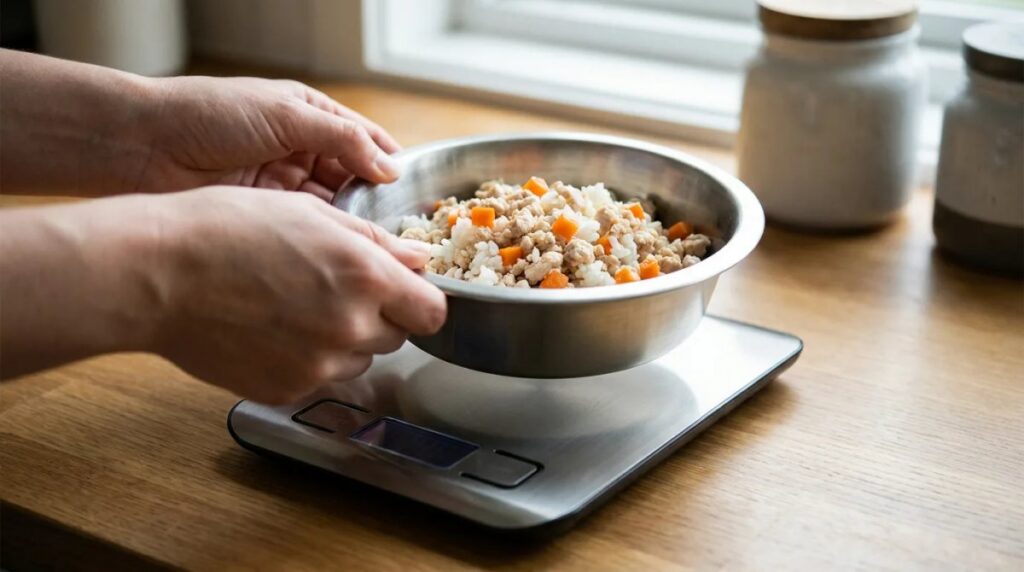
In this scenario, the dry kibble replaces a specific portion of the fresh food caloric allowance rather than being added on top of an already full daily ration. Both components must be accurately weighed on a digital kitchen scale to maintain dietary consistency. Measuring each food item separately before mixing ensures that portions remain precise and allows owners to track if a dog selectively avoids one component of the meal.
Evaluating Costs Based on Daily Caloric Value
Evaluating the financial cost of various commercial dog foods requires looking beyond package retail prices or net bag weight. Because energy density dictates how many grams a dog must consume each day, a heavier package of low-calorie food may provide fewer total feeding days than a smaller, high-density package.
To calculate the true daily cost of a specific recipe, owners should utilize the following equation:
Daily Feeding Cost = (Package Purchase Price × Daily Gram Requirement) ÷ Total Net Grams in Package
This calculation provides a direct, normalized cost comparison tailored specifically to the individual dog’s energy needs, ensuring that financial decisions are based on usable nutrition rather than superficial package volume.
Meal Frequency, Feeding Schedules, and Bloat Risk Management
For adult Greyhounds, dividing the total daily food allotment into at least two separate meals served at predictable intervals represents a practical standard routine. Splitting daily calories prevents the stomach from coping with excessive volume at a single time and supports stable digestion.
Gastric Dilatation-Volvulus (GDV), commonly referred to as bloat, is a life-threatening medical emergency to which deep-chested breeds like Greyhounds are anatomically susceptible. Guidance from the Cornell University Riney Canine Health Center supports dividing daily rations into two or more smaller meals rather than offering a single large daily feeding, as large single meals can increase gas accumulation and stomach distension. However, meal division is merely one supportive management practice and does not eliminate GDV risk entirely.
Contrary to historical beliefs, routine use of elevated dog food bowls is not a universal solution for bloat prevention. Studies highlighted in veterinary guidance, including resources from Cornell, identify elevated feeders as a potential risk factor for GDV in certain deep-chested dogs. Unless a veterinarian explicitly prescribes an elevated feeder to manage a specific orthopedic condition, megaesophagus, or spinal injury, Greyhounds should be fed from stable, clean bowls placed at ground level.

Establishing a consistent feeding routine allows caregivers to monitor eating habits effectively. A shared household log should be used to record meal completion, ensuring that multiple family members do not inadvertently feed double portions. Uncharacteristic behaviors during mealtime—such as sudden reluctance to eat, unusually rapid consumption, or leaving specific ingredients—can serve as early indicators of health issues.
Owners must remain vigilant for signs of acute GDV, which include non-productive retching, noticeable abdominal distension, severe restlessness, excessive pacing, drooling, or sudden collapse. GDV requires immediate emergency veterinary intervention; it cannot be managed at home by altering feeding schedules or changing diets. To minimize general digestive discomfort, vigorous exercise or intense running should be avoided immediately before and after mealtime.
Executing Food Transitions and Storage Compliance
When introducing a new fresh food formulation, executing a gradual, measured transition helps protect the dog’s gastrointestinal tract and allows caregivers to isolate the effects of the new recipe. Unless a veterinarian orders an immediate therapeutic diet change for an acute medical condition, dietary transitions should take place over several days.
A transition should always be managed using calorie-proportional splits rather than simple visual estimates. Because different recipes possess distinct energy densities, mixing equal visual volumes of an old food and a new food can unintentionally alter the dog’s total daily caloric intake during the transition period.
For instance, if a transition stage allocates 500 calories to the current food and 500 calories to JustFoodForDogs Chicken & Rice, the required weight for each component must be calculated individually based on its respective kcal/gram density. Maintaining stable energy intake throughout the transition ensures that any changes in stool consistency or appetite reflect gastrointestinal adaptation to the new ingredients rather than an unexpected caloric surplus or deficit.
During a transition, caregivers should refrain from introducing new treats, supplements, or table scraps simultaneously. Keeping secondary variables constant ensures that if digestive upset occurs, the owner and veterinarian can accurately identify the source. Stool quality, appetite, and energy levels should be documented daily. Persistent diarrhea, vomiting, or lethargy warrants immediate veterinary consultation rather than repeated recipe adjustments.
Fresh Food Handling and Safety Standards
Fresh-cooked pet foods require strict adherence to food safety and handling standards to prevent bacterial contamination and food spoilage. Guidelines established by the U.S. Food and Drug Administration (FDA) recommend storing perishable pet food in a refrigerator maintained at 40°F (4°C) or lower, with prompt disposal of moist food left at room temperature.
According to manufacturer specifications from JustFoodForDogs, fresh-frozen meals should be thawed in the refrigerator. Thawing an 18-ounce package typically takes up to 24 hours, while a larger 72-ounce package may require up to 48 hours. Once fully thawed and kept under proper refrigeration:
- Opened non-fish fresh-frozen recipes should be consumed within five days.
- Opened fish-based recipes (such as Fish & Sweet Potato) should be consumed within three days.
- Opened shelf-stable JustFresh meals must be refrigerated after opening and consumed within three days.
Sealed food packages that have been thawed should not be left in the refrigerator indefinitely, as opening a package does not reset the clock on prior refrigeration time. Feeding bowls and preparation utensils must be washed thoroughly with hot, soapy water after every meal to maintain hygiene and prevent bacterial build-up.
Once a dietary transition is successfully completed, the dog’s central baseline card should be updated with the new product name, its exact caloric density, and the recalculated daily serving weight in grams. Preserving organized historical entries ensures that future dog sitters, family members, or veterinary professionals have clear, unambiguous instructions for maintaining the animal’s daily care.
Addressing Common Greyhound Nutritional Questions
Should Greyhounds eat from raised food bowls?
There is no universal requirement stating that Greyhounds must eat from elevated bowls, and raised feeders should not be relied upon to prevent bloat. Veterinary literature, including GDV research referenced by Cornell University, notes that elevated food bowls can actually increase GDV risk in deep-chested breeds. Raised feeders should only be utilized if specifically recommended by a veterinarian to accommodate an identified medical, neurological, or musculoskeletal condition. Otherwise, Greyhounds should eat from stable, easily cleaned bowls placed at ground level.
What common foods are dangerous for Greyhounds?
Greyhounds face the same metabolic toxicity risks as all domestic dogs. The FDA maintains guidance on items that are hazardous to dogs, including chocolate, caffeine, grapes, raisins, onions, garlic, macadamia nuts, alcohol, and products containing the sweetener xylitol (birch sugar). Exposure to these substances requires immediate emergency veterinary attention. These established toxicological risks are distinct from unsupported online claims advocating for the exclusion of standard, complete-food ingredients based solely on breed.
Are bananas safe treats for Greyhounds?
Small pieces of plain, peeled banana can serve as an acceptable occasional treat for a Greyhound, provided the dog tolerates the fruit and its inclusion is accounted for within total daily energy limits. UC Davis veterinary guidance identifies bananas as a safe treat option when fed in moderation. However, treats must remain strictly within the 10% maximum daily calorie allowance reserved for non-complete foods. Bananas are not a mandatory component of a complete Greyhound diet, and serving sizes should remain small regardless of the dog’s overall frame.
Does visible rib definition mean a Greyhound is underfed?
Visible rib definition alone does not automatically prove that a Greyhound requires additional calories. Because Greyhounds possess naturally thin skin and minimal fat cover, feeling the ribs gently under a light layer of tissue is normal for the breed. A dog’s nutritional status must be determined through hands-on physical palpation of fat cover and muscle mass alongside documented weight trends, rather than relying on a visual rib count or comparisons against photographs of other dogs. Unexplained weight loss or severe bony prominences should be evaluated by a veterinarian.
Is racing food appropriate for a retired pet Greyhound?
A dog’s current lifestyle, energy expenditure, and overall health determine its nutritional requirements, not its historical career. Former racing Greyhounds living as companion pets generally experience reduced physical exertion compared to active track athletes. Feeding high-calorie racing rations to a pet Greyhound can lead to rapid excess weight gain. Adopters should review their dog’s current routine with a veterinarian to select an appropriate complete diet formulated for its present life stage and daily activity level.