Long before his name faded into the quiet corners of art history, Gustave Fayet sat at the pulsing epicenter of early-20th-century French culture. A true multihyphenate who moved fluidly between the roles of visionary patron, daring collector, entrepreneur, and creator, Fayet possessed a sweeping eye for talent that helped shape the trajectory of modern art. His Paris home once housed a collection of Paul Gauguin masterpieces so vast it functioned as a de facto museum dedicated entirely to the post-Impressionist pioneer. He championed the burgeoning genius of Pablo Picasso, organizing one of the very first French exhibitions of work by the artist when he was still not yet 20 years old. His aesthetic influence extended deep into the world of high design and fashion: couturier Jeanne Lanvin commissioned him to craft bespoke rugs for her private apartment, while legendary designer Paul Poiret tailored the wedding dress for Fayet’s daughter.

Despite operating at the highest echelons of the creative world, Fayet eventually slipped into relative obscurity. This fall, however, the forgotten titan is finally stepping out of the shadows. The Fondation Louis Vuitton is dedicating its monumental upcoming exhibition to his extraordinary life and career. Titled Gustave Fayet, Collector–Designer, the blockbuster show marks the latest installment in the institution’s celebrated Icons of Modern Art series. Opening on October 9 and running through March 8, the exhibition will take over the entirety of the striking, Frank Gehry–designed building in Paris, offering visitors a sweeping, immersive exploration of Fayet’s diverse and deeply influential roles across the artistic landscape.
Born in 1865 into an affluent French family of landowners and wine merchants, Fayet was immersed in the arts from an early age. He cultivated his creative impulses by learning to paint alongside his father and uncle, both of whom were enthusiastic amateur artists. As a young man, he made the customary rounds of art fairs, absorbing the shifting currents of the period’s visual culture. His early promise eventually led to a position as a curator at the Musée de Béziers. During his tenure there, he forged a creative partnership with Louis Paul, a talented sculptor who had previously studied under the legendary Auguste Rodin. Together, Fayet and Paul produced a series of innovative, Japonisme-inspired ceramics that captured the attention of the Parisian art world and earned a prominent display at one of the capital’s most prestigious galleries.

The trajectory of Fayet’s life shifted dramatically in 1899 when he inherited the family estate. With newfound financial independence, he began collecting art in earnest, directing his substantial resources toward acquiring works by luminaries of his era. Among his earliest acquisitions were pivotal pieces by Pierre-Auguste Renoir and Paul Gauguin. Over the years, Fayet’s collection became a revolving door for masterpieces that would later define the canon of modern art. Iconic works that once passed through his hands—such as Vincent van Gogh’s haunting Self-Portrait With Bandaged Ear, Paul Cézanne’s monumental The Great Pine, and Gauguin’s evocative Three Tahitians—will figure prominently in the upcoming Fondation Louis Vuitton exhibition, serving as a testament to the staggering quality of his curatorial eye. For a period, Fayet became so consumed by the demands of collecting, patronizing, and curating that he temporarily set aside his own personal artistic practice.
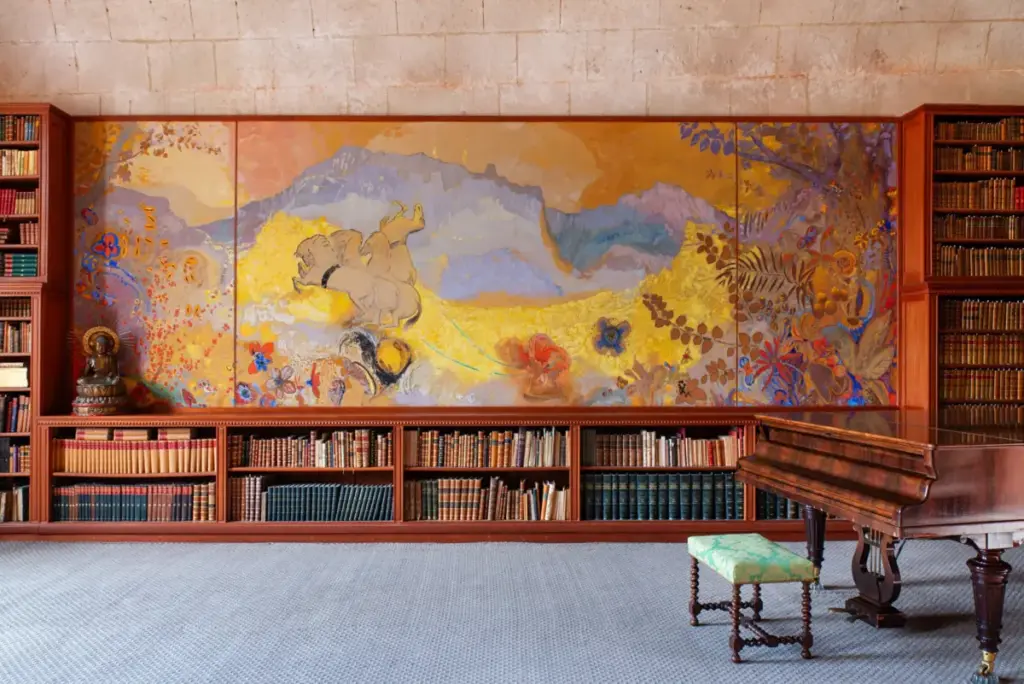
All of that began to change around 1908, when Fayet and his wife, Madeleine, made a purchase that would redefine their lives: the abandoned Abbaye de Fontfroide, located near Narbonne in southern France. Fayet envisioned the sprawling, historic site not merely as a home, but as a total work of art, a living environment where architecture, nature, and creativity intertwined seamlessly. To realize this grand ambition, he assembled a close-knit community of kindred artistic spirits who would come to be known as the "Fontfroideans." Among them was the visionary symbolist painter Odilon Redon, who created three remarkable murals—titled Day, Night, and Silence—specifically for the abbey’s library. For the first time in history, these breathtaking Redon panels will be brought out of their private sanctuary and placed on public view as a centerpiece of the Fondation Louis Vuitton exhibition.

The immersive, creative atmosphere of Fontfroide acted as a profound catalyst for Fayet, reawakening his own dormant artistic impulses. In 1911, he developed an entirely idiosyncratic artistic technique, experimenting with watercolor on ordinary blotting paper. This unusual medium allowed him to produce a vast and compelling body of floral works characterized by an astonishing freshness. Robert Carsen, the exhibition’s artistic director, notes the striking nature of these pieces, observing that the drawings demonstrate an almost childlike spontaneity at a time when Gustave Fayet was a mature man.
Recognizing the commercial and decorative potential of these delicate works, prominent decorator Paul Dumas began reproducing Fayet’s watercolors as fine fabrics and wallcoverings. Building on this success, Fayet and Dumas joined forces to establish the Atelier de la Dauphine, a manufacturing enterprise dedicated to turning Fayet’s designs into luxurious rugs. Pristine examples of these textiles have been meticulously restored for the exhibition, where they will be displayed in direct dialogue with the original watercolor artworks that inspired them. In his later years, Fayet continued to expand his creative output, moving into the realm of illustration by illuminating works of poetry as well as creating a bespoke, illustrated book for his grandchildren.

Reflecting on the breadth of Fayet’s lifelong creative evolution, Carsen emphasizes the restless curiosity that defined his pursuits, noting that he was truly exploring new territory and venturing deeper and deeper into the new genres he encountered with each successive endeavor. Ultimately, a boundless imagination served as the invisible thread connecting everything Fayet touched, whether he was championing an unknown Picasso, curating a room of Gauguins, painting delicate florals on blotting paper, or breathing new life into a historic abbey. This comprehensive look at his legacy provides a long-overdue spotlight on a man who helped build the foundation of modern art while largely remaining behind the scenes.