


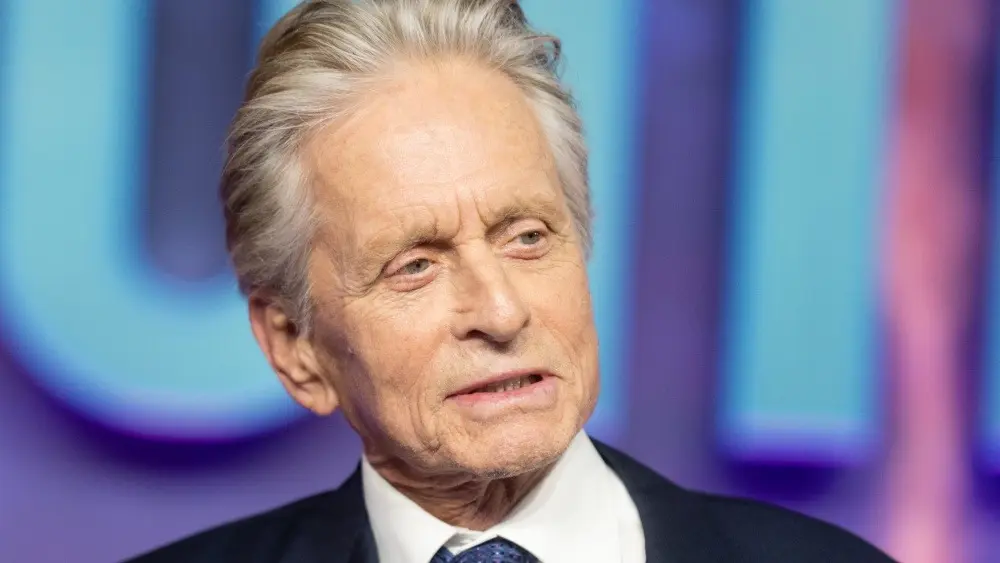
Hollywood veteran Michael Douglas is stepping firmly into the ongoing cultural conversation surrounding industry offspring, commonly referred to as "nepo babies," making it clear that the persistent label has grown entirely exhausting to him.
The Oscar-winning actor, whose lineage places him firmly among Hollywood royalty as the son of the legendary late screen icon Kirk Douglas, shared his unfiltered thoughts during a recent appearance on the popular "SmartLess" podcast, hosted by actors Sean Hayes, Jason Bateman, and Will Arnett. As the conversation turned toward his decades-long career, his enduring success, and the heavy shadow of his family name, Douglas did not hesitate to express his frustration with how modern social commentary characterizes actors who follow their famous parents into the profession.
"Well, first of all, you know, Hollywood royalty. I mean… this ‘nepo’ thing really pisses me off," Douglas told the hosts during the episode, addressing the widespread cultural term head-on. Expanding on his perspective, the "Wall Street" star argued that the entertainment industry is hardly unique when it comes to family members supporting one another’s career ambitions. "I don’t know a career where a father or mother don’t try to help their son or daughter get into their business and this and that, and why they picked on this because of the well-known aspect of it," he added, pointing out the double standard often applied specifically to the performing arts compared to other traditional trades, family businesses, and corporate professions.
The debate over nepotism in Hollywood has dominated social media discourse and industry profiles in recent years, drawing sharp commentary from numerous young actors and established stars alike. While critics argue that family connections provide an undeniable leg-up in securing auditions, representation, and high-profile roles in an intensely competitive market, defenders of legacy actors frequently point out that lasting success ultimately requires public appeal and professional endurance, regardless of an initial foot in the door. For Douglas, whose career spans more than half a century and includes some of the most memorable cinematic performances of the late 20th century, reducing a hard-earned body of work down to a trendy internet buzzword minimizes the actual labor involved in sustaining a lifelong career in motion pictures.
Beyond his candid remarks regarding industry lineage and family advantages, Douglas also turned his attention to the craft of acting itself, offering valuable perspective for aspiring performers looking to break into the business. When asked about the foundational elements of a successful acting career, Douglas noted that the single most important piece of advice he could pass along to newcomers is the ability to recognize and secure "good material."
Unlike practitioners of other artistic disciplines, actors face a unique set of limitations when it comes to creating their own standalone work from scratch, Douglas explained during the podcast discussion. "The problem we all have is we don’t play an instrument, or we don’t paint, or we don’t write," the veteran actor observed. "We’re standing there. But a good piece of material, man, a good piece of material helps things along well." For Douglas, an exceptional script serves as the essential bedrock upon which a memorable performance is built, bridging the gap between an actor’s raw presence and a compelling cinematic narrative.
The conversation naturally evoked memories of Douglas’s legendary father, Kirk Douglas, whose towering presence shaped the Golden Age of Hollywood and left an indelible mark on global cinema. Kirk Douglas passed away in 2020 at the remarkable age of 103, leaving behind a cinematic legacy defined by intensity, physical presence, and uncompromising performances. Throughout a career that spanned decades, the elder Douglas starred in an extraordinary roster of timeless classic films, including "Spartacus," "Seven Days in May," "20,000 Leagues Under the Sea," "Champion," "The Bad and the Beautiful," "Lust for Life," "Paths of Glory," and "Lonely Are the Brave." Widely recognized for his fierce dedication to the craft, Kirk Douglas earned three Academy Award nominations for his acting work and was ultimately presented with an honorary Oscar in 1996 in recognition of his monumental contributions to the motion picture industry.
Michael Douglas has carved out an equally illustrious path of his own, cementing his status as a cinematic heavyweight through critically acclaimed turns in a diverse array of major motion pictures. His memorable filmography includes iconic performances in intense thrillers and character-driven dramas such as "Fatal Attraction" and the television film "Behind the Candelabra," among numerous other box-office hits and critically lauded projects.
Furthermore, Douglas stands as one of the few figures in Hollywood history to achieve elite status on both sides of the camera, having earned Academy Awards in distinct competitive categories for both acting and producing. He took home the Oscar for best actor in a leading role in 1988 for his unforgettable portrayal of the ruthless corporate raider Gordon Gekko in Oliver Stone’s "Wall Street," capturing the greed-driven ethos of the era. More than a decade earlier, Douglas demonstrated his keen eye for groundbreaking storytelling by taking home the Academy Award for best picture in 1976 as a co-producer of the countercultural masterpiece "One Flew Over the Cuckoo’s Nest," directed by Miloš Forman and starring Jack Nicholson.
As he continues to reflect upon his extraordinary life in the spotlight, a lifetime of memories, triumphs, and behind-the-scenes stories is set to reach audiences in a new format. Douglas is preparing for the release of his forthcoming memoir, titled "One Helluva Ride," which is scheduled to hit bookstores and online retailers.