



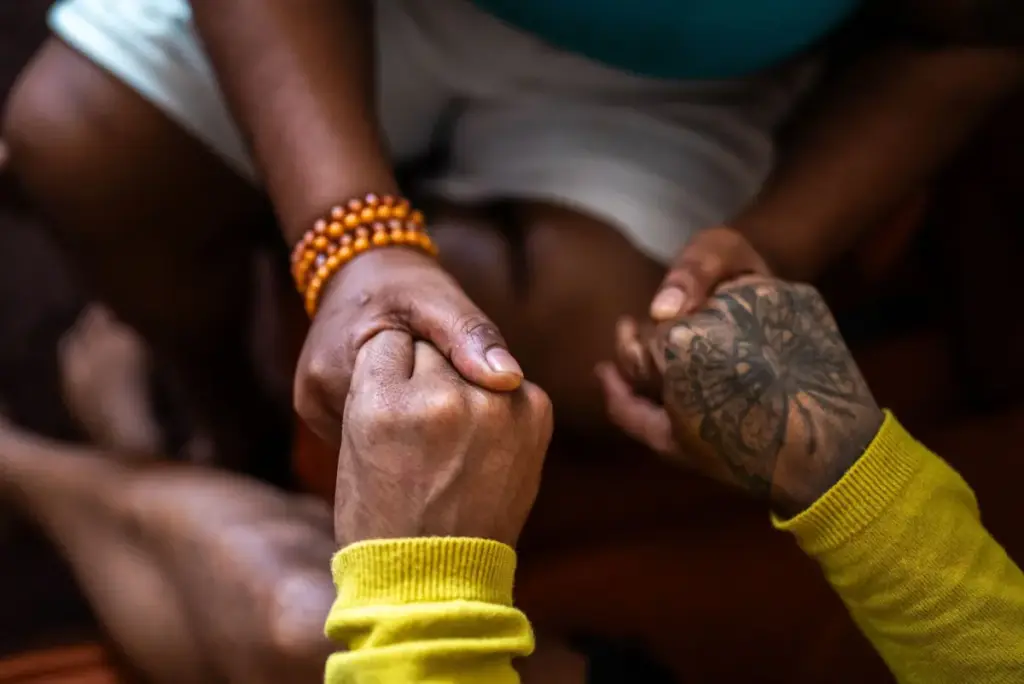
When examining the landscape of breast health for Black women, public health statistics rarely convey a narrative of hope. Medical data consistently shows that Black women are diagnosed with breast cancer at a younger median age—60 years old, compared to 62 for white women—and face a mortality rate that is 38% higher. Furthermore, they experience the lowest survival rates across every known stage of the disease. Most concerning to oncologists, approximately one in five Black women diagnosed with breast cancer learns they have triple-negative breast cancer (TNBC), an aggressive and hard-to-treat form of the illness that disproportionately affects women of color more than any other racial or ethnic group.
Yet numbers alone fail to capture the human reality behind these diagnoses: the quiet 3 a.m. phone calls, spontaneous head-shaving gatherings with loved ones, intensive therapy sessions that unlock deep emotional processing, and the powerful moment a mother looks into the eyes of her daughter and decides she has every reason to fight. Black women have consistently proven to be far more than a statistical data point. This resilience is exemplified in the lives of thirteen Black women who refused to let their diagnoses define the boundaries of their existence. These individuals—mothers, professionals, daughters, and community leaders—carried their careers, humor, faith, and grief through a medical crisis that changed them profoundly. By navigating their own paths through complex treatments, they have constructed a powerful blueprint for survival, community building, and purpose that they now pass on to future generations.
1. "I put my boxing gloves on and fought with everything I had."
Monique Bass, 53, had always maintained a proactive stance toward her personal health. As a single mother to twin sons and a grandmother of four, she initiated annual mammograms at age 40. However, a routine self-exam performed in bed at age 47 revealed an unfamiliar lump.

Over the course of three years, Bass underwent three separate tissue biopsies, each returning benign results while physicians recommended watchful waiting. Knowing her body intimately and observing the lump’s growth, Bass pushed back against the medical consensus, insisting on a lumpectomy for definitive testing. The pathology confirmed stage 1 invasive ductal carcinoma requiring immediate chemotherapy.
The diagnosis arrived in 2020 at the height of the COVID-19 pandemic while Bass sat in a car wash, compounding her isolation as she simultaneously navigated a divorce. Her treatment regimen comprised four rounds of doxorubicin, four rounds of paclitaxel, and 21 radiation treatments. Although losing her hair proved emotionally devastating, her hair eventually grew back thicker and healthier. Anchored by her personal faith, Bass subsequently founded "What’s Behind the Bra?", a New Jersey-based nonprofit organization that provides comfort care packages to breast cancer patients year-round alongside a weekly educational podcast.
2. "I surrounded myself with love and laughter."
Jaqueline Beale, 64, grew up with a profound family history of cancer, including her mother’s battle with the disease. Consequently, discovering a lump during a self-exam at age 40 prompted immediate action. Although initial sonograms and mammograms appeared clear, Beale pursued a biopsy based on her intuition.

When the radiologist delivered the stage 1 breast cancer diagnosis while hailing a cab in New York City, Beale leaned into humor as a coping mechanism. She deliberately surrounded herself with relatives who understood her need for lightness during dark moments. Whether sharing lighthearted banter about her condition in public elevators or relying on family to lift her spirits after grueling chemotherapy sessions, Beale maintained that humor remained essential to her emotional survival.
3. "What once felt like the end became the beginning of something greater."
Annita White, 51, was five months late for her scheduled mammogram, consumed by her responsibilities as a single mother, higher education administrator, and doctoral student. When she finally completed the screening, a newly formed mass was detected. Following a difficult biopsy confirmation, White faced rigorous chemotherapy, double mastectomy surgery, and the loss of her signature full hair.
Navigating vulnerability and physical insecurity, White relied heavily on her spiritual faith during her darkest moments. Three years post-treatment, White is cancer-free, has completed her PhD, and actively contributes to the African American Breast Cancer Alliance survivor network as Dr. Nita, sharing her testimony to uplift others.

4. "The clouds are moving. The sun has decided to show itself."
Marylande Regis, 38, relocated to Georgia shortly before finding a lump shortly after weaning her nine-month-old infant. Initially dismissed by an on-call provider who suggested a clogged milk duct due to her youth, Regis advocated persistently for herself until an OB-GYN ordered prompt clinical evaluations. Within weeks, she received a diagnosis of aggressive stage 2B, BRCA1-positive breast cancer at age 36, which quickly progressed to multiple tumors and impacted lymph nodes.
Enduring six months of chemotherapy, a bilateral mastectomy, radiation, a total hysterectomy, and reconstructive surgeries over 18 months, Regis balanced realism with determination. Supported by her mother, who moved in indefinitely, and her husband Kory, Regis channeled her Haitian-American upbringing’s resilience into daily victories, such as walking her autistic son to the bus stop and watching her eldest child pursue nursing school.
5. "Sickness had never been my world."
Judy Fambrough-Billingsley, 75, lived an exceptionally active life marked by daily walks, swimming, Zumba, and decades of soccer without smoking, drinking, or requiring daily medication. When persistent lumps appeared, she initially delayed seeking care due to a prior clean mammogram, only to discover she had developed cancer.

Drawing upon her formative years growing up during the Civil Rights Era—where her parents were lifetime NAACP members and she served as an NAACP Youth Council president—Fambrough-Billingsley approached her medical battle with the same unwavering spirit of resistance she utilized throughout her decades of community organizing.
6. "I was so used to always being the strong one."
Taylor Johnson was approaching 30 when she discovered a lump on her left breast. After initial pushback regarding her age from medical staff who denied her a mammogram, Johnson insisted on a biopsy, yielding a stage 2 triple-negative breast cancer diagnosis.
Balancing six months of chemotherapy, upcoming surgeries, and radiation, Johnson focused heavily on maintaining emotional stability for her five-year-old daughter. Supported by weekly prayer circles and the Mayo Clinic team in Arizona, Johnson realized that true strength encompasses both physical endurance and mental resilience.

7. "I wanted to feel supported through it, not just survive it."
Jessica Ncube, 41, spent her career as a licensed clinical social worker and mental health practice co-owner caring for others. Detected via a routine mammogram without prior physical symptoms, her stage-appropriate findings led to a lumpectomy and subsequent double mastectomy when surgical margins were unclear.
As a professional accustomed to providing strength to others, Ncube had to learn how to receive care, practice vulnerability, and balance cultural expectations of resilience with personal softness and emotional honesty.
8. "Cancer doesn’t define you. You define you."
Ameiko Newman, 40, discovered her breast cancer unexpectedly following a hospital admission for severe abdominal pain. While undergoing weekly chemotherapy and immunotherapy, Newman transformed her personal trial into a purposeful mission. She rebranded her professional endeavors to launch "Graceful and Glow," designing specialized headscarves primarily tailored for Black women experiencing hair loss from chemotherapy treatments.

9. "I shifted to being overly optimistic."
Charlotte Connor, 38, discovered a lump following a breast augmentation procedure at age 30. Despite initial medical reassurance due to her youth, the lump tripled in size over a year, resulting in a stage 2A ductal carcinoma diagnosis. Adopting a fiercely optimistic outlook for the sake of her young daughter, Connor relied on a supportive circle of family and friends who organized a celebratory head-shaving party before her chemotherapy-induced hair loss occurred.
10. "We have been through challenges our whole lives. This is just one more."
Donna Culmer received a clean mammogram in 1999, only to discover a stone-sized fibrocystic lump months later that prompted comprehensive imaging, which revealed an unpalpable stage 1 cancer on her left side. Serving in the Navy as a military trainer at age 46 while raising three children, Culmer underwent grueling chemotherapy and a mastectomy, supported closely by her father and church community. Reflecting nearly three decades later at age 73, Culmer emphasizes that Black women’s lifelong familiarity with adversity equips them to confront medical crises with pragmatic inquiry and resilience.
11. "Therapy fortified me to get through cancer."
Patricia Fox, 38, discovered a golf ball-sized lump in her right breast at age 26. Initially dismissed by medical personnel who attributed the finding to dense breasts and presumed cysts, Fox advocated for a biopsy that confirmed estrogen receptor-positive stage 2A breast cancer. Overwhelmed by the emotional toll, Fox utilized therapy to process her diagnosis, dismantle cultural taboos surrounding mental health support in the Black community, and reexamine destructive behavioral patterns.

12. "I turned to prayer to remain calm."
Annette Colden, 63, navigated her own breast screening journey after making a deathbed promise to her sister, who ultimately passed away from metastatic breast cancer. Following initial misdiagnoses attributing her scan findings to lumpy breast tissue, Colden pursued diligent follow-up care that detected stage 0 breast cancer at age 42. Grounded by her religious faith and a calm demeanor, Colden dedicated her post-recovery life to supporting other patients through Roswell Park Comprehensive Cancer Center support networks, offering round-the-clock availability and practical aid to fellow survivors.
13. "I quit my life and started a new one as an advocate."
Ricki Fairley, 69, received a stage 3A triple-negative breast cancer diagnosis at age 55 while traveling for work. Recognizing the aggressive nature of TNBC and the statistical disparities facing Black women, Fairley fundamentally restructured her life by leaving her career, initiating a divorce, and selling her home to eliminate chronic stress. After successfully overcoming a subsequent metastatic recurrence through second-opinion oncology care, Fairley co-founded The Black Breast Cancer Alliance, dedicating her life to systemic advocacy aimed at lowering breast cancer mortality rates among Black women.