



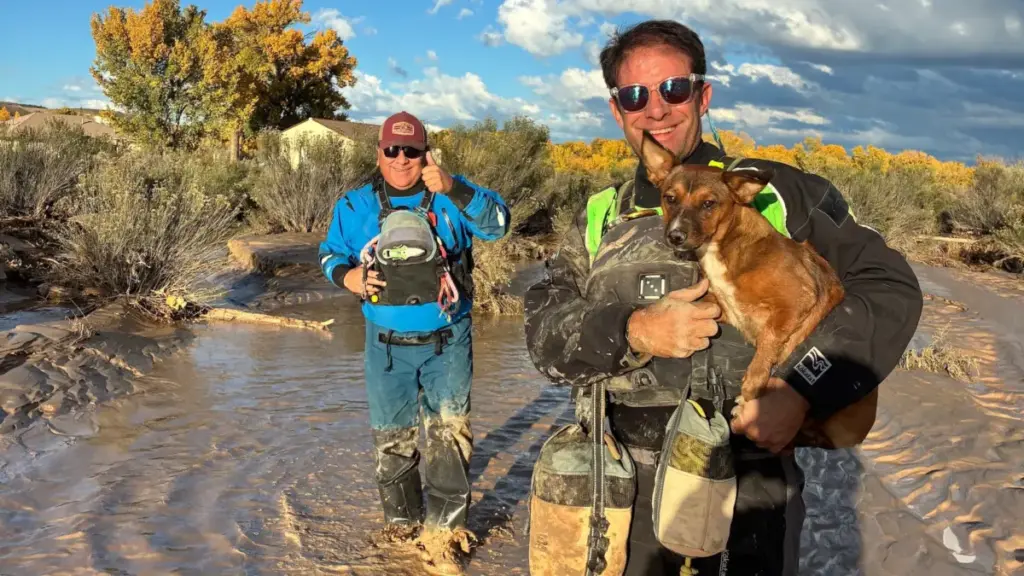
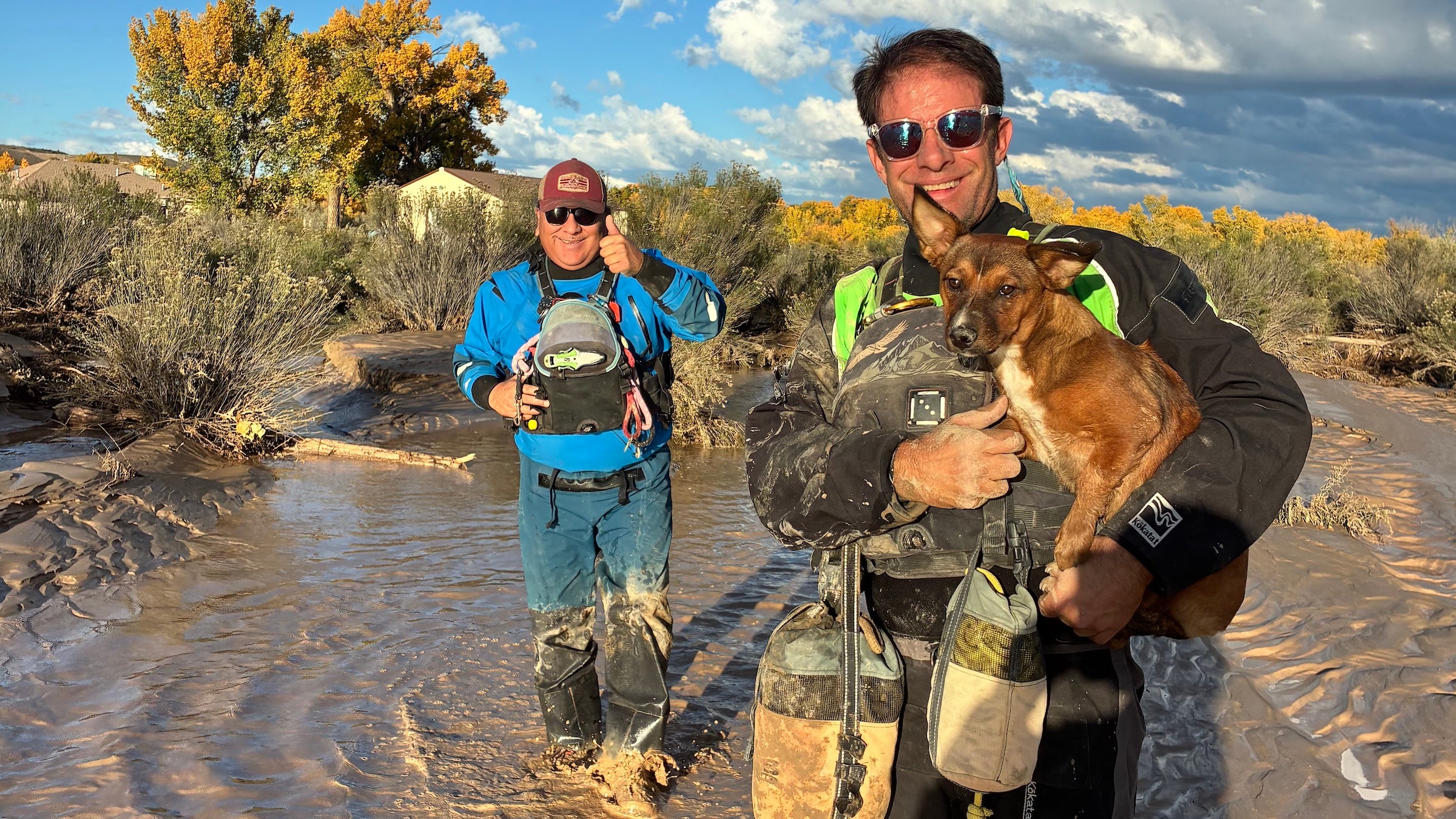
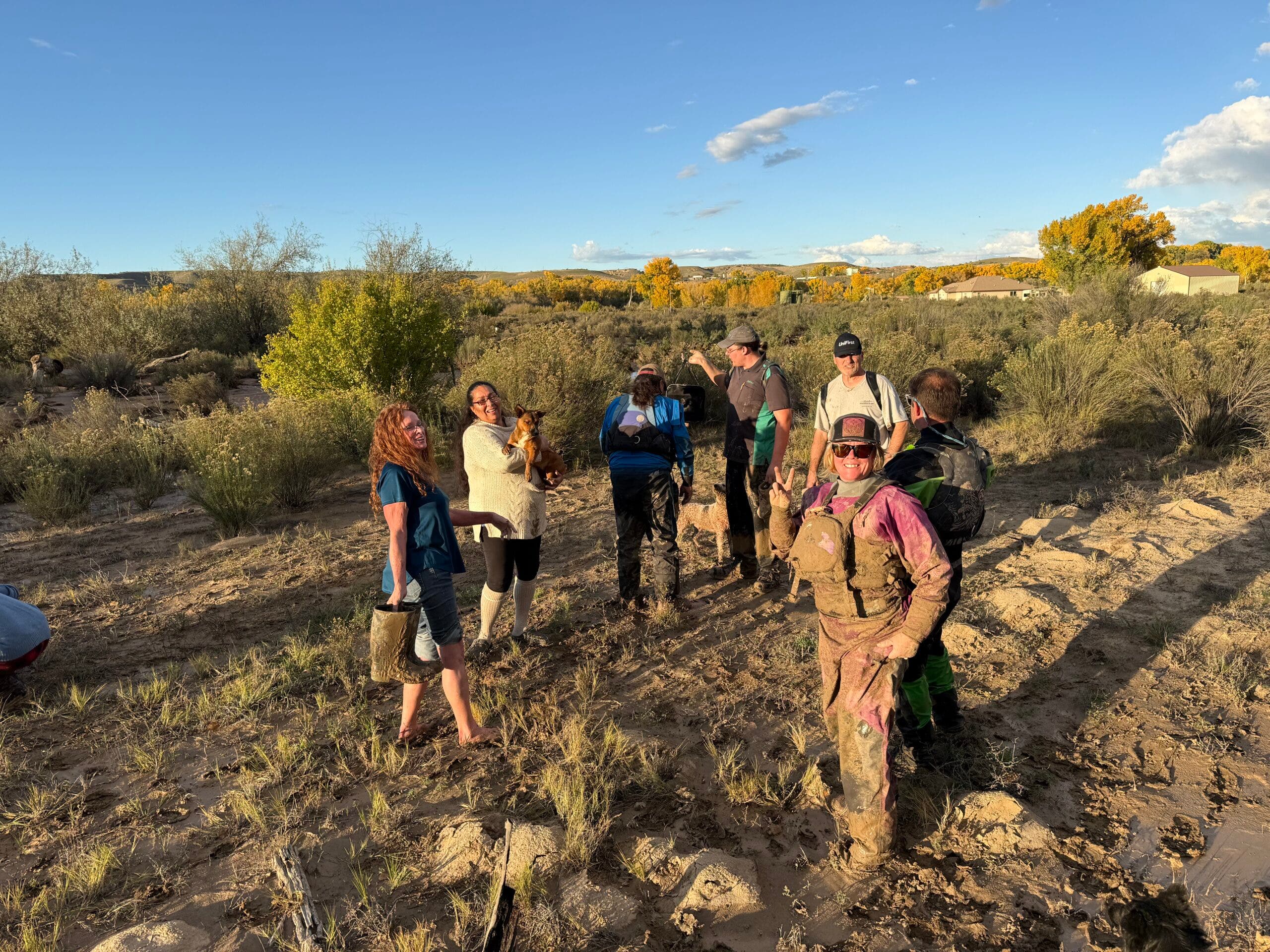
FARMINGTON, New Mexico — Emerging from waist-deep quicksand with her raspberry-pink drysuit caked in thick desert mud, Ryan Dudgeon caught her breath before pushing forward. The Farmington whitewater paddler had spent hours wading through flooded streets alongside a dedicated team of fellow river guides, towing a 14-foot inflatable raft through the submerged neighborhoods of northwestern New Mexico.
The emergency response effort, launched on October 23, 2026, was part of an urgent mission to locate and rescue domestic pets and farm animals left behind after historic, catastrophic flooding devastated the Four Corners region overnight. The sudden disaster destroyed residential properties, washed mobile homes off their foundations, and displaced thousands of residents across multiple counties and tribal lands.
Utilizing their specialized swiftwater rescue equipment, drysuits, and professional river navigation skills, Ryan and her volunteer team spent several grueling days navigating dangerous waters to save animals stranded inside flooded homes, locked in corrals, or trapped in submerged kennels and cages.
“We are the only ones in the county qualified to do anything like this, aside from Search and Rescue,” Ryan, 41, explained in an interview.
Ryan and her husband, 46-year-old Cody Dudgeon, are lifelong Farmington residents and the owners of Desert River Guides, a local commercial rafting outfitter that typically leads outdoor recreation trips down the nearby Animas and San Juan Rivers. Despite their extensive experience navigating complex river systems, the couple admitted they had never witnessed or experienced a natural disaster of this magnitude in their hometown.
“We aren’t used to natural disasters here,” Ryan said. “None of us know what to do because we’ve never dealt with something like this.”
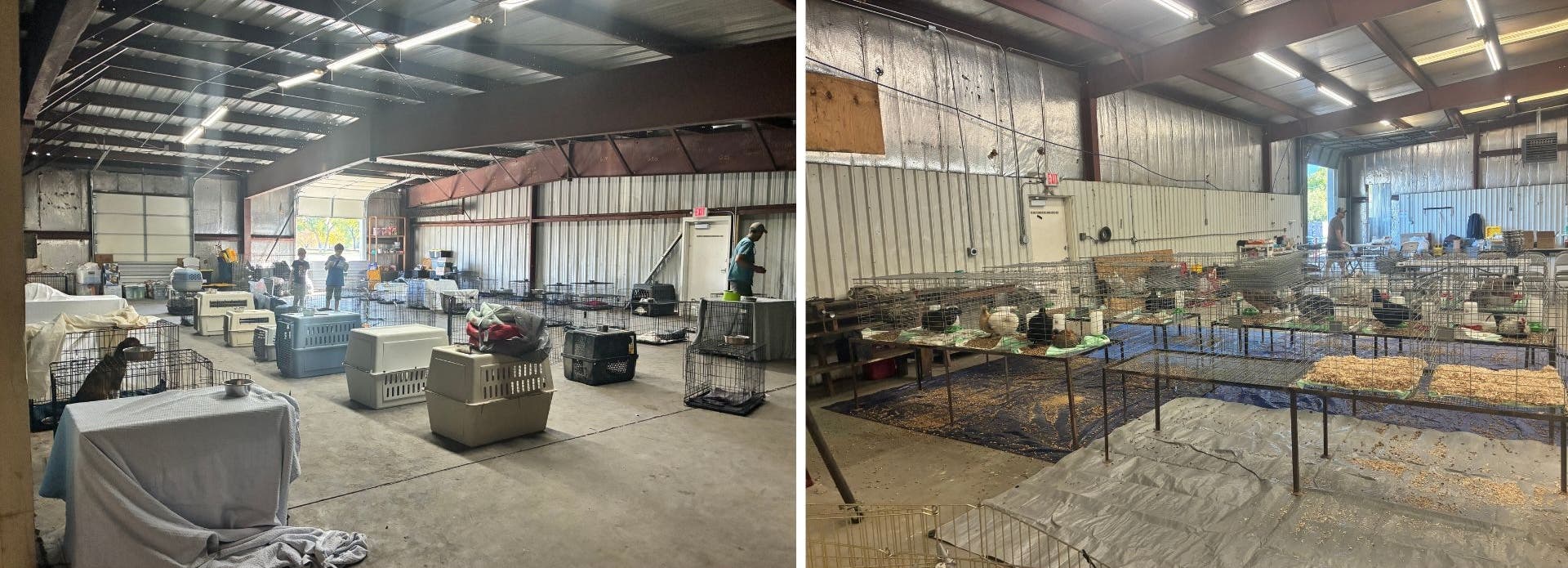
Operating under the guidance of the Farmington Regional Animal Shelter and the City of Farmington, the Dudgeons made the pivotal decision to repurpose their commercial rafting warehouse and equipment storage facility into a temporary emergency animal shelter. The makeshift sanctuary quickly became a crucial holding area for displaced pets recovered from the floodwaters.
“We have kittens and puppies all over the place,” Ryan noted, describing the steady influx of animals. “More and more are showing up now that the waters have receded and other people are finding lost animals.”
Across the broader Four Corners region, the scale of the devastation has shocked local communities. Homes have been heavily damaged or completely decimated, major transit routes and trails—such as the Bridal Veil Falls trail in Utah—have been closed by massive rockfalls, and regional water bodies like Lake Powell have risen by at least ten feet since the storm system unleashed relentless downpours.
Local authorities and volunteers anticipate that the Dudgeons’ converted guide shop will continue to serve as a safe haven for rescued animals—including chickens, cats, dogs, and rabbits—for weeks to come as families begin the slow and arduous process of returning home and assessing the damage.
Paddling in Where Others Couldn’t Go
Reflecting on the initial moments of the crisis, Ryan recalled the heartbreak of watching rising floodwaters quickly swallow her local community on October 23. Realizing the immense danger facing both human residents and vulnerable animals left behind during mandatory evacuations, she knew immediate action was required.
“We got in our dry suits, loaded up the van with the boat, and we went out there,” Ryan said.
The rescue team alternated between paddling their raft through heavily inundated residential streets and wading through treacherous currents while towing the watercraft by hand.
“People needed help,” she said. “People were scared. They left their homes, but they also left their pets locked inside their houses, which is why we went out.”
While the team successfully rescued dozens of domestic pets, the agricultural reality of San Juan County—an area dotted with thousands of ranches and small farms—presented heartbreaking limitations. Ryan recalled a particularly agonizing moment when she and her fellow paddlers attempted to reach a remote goat farm, guided only by the desperate bleating of animals echoing across the water. Because the swift currents and submerged hazards made access impossible, the team could not reach the herd, leaving the animals to perish alongside vast numbers of other local livestock.
“There were dead animals everywhere,” Ryan said, describing the grim landscape. “People were calling us, and we went out with our boats and gear, and we spent two days trying to rescue animals in rafts and float people out. Just as much as we could help, just as much as we were allowed to do.”
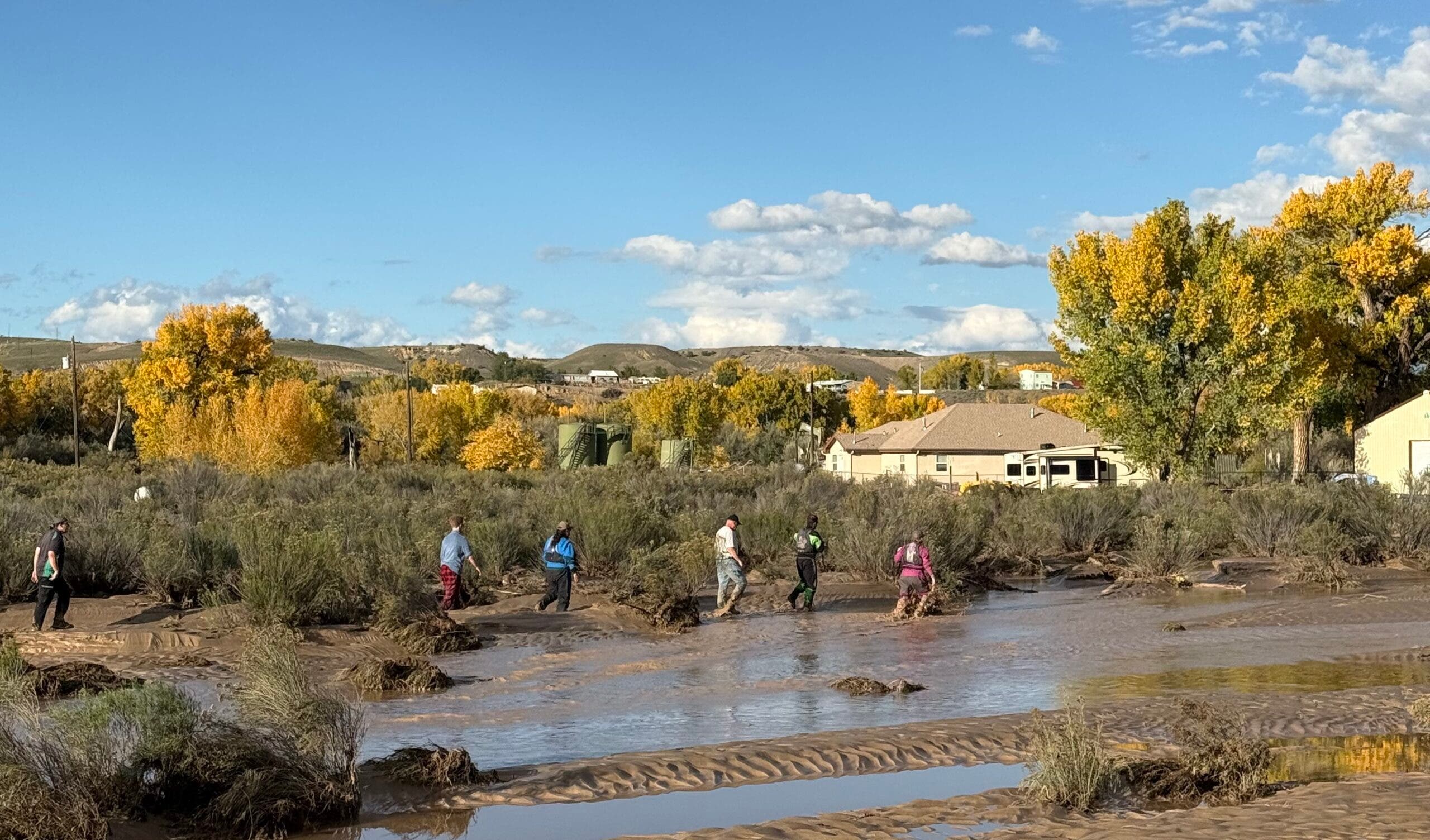
As the rescue operations continued, the floating debris in the streets served as a grim reminder of the agricultural losses, with deceased livestock drifting alongside household wreckage, furniture, and massive logjams brought down by the swollen rivers.
“I heard them drowning,” Ryan said softly, recounting the distressing auditory backdrop of the flood zone.
Historic Destruction Across the Four Corners
Longtime regional residents and historians have drawn direct comparisons between the October 2026 disaster and the legendary 100-year floods of October 1911, when catastrophic seasonal rains similarly tore through the Four Corners landscape. The sheer volume of water during the recent storm generated widespread anxiety and rumors throughout Farmington, including unverified reports that a major regional dam had structural failures. Authorities later confirmed that the catastrophic flooding was driven entirely by torrential rainfall and unprecedented river surges.
Hydrologists measure river flow in cubic feet per second (CFS), a metric where one cubic foot is roughly equivalent to the volume of a standard basketball. Under normal conditions, the Animas River flows at a steady pace of 1,000 to 4,000 CFS. However, as the storm peaked on October 26, the river was measured pushing an astonishing 12,000 CFS—effectively driving that many basketball-sized volumes of water through a single point every second. Similarly, the San Juan River, which the Dudgeons typically guide at a gentle 500 CFS, experienced a staggering surge to 33,500 CFS as it ripped through Farmington.
The human toll of the flooding has left many families entirely destitute. Ryan noted that a displaced friend, whose home was completely inundated by the surge, is currently staying with her after floodwaters left nearly a foot of thick, contaminated mud inside his residence.
“He can’t go home, and he doesn’t know what to do,” Ryan said. “He has nowhere else to go.”
Upstream and downstream communities experienced similar devastation. Mobile home parks in Bloomfield, along with residential areas extending through Shiprock and across the Navajo Nation, suffered severe destruction. Homes were ripped directly from their structural foundations, with some entire residential structures swept away by the current and left stranded against bridge abutments or along remote riverbanks.
“Trailers were moved off the foundations and houses were taken downstream—they’re stuck on bridges or on the side of the river,” Ryan said. “They’ve lost everything. I can’t imagine how long this recon will take. It’s literally unbelievable.”
Compounding the property damage, the receding floodwaters left behind thick, hazardous layers of river silt mixed with sewage from compromised municipal treatment facilities, rendering many homes unsafe to enter without specialized mitigation.
“None of us know what to do because we’ve never dealt with something like this,” Ryan reiterated.
A Whitewater Warehouse Turned Into an Ark
The logistics of operating an emergency animal shelter inside a commercial guide outfit faced immediate hurdles when local officials issued an urgent flood watch for the Dudgeons’ warehouse location at approximately 10:00 P.M. on October 23.
“We moved out all of our rafts onto the bus, and started moving animal crates in,” Ryan said. “And then all of a sudden, after we got everything perfectly set up, officials called us around 10 P.M. on a Friday night.”
Faced with the imminent threat of rising water at their primary staging ground, the Dudgeons put out a call for help. Within a short time, friends, colleagues, and community volunteers arrived in force to assist in relocating the rescued animals and equipment to a secondary building situated on higher ground.
“It was just the most incredible community involvement, and I will never be able to thank these people enough,” Ryan said.
By the following morning, meteorological conditions deteriorated further as heavy downpours dropped up to four inches of rain within a ten-minute window, accelerating flash flooding across the municipality.
“I have my whole life in that building,” Ryan said, describing the tension of watching the storm unfold. “Rain was just pouring down the hills, all toward our shop and river. The river was breaching its banks.”
A Community Banding Together
In the days following the emergency relocation, the secondary warehouse facility evolved into a communal living space, accommodating not only dozens of rescued dogs, cats, rabbits, and chickens, but also the exhausted volunteers and animal caretakers who tended to them. Supporters slept on the outfitter’s inventory of camping gear, utilized the warehouse’s recreational amenities, and prepared communal meals using portable camp stoves.
“It’s a rafting company, and now it’s a rafting company turned into an animal shelter,” Ryan remarked.
Beyond her role as a swiftwater rescuer and animal caretaker, Ryan is an elementary school educator and a mother of two. As the emergency response transitioned into recovery, her focus shifted toward providing emotional stability and a sense of normalcy for her family and her fourth-grade students.
“Everybody in the community has come together. I’ve never seen anything like this or experienced anything like this,” Ryan said. “Tomorrow, everybody’s going back to school, and as a fourth-grade teacher, I’m just going to try to make my kids’ lives feel as normal as possible.”
Though her husband Cody remained steadfast in his decision not to permanently adopt any of the displaced animals housed at their makeshift shelter, the couple did manage a brief moment of levity amidst the exhaustion. Once the emergency operations stabilized, the two experienced river guides took the opportunity to pilot a raft down the Animas River at its historic, peak flow rate—purely for the thrill of the water.
“I will tell you,” Ryan said, “best float of my life.”