

For many modern desktop 3D printing enthusiasts, moisture management has quietly evolved from an afterthought into a critical daily ritual. Filament drying and humidity control historically meant relying on standalone heating cabinets, external food dehydrators, or passive desiccant boxes. However, the release of accessories specifically engineered to integrate directly with automated multi-material systems is beginning to shift how hobbyists handle hygroscopic materials. Among the latest entries in this specialized hardware category is the Sunlu AMS Lite Filament Heater, an aftermarket expansion priced at $130 designed exclusively to upgrade Bambu Lab’s popular AMS Lite multi-material system.
Operating out of the San Francisco Bay Area, where ambient humidity rarely poses a severe threat to standard printing polymers, testing this hardware reveals both the clever engineering behind integrated drying systems and the inherent limitations of modifying closed-ecosystem printer accessories. The Sunlu AMS Lite Heater aims to bridge a gap in Bambu Lab’s hardware lineup by providing active pre-printing and in-print drying capabilities within a consolidated desktop footprint.
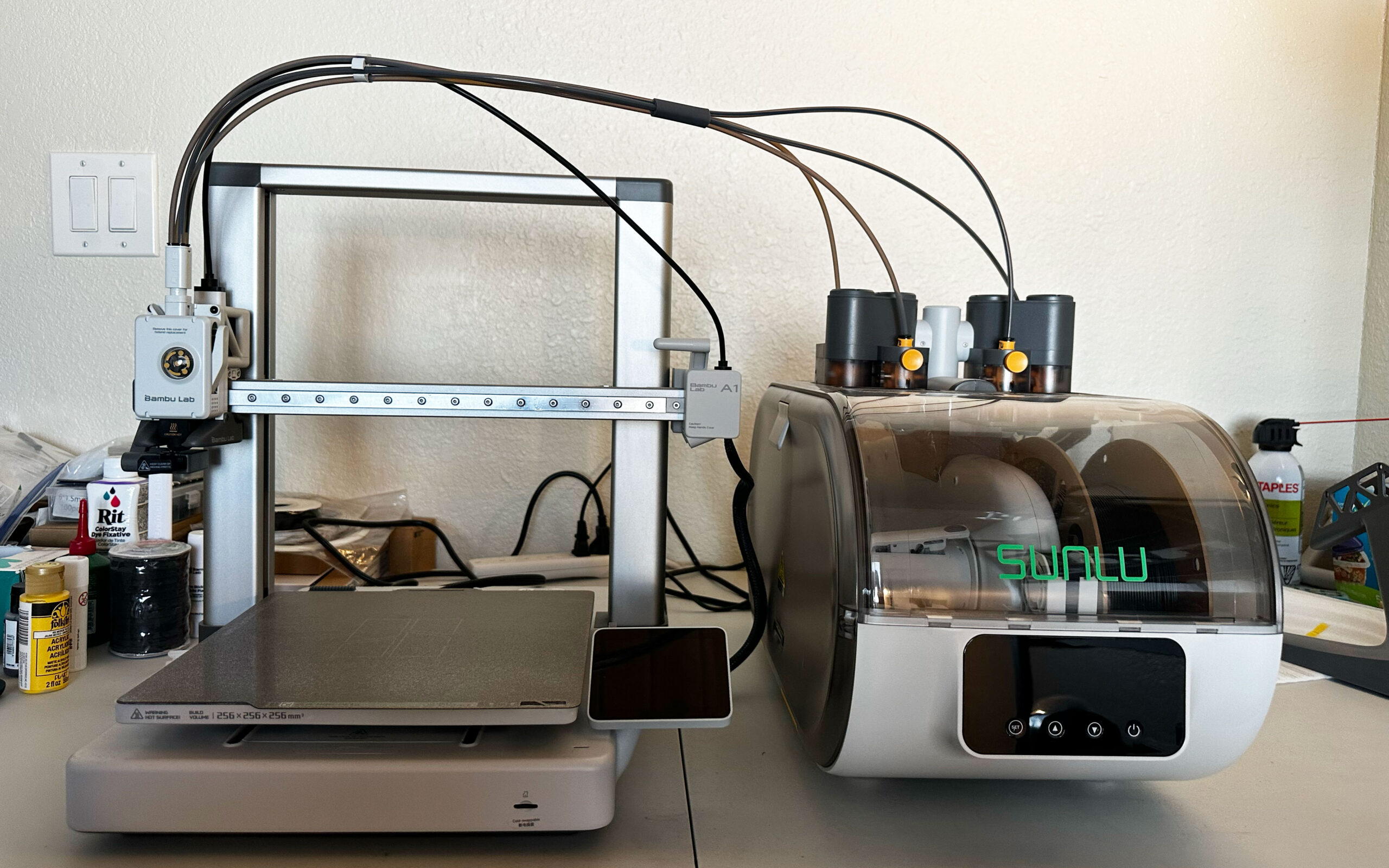
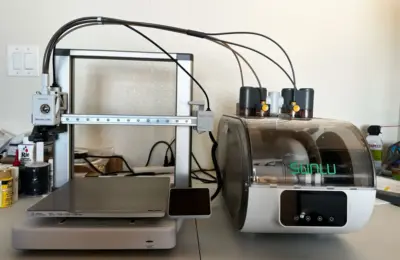
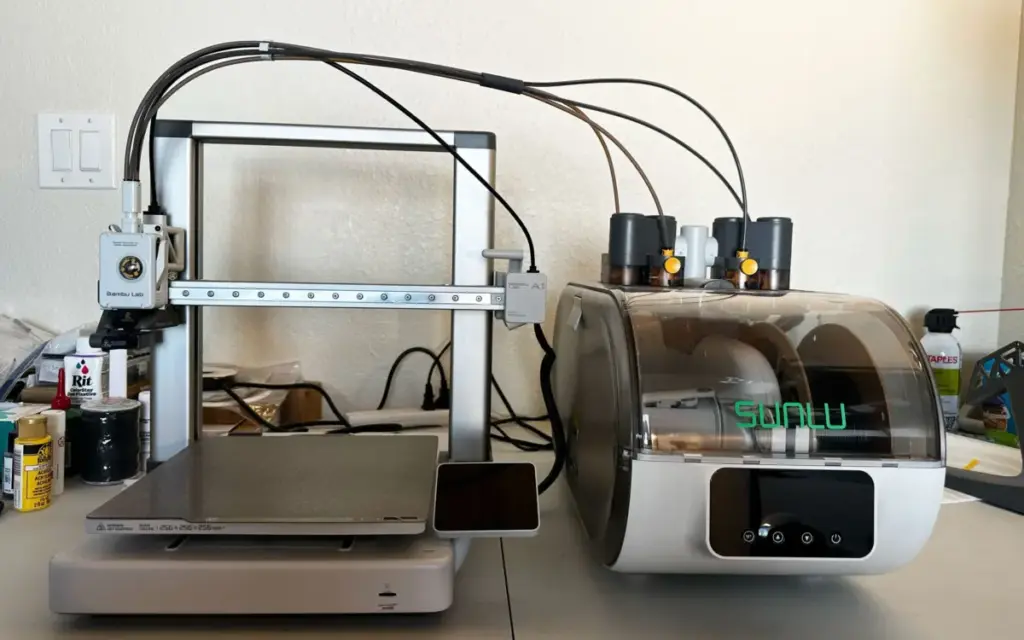
Unlike traditional standalone drying boxes that require users to pull dry filament out of a separate machine and thread it into a printer, Sunlu’s unit merges directly with Bambu’s hardware architecture. The installation process transforms the user experience from the outset, proving to be both surprisingly straightforward and slightly daunting on paper. Assembly requires splitting the AMS Lite apart and sandwiching the Sunlu heating unit directly into the middle of the assembly.
Despite the initial impression of a complex teardown, the actual mechanical modification is minimal, involving little more than swapping out a few factory screws and plugging in a pair of internal wires. Cleverly, the modified AMS retains its core power delivery through the primary 3D printer. This thoughtful design choice means users can operate the printer normally without engaging the heating elements, or alternatively run the drying unit independently while the printer itself is powered off. Aside from minor manufacturing tolerances resulting in a couple of screw holes that did not quite line up perfectly, alongside a somewhat fussy plastic cover replacement, the overall integration achieves an elegant physical execution on the desktop.
In daily operation, the heating unit offers comprehensive control over thermal and environmental parameters. It features six preset configurations optimized for common and advanced 3D printing materials, including PLA, PETG, TPU, ABS, PA (Nylon), and PC (Polycarbonate). For users who prefer granular control, the device also provides manual adjustments, allowing temperatures to be set anywhere from 35 degrees Celsius up to 70 degrees Celsius, alongside a humidity target range spanning from 25% to 50%.

A built-in timer manages the active drying cycles, defaulting to a standard six-hour heating window. Once the initial timer expires, the system intelligently transitions into a maintenance mode, automatically engaging whenever humidity climbs back up to 50% in order to bring the environment back down to the user’s specified target value. Throughout extended testing cycles, the enclosure remained warm to the touch without ever reaching hazardous or burning temperatures, and crucially, it radiated very little waste heat into the surrounding office workspace. Furthermore, the internal fans and heating mechanics operated at a remarkably low noise level, ensuring it did not add noticeable acoustic distraction to the desktop environment.
From a practical print quality perspective, the benefits heavily depend on regional environmental conditions. In drier climates like the San Francisco Bay Area, users may struggle to notice an immediate, dramatic leap in surface finish or layer adhesion, primarily because untreated filament rarely suffers from severe moisture saturation locally. However, for makers residing in humid tropical or coastal regions, the continuous drying capability during active printing jobs offers substantial value, preventing the gradual degradation of filament properties mid-print.
Physical workspace ergonomics present a few minor operational hurdles that users must navigate. Because the filament spools are securely housed and heated within a unified enclosure, users must ensure they leave adequate clearance space on the sides of the machine. The access doors on the heater require clear room to fold downward. Due to the relatively short length of the standard Bambu PTFE guide tubes, accessing the door closest to the printer body can become awkward, occasionally forcing users to manually rotate the entire heavy unit to reach the loading ports on the printer-facing side.

Another crucial operational factor involves material compatibility and multi-material workflows. Because all four spools share a single enclosed and heated chamber, mixed-material setups require careful planning. Different polymers demand vastly different drying and storage temperatures. Maintaining an elevated internal temperature suitable for drying a spool of PETG or Nylon, for instance, risks softening or outright fusing a loaded spool of low-temperature PLA if both materials occupy the enclosure simultaneously.
Ultimately, the Sunlu AMS Lite Filament Heater represents a clever, well-executed hardware modification for owners of the Bambu Lab A1 and AMS Lite ecosystem. It delivers robust climate control features, operates quietly, and manages to preserve the desktop footprint of the original factory hardware setup. While material management requires mindfulness when mixing diverse polymers, the unit provides an effective, streamlined solution for makers seeking active humidity control directly at the point of print.