


The stock market has once again left investors marveling at its resilience and scratching their heads over its trajectory. Year after year, financial markets continue to surprise participants, oscillating between devastating crashes that shrink retirement stashes and record-shattering valuations that provoke an entirely different kind of anxiety. After all, when the market climbs to unprecedented highs, many assume it is merely building momentum for an inevitable, catastrophic fall—particularly when the current market boom is fueled by the breathless frenzy surrounding Artificial Intelligence.

For those who have tuned out the financial news cycle entirely to focus on living their lives, the detachment is admirable. However, understanding the broader context of the current economic anxiety requires looking closely at how historical market cycles mirror today’s headlines. Investors currently worry that while AI is undeniably a transformative technology, the financial mania surrounding it is moving too fast and reaching unsustainable valuations. Many fear a replay of the early 2000s dot-com crash on a much grander scale—a historical parallel that holds personal significance for early retirement advocates who navigated that exact era.

Reflecting on two decades of financial independence brings a unique perspective to these recurring cycles of panic. Conversations with friends and fellow investors frequently center on a persistent sense of dread: how can anyone remain comfortably retired and sleep soundly at night with the state of the world as it is? A laundry list of modern anxieties—ranging from geopolitical instability and rising national debt to inflation and the looming threat of an AI-induced market collapse—routinely dominates public discourse. Yet, stepping back reveals that this brand of existential financial worry is hardly new.

Comparing current anxieties to those from twenty years prior reveals striking similarities. In 2006, the cast of characters and specific macroeconomic boogeymen looked entirely different, yet the underlying terror was identical. Back then, society wrestled with geopolitical conflicts in the Middle East, escalating national debt, stubborn inflation, and an overvalued housing market that eventually triggered the Great Financial Crisis. Instead of fearing that artificial intelligence would eliminate jobs, workers worried about outsourcing to overseas markets. There was even widespread panic over "Peak Oil," with doomsayers predicting that the world was running out of fossil fuels—a prediction that was ultimately upended by technological innovation and booming energy supplies.

Looking back at the trajectory of the stock market over the past twenty years places even the most severe historical crashes into a reassuring perspective. Even the Great Financial Crisis, which stands as the largest economic downturn since the Great Depression, appears as a temporary dip on a long-term upward chart. Broad economic progress accompanied this market growth: global extreme poverty rates plummeted significantly, infant mortality rates were cut in half, and clean energy adoption surged as solar panels became dramatically cheaper, paving the way for widespread renewable power generation and the rapid rise of electric vehicles.

This historical resilience underscores a fundamental economic truth that financial fear-mongers consistently overlook: true prosperity does not originate from abstract numbers on a computer screen within the financial system, but rather from tangible productivity. The underlying architecture of capitalism is inherently volatile, subject to choppy waters and wild cyclical swings. Yet beneath the surface turbulence, real people continue to perform real work and develop genuine innovations. Financial systems are entirely human constructs; if a flawed system collapses under the weight of excessive speculation, society simply adjusts, resets the metrics, and returns to productive labor—just as it did in 2008 and countless times before.

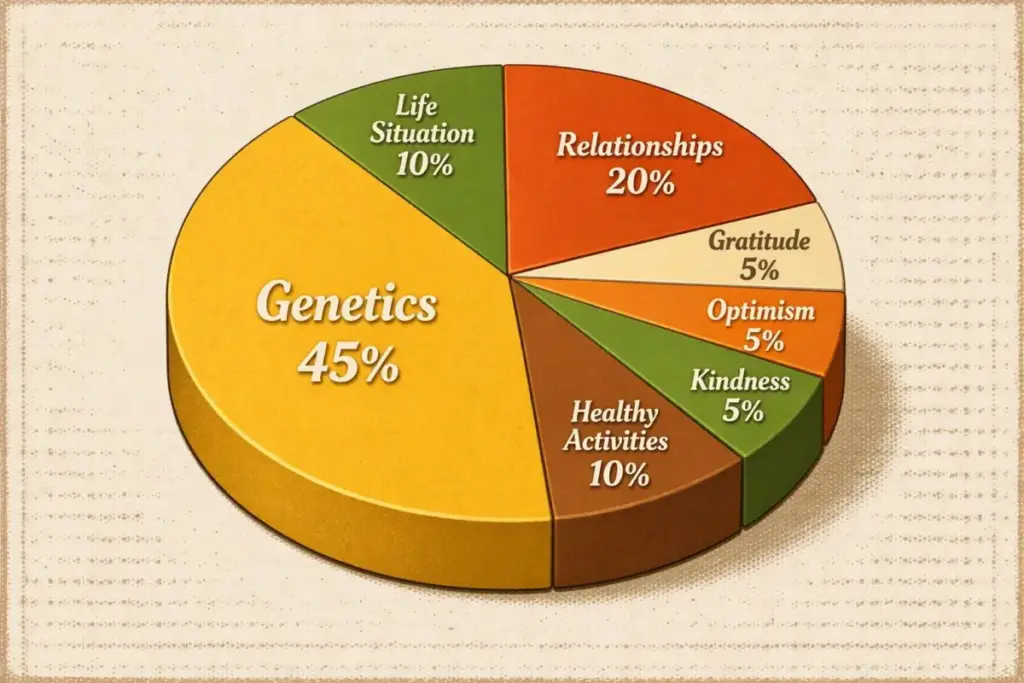
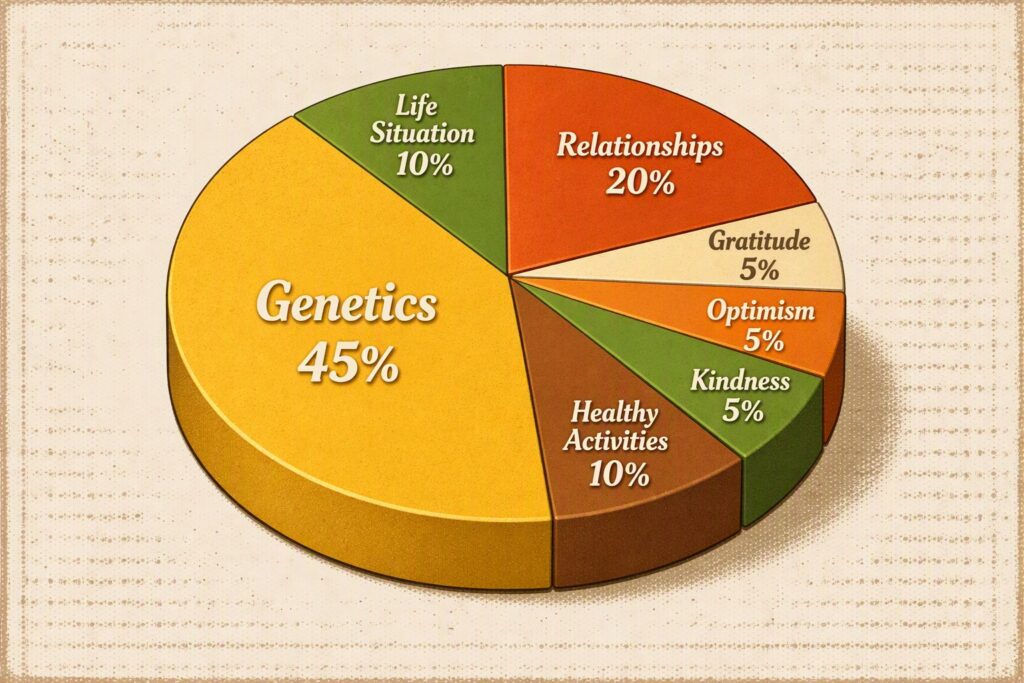
While productivity drives economic growth, the pursuit of human happiness ultimately extends far beyond financial metrics. Once a society achieves a stable standard of living, additional wealth yields diminishing returns regarding personal fulfillment. Happiness relies much more heavily on factors within individual control, such as cultivating strong relationships, practicing daily gratitude, maintaining optimism, and engaging in healthy outdoor activities. Despite these enduring principles, background financial anxiety persists even among seasoned investors who understand the mechanics of long-term wealth accumulation.

The root cause of this persistent unease is not a failing economy, but rather human biology. As a species, humans evolved as sophisticated danger-detection machines designed to protect themselves from physical threats, predators, and scarcity. Once immediate physical survival is secured, this evolutionary machinery simply moves the goalposts. When modern comforts are achieved, the mind pivots to worrying about social standing, localized community regulations, tax strategies, and estate management.
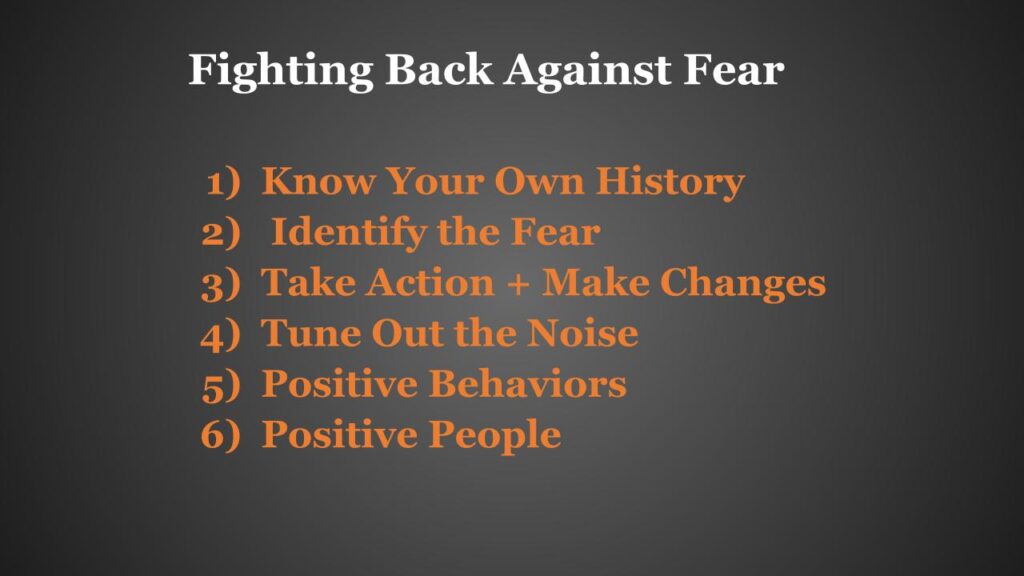
Recognizing this internal mechanism is the first step toward combating irrational financial fear. By examining personal history and childhood influences—such as growing up in households shaped by a scarcity mindset or surviving past trauma—individuals can better understand why their brains overreact to modern market headlines. Identifying specific worst-case scenarios often reveals that even the most frightening financial outcomes are manageable. Taking deliberate action transforms the unfamiliar into the familiar, fostering the resilience and confidence needed to handle any future situation without panic.

Tuning out the continuous stream of sensationalized media is another crucial step toward mental clarity. Daily news broadcasts rely on fear-mongering to capture attention, poisoning public perception with hand-picked narratives of impending doom. True progress and personal well-being stem from positive behaviors, physical movement, and active problem-solving rather than passive media consumption. Surrounding oneself with optimistic, productive peers further reinforces a balanced mindset focused on living a fulfilling life rather than anticipating catastrophe.
Approaching major life transitions—including career changes, housing moves, and early retirement—through the lens of experimentation helps reframe uncertainty from a source of terror into an opportunity for curiosity. This experimental mindset applies directly to the current Artificial Intelligence boom. Rather than succumbing to doom-scrolling and generalized panic, understanding the technological and economic drivers behind AI reveals immense potential upside. AI functions essentially as a cognitive tool designed to supercharge efficiency and productivity, ultimately fostering broader economic prosperity.

While technological shifts inevitably displace certain entry-level office and driving roles, history shows that such transitions simultaneously pave the way for cheaper services and entirely new industries, much like the advent of the internet and mobile computing. The distribution of these rewards often favors innovators and shareholders, but the overarching reality remains unchanged: technological advancements present choices. Individuals can either view these developments through a lens of paralyzing fear or utilize them as catalysts for lifelong learning, adaptation, and personal growth. Ultimately, overcoming financial anxiety requires confronting the root causes of apprehension, recognizing that meaningful personal and financial progress consistently lies just beyond the horizon of fear.