



By Jacob Kleinman
Published September 20, 2026, 2:00 PM EDT
The day before Ethan Hawke was scheduled to film the most physically demanding and high-stakes sequence of his new film The Weight, he gave himself an entirely avoidable injury. "For a variety of dumb reasons, I pulled my hamstring," Hawke recalls.
Despite the setback, there he was hours later, positioned precariously on a rickety, swinging rope bridge suspended over a deep ravine. With the camera rolling, his task was to catch giant, heavy fake gold bricks hurtling through the air and heave them safely to the opposite side.
"When you’re falling all over the ropes over a couple of days, it really starts to hurt a lot," Hawke reflects. "But I loved doing it because I believed in the movie, and we had this great group of people around, and our director was incredible."

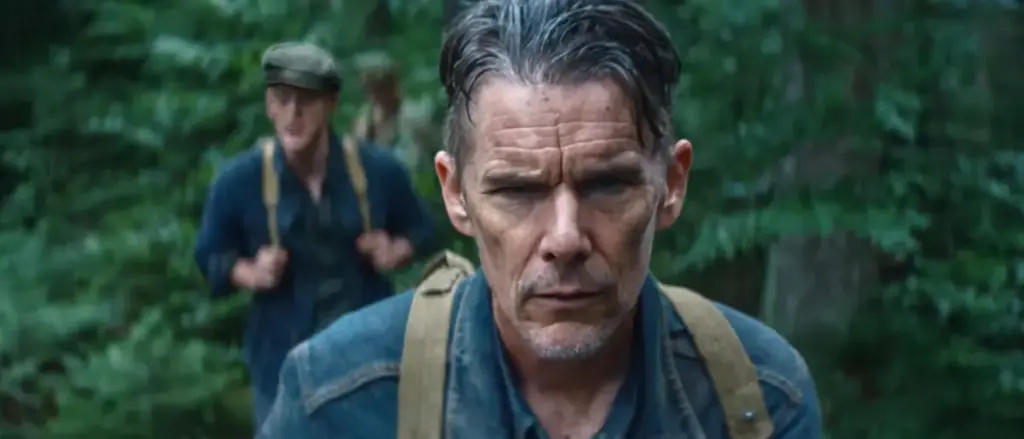
Directed by Padraic McKinley, The Weight is a gritty historical drama set against the backdrop of 1930s America. In the film, Hawke stars as Samuel Murphy, a down-and-out single father who is abruptly separated from his young daughter and thrust into a brutal, unforgiving work camp in Oregon. Murphy soon catches the eye of the camp’s manipulative warden, played by Russell Crowe. Seeking a way out, Murphy is offered a tempting bargain: secure an early release by smuggling several bags of heavy gold bars out of a heavily guarded mine before President Franklin Delano Roosevelt and his New Deal administrators can seize them, and deliver the cargo to a secret drop-off point.
Murphy does not undertake this perilous journey alone. He is joined by three other desperate inmates, a pair of deeply untrusting gold miners, and an Indigenous runaway played by Julia Jones, who crosses paths with the group as they attempt to flee the mining camp and decides to tag along.
Along their treacherous escape route, the fugitives encounter a series of deadly obstacles rooted in both the harsh natural environment and human threats. Among them, the most harrowing challenge is a dilapidated rope bridge spanning a dizzying chasm. Too flimsy to safely support the weight of more than one man at a time, Murphy is forced to station himself in the middle of the swaying structure as his companions toss the gold bars across one by one. A single misstep, or a missed catch, could mean losing the gold—or plunging over the edge into the abyss below.
The sequence immediately invites comparisons to classic high-tension cinema, most notably William Friedkin’s iconic 1977 action thriller Sorcerer, which famously featured a nerve-wracking sequence involving a heavy truck navigating a collapsing rope bridge. McKinley readily leans into these cinematic parallels. "We took much more of a cue from the Sorcerers of the world," the director explains, highlighting both the thematic bridge showdowns and the dense, immersive green vegetation that dominates the visual landscape of both films.

Bringing the sequence to life required extensive logistical planning. Principal photography for The Weight took place in Germany, primarily utilizing the dense, atmospheric forests of the Bavarian region. McKinley and his crew scouted extensively across the territory before finding a location that matched their vision for the rugged American wilderness.
"Then we had to figure out how to build it," McKinley says. "Our production designer, Cora Pratz, was able to build this bridge that was stable and safe, but really swung, and you could go over, no problem. All the gaps in it were bigger than your foot. So if you didn’t watch your step, you were falling through."
The resulting structure was fully functional, though engineered with deliberate safety measures alongside authentic hazards. One end of the bridge was anchored securely into solid ground, while the other was designed to appear more natural and hazardous. Because of this asymmetrical setup, McKinley could only film in one direction—facing away from the secure anchor. This limitation required clever camera positioning and editing tricks.
"We shot one group of people throwing the gold bricks this way, and then we switched out the backgrounds a little and shot the other people," McKinley notes. "Ethan basically just turned around."
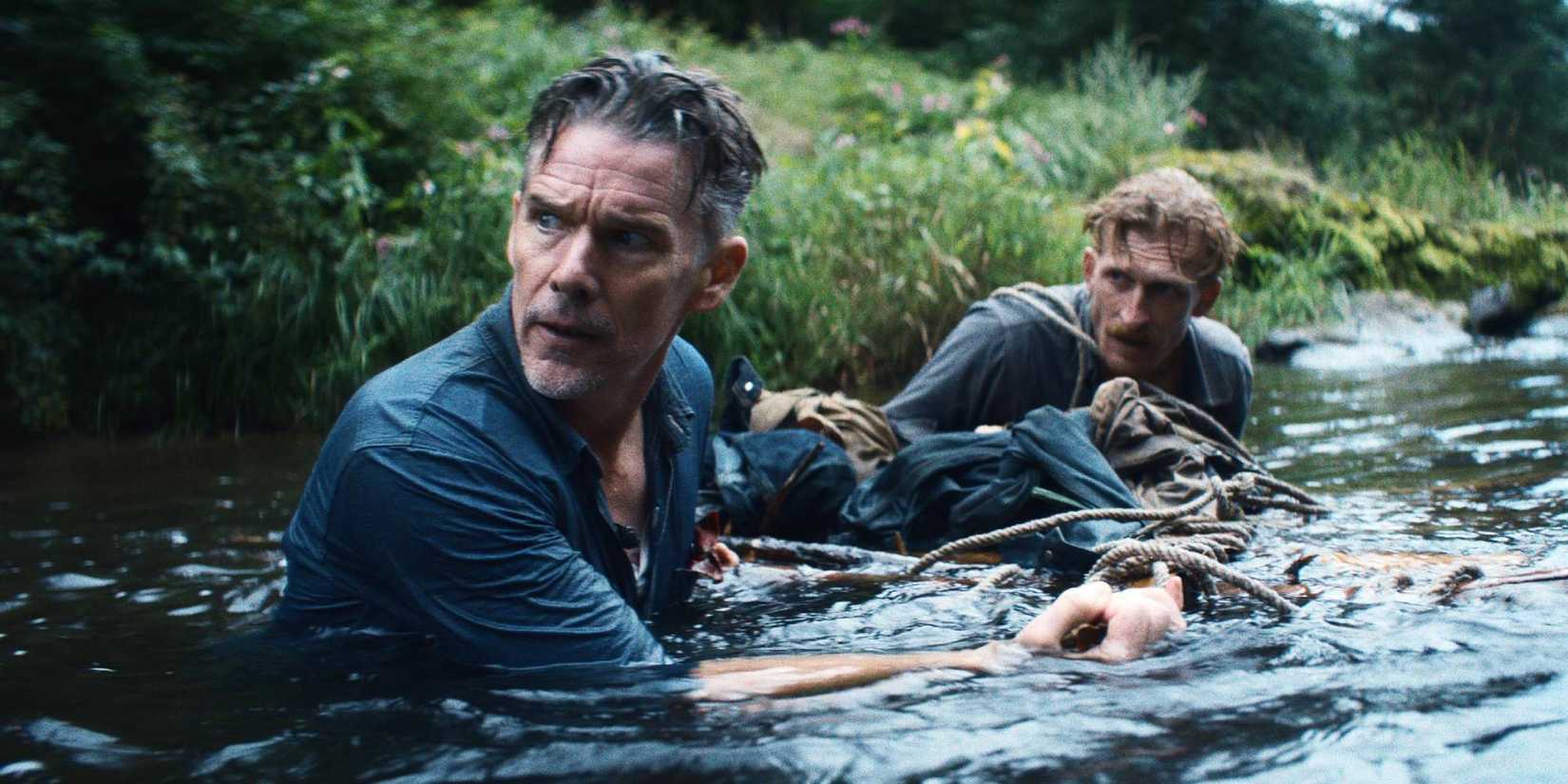
Even with the safety precautions, the physical toll was real. "It wasn’t without its own set of treachery, but it wasn’t quite as bad as it looks—a little bit of movie magic," Hawke says.
"We Were Out There"
While the rope bridge sequence serves as the narrative and visual centerpiece of The Weight, the production demanded intense physical and mental endurance from the entire cast throughout the shoot.
"Pretty much every scene in this movie was stressful and difficult," Hawke admits. "Every day presented some kind of riddle that was much more difficult than I had imagined."
Even mundane tasks, such as navigating the forest terrain on foot, presented ongoing challenges as filming progressed.
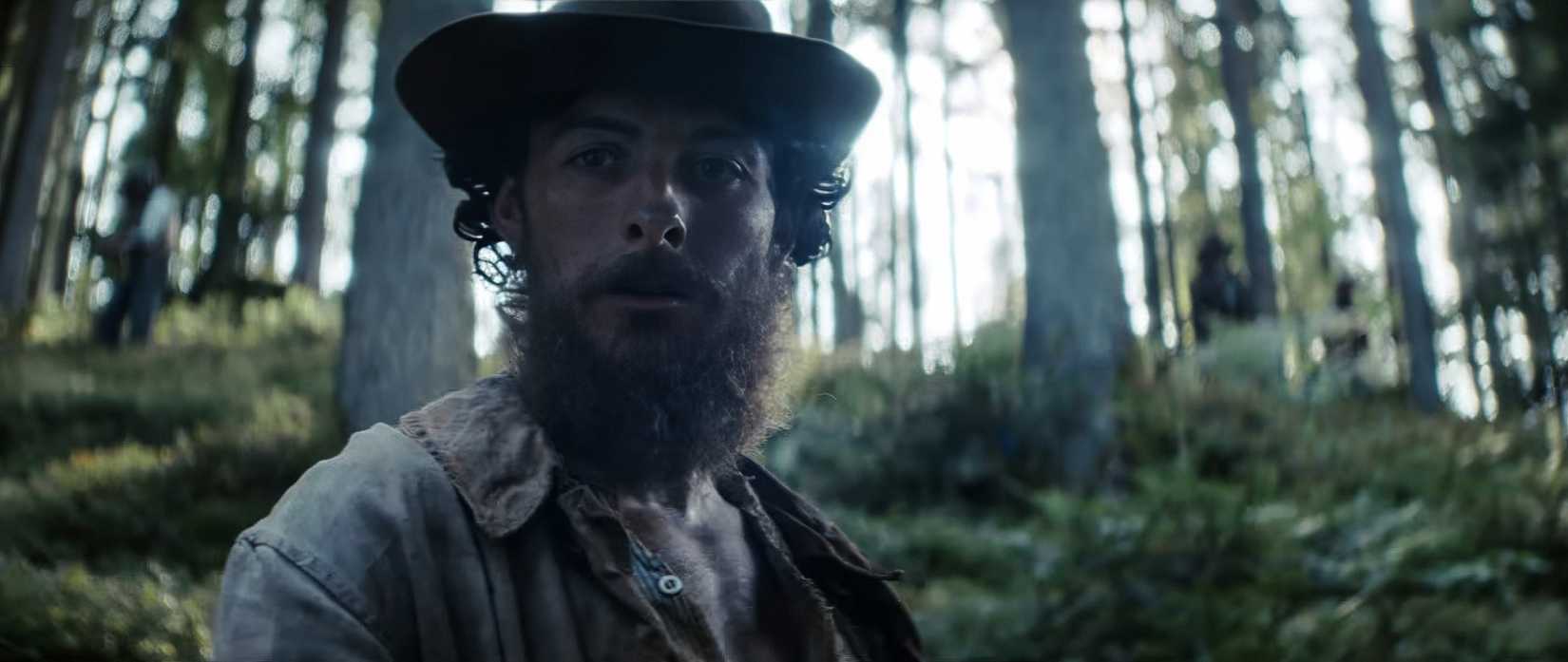
"As we filmed, we’d get banged up," Julia Jones explains. "So the further we got into production, it did feel like we were getting deeper and deeper into the woods, but also, you have a sprained ankle now because of the jump you took yesterday. The irony of it is, that’s helpful as an actor, given the script."
Hawke echoes the sentiment, pointing out that the cumulative exhaustion added authenticity to their performances. "It was the constant day after day of a new challenge that got really hard," he says. "Even if it’s just hiking a mountain. To get a shot where you can’t see anything means we have to be in the middle of nowhere. A lot of that was really fun. I look back so fondly on the talks we all had when we were getting ready to do shoots and walking through the woods. It’s fun in hindsight, but in the moment, there was the fear that something would go terribly wrong."
Shooting deep within remote forest locations also played a crucial role in helping the actors inhabit the 1930s setting. Cut off from modern conveniences, the cast found it easier to connect with the historical material.
"We were out in the middle of nowhere and away from our own lives and away from cell service," Hawke notes. "It’s very easy to transport your mind back in time."
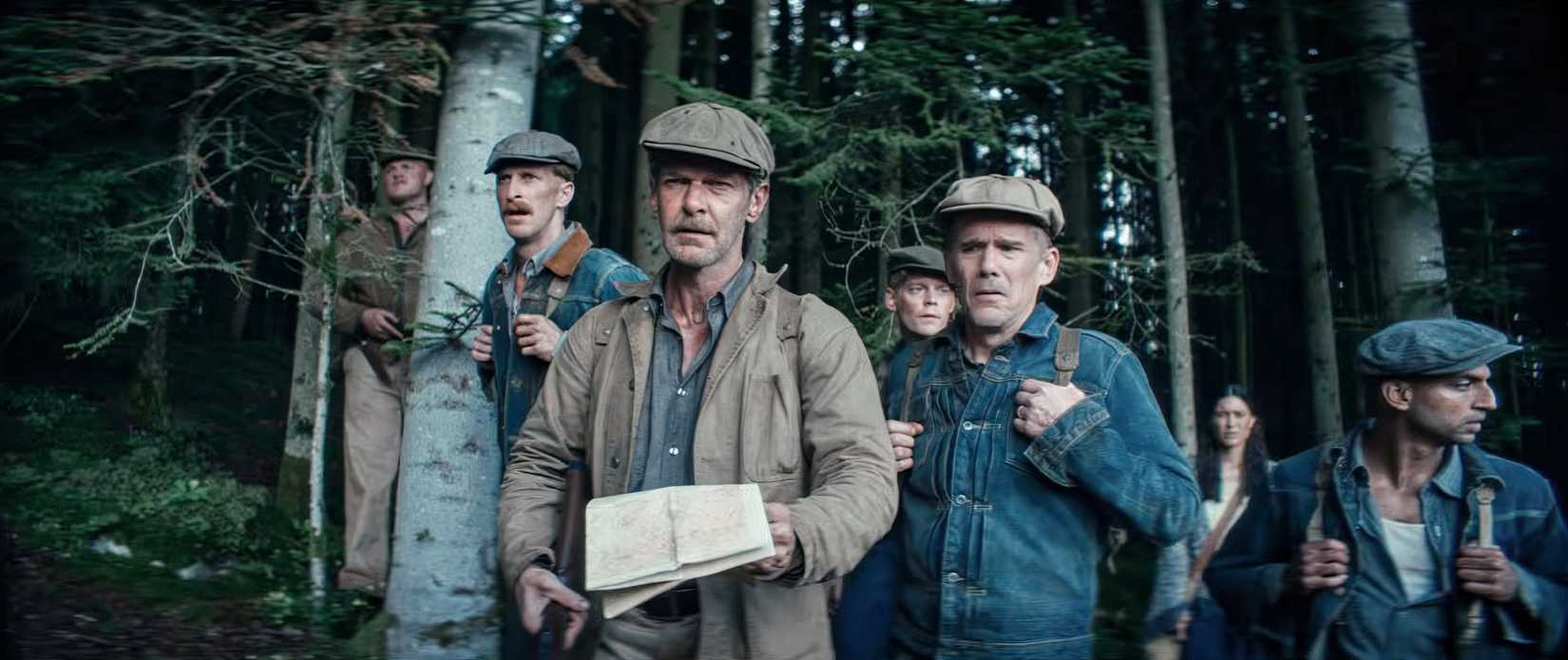
"We were out there," McKinley confirms.
"We Borrowed from the Best"
For the director, a primary hurdle was transforming European landscapes into a convincing double for the wilderness of the Pacific Northwest. To solve this puzzle, McKinley looked to Hollywood history for inspiration, drawing specifically on adventurous classics like Steven Spielberg’s Indiana Jones and the Temple of Doom.
"We looked at Indiana Jones, where they shot it in three different countries, three different locations," McKinley says. "We borrowed from the best, and we took some angles that they used in Indiana Jones and the Temple of Doom. There’s three VFX shots in it. The rest is all practical."
The Weight is playing in theaters now.