




By Olivia Rosane and Cristen Hemingway Jaynes
Invisible, odorless, and found everywhere from natural wetlands and the digestive systems of livestock to residential basement furnaces, methane has emerged as one of the most critical fronts in the global effort to combat climate change. As the second most important contributor to global warming after carbon dioxide, methane is a powerful greenhouse gas that serves as the primary component of natural gas, which currently generates roughly a quarter of the world’s electricity.
Composed of four hydrogen atoms bonded to a carbon atom, methane is a versatile hydrocarbon abundant in both nature and human industrial systems. It is formed through geological processes over millions of years when heat and pressure act on decomposing organic matter, creating the reserves we tap into as natural gas, as well as through deep underground processes free of organic material. Biologically, the gas is generated via a process known as methanogenesis, in which underwater microorganisms called archaea produce methane through an oxygen-free respiration process. This biological pathway accounts for natural emissions in wetlands and the digestive tracts of animals like termites and cows.

Measuring atmospheric methane involves two primary methodologies: bottom-up and top-down approaches. Bottom-up assessments start locally on the ground, measuring emissions directly at specific facilities or estimating them using general metrics, such as multiplying the average emissions of a single cow by the total livestock population. Conversely, top-down approaches measure atmospheric methane from the sky using aircraft, high-altitude platforms, and advanced satellites.
As satellite technology evolves, it is revealing massive super-emitting incidents that traditional ground-level inventories frequently miss. For instance, calculations based on standard equipment leak rates often overlook the extraordinary leaks—such as the top five percent of failures that account for over half of all gas industry leakage volume. Overall, direct measurements have repeatedly shown that official estimates underestimate the scale of the problem; one major study found that direct measurements of U.S. oil and gas methane emissions were 60 percent higher than U.S. Environmental Protection Agency inventories. Improving these measurement techniques remains essential for understanding and ultimately controlling emissions.
Once in the atmosphere, methane acts as a potent heat-trapping agent, absorbing energy emitted by the Earth and redirecting it back toward the surface. While natural sinks, including soils and the troposphere, naturally break down methane into carbon dioxide and water vapor, human activities since the industrial revolution have accelerated emissions far beyond the capacity of these natural systems.

Data from the World Meteorological Organization indicates that by 2023, atmospheric methane concentrations had surged by 265 percent compared to pre-industrial levels, reaching 1,934 parts per billion. Human activities account for roughly 60 percent of these emissions, driving approximately one-third of current global heating. Without intervention, emissions are projected to rise another 13 percent between 2020 and 2030.
Controlling methane is uniquely urgent because the gas is far more potent than carbon dioxide, even though it has a much shorter atmospheric lifespan of roughly 12 years compared to centuries for CO2. Over a 20-year period, a unit of methane traps 86 times more heat than carbon dioxide. This combination of high potency and short lifespan means that aggressive methane reduction offers the single greatest potential to rapidly curb greenhouse gases and stabilize global temperatures over the near term. The Intergovernmental Panel on Climate Change has calculated that global methane emissions must fall by approximately 34 percent by 2030, relative to 2019 levels, to keep global heating within the 1.5-degree Celsius threshold.
Human activities drive more than 90 percent of anthropogenic methane emissions, concentrated primarily in agriculture, fossil fuel operations, and waste storage. Agriculture accounts for roughly 40 percent of human-caused emissions, with livestock generating about 32 percent primarily through enteric fermentation—the digestive process of ruminants like cattle, sheep, and goats. Manure storage from pigs and cattle represents another significant agricultural source. Rice cultivation, which involves flooded paddy fields that encourage microbial growth, contributes another eight percent of human-caused emissions.

Fossil fuel extraction, transportation, and use account for approximately 35 percent of human-caused methane emissions. The oil and gas sector alone generates about 23 percent through intentional venting and accidental leaks. Coal mining operations and abandoned mines contribute another 12 percent, with underground mines producing the majority of these releases. Major infrastructure leaks, or super-emitters, often release staggering amounts of gas in short periods; in 2022, researchers detected over a thousand such incidents globally, including a facility in Turkmenistan that spewed 427 metric tons of methane per hour.
Landfills and waste management systems are responsible for roughly 20 percent of human-caused methane emissions. Microbes in wastewater treatment plants and solid waste sites continuously release the gas as they decompose organic material. With rapid population growth and urban development, waste-related emissions are projected to grow faster than any other human-caused source, with global solid waste expected to increase by 73 percent by 2050.
Natural sources account for the remaining 40 percent of atmospheric methane, led heavily by wetlands. Covering about six percent of the Earth’s land area, wetlands create waterlogged, oxygen-depleted conditions that foster methanogenesis. Climate change has accelerated these natural emissions through a feedback loop driven by higher temperatures and shifting rainfall patterns, leading to exceptional growth in tropical and Arctic permafrost wetlands. Oceans also contribute between one and 13 percent of natural emissions through marine seeps, melting underwater permafrost, and coastal groundwater discharge.

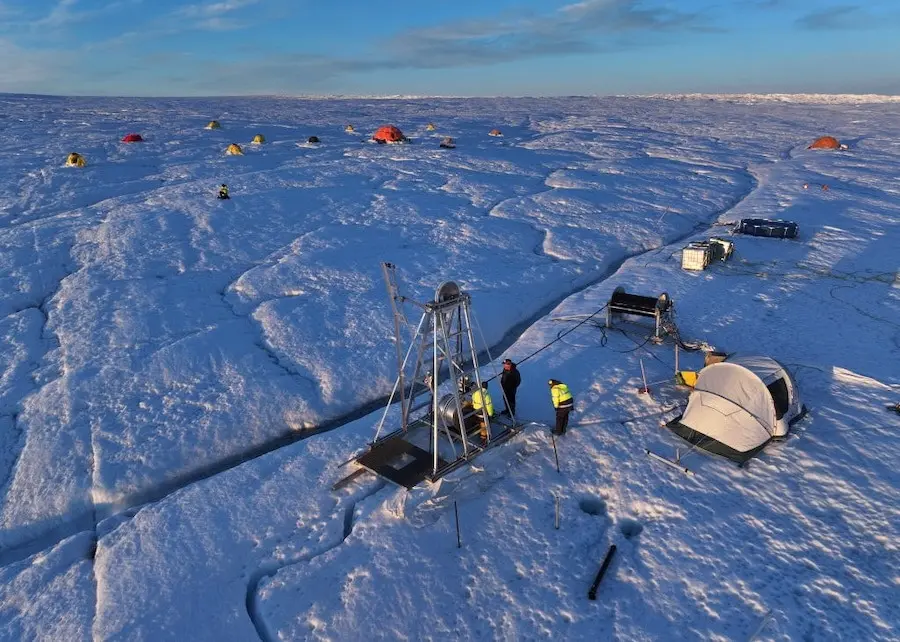
Methane is deeply entwined with positive climate feedback loops and potential tipping points. In the Arctic, warming temperatures are thawing permafrost soils that contain vast amounts of frozen plant and animal matter, as well as marine methane hydrates. This region holds 2.5 times more carbon underground than exists in the entire atmosphere, and its gradual thaw threatens to release quantities of greenhouse gases comparable to major industrial nations. Similarly, the increasing frequency and severity of wildfires are releasing large pulses of carbon dioxide and methane, further amplifying planetary warming.
The expansion of natural gas infrastructure and liquefied natural gas exports has further complicated the emissions landscape. While proponents have long framed natural gas as a cleaner "bridge fuel" away from coal because burning it produces less carbon dioxide, this narrative frequently overlooks upstream methane leaks. Studies indicate that if even a small fraction of gas leaks during extraction and transport, LNG can possess a greater greenhouse gas footprint over a 20-year timeline than coal. Furthermore, federal energy analyses suggest that increased LNG exports are more likely to displace renewable energy investments than coal use.
Beyond its role in the climate crisis, methane is a major precursor to ground-level ozone, a dangerous pollutant that damages human respiratory systems and harms agricultural crops. Methane-generated ozone currently contributes to approximately half a million premature deaths annually. Consequently, broad mitigation efforts would yield immediate public health dividends, preventing thousands of cardiovascular and respiratory emergencies and protecting millions of tons of staple crops like wheat, rice, and soybeans each year.

Achieving meaningful reductions will require a combination of systemic transformations and targeted technical fixes across energy, agriculture, and waste management sectors. In agriculture, solutions range from dietary shifts and reduced food waste to the use of specialized feed additives like seaweed and chemical inhibitors that significantly cut enteric fermentation in cattle. For the fossil fuel industry, deploying rigorous leak detection and repair protocols, upgrading outdated equipment, and phasing out routine venting can eliminate a substantial portion of ongoing emissions. In the waste sector, expanding municipal composting, upgrading wastewater treatment facilities, and capturing biogas can dramatically curb urban methane releases.
While international frameworks like the Global Methane Pledge—signed by 159 nations committed to cutting global emissions by 30 percent from 2020 levels by 2030—have elevated political attention, real-world reductions have lagged behind targets. Total emissions from the fossil fuel sector have continued to rise, highlighting a persistent implementation gap between national pledges and operational practices.
Addressing the methane challenge remains both a formidable test and a vital opportunity for climate stabilization. Because of the gas’s short atmospheric lifespan, decisive action to curtail emissions can yield immediate progress in slowing the rate of global heating, safeguarding public health, and preserving global ecosystems for the future.