



The human quest to discover a literal or metaphorical fountain of youth is as old as civilization itself, driving generations of scientists, philosophers, and adventurers to search for ways to halt or reverse the ravages of time. Today, that ancient pursuit has moved from the realm of mythology into high-tech medical laboratories. Among the latest experimental procedures generating immense public curiosity and scientific buzz is therapeutic plasma exchange, a medical technique that involves filtering and replacing the liquid portion of a patient’s blood. According to a notable 2025 study published in the scientific journal Aging Cell, this intensive procedure suggests the intriguing possibility of lowering a person’s biological age by approximately two and a half years.
Yet, before health-conscious individuals begin searching online for commercial plasma clinics or experimental longevity centers, experts urge caution. It is vital to look past the sensationalized headlines to understand what the study actually concludes, along with its distinct limitations. While the research offers a fascinating glimpse into the mechanics of human aging, it also highlights the gap between preliminary laboratory findings and practical, safe anti-aging treatments. To fully grasp the implications of this new research, scientists emphasize the need to examine the biological role of blood plasma, the history of aging experiments, and the real-world safety considerations surrounding the procedure.
Why Longevity Experts Care About Plasma
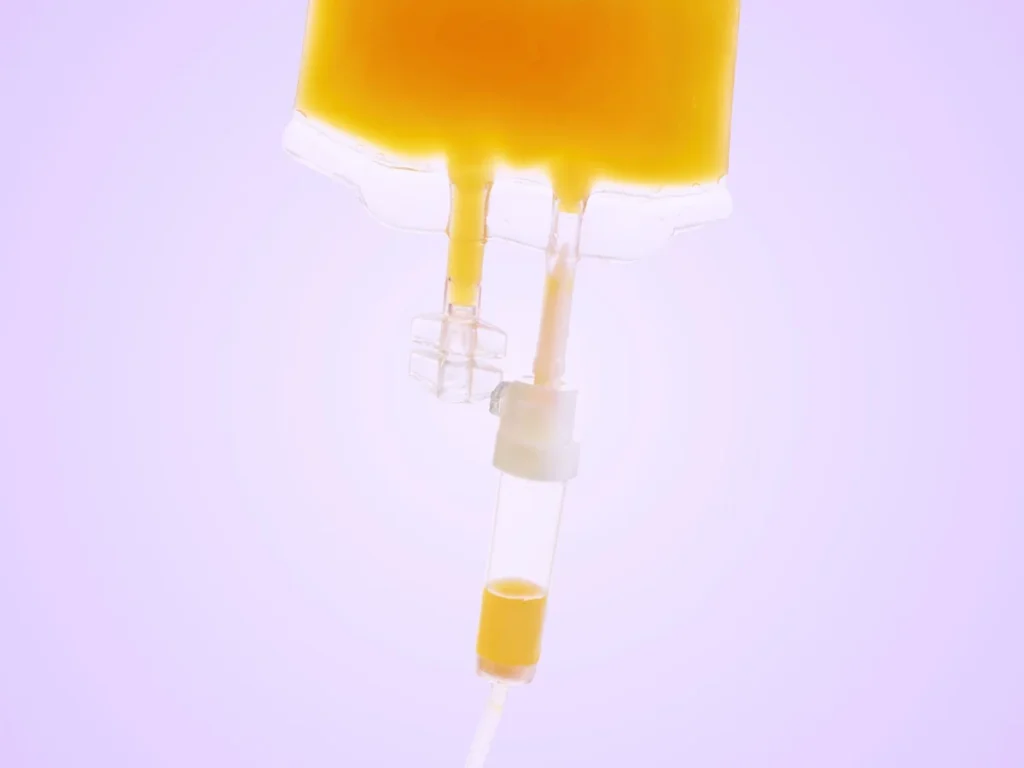
To understand why researchers are focusing heavily on blood components in the quest for longevity, it helps to look beyond the basic definition of blood. Plasma is far more than the simple yellowish liquid that suspends red and white blood cells as they travel through the circulatory system. Although it consists predominantly of water, plasma is a complex, information-dense medium rich in vital proteins, metabolites, hormones, and inflammatory signaling molecules. These circulating molecules collectively reflect and actively influence what is happening across various organ systems throughout the body, according to Dr. Andrea Maier, a geriatrician and board member of the Academy for Health and Lifespan Research.
Dr. Maier compares plasma to a comprehensive logistics network, describing it as a transport system similar to a global shipping courier. It serves as a cellular vehicle carrying chemical messages and nutrients from the brain to the muscles, from the kidneys to the lungs, and back again. Because it constantly circulates through every corner of the anatomy, it functions as a fluid repository laden with biological information.
This unique characteristic makes plasma a prime focal point for modern longevity studies. By analyzing changes in the concentrations of thousands of circulating proteins found within an individual’s plasma, researchers can capture a wide-angle snapshot of the body’s internal physiological state—a metric commonly referred to as "biological age."
Unlike chronological age, which simply measures the number of years a person has been alive, biological age attempts to quantify how well the body’s cells and tissues are actually functioning. As Dr. Keenan Walker, a senior investigator at the National Institute on Aging, explains to reporters, a person might have a chronological age of 40, but their underlying biology may function more like that of a 30-year-old—or conversely, a 50-year-old. While biological age is not a fixed, absolute, or perfectly precise measurement, it provides exceptionally helpful health information.
Dr. Walker notes that while there is no single consensus biomarker for biological age, researchers actively attempt to estimate it using various panels of molecular indicators. Crucially, extensive scientific studies have established that individuals whose estimated biological age significantly exceeds their chronological age face a demonstrably greater risk of developing chronic medical conditions, severe age-related diseases, and premature mortality.
The scientific foundation for manipulating blood to combat aging dates back approximately 15 years, when researchers first began aggressively exploring the relationship between circulating plasma and the fundamental physiological processes of aging. This line of inquiry initially led to radical laboratory experiments utilizing a surgical technique known as parabiosis. In these studies, researchers physically linked the circulatory systems of two distinct organisms together. By stitching the circulatory systems of old mice and young mice, scientists tested the hypothesis that if younger plasma was continuously circulated through an older biological organism, the older animal would reap regenerative benefits.
The results of these animal studies were striking. Older mice that received the continuous infusion of plasma from younger mice demonstrated enhanced resilience when subjected to tissue and organ stress. These promising findings eventually paved the way for the clinical adaptation of plasma exchange as a medical therapy to manage certain complex conditions, including specific autoimmune diseases, severe neurological disorders, and aggressive blood cancers.
Reflecting on the trajectory of this research, Dr. Maier notes that the entire field grew out of a fundamental question: Is there something circulating in our blood that we can safely remove, or conversely, infuse into our circulation, to enable humans to live healthier and longer lives? Despite decades of dedicated research, however, a definitive answer to that overarching question remains elusive.
The Study Has Potential, But It Is Not a Panacea, Experts Say
The recent 2025 study published in Aging Cell sought to test these concepts in a human clinical setting. Researchers enrolled 42 human participants and performed therapeutic plasma exchange, substituting their extracted plasma with purified albumin, a standard blood protein, and a saline solution. In addition to this filtering process, certain participants also received a specialized form of immune therapy known as intravenous immunoglobulin (IVIG) as an additive intervention. To evaluate the physiological impact of the procedure, researchers tracked changes in the participants’ bodies using advanced laboratory testing capable of measuring aging metrics directly at the molecular level.
At first glance, the empirical results of the study appeared remarkably significant, indicating that some participants successfully reduced their biological age by roughly two and a half years. However, Dr. Maier points out a critical nuance that alters how these findings should be interpreted: this notable data was recorded at the midpoint of the study rather than at its final conclusion.
When analyzing the complete trajectory of the trial, Dr. Maier explains that the measurement showing participants were 2.5 years younger was based on a comparison between the midterm data and their initial baseline measurements. By the time the study concluded, that apparent rejuvenation effect had largely dissipated, with the biomarker levels returning close to where they started.
Dr. Maier attributes this temporary shift to the intense physiological stress that the body experiences when a significant portion of its plasma is entirely extracted and replaced with alternative fluids. The sudden influx of fresh components can temporarily trigger a measurable shift in a person’s biological age markers. Almost immediately, however, the human body begins experiencing profound physiological stress as it works furiously to adapt to this massive alteration in its internal environment. Consequently, the biomarkers swing back toward their baseline states. In practical terms, while an individual might experience a temporary illusion of cellular rejuvenation, the effect appears fleeting and unsustainable over the long term.
Another noteworthy variable highlighted by the researchers was the baseline health status of the study participants themselves, according to Dr. Walker. The data revealed that individuals who entered the study in poorer health actually exhibited a stronger intervention response than those who were initially healthier. This observation suggests that the efficacy of such drastic blood-based interventions may vary dramatically depending on the metabolic and clinical profile of the recipient, making it critical for future researchers to determine precisely for whom these therapies might offer genuine benefit.
Despite the limitations observed in the current data, both Dr. Maier and Dr. Walker maintain that blood-based interventions hold genuine conceptual promise for improving overall healthspan. However, they strongly advocate for a shift toward more refined, personalized medical approaches rather than relying on generalized, non-specific plasma filtering procedures that treat the entire circulatory system with a blunt instrument.
Characterizing the current research trajectory, Dr. Maier describes the published trial as a foundational phase 1 study. She notes that the primary takeaway is that the procedure can be performed safely under controlled clinical conditions, but it now must be rigorously tested in much larger, randomized clinical trials that evaluate long-term safety and efficacy.
She emphasizes that the underlying premise is scientifically grounded in a substantial body of prior evidence, even if it is not currently suitable or effective for the general population. The procedure requires significantly greater precision before it can be considered for mainstream medicine. While expressing optimism for the future of longevity science, Dr. Maier cautions against premature adoption, reiterating that the procedure is currently far too harsh on the human body to be implemented safely in routine clinical practice today.