



The first time Caroline began taking Wegovy, she made no secret of it. She openly shared the decision with her boyfriend, her mother, and her closest friends. Over the course of six months, they watched as she successfully shed 30 pounds, transitioning from 130 pounds back to what she describes as her healthy original weight of 100 pounds. Even so, her loved ones grew deeply concerned about the extent of her weight loss and repeatedly expressed that they did not want her to lose any more.
"I had tried every way under the sun to lose weight," Caroline tells SELF. The 34-year-old, who lives in Montreal and asked to use only her first name to protect her privacy, admits she was utterly exhausted by the endless cycle of trying to manage her weight. At five feet and four inches tall, she was not classified as obese and did not believe her primary care physician would approve a prescription for the medication.
Seeking an alternative path, she turned to the internet and found a doctor willing to prescribe the medication over the phone, without knowing Caroline’s actual weight. Immediately after starting Wegovy, she notes that the weight began coming off at an incredible speed. After six months, she decided to stop taking the drug. However, the discontinuation triggered a rapid rebound: she gained 10 pounds in a single month. "I realized, I can’t stop," Caroline says.
For the past six months, she has resumed taking Wegovy, utilizing a maintenance-level dosage to manage her weight. But this time, a significant dynamic has changed—she is keeping the prescription a secret from her boyfriend and her family. "Now that we’re talking about kids, he’s seen all the impacts [of the drug] and he’s done with it," she explains. Because she lives alone, concealing the medication is relatively manageable; she staches the vials in the back of her refrigerator, as the drug requires continuous refrigeration. Still, the logistics are a constant source of anxiety. When they travel together, she has to covertly hide the medication in hotel room mini-fridges or, when visiting his parents, tuck it away in their household refrigerator. "So imagine, I’m hiding stuff in my parents-in-laws’ fridge, hoping they won’t see them," she says. "It’s super awkward."
Sometimes Avoidance Is the Easiest Option
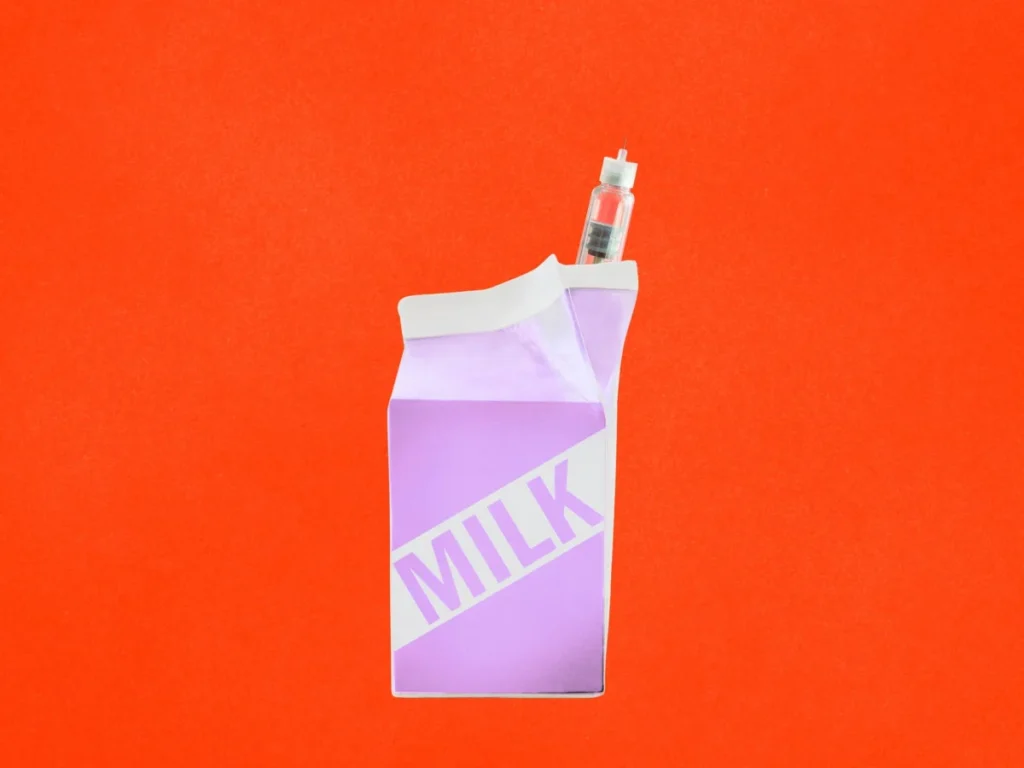
Caroline is far from alone in going to elaborate lengths to keep her use of GLP-1 receptor agonists a secret from the people closest to her. On a recent thread on the r/GLP1microdosing subreddit, women shared an array of creative tips and covert tactics for hiding their medication from partners and family members. One user hides her pens inside a tomato paste box, while another repurposes a play food container from a child’s pretend kitchen. Others have turned to opaque containers and packaging, including feta cheese tubs, butter stick boxes, anchovy paste boxes, empty bottles of women’s probiotics and supplements, plastic takeout containers, metal water bottles, boxed wine cartons, and baking soda boxes tucked safely in the back of the refrigerator—all in the name of concealing weight loss treatments.
"It’s a real thing," Kia Mitchell, MD, a specialist in family and obesity medicine, tells SELF. She has observed numerous patients in her Jacksonville, Jacksonville, Florida, practice going to similar lengths to hide their medications from romantic partners. The first time she encountered this behavior, a patient explained that she simply wanted to avoid a domestic debate and retain the option to take the medication on her own terms. "A lot of my patients are similar," Dr. Mitchell adds. "There’s this loss of control with the gaining of the weight, but being able to control the narrative around weight loss has been empowering and exciting" for her patients. "Because now they can reveal it on their own terms. That’s where the control comes back."
The motivations behind this guardedness are starkly apparent across online support communities. "If my husband found out, it would just be a series of lectures," wrote a Reddit user under the handle Vivid-Act-6442. Another anonymous user shared a similar sentiment: "Just don’t want to hear any negative or critical opinions. After 52 years of marriage, one knows one’s mate." Another participant noted she was hiding her medication from her teenage children out of fear they would report it to her ex-husband, simply wishing to bypass an onslaught of questions and judgment.
Dr. Mitchell holds mixed feelings regarding this culture of secrecy. While she notes that individuals navigating health journeys generally benefit from a supportive network that cheers them on, she acknowledges that exercising discretion can feel protective for women navigating complex relationship dynamics. Ideally, she notes, a person wants to be in a relationship built on complete trust, but reality often presents more complicated emotional landscapes.
From a medical perspective, however, concealing GLP-1 use from a partner carries distinct practical risks. For instance, fertility can increase while taking these medications, and Dr. Mitchell reports having several "GLP-1 babies" born to patients who did not anticipate the shift. Furthermore, hiding the treatment makes it harder to seek support when experiencing potential side effects. More broadly, secrecy is an inherent source of stress. "When someone is trying to lose weight, we want their stress hormones to be as low as possible," Dr. Mitchell explains. "If you’re trying to hide [medication], we’ll be fighting an uphill battle if you’re stressed about that."
Telemedicine Makes It Easier to Hide Them
A parallel concern is the concealment of GLP-1 medications from primary care physicians, a practice facilitated by the proliferation of telehealth platforms such as Hers and Ro. This disconnect presents a dilemma for patients like Caroline, who did not inform her primary doctor during either round of taking Wegovy. She remains hesitant to disclose her regimen, despite valid concerns regarding potential drug interactions with the Accutane and Ritalin she is also prescribed. The prospect of confessing her GLP-1 use to her doctor brings her considerable anxiety, as she worries about eroding their professional trust. With her annual physical approaching, she faces a looming confrontation over her noticeable weight loss.
"I use ChatGPT as my doctor at this point since I can’t be honest with my own doctor," she admits. "I say, ‘Hey, this is my actual weight, what type of dosage is okay to take with other drugs?’" She acknowledges, however, that this alternative is far from ideal. Caroline originally secured her Wegovy prescription through Hers, a process that required only basic bloodwork and provided informational documentation rather than direct clinical counseling.
Craig Primack, MD, the head of weight loss at Hers, tells SELF that the company’s prescribing physicians explicitly encourage patients to discuss their care plans with their primary care doctors. While acknowledging that the platform offers limited direct counseling, Dr. Primack notes that providers screen for mental health, anxiety, and stress. The Hers app also supplies patient resources developed by psychologists covering topics like sleep management and eating behaviors.
Dr. Primack confirms that he is fully aware that some patients hide their medication from romantic partners. He points out various underlying reasons, such as wanting to prove weight loss success before making an announcement, financial considerations, or anxieties over how changing physical appearances might alter relationship dynamics. "Your weight and persona set up a dynamic in your couple," Dr. Primack says. "When you start changing that, sometimes spouses get very jealous—’Oh my god, you’re becoming potentially more attractive.’ Not that weight is directly linked to that, but that’s what I hear them say."
He also highlights the broader cultural stigma surrounding weight and weight loss as a driving factor. "One benefit of telemedicine is it takes the bias and stigma away," Dr. Primack says. "One reason we are here is because people are uncomfortable going to talk to their primary care doctor about it."
Whether Caroline ultimately decides to disclose her medication use to her physician, she continues to grapple with the deeper psychological implications of her regimen and the secrecy surrounding it. "It’s very stressful," she says. "The fact that not only can I not talk about it, but I’m also unable to get off of it. I don’t love the idea of taking medicine like that forever, but I’m kind of stuck with it." Driven by a fear of regaining weight, she frequently questions her motives. "But I wonder to which extent I’m too harsh with my criticism of my body. Maybe my goals are too intense."
Given the profound vulnerability and sensitivity associated with weight loss, the dilemma surrounding disclosure is entirely understandable. Yet approaching the conversation thoughtfully can ease the process, according to Rachel Goldman, PhD, a clinical assistant professor in the department of psychiatry at NYU Grossman School of Medicine and a clinical psychologist specializing in weight management and disordered eating. Framing the discussion around personal experiences and individual needs can transform the dialogue into something manageable rather than a defensive encounter, she explains.
Dr. Goldman encourages patients to first examine their motivations—identifying the factors that led to the decision and understanding what the treatment means for their overall health and well-being. Grounding oneself in that reasoning makes communication feel more authentic and confident. She also recommends drafting sample talking points in advance, prioritizing personal experiences over general trends, and relying on "I" statements.
Anticipating a partner’s potential reactions and identifying what kind of support is desired—whether it is emotional backing, understanding, or simply the space to make healthcare decisions free from judgment—can further prepare an individual for the conversation. Dr. Goldman emphasizes that an initial reaction may not represent a partner’s final perspective, as processing new information and working through personal biases takes time.
Ultimately, the objective is not to execute a flawless conversation, but to open the door to greater honesty, connection, and mutual support over time. And if all else fails, there remains a box of anchovy paste waiting quietly in the back of the fridge.