


Artstorm, the developer behind the popular PvP naval warfare game Modern Warships, has publicly acknowledged that it used an independent artist’s original creation as the foundation for an in-game ship design without proper permission or compensation. The controversy came to light when concept artist Alex Jay Brady took to social media to highlight striking similarities between their personal artwork and a newly introduced vessel within the game.
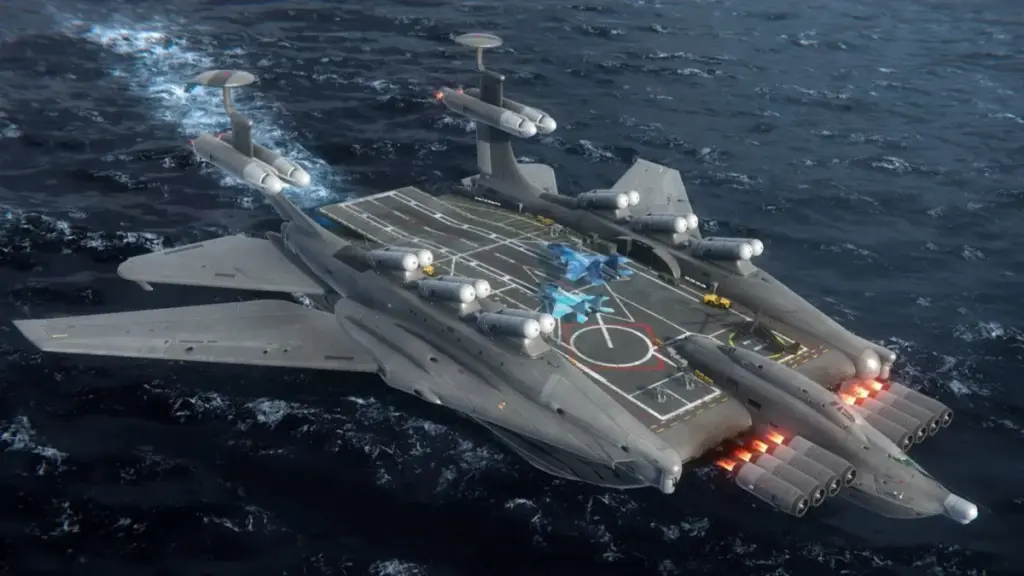
The plagiarism controversy began when Brady posted a side-by-side comparison on X, formerly Twitter, contrasting their concept design for an atomic ekranoplan carrier vessel with the in-game model known as the RF Bartini A-2000-7. Even to a casual observer, the resemblance was undeniable, featuring the same distinct structural layout, configuration, and aesthetic choices.
In their initial post, Brady expressed a mix of amusement and frustration regarding the uncredited use of their intellectual property. While noting that the in-game model looked great and featured significantly more detail than their original sketches, Brady pointed out that a simple request and appropriate financial compensation would have prevented the issue entirely, adding that it was not too late for the developer to do the right thing.
Speaking to IGN for further clarification, Brady detailed the extent of the similarities found in the digital replication. According to the concept artist, the design is fundamentally the same aside from a few minor modifications, such as the placement and quantity of the AWACs dishes, which were likely adjusted to accommodate the technical requirements of the game’s symmetry.
Brady further emphasized that because a swing-wing ekranoplan carrier never actually existed in reality for practical reasons, the presence of these hyper-specific design choices made the situation completely cut and dried. The artist confirmed possessing all the original project files, including minute details such as specific lines on the deck. Furthermore, Brady noted that the conceptual design actually makes very little sense from a real-world military realism perspective, pointing out design quirks like engine exhaust washing directly across the flight deck and aircraft taking off backward rather than into the wind. These unconventional and physically impractical mistakes, born from the artist’s initial lack of subject knowledge at the time of creation, were cloned wholesale by the game developers.

Following the widespread circulation of the post online, developer Artstorm reached out directly to Brady to address the unauthorized use of the artwork. In a public reply on X, the developer issued a formal apology, admitting fault. The studio stated that the design had been utilized merely as a reference without securing the proper clearance first and promised to contact the artist directly to make things right.
When asked about the potential resolution, Brady indicated that if a satisfactory offer is made by the studio, the issue would be considered closed. Under such an outcome, Brady noted that the comparison images could be added to their professional portfolio as a roundabout piece of contract work. Meanwhile, the game’s publisher, Gaijin, confirmed to IGN that the Modern Warships development team had reached out to Brady on X, though they declined to provide any additional details regarding ongoing discussions or potential compensation terms. Brady remains in a holding pattern, awaiting the specific terms of the developer’s offer to compensate for using their conceptual art as the structural blueprint for an in-game asset.
The inclusion of the RF Bartini A-2000-7 has also drawn scrutiny due to how players acquire the vessel within Modern Warships. To unlock the controversial carrier, players must typically engage in the game’s gacha mechanics, spending anywhere between $50 and $100 on randomized spins. Alternatively, players can acquire the ship using the game’s premium currency, ArtCoins, with the RF Bartini A-2000-7 commanding a price tag ranging between 7,000 AC and upwards of 15,000 AC.
Given the standard economic conversion rate in the game, where approximately $100 yields between 1,300 and 2,000 ArtCoins, a vessel priced at 10,000 AC can realistically cost a player anywhere from $500 to over $700, depending on market fluctuations and purchasing efficiency. This aggressive monetization model has long been a point of contention within the community. Numerous user reviews on Steam frequently voice frustration regarding the steep pricing structures attached to the free-to-play title’s most competitive and effective vessels.
One prominent user review bluntly criticized the game’s economic design, accusing the studio and moderators of prioritizing monetization over gameplay balance and enjoyment. As the situation develops, the focus remains on whether Artstorm and Brady can reach a fair agreement regarding the unauthorized use of the concept art, while questions surrounding the game’s high-cost acquisition models continue to circulate within the player community.