


For decades, the stock market has consistently managed to surprise investors, moving in cycles that alternate between painful crashes and soaring, record-breaking valuations. In the current economic landscape, a familiar brand of anxiety has resurfaced among retirement planners and everyday investors. This unease is fueled in large part by the rapid ascent of Artificial Intelligence, a technological boom driving unprecedented market highs and sparking widespread fears that an even larger correction is looming on the horizon—potentially dwarfing the dot-com crash of the early 2000s.
That particular historical parallel carries personal significance for prominent early-retirement advocate and financial commentator Peter Adeney, widely known as Mr. Money Mustache. The dot-com boom helped launch his early career and paved his path toward financial independence, even though the subsequent crash nearly cost him his job and citizenship application. Two decades later, as an established voice in the personal finance community, Adeney regularly fields questions from investors attempting to navigate another volatile tech cycle. To address these concerns, he recently debuted a presentation at Camp FI Midwest, with an updated version scheduled for the upcoming Bogleheads conference in November.

Will the AI Bubble Ruin Our Retirement?
Having celebrated 21 years of retirement, Adeney remains comfortable with his lifestyle, yet he recalls being taken aback by a friend’s query more than twenty years ago in 2006. At the time, his friend asked how anyone could remain retired and sleep soundly given the state of the world, citing pressing global anxieties. A retrospective look at those historical worries reveals a striking parallel to contemporary headlines. In 2006, the public fixated on controversial political leaders, Middle Eastern conflicts, ballooning national debt, inflation, and a housing market bubble widely viewed as dangerously overvalued. Concerns also centered on outsourcing jobs to emerging economies like India and China, alongside widespread debates over "Peak Oil" and the impending depletion of fossil fuels.
Despite those profound fears, the subsequent two decades witnessed significant long-term growth. Even the Great Financial Crisis—triggered by housing market irrational exuberance and complex mortgage leverage, and recognized as the most severe economic downturn since the Great Depression—was ultimately absorbed by the broader upward trajectory of the market. Long-term historical data shows that standard investments weathered both the 2008 crash and the subsequent 2020 pandemic downturn, continuing to generate substantial returns over a twenty-year horizon.

Simultaneously, global socioeconomic indicators improved dramatically. Between 2005 and the mid-2020s, the proportion of the global population living in extreme poverty dropped from 20 percent to 8 percent, while global infant mortality rates were cut in half. The clean energy sector transformed profoundly, driven by a dramatic decrease in the cost of solar panels, which enabled solar power to become the dominant source of new electrical generation capacity. Simultaneously, electric vehicle adoption expanded from negligible levels to capture a significant share of global automotive sales.
These historical outcomes raise a fundamental question regarding whether the present economic environment is fundamentally different. Contemporary financial media continues to highlight risks such as high national debt, geopolitical conflicts, and the potential fallout of an AI-driven market correction. However, economic observers argue that such fear-mongering frequently overlooks the foundational driver of enduring prosperity: productivity.

The Core of Economic Prosperity
Prosperity does not originate from abstract financial systems or stock market ticker numbers, which essentially represent human-engineered metrics. Instead, true economic health is rooted in productivity. While capitalist markets remain inherently prone to volatility and cyclical swings, underlying human productivity consists of tangible work, innovation, and problem-solving carried out by real people.
Financial systems and economies themselves are human inventions. When structural corrections occur—such as the market reset of 2008—economies adapt, recalibrate, and resume productivity. Historical resilience demonstrates that human societies retain the foundational tools required to boost economic output, raise standards of living, and sustain long-term growth.

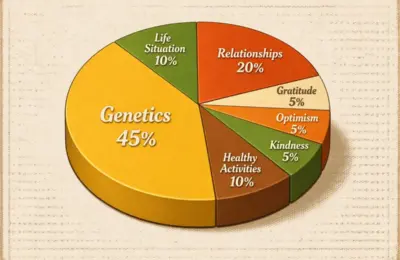
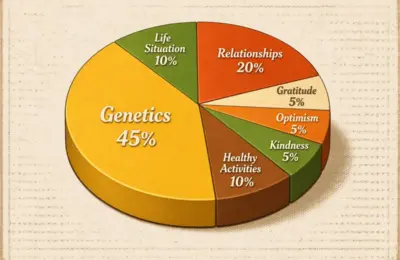
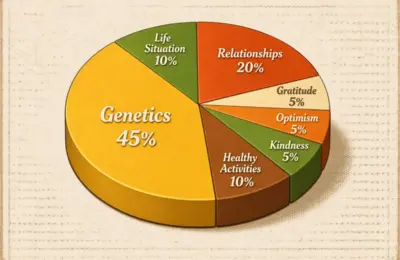
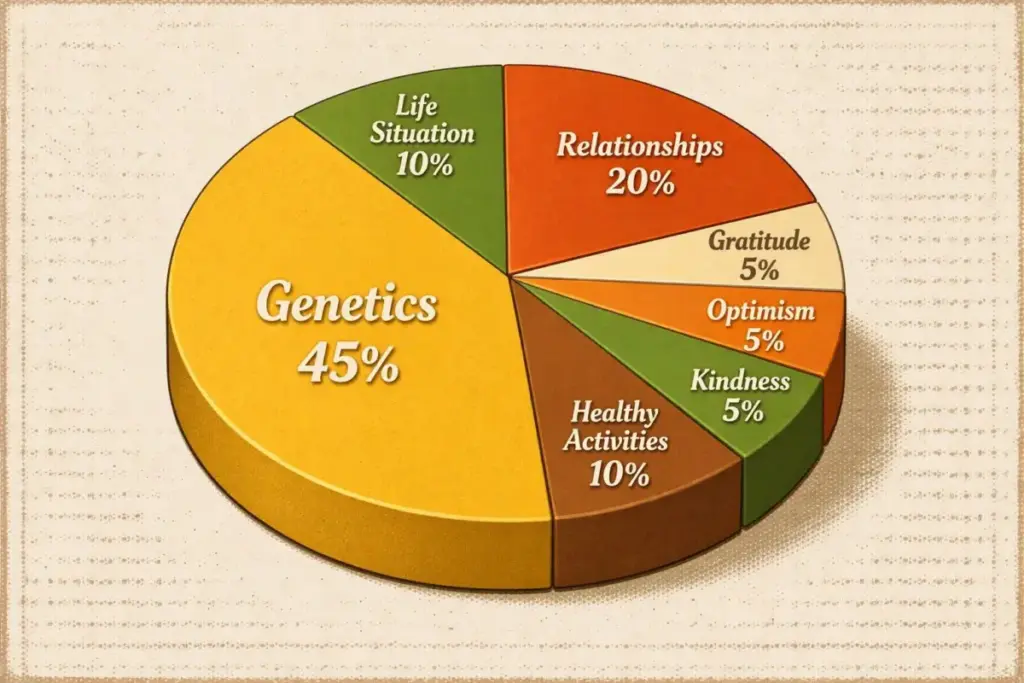
Beyond economic output and standard of living, human well-being relies heavily on personal factors and lifestyle choices. In developed nations, basic material needs were largely satisfied decades ago, shifting the primary focus of human happiness toward meaningful personal relationships, community engagement, gratitude, and physical health. Wealth remains a supporting component of an individual’s broader life circumstances, while psychological factors and personal agency dictate overall fulfillment.
Understanding and Managing Fear
Despite historical evidence pointing toward long-term resilience, pervasive financial anxiety persists even among experienced investors. This background fear is largely a byproduct of evolutionary biology. Human beings evolved as threat-detection organisms designed to navigate scarcity, physical danger, and social exclusion.

When immediate physical threats are mitigated, the human brain often continues to search for potential dangers, shifting focus toward economic scarcity, social status, or administrative challenges such as tax strategies and required minimum distributions. This behavioral pattern frequently manifests as anchoring bias, where individuals evaluate their security relative to external benchmarks rather than absolute stability.
Overcoming this pervasive anxiety requires self-awareness and a rational examination of personal history and emotional triggers. Many individuals carry financial anxieties inherited from family histories influenced by past economic depressions or personal trauma. Identifying these underlying roots helps separate historical conditioning from objective present-day realities. Taking proactive steps to address financial concerns helps demystify uncertainty, building personal resilience and confidence.

Furthermore, reducing exposure to daily sensationalized news cycles helps mitigate unnecessary psychological distress. Continuous consumption of fear-driven media often replaces productive problem-solving with passive worry. Shifting focus toward constructive behaviors, physical health, outdoor activity, and engagement with optimistic communities provides a more stable foundation for mental well-being.
Viewing Technological Shifts as Experiments
Approaching major life transitions and macroeconomic shifts through the framework of experimentation can significantly alter one’s perspective. Whether evaluating a minor lifestyle change or navigating major decisions such as career transitions or early retirement, treating life developments as manageable experiments diminishes the paralyzing effect of fear.

This experimental mindset applies directly to the current Artificial Intelligence boom. Rather than succumbing to dystopian narratives, examining AI through the lens of technological history reveals it to be a sophisticated productivity tool—comparable to a cognitive nail gun. Like previous technological revolutions, AI enhances efficiency and expands economic potential while simultaneously displacing specific administrative and entry-level tasks.
While productivity technologies often concentrate financial rewards among asset owners and shareholders, they also drive down the cost of essential services and catalyze the creation of entirely new industries, mirroring the long-term economic impact of the internet and mobile computing. Ultimately, technological advancement presents ongoing opportunities for adaptation, learning, and personal growth. By confronting systemic anxieties and focusing on proactive engagement, individuals can navigate market volatility and technological change without allowing fear to dictate their futures.