The stock market has once again proved its capacity to surprise, leaving investors grappling with a familiar internal debate. When prices crash, anxiety builds as retirement portfolios shrink. Yet, even when the market surges to unprecedented, record-shattering valuations, a different kind of worry sets in. The prevailing fear is that an extraordinary boom inevitably precedes an even larger crash, particularly when current market exuberance is driven by the frenzied rise of Artificial Intelligence.
While many investors have tuned out the daily financial drama to focus on everyday life, the broader narrative surrounding AI has dominated economic discussions. Investors increasingly worry that while artificial intelligence is unquestionably a major technological leap, the mania surrounding its adoption is moving too fast and reaching too high. This has sparked widespread comparisons to the dot-com bubble of the early 2000s—a market cycle that heavily influenced the early career and path to early retirement for financial commentators like Mr. Money Mustache, before the subsequent crash nearly derailed professional and personal milestones.

As questions surrounding this latest investment cycle continue to mount, discussions are shifting away from digital noise and toward fundamental economic truths. A presentation delivered earlier this month at Camp FI Midwest, with an upcoming refinement scheduled for the Bogleheads conference in November, aims to unpack these exact anxieties. By examining historical market cycles, human psychology, and the true drivers of prosperity, financial observers are taking a closer look at whether the AI bubble poses a genuine threat to long-term financial security or simply represents the latest iteration of cyclical market fear.
Will the Artificial Intelligence Bubble Ruin Our Retirement?
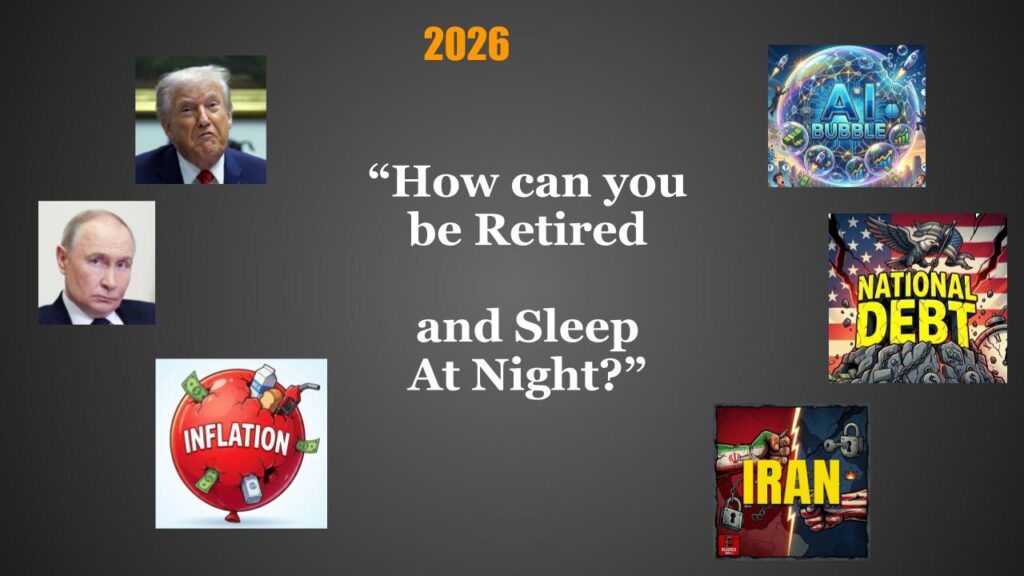
Achieving long-term financial independence brings a distinct level of comfort, but it rarely shields individuals from external anxieties. Discussions with friends and peers often reveal a persistent undercurrent of unease regarding the state of the world. When asked how anyone can remain retired and sleep soundly given global headlines, the natural human response is often confusion over what specifically warrants such distress.

A glance at contemporary media highlights a litany of modern worries: volatile geopolitical figures menacing the global stage, persistent inflation eroding purchasing power, the towering United States national debt, ongoing conflicts in the Middle East and Eastern Europe, and the ever-present shadow of a market correction triggered by the AI boom. Yet, historical perspective reveals that these anxieties are merely updated versions of fears from decades past.
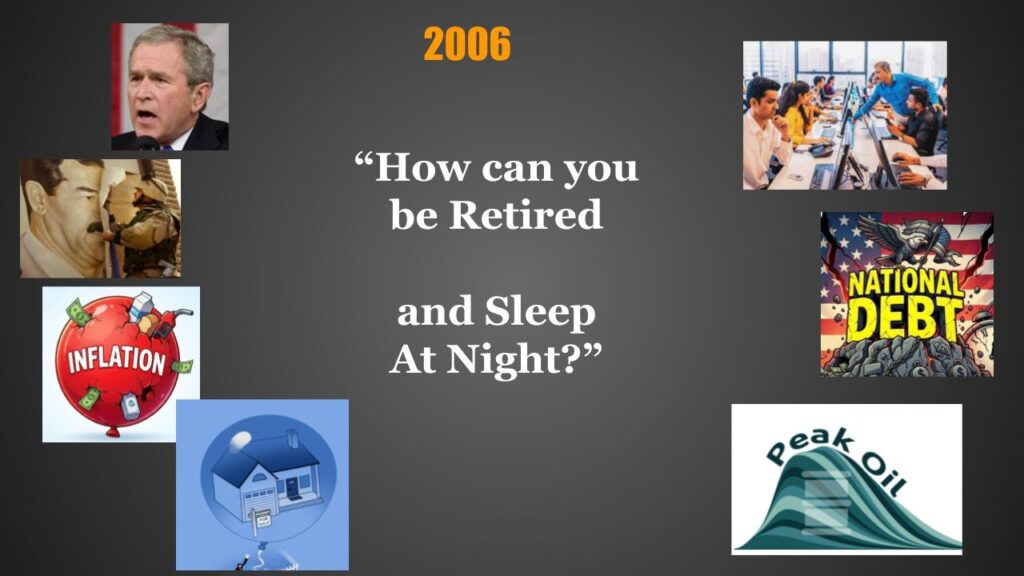
Reflecting on the financial landscape of 2006, the worries of the era centered on entirely different catalysts. Back then, markets fixated on geopolitical tensions in Iraq, national debt, and inflation. Investors worried about an overvalued stock market driven by the housing bubble rather than an artificial intelligence boom, while job security fears focused on widespread outsourcing to India and China rather than automation. There was even widespread panic over "Peak Oil," with dire predictions that the world was doomed because fossil fuel consumption was rapidly outstripping supply—an outcome that ultimately reversed course entirely.

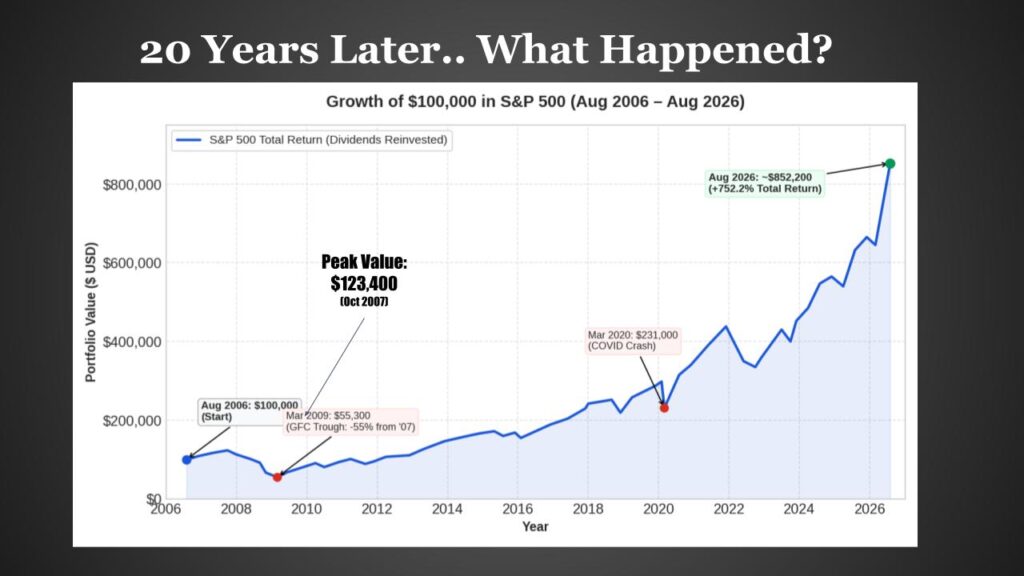
Following the intense anxiety of 2006, the global economy did indeed experience the Great Financial Crisis, fueled by irrational exuberance in housing prices and excessive financial leverage. It stands as the largest market crash since the Great Depression. Yet, viewed through the lens of a multi-decade timeline, even that historic catastrophe appears as a temporary dip in a broader upward trajectory. A hypothetical long-term investment of $100,000 made during those turbulent years would still have grown substantially over the ensuing two decades, weathering both the 2008 crash and the pandemic-induced market shock of 2020.
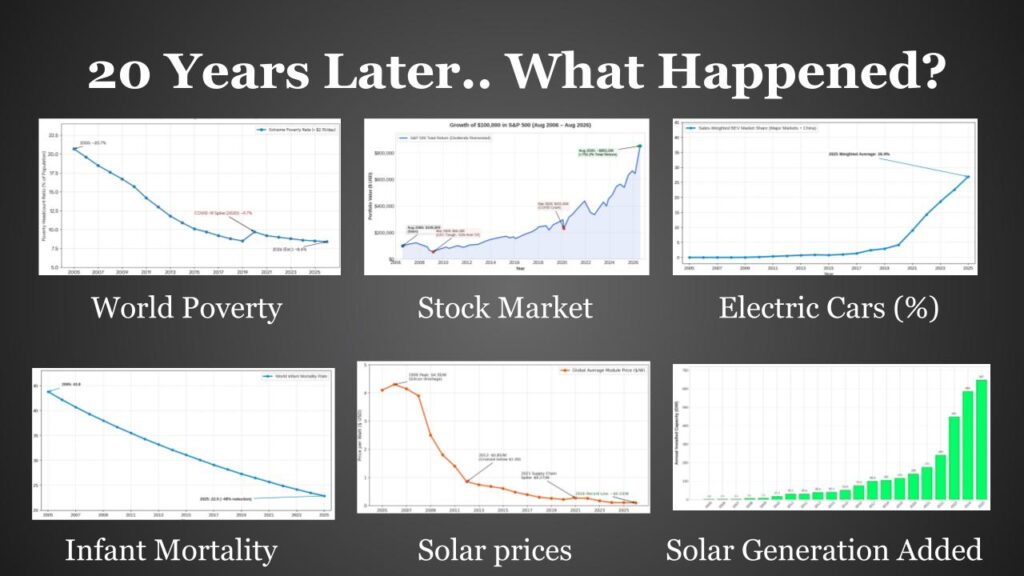
Beyond the stock market, the broader world experienced remarkable structural improvements over the same twenty-year span. Global extreme poverty rates dropped significantly, infant mortality was cut in half, and clean energy alternatives expanded rapidly. Solar panel costs plummeted, allowing solar generation to become the primary source of new electrical capacity worldwide, while pure electric vehicle adoption surged from near-zero to significant shares of the global automotive market.
Examining this history raises a fundamental question: does focusing energy on an uncertain future yield better results than maintaining long-term optimism? This leads directly to the question of whether current market conditions are truly different this time around. Skeptics point to the expanding national debt, the unprecedented scale of the AI valuation boom, or theoretical risks of runaway artificial intelligence as unique threats. However, financial fear-mongering frequently overlooks a core economic reality: true prosperity does not originate from financial systems or stock market tickers, which are ultimately human-designed mechanisms. Instead, prosperity stems directly from productivity.
The Core Driver of Long-Term Prosperity
The foundational lesson of sustainable economics is that capitalism is inherently volatile, characterized by choppy waters and wild cyclical swings. Beneath the surface turbulence, however, real people perform real work and develop genuine technological innovations. Financial systems and market economies are human inventions; if a system experiences a catastrophic failure due to distorted valuations, society simply restructures the underlying metrics and resumes productive labor, a mechanism that successfully restored stability following 2008 and earlier historical downturns.
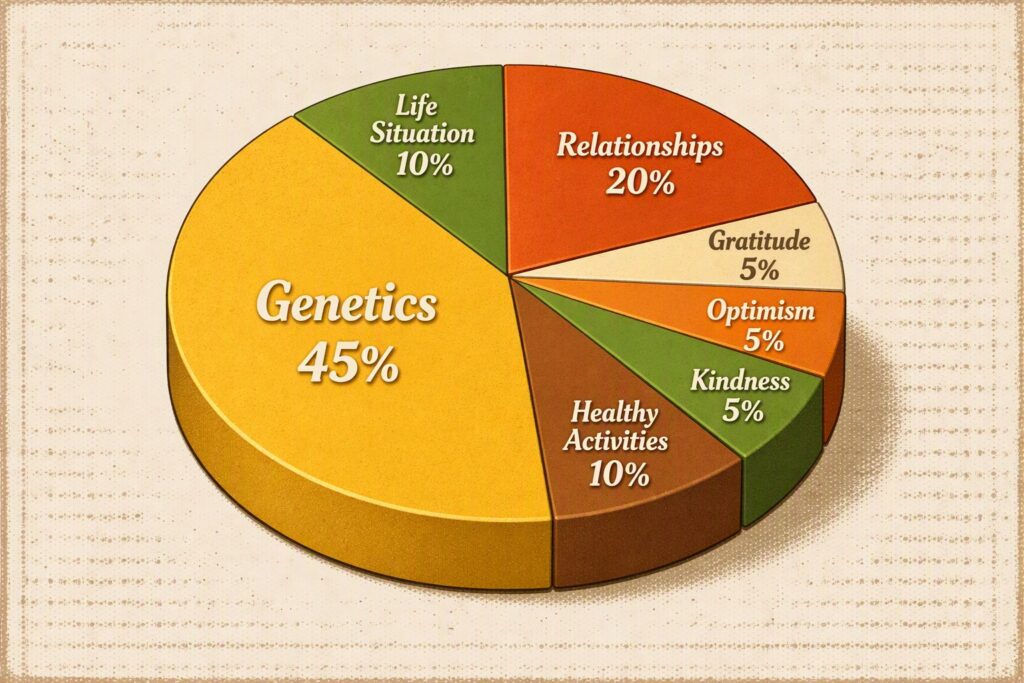
High productivity remains the primary engine behind rising standards of living, economic growth, and the viability of early retirement. Once societies achieve a certain baseline level of material wealth, however, human happiness ceases to scale proportionally with additional financial accumulation. In developed nations, basic survival and comfort requirements were surpassed decades ago, shifting the focus of human satisfaction toward non-financial factors.
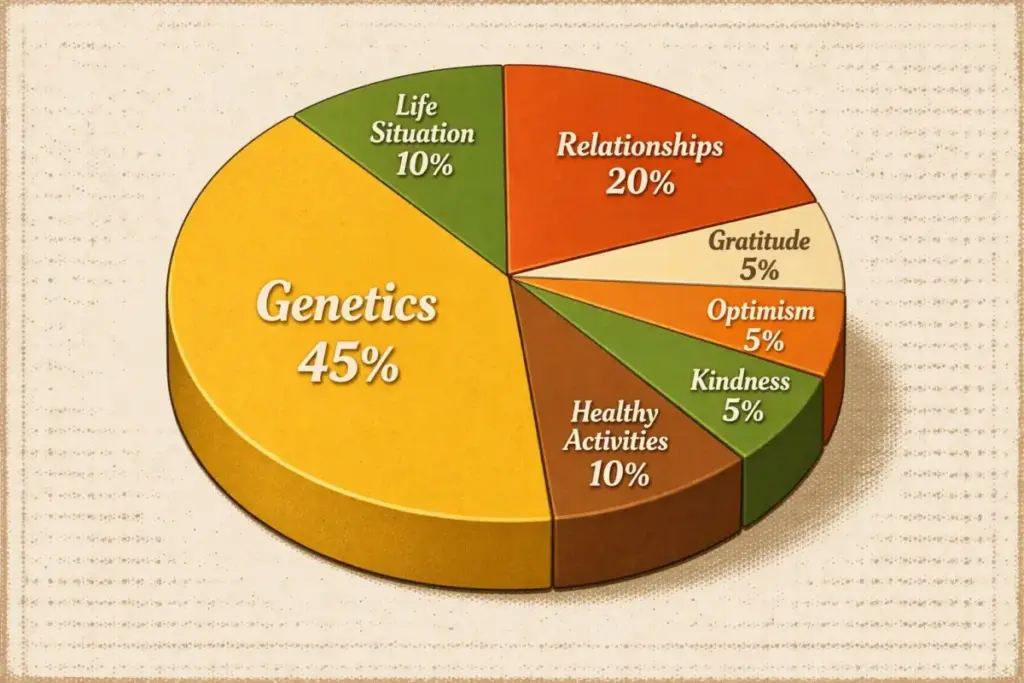
Psychological research and behavioral observation suggest that long-term happiness relies heavily on elements outside of material wealth. While genetics play a substantial baseline role in an individual’s disposition, controllable lifestyle choices—such as cultivating strong personal relationships, practicing gratitude, maintaining an optimistic philosophy, and incorporating regular physical activity outdoors—far outweigh the marginal benefits of accumulating excess capital.
Despite these established principles, a pervasive background fear continues to affect even financially secure individuals. To understand this phenomenon, it helps to examine human evolution. As a species, humans evolved as sophisticated danger-detection mechanisms. This background anxiety served an evolutionary purpose by protecting early humans from physical predators and environmental scarcity.
The flaw in this biological machinery, however, is its adaptability. When immediate physical dangers are resolved, the human mind continues searching for new sources of worry, effectively moving the goalposts. Once scarcity is conquered, individuals worry about social exclusion, followed later by financial comparisons, neighborhood property standards, tax strategies, and even government-mandated retirement account distributions.
Combating this persistent fear requires self-awareness and rational evaluation. Recognizing the historical roots of personal anxiety—whether stemming from childhood upbringing, family scarcity mentalities, or past trauma—allows individuals to differentiate between historical triggers and objective present realities. By identifying specific fears and analyzing worst-case scenarios, people can replace abstract dread with concrete action. Action breeds resilience and confidence, transforming the unfamiliar into the manageable.
Everything Is an Experiment
Navigating modern technological shifts requires reframing uncertainty through the lens of experimentation. Whether applied to minor lifestyle adjustments, career changes, or major financial transitions like early retirement, viewing life experiences as iterative experiments effectively neutralizes paralyzing fear.
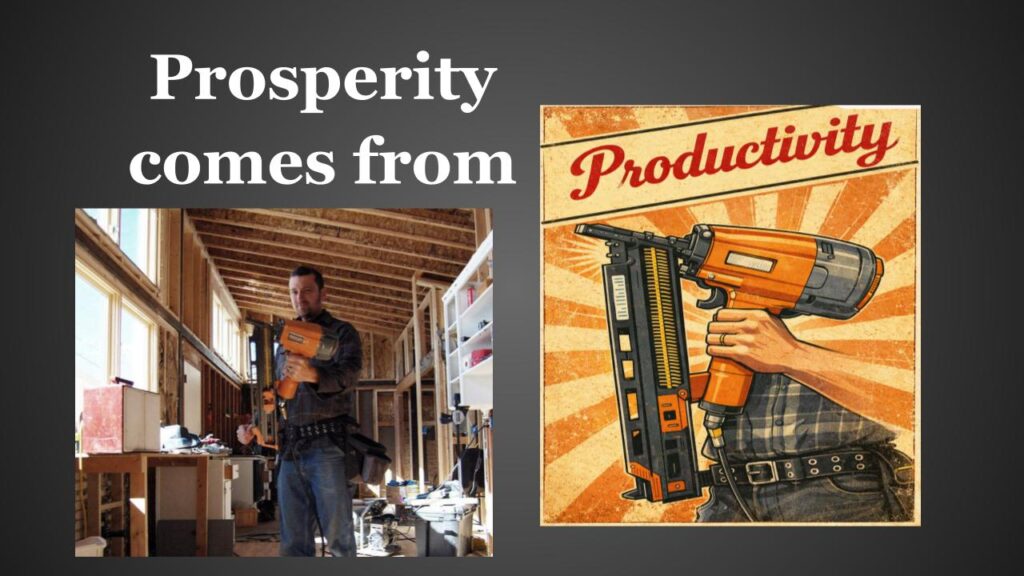
This experimental mindset applies directly to the current artificial intelligence landscape. Rather than succumbing to cyclical doom-scrolling, analyzing the technological foundations of AI reveals its potential as a powerful tool for cognitive efficiency. Much like a digital nail gun, artificial intelligence enhances human productivity, lowers service costs, and paves the way for entirely new industries, mirroring the transformative arcs of the internet and mobile computing revolutions.
While new productivity technologies inevitably displace certain traditional roles, particularly in entry-level administrative, financial, and technical sectors, they simultaneously generate broader economic expansion and new market opportunities. The financial rewards of these transitions frequently concentrate among the owners of capital and shareholders, reinforcing the importance of long-term participation in productive economic assets.
Ultimately, artificial intelligence represents another transitional milestone requiring active choices rather than passive dread. By addressing the root causes of fear, tuning out sensationalized media consumption, and focusing on purposeful, productive behaviors, individuals can navigate market cycles and technological revolutions with clarity and resilience. True security lies not in eliminating all future uncertainty, but in developing the adaptability to face whatever changes emerge on the horizon.