



With just weeks left in the contentious midterm election campaign, candidates in a trio of highly-competitive Senate races debated Thursday night, clashing over the economy, tariffs, the Iran war and abortion rights, with control of the upper chamber at stake. The showdowns offered voters a stark look at the competing visions for the future of the nation, highlighting the intense partisan polarization defining this cycle’s legislative battles.
In Georgia, incumbent Democratic senator Jon Ossoff faced GOP representative Mike Collins. In Michigan, Democrat Abdul Al-Sayed and Republican Mike Rogers debated over the state’s open Senate seat. And in Maine, longtime senator Susan Collins met Democratic challenger Troy Jackson. Democrats need to flip four Republican-held Senate seats to win the majority, making these battleground matchups critical testing grounds for both parties’ national strategies and grassroots mobilization efforts.

The evening’s events underscored how localized dynamics interact with overarching federal concerns. Across all three states, candidates found themselves pressed on pocketbook issues that have dominated voter anxieties for months, while also navigating deeply divisive social policies and foreign policy flashpoints that have erupted on the global stage.
Here are the key takeaways from the battleground state debates.
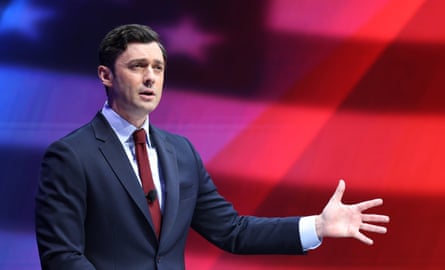
In the southern battleground of Georgia, the matchup between Democratic incumbent Jon Ossoff and Republican challenger Representative Mike Collins delivered immediate fireworks. Ossoff, seeking to secure a full six-year term in a state that has rapidly transformed into a premier political battleground, leaned heavily on his record of constituent service and economic investments brought to the state during his tenure. He defended the legislative accomplishments of the current administration, arguing that federal measures have bolstered infrastructure development, lowered prescription drug costs, and created sustainable jobs across both urban centers and rural communities.
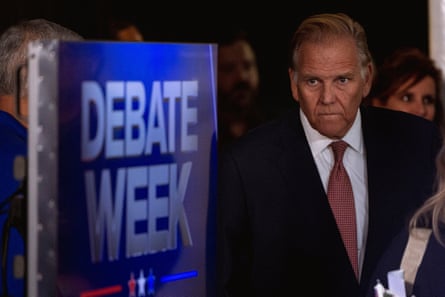
Opposing him, Representative Collins mounted a rigorous challenge centered on the economic pressures currently facing American households. Collins criticized the federal government’s fiscal policies, attributing inflation and the rising cost of living to excessive federal spending. The debate quickly pivoted toward trade policy and tariffs, with Collins defending protective measures designed to shield domestic manufacturing and agriculture from foreign competition. Ossoff countered by warning that broad tariff strategies risk sparking trade wars, driving up prices for everyday consumers, and harming export-dependent industries within Georgia’s robust agricultural sector.
Beyond the economy, the Georgia candidates clashed sharply over foreign policy, specifically addressing the escalating tensions surrounding the conflict involving Iran. Ossoff emphasized the necessity of steady, diplomatic leadership paired with robust international alliances to maintain regional stability and protect national security interests. Collins adopted a more hawkish posture, demanding unwavering support for key allies in the region and asserting that projecting strength is the singular method to deter adversaries and safeguard American lives abroad. The debate also featured intense exchanges on reproductive rights, a galvanizing issue for voters nationwide. Ossoff argued forcefully for the codification of reproductive freedoms, framing the discussion as a fundamental defense of bodily autonomy and healthcare access. Collins, presenting a traditional anti-abortion platform, maintained his commitment to protecting unborn life and supporting restrictions on the procedure, drawing clear lines between the two campaigns as early voting approaches.
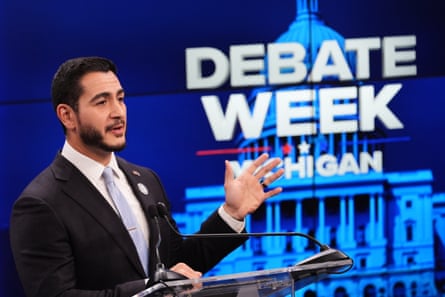
Meanwhile, in the industrial Midwest, Michigan voters tuned in to a high-stakes debate for the state’s crucial open Senate seat. The matchup featured Democrat Abdul Al-Sayed and Republican Mike Rogers, offering voters a definitive choice between contrasting economic and social philosophies. Michigan has long been viewed as an essential bellwether for national political trends, and the debate reflected the complex economic anxieties of a state navigating the transition toward advanced manufacturing, green energy technologies, and automotive innovation.
Al-Sayed focused his platform on progressive economic reforms aimed at strengthening the middle class, expanding access to affordable healthcare, and addressing systemic inequalities. He argued for targeted investments in public education, clean energy infrastructure, and worker empowerment, contending that prosperity must be built from the bottom up. Rogers, bringing a wealth of national security and legislative experience to the stage, framed his campaign around economic revitalization through deregulation, lower taxes, and energy independence. Rogers argued that excessive government intervention and federal mandates are stifling business growth, burdening automakers, and undermining the state’s competitive edge in the global marketplace.
The Michigan candidates also engaged in a rigorous debate over trade policy, touching directly upon how tariffs impact the state’s iconic manufacturing and automotive sectors. Rogers defended tariffs as a necessary tool to protect domestic workers from unfair international competition, while Al-Sayed cautioned against policies that could disrupt integrated supply chains and invite retaliatory tariffs against Michigan’s agricultural and manufacturing exports. The discussion further encompassed national security concerns, including the U.S. posture toward the conflict involving Iran, alongside intense deliberations over reproductive rights, where Al-Sayed championed the preservation of reproductive freedom enshrined in state law, and Rogers defended conservative limits on abortion access.
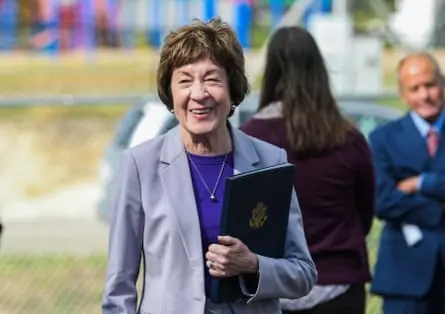
Far to the northeast, Maine hosted a closely watched debate between longtime incumbent Senator Susan Collins and her Democratic challenger, Troy Jackson. The Maine race represents one of the most prominent contests in the country, given Collins’s decades-long tenure and her history of navigating an independent path within an increasingly polarized Senate. Jackson, a working-class leader and current state legislative official, sought to position himself as a champion for everyday Mainers, focusing his arguments on the rising cost of living, the preservation of labor rights, and the protection of fundamental healthcare access.
Senator Collins defended her legislative record by emphasizing her independence, bipartisan credentials, and consistent efforts to deliver federal funding for Maine’s fisheries, forestry, and small businesses. She highlighted her work on key committees and her ability to forge compromises across party lines to address issues unique to rural and coastal communities. Jackson, however, pressed the incumbent on her past votes regarding judicial nominees and federal policies, arguing that Maine requires a senator who will unequivocally protect abortion rights and fight for working families without hesitation.
The Maine debate also touched on broader national and international themes, including economic sustainability, the impact of federal tariffs on local industries, and the implications of the ongoing conflict involving Iran. Throughout the evening, Jackson maintained that federal priorities have failed to adequately support ordinary citizens facing economic headwinds, while Collins countered that her pragmatic, experienced approach is precisely what is needed to maintain stability and secure necessary federal resources for the state.
With control of the United States Senate hanging in the balance, these three regional debates illustrate the intense national narrative playing out across the country. Democrats currently hold a narrow advantage in the upper chamber and need to flip four Republican-held seats to secure an outright majority, raising the stakes for every battleground matchup. As the final weeks of the campaign unfold, candidates in Georgia, Michigan, Maine, and across the nation will continue to refine their messages, striving to mobilize their core bases and persuade the remaining undecided voters before ballots are cast on Election Day.