When shopping for a new portable audio device, consumers are often drawn to specifications that seem straightforward. Alongside physical dimensions and total weight, wattage frequently serves as a primary metric for evaluating the best Bluetooth speakers on the market. Buyers naturally assume that a higher electrical power rating guarantees superior performance and, most importantly, significantly louder sound. However, the complex physics of audio engineering mean that speaker specifications do not operate on such simple arithmetic.
A common misconception among audio enthusiasts and casual listeners alike is that a 20-watt speaker is twice as powerful or twice as loud as a 10-watt model. In reality, wattage merely measures the amount of electrical power an amplifier sends to the speaker drivers. Understanding how manufacturers measure power, how human hearing perceives loudness, and what specific wattage thresholds mean for everyday listening is essential for making an informed purchasing decision. Without looking past the marketing numbers, buyers risk paying for power they cannot actually perceive.
RMS vs. Peak Power Ratings on Bluetooth Speakers
The confusion surrounding speaker power is exacerbated by the presence of two distinct metrics: peak power ratings and RMS, or root mean square, ratings. Manufacturers and consumer electronics retailers frequently highlight only one of these figures, usually opting for the more impressive-looking metric, which makes comparing different audio products based on raw specifications a challenging endeavor.

The peak power rating is relatively simple to define as the maximum electrical power handling capacity of a speaker’s amplifier. However, this peak figure can typically only be sustained for brief, momentary bursts. Pushing a speaker to its peak output for extended periods can cause severe strain, leading to audio distortion or permanent damage to the internal components. This vulnerability is why manufacturers establish a secondary safety threshold known as the RMS rating.
The RMS figure reflects the true, continuous electrical power that the speaker’s internal components can handle reliably over long periods of normal operation. It is common practice for marketing materials to highlight a peak power rating of 40 watts while the actual continuous RMS rating sits quietly at 20 watts. Because companies rarely publish the RMS power rating uniformly across all models, consumers are often left staring at inflated maximum power figures designed to make a device look superior to competing hardware.
Brick-and-mortar stores and online retail platforms frequently fail to distinguish between RMS and peak power ratings in their product listings. For example, the official specification sheet for the ultra-portable JBL Go 4 rates the device at 4.2 watts RMS, yet major retailers like Target may omit power ratings entirely from their product pages. Because some manufacturers choose to bypass publishing RMS data altogether, consumers must often rely on independent laboratory reviews and real-world testing data to understand how a speaker truly performs under sustained loads.

Even when comparing two genuinely accurate RMS figures, a higher rating does not automatically translate to a better listening experience. The efficiency and design of the actual speaker drivers, along with their acoustic sensitivity, play a far more influential role in overall audio output. An exceptionally efficient 10-watt speaker can easily outperform a poorly designed 20-watt model, demonstrating that power ratings should serve merely as a starting point rather than a definitive metric for comparison.
Doubling the Power Rating Doesn’t Double the Loudness
Perhaps the most persistent myth in consumer audio is the linear relationship between electrical power and perceived volume. Many buyers assume that moving from a 10-watt speaker to a 20-watt speaker will double the acoustic output, but human hearing and acoustic physics operate on a logarithmic scale rather than a straight line.
In acoustic terms, doubling a speaker’s electrical power rating yields an increase in sound output of approximately 3 decibels, abbreviated as dB. To human ears, however, a sound must increase by roughly 10 decibels to be perceived as twice as loud. This means that going from a 10-watt speaker to a 20-watt speaker results in a modest 3 dB increase. Achieving another 3 dB jump requires doubling the power again from 20 watts to 40 watts. To achieve a true doubling of perceived loudness, a sound system requires a tenfold increase in electrical power. Consequently, the practical difference in volume between a 25-watt speaker and a 35-watt speaker is far less dramatic than the numbers might suggest.
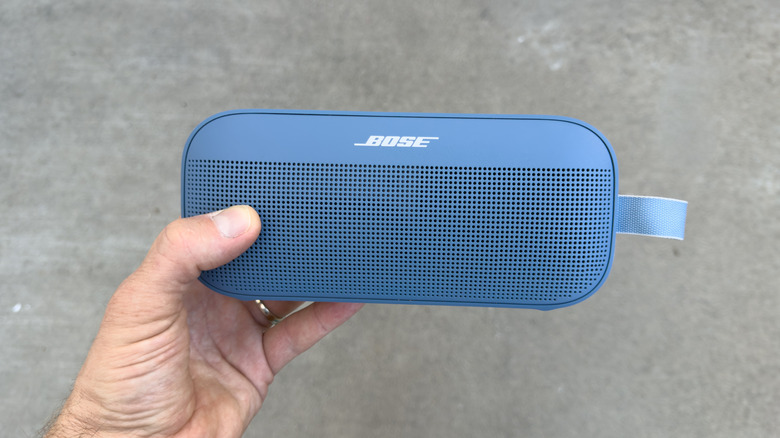
Furthermore, speakers within the exact same power bracket can exhibit vastly different sound profiles, tonal balances, and maximum undistorted volume levels. Relying on spec sheets, power ratings, or physical dimensions alone is rarely sufficient for predicting how a device will perform in the real world. Physical size is a particularly tricky variable for Bluetooth speakers, as manufacturers sometimes use the space required for a large battery to inflate the physical footprint of the unit. This can create the false impression that a larger chassis inherently produces louder or higher-quality sound than a more compact alternative.
How Many Watts Do I Need in a Bluetooth Speaker?
Navigating the wide array of available power ratings requires a clear understanding of personal listening habits and intended environments. The smallest portable Bluetooth speakers on the market generally feature an RMS output power ranging between 3 and 10 watts. This power tier is typically sufficient if the listener remains within a few feet of the device, such as at an office desk or a quiet bedside table. However, these compact units generally lack the output necessary to overcome significant background noise or comfortably fill an average-sized room with rich sound. Pushing sub-10-watt speakers to their absolute maximum volume frequently introduces noticeable audio distortion, meaning users rarely want to operate them at full capacity.
Moving up into the middle tier, consumers encounter speakers rated up to 40 watts of continuous RMS power. These units remain reasonably portable while frequently incorporating dual speaker drivers instead of a single full-range driver. The structural advantage of multiple drivers is improved clarity and frequency separation, allowing the speaker to fill a small room comfortably without requiring the volume control to be pushed to 100 percent.
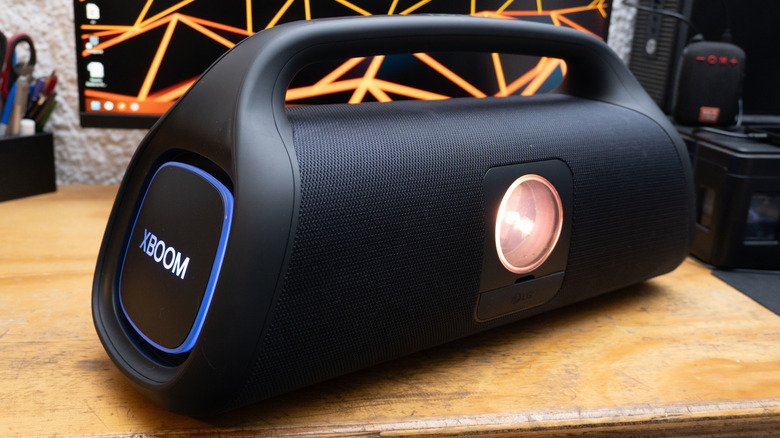
Within the 40-watt to 100-watt range, the market offers robust Bluetooth speakers specifically marketed for outdoor use. Devices such as the Anker Soundcore Boom 3i, which boasts a 50-watt RMS power rating, are engineered to produce enough acoustic energy to overcome environmental sounds like wind, traffic, or bustling backyard gatherings. At the upper extreme of the consumer spectrum lie heavy-duty party speakers, such as high-end models from the JBL Boombox and PartyBox series, which deliver RMS power ratings scaling from 80 watts well past 200 watts.
These high-powered units excel in large outdoor venues, open-air parties, and wide spaces where massive sound output is required. However, generating that level of continuous acoustic energy necessitates scaling up internal amplifiers, heat sinks, and massive battery cells. The inevitable result is a significant increase in physical weight, overall dimensions, and a corresponding decrease in everyday portability.
Ultimately, the ideal power rating for a Bluetooth speaker depends entirely on where and how the device will be deployed. For intimate indoor listening environments, most compact speakers rated below 50 watts will easily satisfy everyday requirements. For users navigating noisier environments, open-air workspaces, or frequent outdoor excursions, investing in a Bluetooth speaker with a higher RMS power rating and a more robust acoustic design remains the most effective path forward.