


For decades, the standard office filing cabinet was built with a singular, utilitarian purpose in mind: uniformity. Born out of the mid-20th-century corporate environment where sameness was the entire point, a row of industrial gray vertical file cabinets signaled that an office was perfectly organized, heavily bureaucratized, and entirely devoid of personal expression.
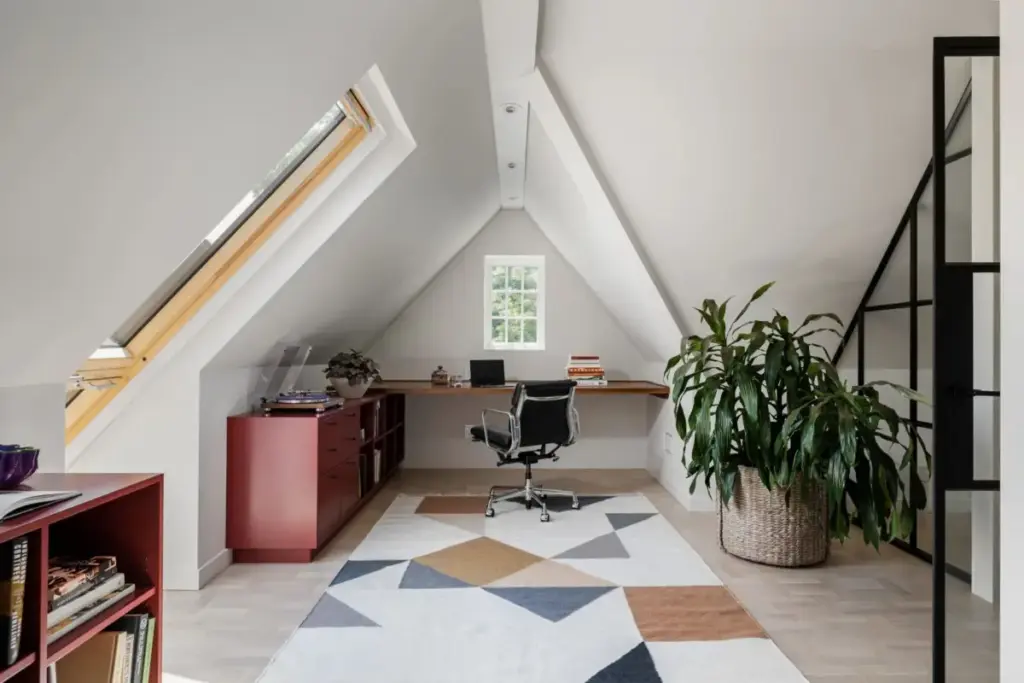
Today, however, that same piece of office furniture faces a much more demanding role. As remote work, hybrid schedules, and urban living spaces blur the boundaries between professional domains and domestic sanctuaries, the filing cabinet has been forced to evolve. No longer hidden away in corporate storage rooms or corporate basements, storage furniture must now fit seamlessly into residential layouts. It sits beside a living room sofa, slides under a standing desk in a compact studio apartment, or doubles as a bedside nightstand. To survive in the modern home, a filing cabinet has to look considerably more intentional and aesthetic than anything found in a corporate headquarters.

This shift has prompted major furniture designers and home brands to rethink what office storage can look like. Contemporary solutions range from metal filing cabinets finished in vibrant colors that no traditional office manager would ever sign off on, to warm wood and veneer pieces meant to blend effortlessly with residential living room furniture, to high-end design icons that happen to accommodate hanging folders.
Navigating this new landscape requires careful consideration of both form and function. Before investing in a modern storage piece, interior experts recommend checking specific details: whether the drawers can accommodate legal-size documents or are restricted to letter-size folders, whether a locking mechanism is necessary for securing private items like passports and tax returns, and whether integrated casters would make the piece easier to maneuver when cleaning or rearranging a workspace.

Among the space-saving options transforming the market is the Branch Small Filing Cabinet. Known for their unfussy office chairs, Branch applies the same minimalist design sensibility to its compact storage. Standing 20 inches tall and roughly a foot wide, the unit is engineered to slide easily beneath standard desks or slip into narrow gaps beside bookshelves. Weighing just 22 pounds and equipped with smooth-glide wheels, it is designed for effortless mobility during home office redesigns. Its smooth, coated finish marks a stark departure from the ribbed metal cabinets of the 1970s, with colorways like soft sage providing a gentle accent to brighten up a room.
For those looking toward high-end design, the Herman Miller OE1 Trolley—designed by the London-based studio Industrial Facility—borrows its sleek silhouette from the traditional bar cart. Featuring a slim powder-coated steel frame on casters, it is topped with a rimmed tray that keeps items secure while being wheeled from a desk to a sofa. Beneath the surface lies a tilting compartment that opens to reveal slots for folders and stationery rather than beverage bottles, merging playful mobility with functional organization.

When wood is preferred over metal to match midcentury-inspired decor, options like the Article Fantol File Cabinet offer a petite, furniture-first approach. Standing 23 inches tall, it is scaled to tuck under low-profile desks while looking more like a side table than office equipment—a crucial factor when a workspace occupies a corner of a living room. Its natural oak finish pairs naturally with warm wood furnishings, and its top surface provides ample space for a compact printer.
Addressing the demand for vibrant color, Laura Davidson Furniture’s Stockpile Cabinet asks a fundamental question about traditional office aesthetics: why must storage be strictly beige or black? Offered in over ten distinct colorways, including cheerful oranges and rich cobalt blues, the cabinet relies on soft proportions and gentle-close drawers to prevent slamming, making it ideal for multipurpose rooms that double as bedrooms or share walls with sleeping children.

West Elm’s Cutler File Cabinet takes a more traditional, long-haul approach with a solid mahogany frame enveloped in oak or walnut veneer. Built to contract-grade standards—the rigorous durability benchmark used for hospitality and commercial projects—it measures 16 inches wide to slide neatly under matching desks for a streamlined workspace aesthetic. Similarly, the brand’s Tandem Filing Cabinet pairs an oak-veneer case with a steel frame, rolling on casters like a mobile file cabinet while maintaining the appearance of a compact dresser.
For lovers of avant-garde design, Konstantin Grcic’s 360 Degree Container for Magis discards the conventional drawer pull entirely. Its five trays pivot smoothly around an aluminum spine, swinging outward rather than sliding forward to form a sculptural spiral when partially opened. Though the trays are too shallow for traditional hanging files, the piece functions as an artistic repository for everyday desk supplies.

At the architectural end of the spectrum, the USM Haller File Credenza traces its lineage back to 1961, when Swiss modular system manufacturer USM hired architect Fritz Haller to design a new factory. The resulting modular steel furniture is now part of the permanent collection at the Museum of Modern Art. Featuring drop-down doors and lower drawers that accommodate letter-size hanging files, each compartment locks securely with the simple turn of a coin—a nod to the brand’s origins as a hardware and lock maker. It stands as a rare example of a secure filing system that feels equally at home in a residential dining room.
Similarly, the MoMA 5-Drawer Pivot Cabinet, made in Italy and retailed through the MoMA Design Store, stacks candy-colored, swing-open drawers in a powder-coated finish. Its slim profile allows it to function as a vibrant nightstand while holding its own alongside contemporary art in bedrooms that double as home offices.

Ultimately, the reinvention of the filing cabinet reflects a broader cultural shift in how we inhabit our living spaces. As the home office continues to evolve beyond temporary setups into permanent, integrated parts of domestic architecture, storage furniture is no longer expected to hide in plain sight. Instead, it has transformed into an opportunity for design self-expression, proving that even the most bureaucratic relics of the 20th century can undergo a remarkable aesthetic transformation.