Director Brad Bird has spent nearly his entire career attempting to convince American moviegoers of a fundamental truth: animation is not a genre. Throughout decades of groundbreaking filmmaking, he has continuously argued that it is an artistic medium capable of tackling any story, tone, or subject matter. For almost as long as he has been advocating for a Hollywood that matches the international appreciation for mature animated art found in countries like Japan and France, Bird has been quietly developing Ray Gunn. The retrofuturist murder mystery was scripted even before he directed his critically acclaimed feature-length debut, 1999’s The Iron Giant.
Now, decades later, Ray Gunn has finally transformed from a Hollywood rumor into a tangible reality. Released on Netflix under the Skydance Animation banner, the film serves as a meta-polemic that echoes every argument Bird has ever made regarding what animation can achieve for adult audiences. Reunited with his longtime collaborator John Lasseter, Bird has finally realized his lifelong ambition of sending private investigator Ray Gunn—voiced by Sam Rockwell—on a hoverbike-driven investigation through art deco megastructures and neon-lit alleyways.
The film unapologetically embraces its adult sensibilities. While older children might find aspects to enjoy, assuming they harbor a niche appreciation for classic noir cinema like Nicholas Ray’s In a Lonely Place or Robert Aldrich’s The Big Knife, Bird is clearly unconcerned with pandering to the traditional under-ten demographic. Instead, he has constructed a stunning, densely packed sci-fi neo-noir that treats its mature themes with absolute sincerity and stylistic rigor.
A Retrofuertist World Built with Technical Wizardry
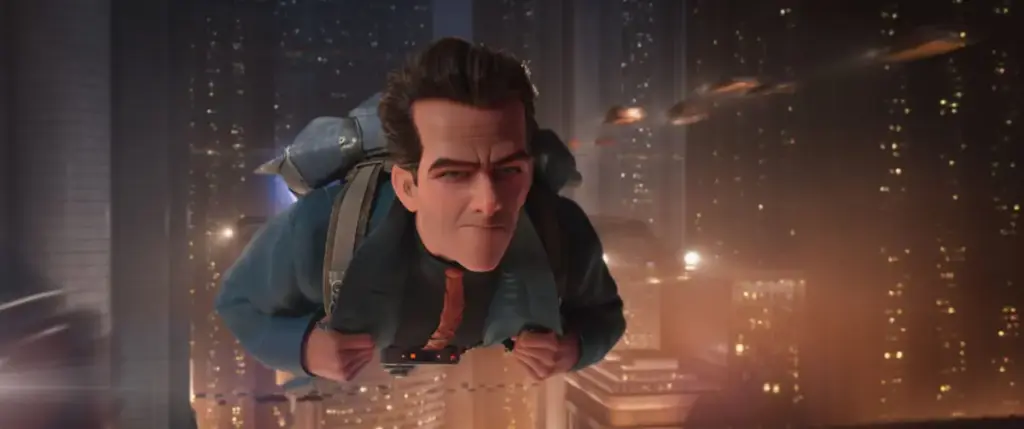
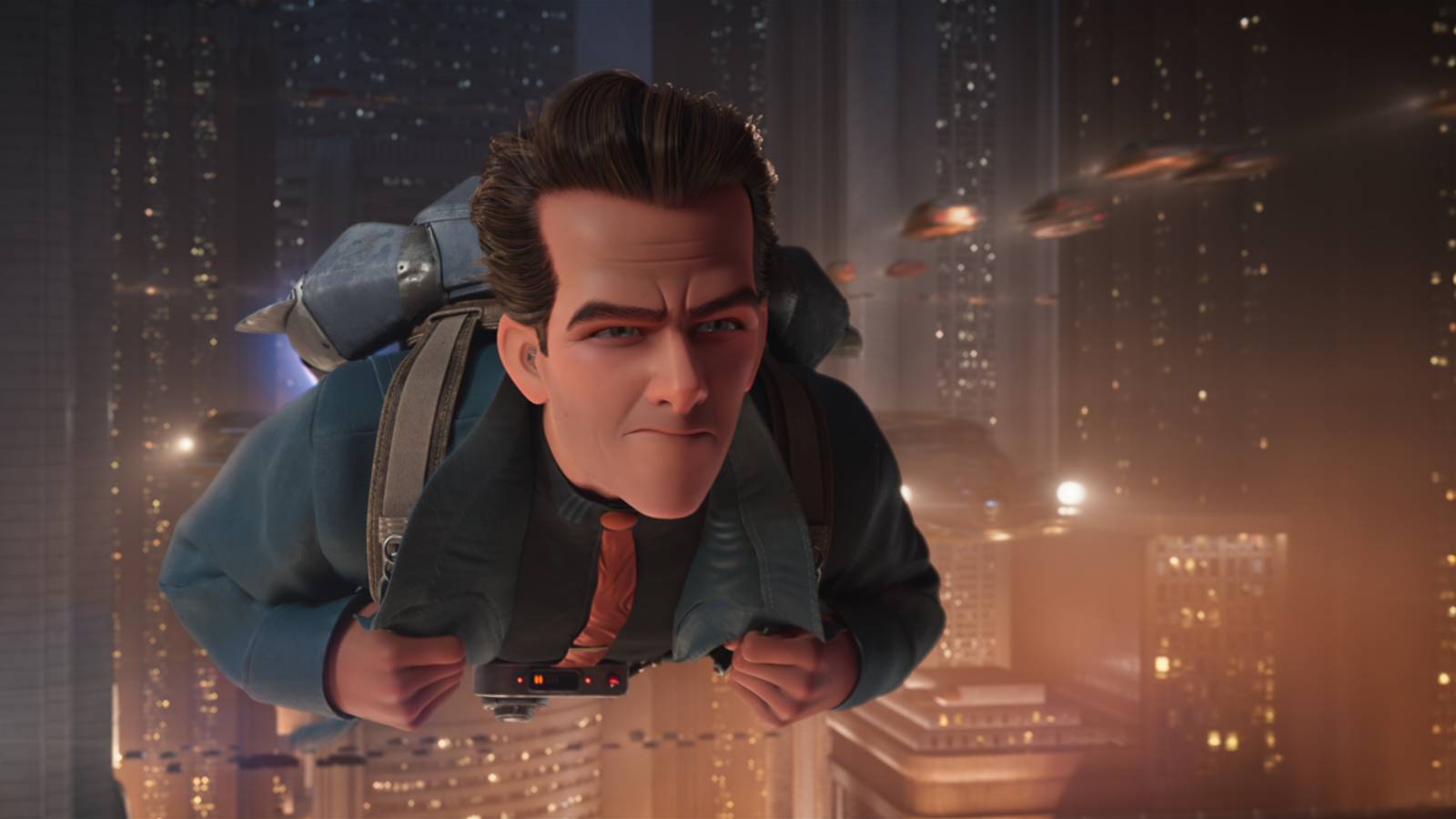
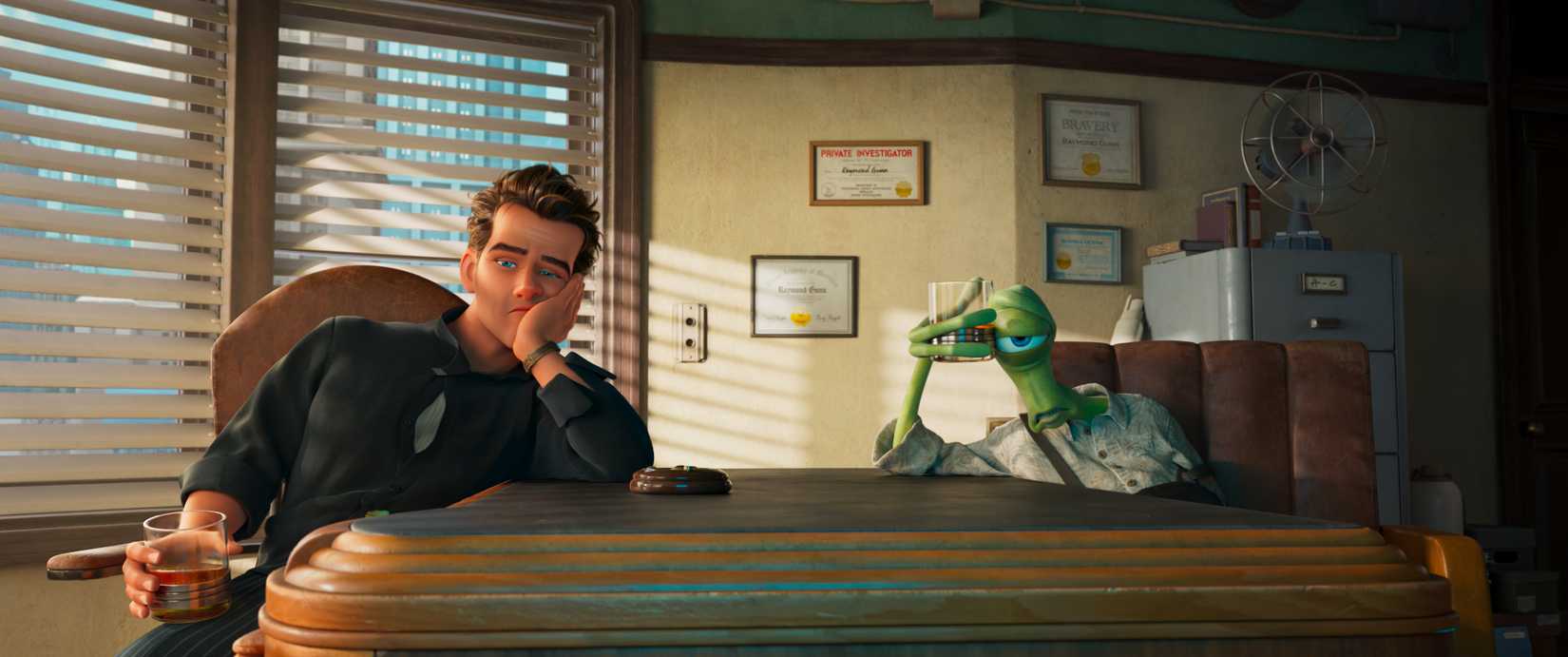
Skydance has spared no expense in ensuring that the film matches the technical wizardry of Bird’s celebrated Pixar tenure, including The Incredibles and Ratatouille. The resulting aesthetic frequently resembles living, breathing concept art. Detective Ray and his wisecracking, one-eyed alien partner, Eye-Ra—portrayed with gravelly charm by Tom Waits—zip around a sprawling, vertical metropolis in pursuit of the truth behind a high-profile murder.
The crime is intimately tied to a glamorous diva named Venus Nova, brought to life through the sultry vocal performance of Scarlett Johansson. Every square inch of the city feels vibrantly lived-in, from its towering, gravity-defying architecture to the uneasy, multifaceted coexistence of its human and extraterrestrial inhabitants.
Beneath the laser-beam shootouts and hard-boiled gumshoe tropes, Bird weaves an ambitious thematic tapestry. The narrative grapples with complex social issues, including racial tensions, the uneasy encroachment of technology upon traditional art forms, the existential threat of artificial intelligence erasing human creativity, and an economic landscape where major corporations operate with criminal impunity while ordinary citizens struggle to get by. Private investigator Ray Gunn barely manages to scrape together enough credits to make rent, largely because he spends too much time trying to play the hero in a world that has long since abandoned chivalry.

While Bird occasionally struggles to balance every single socio-political and philosophical idea he has crammed into the runtime—yielding a narrative that perhaps lacks the singular, piercing emotional depth of The Iron Giant‘s post-war paranoia or Ratatouille‘s ode to artistic expression—the moment-to-moment experience easily compensates.
The movie functions as a continuous visual feast. Every frame is as dense with intricate production design and background gags as Bird’s finest contributions to The Simpsons. Viewers will find themselves wanting to pause and study the futuristic art-deco landscapes or rewind to catch the subtle choreography of the single-shot rumbles that punctuate Ray’s investigations. Bird’s renowned eye for composition and kinetic movement remains as sharp as ever, suggesting that the decades spent waiting to bring this world to the screen only fueled his creative hunger.
Blending Hard-Boiled Cynicism with Surprising Romance
Perhaps the most startling aspect of Ray Gunn is its genuine emotional resonance. While Sam Rockwell slings hard-boiled wisecracks reminiscent of Humphrey Bogart, Ray’s relentless pursuit of answers leaves him physically battered and emotionally bruised, looking every bit as weathered as a detective searching for the Maltese Falcon. Accentuating this atmosphere is a sweeping musical score by Michael Giacchino, which firmly signals to the audience that the film is not a cynical parody or superficial pastiche, but a legitimate continuation of a cinematic legacy.
Bird also injects a healthy dose of physical comedy by colliding 1930s detective tropes with futuristic sci-fi absurdity. A standout shakedown sequence involving two of mob boss Slugsy’s extraterrestrial heavies escalates brilliantly. One of the thugs serves as an animated nod to classic character actor Peter Lorre, echoing cinematic trends seen across other recent animated projects. The brawl builds in intensity until the combatants find their physical forms literally melded together by a rogue molecule-scrambling pistol, transitioning seamlessly from cramped corridors to turbo-elevators in a sequence that feels like a classic Bugs Bunny cartoon crashing headfirst into a gritty mid-century crime drama.
In addition to the action and comedy, Ray Gunn emerges as a deeply romantic picture. As Ray investigates Venus Nova’s connection to the central murder, he falls for her hard. Backed by Johansson’s flirtatious and captivating voice work, the chemistry between the characters grounds the cynical narrative. In a standout, magical zero-gravity sequence, Ray and Venus literally float above their hardened exteriors, melting into each other’s gaze in a weightless embrace. It stands as one of the most genuinely romantic moments in modern American animation, proving that Bird’s directorial range extends far beyond kinetic action and kinetic spectacle.
A Long-Awaited Triumph for Adult Animation
After more than thirty years of false starts—navigating his major Pixar successes, live-action detours with high-profile stars, and an industry that historically struggled to categorize material of this scale—Bird has finally completed his passion project. He has delivered a sophisticated animated adventure comedy for adults, a rarity in mainstream Western cinema.
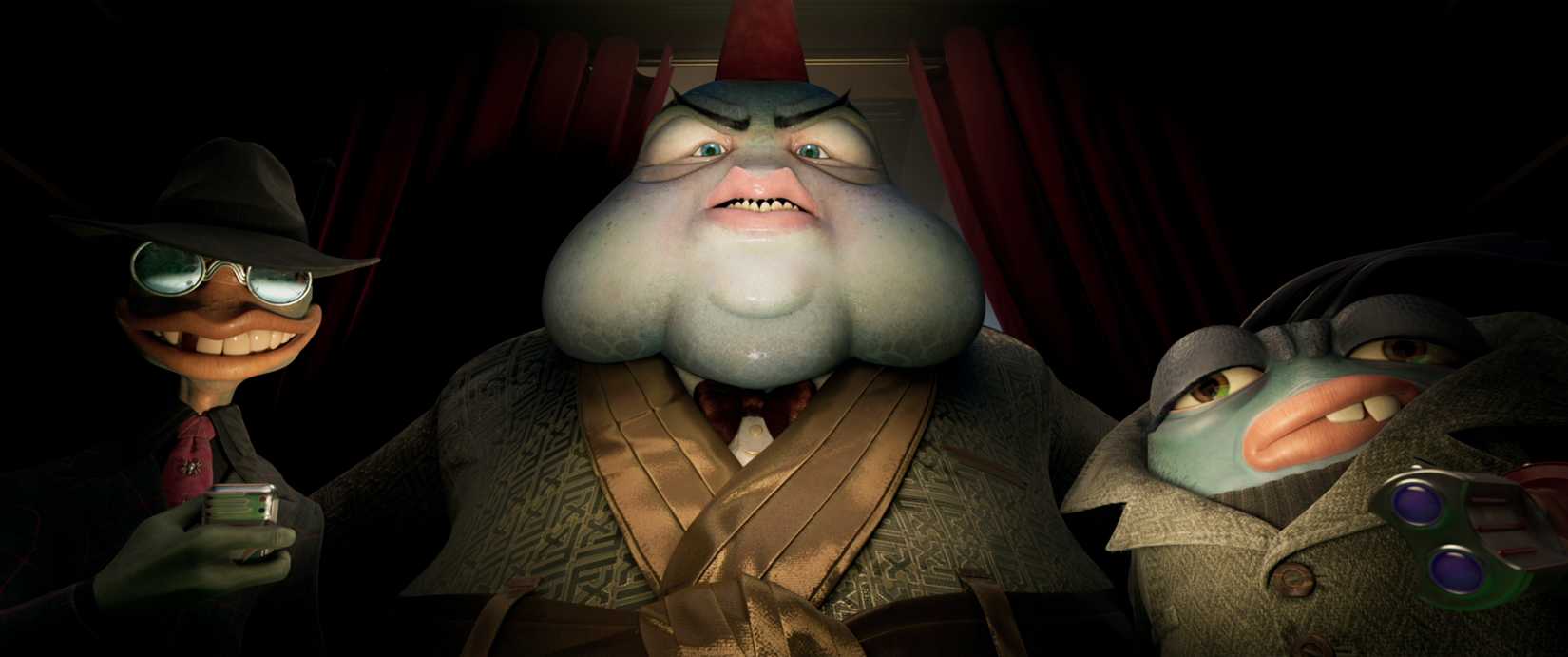
While it is unfortunate that a cinematic spectacle of this magnitude will bypass traditional theatrical runs for most viewers, those who dim the lights at home will find one of the year’s most accomplished hybrids of action, sci-fi thriller, comedy, and romance. Through Ray Gunn, Brad Bird has proven his point not through another impassioned industry interview, but by simply making the film he always knew was possible.