

Director Brad Bird has long been celebrated as one of the defining visionary voices in modern animation, having previously steered beloved classics like The Incredibles, Ratatouille, and The Iron Giant to critical and commercial acclaim. Now, after a development journey spanning over three decades, Bird is finally bringing his long-gestating passion project to life. Ray Gunn, a genre-bending mashup of hardboiled detective fiction and retro-futuristic space opera, made its world premiere at the London Film Festival on October 10. Following its festival debut, the film is slated for a select theatrical run on December 4, ahead of its broader streaming release on Netflix on December 18.
Securing a solid 8 out of 10 ("Great") score in its official review, Ray Gunn proves to be a visually sumptuous and cleverly realized endeavor. While it occasionally stumbles over its own runtime and a slightly clunky procedural narrative, it stands out as a bold, mature animated feature that successfully revitalizes a classic cinematic aesthetic for contemporary audiences.
Welcome to Metropia: A World of Sci-Fi Noir
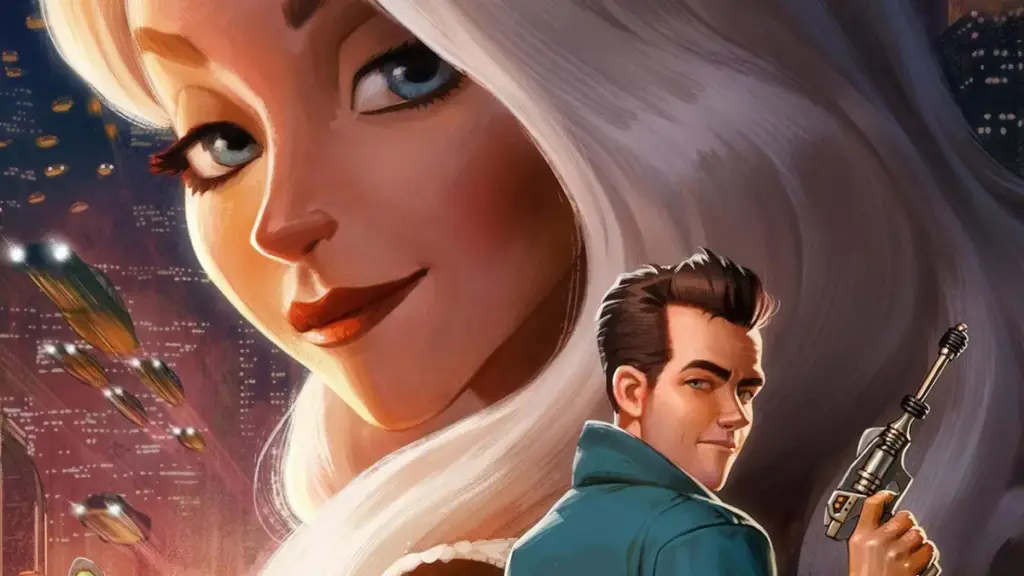
Set in the sprawling, neon-drenched expanse of Metropia, Ray Gunn immediately establishes its distinct tonal identity. The story follows its titular private eye—a glib, hardboiled yet stubbornly optimistic gumshoe voiced by Sam Rockwell—as he takes on a high-stakes case. Alongside his cynical, one-eyed alien partner Eye-Ra (voiced with world-weary and wry wit by Tom Waits), Ray Gunn is hired to investigate a dangerous trail surrounding the world’s biggest pop star, Venus Nova (voiced by Scarlett Johansson). What begins as a seemingly standard missing-person or celebrity inquiry quickly spirals downward into a web of murder, deep-seated corporate corruption, and nefarious underworld conspiracies.
The cinematic lineage is unmistakable. Bird leans heavily into the tropes of classic 1940s detective thrillers and golden-age science fiction, creating an atmosphere that feels very much like Sam Spade meeting Buck Rogers. The film’s gritty tone and mature sensibilities clearly skew toward an older demographic rather than the broad, all-ages family market typical of Bird’s past work with Pixar. However, this shift is handled with confidence, proving once again that the medium of animation can effectively support diverse genres and sophisticated storytelling without alienating viewers entirely.
Despite its darker undertones, Ray Gunn still delivers plenty of animated hijinks and cartoon energy. Ray’s signature particle blaster pistol frequently sparks raucous, high-energy sequences that might border on body horror if handled in a live-action setting, yet they maintain a lighthearted, comedic punch here. For audiences seeking a touch of whimsy, the film also introduces a delightfully strange alien creature that serves essentially as the cosmic equivalent of a French bulldog, anchoring the movie’s cute factor.

Alien Metaphors and World-Building
The inhabitants of Metropia are brought to life through a diverse array of alien designs that feel both comfortingly familiar and entirely appropriate for the retro-futuristic ecosystem. Some alien species are utilized for physical comedy and utility, such as Eye-Ra, whose spider-like climbing skills grant the duo unique tactical advantages during investigations. Other characters function as direct homages to classic film noir archetypes. The Jabba-the-Hutt-esque crime lord Slugsy, voiced with sleazy erudition by Matt Berry, is clearly modeled after legendary The Maltese Falcon and Casablanca actor Sydney Greenstreet, complete with a tiny henchman who looks and sounds remarkably like Peter Lorre.
Beyond aesthetic homages, the alien population of Metropia serves as a direct narrative metaphor for systemic prejudice. The film explores a world where segregation and xenophobia remain pervasive, though redirected toward extraterrestrial beings instead of human ethnic groups. Aliens in Metropia are largely relegated to manual labor and face strict systemic barriers, including being barred from entering specific human facilities, such as designated human-only hospitals.
While Ray Gunn introduces these heavy-handed social themes thoughtfully, critics note that it leaves additional narrative avenues unexplored. Due to major plot developments that must remain unspoiled, the film’s handling of its xenophobia metaphor ventures into territory rarely broached by animated features, even if the execution leaves room for a deeper thematic dive.
Pacing Hurdles and Technical Splendor
For all its stylistic flair, Ray Gunn is not entirely without flaws. The narrative tends to drag during its middle stretch, as the story dutifully maneuvers through the required beats of a traditional detective procedural. In doing so, it occasionally attempts to misdirect the viewer with plot points and characters that feel transparent and obvious from the outset. Furthermore, as the film races toward its climax, it crams in a significant amount of under-explored commentary regarding the entertainment industry, the evolution of technology, and fundamental human nature. These ideas skim the surface rather than receiving the rigorous examination they deserve within the runtime.
Where the film truly excels, however, is on a purely technical and artistic level. Ray Gunn boasts a stellar retro-futuristic aesthetic that permeates every frame, from the towering architecture of Metropia to the intricate costume design, futuristic gadgets, and sleek vehicles. Every element reflects an immense attention to detail.

The auditory experience matches the visual fidelity. Esteemed composer Michael Giacchino delivers a moody, evocative musical score that sounds authentically lifted from a 1940s Hollywood picture, enhancing the emotional weight of dialogue-driven and romantic encounters alike. The stylistic synergy of these creative elements results in a film that oozes pulpy fun wrapped in an old-school sci-fi gloss.
A Stellar Voice Cast and Musical Highlights
The voice performances across the board are uniformly strong. Sam Rockwell anchors the production with his charismatic portrayal of Ray Gunn, managing to balance world-weary cynicism with a persistent, endearing optimism. Tom Waits provides the ideal counterweight as Eye-Ra, infusing the character with a weary, gravelly comedic timing. Supporting players including Bobby Cannavale, Alan Tudyk, Michelle Rodriguez, and Kether Donohue each seize their respective moments to shine in memorable supporting capacities.
Meanwhile, Scarlett Johansson delivers a breathy, sultry performance as the femme fatale Venus Nova, bringing a classic noir vocal texture to the role. Perhaps most surprisingly, Johansson demonstrates genuine vocal talent as a singer, performing three original tracks written for the film by composer Kimbra. Among them, the track "Innocent" emerges as a standout earworm that lingers long after the credits roll.
Verdict
Director Brad Bird’s Ray Gunn functions as a passionate love letter to both film noir and old-school science fiction, brilliantly breathing life into a meticulously crafted retro-futuristic universe with boundless style. As a detective narrative, it occasionally outstays its welcome by stretching its runtime over predictable twists, while its bold attempts to weave in themes of bigotry stop short of a truly deep exploration.
Even with these narrative compromises, Ray Gunn offers an abundance of unique entertainment that deserves to be experienced in the best environment possible. While it will soon find a wide home audience on Netflix, audiences are encouraged to seek it out on the big screen with a top-tier sound system to fully appreciate the scope of Bird’s visionary craftsmanship.