

Travelers rarely look for profound self-actualization through a simple getaway, yet life often intervenes at precisely the wrong moment, demanding an escape. For one traveler stepping into her late twenties, facing an impending loss, a recent breakup, and a looming anxiety about aging, a wellness retreat in Costa Rica sounded less like an indulgence and more like a necessary refuge. Whether one calls it a quarter-life crisis or a Saturn return, the heavy fog clouding the mind ahead of turning 30 seemed ripe for clearing, perhaps through the literal vibrations rippling through The Vessyl’s state-of-the-art "Frequency Dome."

Opened in August, The Vessyl bills itself as the world’s first 4D sound resort, occupying a unique space in the rapidly expanding wellness landscape. While its nomenclature follows the modern tech tradition of playing fast and loose with vowels, and its initial impression might suggest an audience straight out of Burning Man, the resort offers something distinct from the ubiquitous sauna-and-cold-plunge routine that currently dominates contemporary wellness culture. Situated on 118 sprawling acres of rainforest directly beneath the shadow of the Arenal Volcano, the property limits its capacity to just 32 guests at a time. This intimate scale encourages deep connection with both the surrounding natural ecosystem and the high-tech immersive installations housed inside the Dome, which hosts vibrational yoga sessions, fractal projections, energy alignments, and live performances engineered to let guests physically feel sound rather than merely hear it.
Yet, leaving home carried its own emotional toll. In the weeks leading up to the trip, the traveler’s 11-year-old French Bulldog, Cooper, had been suffering from a brain tumor, experiencing worsening seizures that broke through his medication as he approached his final days. Adopted at age 18 right before college as a clever graduation present from a father scheming to ensure regular visits back to New Jersey, Cooper had served as the constant, quiet witness to an entire decade of life. He had been there through the isolation of COVID-19, multiple bouts of unemployment, and a succession of boyfriends and subsequent breakups, always tilting his head with silent curiosity at human tears. Knowing he would be cared for by her parents offered a fragile comfort, fueling the hope that the Costa Rican rainforest might provide the necessary space to process anticipatory grief.

That journey began on a misty August afternoon with a winding, three-hour drive from San José to the northern highlands of La Fortuna. It requires little imagination to understand why travelers seeking soul-searching retreats gravitate toward Costa Rica, a country celebrated for its cascading waterfalls carrying names like La Paz—meaning peace in Spanish. According to the Global Wellness Institute, the nation’s wellness market has surged by 58 percent since 2019, aligning effortlessly with the ubiquitous "pura vida" philosophy that permeates local souvenir shops just as strongly as daily life.
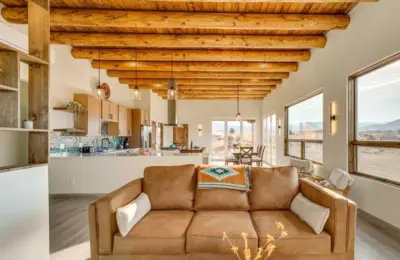
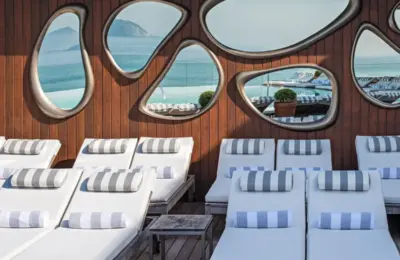
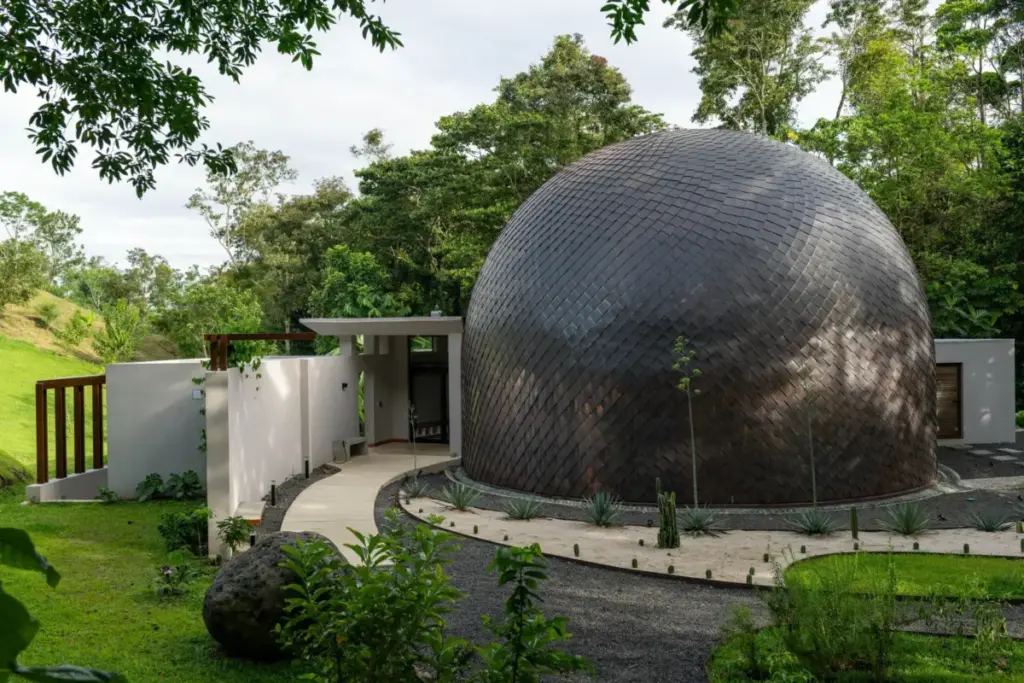
Upon arrival at The Vessyl’s open-air lobby and restaurant, visitors are immediately greeted by the striking outline of the Arenal Volcano emerging from a sea of clouds, perfectly framed at the edge of an infinity pool. Accommodations include structures like the Sky Tree House, a wooden retreat elevated on stilts, featuring panoramic terraces that look out toward the copper-scaled Dome—a gleaming architectural contrast to the wild jungle encompassing it. A spiral staircase winding through the living room leads down into a dark, subterranean-like meditation burrow, though quieting an overactive mind can prove challenging for those unaccustomed to solitary contemplation.

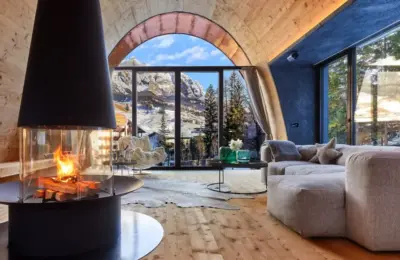
A comprehensive tour of the futuristic Dome revealed the scale of its engineering. Developed in collaboration with Grammy Award-winning acoustician George Augspurger over a period of eleven and a half years, the space features a custom floating floor embedded with 24 transducers—similar to technology utilized in theme park attractions at Disney and Universal. These transducers work in tandem with spatial audio and immersive visuals to facilitate a profound nervous system reset, allowing frequency to move through physical vibration. Sound waves echo off curved walls leading to an adjacent recording studio equipped for musicians, artists, and scientists exploring the boundaries of acoustic frequency.
The journey inward continued with a "Bio-Well" scan conducted in the Dome’s lobby by facilitator Ashley Marie. Developed by Russian physicist Konstantin Korotov, the small cubic scanner utilizes Gas Discharge Visualization (GDV) imaging to reflect patterns of stress, energy distribution, and overall regulation based entirely on readings taken from a guest’s fingerprints. The resulting diagnostics generate numerous graphs illustrating energy fields mapped across various organs and even dental structures, alongside biorhythm waves charting physical, emotional, and intellectual levels over preceding weeks. Cross-referencing those data points with personal calendars revealed undeniable correlations, showing the lowest energy levels precisely matching the most stressful days spent navigating veterinary neurology appointments for Cooper earlier that month.

As the itinerary unfolded, the underlying reality of aging and life transitions came into sharp focus. The impending loss of a companion animal symbolized the closing of a major chapter, highlighting an unconventional path that bypassed traditional milestones like marriage and children. Physical reminders of the passage of time—such as stray gray hairs and nagging lower back pain—heightened the awareness that future decisions carry heavier consequences.
During a family-style dinner under the stars, guests gathered for a meal of yuca gnocchi, pejibaye croquettes, and octopus ceviche, hosted in part by The Vessyl’s founder, Josh Stanley. Stanley is no stranger to championing unconventional concepts before they enter the mainstream; back in 2013, he and his brothers helped save the life of a five-year-old girl named Charlotte Figi using a specialized hemp strain grown at home, a pivotal moment that predated the widespread CBD movement sparked by Charlotte’s Web.

Conversations during the evening introduced another emerging framework: "human design." Initially mistaken for a standard personality assessment, human design was explained by lead facilitator Svetlana Parmar as a complex personal mapping system that synthesizes elements of astrological charting, the Kabbalah, the I Ching, numerology, the chakra system, and quantum physics. Formulated in 1987 by Alan Robert Krakower under the pseudonym Ra Uru Hu, the system generates a personalized "bodygraph" using an individual’s birth date, time, and location—a concept that has gained substantial traction on digital platforms like TikTok.
The following day inside the Dome, guests reclined on the vibrating floor equipped with headphones and blankets beneath a projected black-and-white spiral. A soothing voice delivered a personalized audio message designed to simulate a dialogue with one’s "higher self," addressing recurring mental patterns such as the compulsion to turn mysteries into intellectual certainties or harboring anxiety about the future. While the messaging resonated with some familiar psychological traits, the realization that artificial intelligence had generated the specific narrative using each guest’s bodygraph prompted a lingering internal debate about the boundaries of self-optimization and data-driven introspection. In an era dominated by wearable technology and biometric scanning devices like the Oura Ring, an obsessive focus on metrics occasionally runs the risk of making individuals feel less human.

Subsequent one-on-one sessions with Parmar offered a more grounded perspective. Seated on an outdoor patio amid the rustling rainforest, reviewing geometric shapes and channels on an iPad demonstrated that technical details matter far less than human connection. Discussing relationships, aging, and personal fears with an experienced guide underscored a comforting truth: aging brings the hard-earned wisdom of trial and error, cementing core traits into permanent ink rather than lingering uncertainty.
Surprises continued during a somatic breathwork session in the Dome led by facilitators Dylan Baird and Ashley Marie. Described as the closest experience to a psychedelic state achievable without chemical intervention, the 40-minute active breathing exercise involved a rhythmic breathing pattern designed to temporarily alter blood chemistry, reduce cerebral blood flow, and stimulate the nervous system. The physical manifestations—numbness in the hands, a drop in body temperature, and involuntary muscle sensations—were followed by a deep 20-minute integration period. For a participant unaccustomed to emotional release during traditional relaxation practices, the session culminated in an unexpected wave of calm and spontaneous tears triggered by a profound sense of inner stillness.

Dr. Diva Nagula, co-founder and chief medical officer at The Vessyl, explained that active connected breathing temporarily raises blood pH and activates sympathetic responses before transitioning into deep parasympathetic relaxation once normal breathing resumes. Combined with spatial sound and physical vibrations, the Dome environment effectively encourages inward reflection.
External explorations offered an equally powerful counterbalance. A visit to a nearby stable introduced guests to Criollo horses and a local horse whisperer named Enrique Molina. Following a demonstration of how horses interact based entirely on perceived human energy—whether hesitation, confidence, or fear—participants were paired with steeds suited to their temperaments. Riding a white horse named Rosa through the jungle canopy, past poisonous frogs and toucans, offered a lesson in accepting nature’s unpredictability, especially after heavy overnight rains precluded a planned river crossing.

A brief detour to the stables’ restroom led to a serendipitous encounter with a small Doberman belonging to Molina’s son. Spontaneous play in the sand with the energetic dog triggered another wave of memory and emotion, transporting thoughts back to the day Cooper first arrived as an awkward puppy with a floppy ear. That bittersweet recollection served as a poignant reminder of love, loss, and the enduring capacity to feel deeply while navigating life’s ongoing transitions.