


For centuries, the mulberry plant has occupied a quiet, respected place in traditional medicine systems and culinary traditions around the world. From soothing herbal infusions brewed from its leaves to sweet, nutrient-dense berries consumed across continents, parts of the plant have long been associated with health and vitality. Now, modern scientific inquiry is taking a closer look at this ancient botanical, examining whether specific compounds found within the plant can actively alter the human gut microbiota and, in turn, exert a measurable influence on broader metabolic processes.
A comprehensive new review, spearheaded by researchers at Wroclaw Medical University, suggests that the physiological effects of mulberry are far from uniform. Instead, the outcomes of consuming or administering mulberry preparations may depend heavily on a complex array of variables: the specific species of the plant, the exact part of the plant being utilized, and the precise methods applied during its processing.
The human gastrointestinal tract plays host to trillions of microorganisms collectively known as the gut microbiota. Far from being passive inhabitants, these microbial communities actively contribute to the daily functioning of the digestive system while also sending signaling molecules and metabolic byproducts throughout the entire body. It is this systemic reach that has drawn scientists to investigate botanical materials rich in bioactive molecules.
"The gut microbiota not only contributes to the functioning of the gastrointestinal tract but may also influence metabolism throughout the body," explains Anna Prescha, PhD, DSc, Professor at Wroclaw Medical University, working within the Department of Dietetics and Bromatology. "Mulberry is particularly interesting in this respect because it contains numerous bioactive compounds, including polyphenols and polysaccharides, which may interact with gut microorganisms."
Different Mulberries Contain Different Chemical Profiles
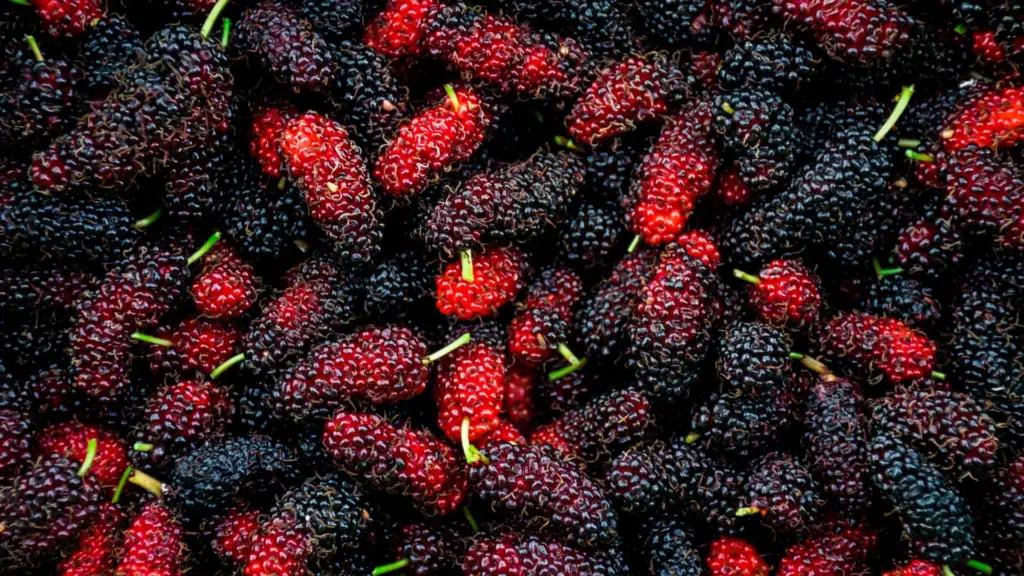
To understand how the plant interacts with biology, researchers must first look at its chemical diversity. Scientific investigations to date have largely concentrated on white mulberry, scientifically known as Morus alba. However, black mulberry (Morus nigra), particularly its deeply pigmented fruit, has also yielded notable and promising results in laboratory settings.
The anatomical parts of the plant harbor distinct sets of biologically active substances. Mulberry leaves are particularly recognized for containing 1-deoxynojirimycin, commonly referred to as DNJ, a specialized compound known to impact carbohydrate metabolism. Alongside DNJ, the leaves are rich in various polyphenols and complex polysaccharides. Meanwhile, the fruit of the black mulberry contains high concentrations of anthocyanins—the powerful pigments responsible for its dark color—along with other phenolic compounds and polysaccharides.
Beyond the choice of species and plant part, the way the raw botanical material is handled plays a monumental role in its ultimate chemical makeup. Routine industrial or laboratory processing methods—such as drying, fermentation, and targeted extraction techniques—can drastically alter both the total amount and the relative proportions of bioactive compounds present in the final product. Consequently, two distinct preparations sourced from the identical plant material can end up with vastly different chemical compositions and, by extension, profoundly different biological effects.
Mulberry Preparations May Shift Gut Bacteria Populations
The recent scientific review evaluated a wide body of literature and found that preparations derived from both mulberry leaves and fruit can actively influence the composition and overall activity of the gut microbiota. Across multiple experimental studies, researchers observed notable shifts favoring the proliferation of beneficial bacterial strains. These shifts were frequently accompanied by an increased production of short-chain fatty acids, including acetate, propionate, and butyrate.
These crucial biochemical compounds are naturally synthesized when resident gut microbes ferment dietary plant material that resists standard digestion in the upper gastrointestinal tract. Short-chain fatty acids are vital for maintaining normal, healthy intestinal function and maintaining the integrity of the gut barrier. Furthermore, in several of the reviewed experiments, these microbially driven changes aligned with measurable improvements in physiological parameters related to glucose and lipid metabolism.
Despite these encouraging trends, the results were not entirely uniform across every single tested preparation. The specific plant material under investigation and the methods used to process it consistently appeared to steer the final outcome.
As a prime example, researchers point to the polysaccharides found in black mulberry fruit. When scientists applied different extraction techniques to the fruit, they successfully produced distinct molecular fractions. These fractions displayed marked variations in their chemical structures and were utilized by gut microbes to varying degrees. Notably, fractions produced through water extraction and enzymatic treatment using pectate lyase demonstrated the strongest potential prebiotic effects.
Similar patterns emerged in studies examining polysaccharides extracted from mulberry leaves. Structural characteristics—such as overall molecular weight and the specific monosaccharide composition of the polymers—appeared to determine which bacterial species could successfully consume the compounds as a substrate and which specific short-chain fatty acids were ultimately synthesized as metabolic end products.
Combined Compounds Yield Stronger Effects in Animal Models
Some of the most intriguing and provocative insights uncovered by the review stemmed from experiments utilizing more complex, multi-compound mulberry preparations rather than isolated single molecules.
In controlled laboratory studies where mice were fed an unhealthful, high-fat diet, researchers administered a specialized fraction containing both polyphenols and polysaccharides extracted from white mulberry fruit. This combination produced significantly more favorable shifts in the gut microbiota than either individual fraction administered entirely on its own. Moreover, these structural microbial improvements coincided with measurable enhancements in markers linked directly to metabolic syndrome and overall intestinal health.
To test whether the altered microbiome was genuinely driving these health improvements, the research team conducted a microbiota transplantation experiment using the same animal model. The gut microbiota harvested from the mice that had received the combined mulberry fraction was successfully transferred into the digestive tracts of a separate group of recipient animals. Remarkably, these recipient mice also exhibited improvements in various metabolic disturbances. This crucial step provided stronger evidence that shifts in the microbial ecosystem act as a primary driver for the physiological benefits observed after consuming the mulberry preparations.
"These findings suggest that what matters is not only the presence of an individual compound, but also the complex composition of the preparation, the proportions of its compounds, and their interactions," emphasizes Prof. Anna Prescha. "Therefore, rather than searching for a single universal product, it is worth determining which combination of species, plant part, composition, and processing method produces a specific biological effect."
An Interdisciplinary Student Initiative
The comprehensive review did not emerge from traditional top-down funding initiatives alone; instead, the entire academic project grew organically out of the Nutri-Sfera Student Research Group, operating within the Department of Dietetics and Bromatology at Wroclaw Medical University.
The foundational topic was originally proposed by two dedicated students who have since completed their degree programs: Marta Miszczak, representing the Dietetics program, and Karolina Kłosowska-Buryło, from the Pharmacy program. Their active involvement successfully bridged traditional nutritional science with advanced pharmaceutical approaches, creating a well-rounded methodology for investigating the complex interplay between the botanical plant and the human microbiome.
"This fitted very well with the interdisciplinary nature of the study," adds Prof. Prescha, reflecting on the student-led origins of the work. "It combined a perspective on mulberry as a plant material with a specific composition with an analysis of its potential effects on the microbiota and metabolism."
The Missing Piece: Human Clinical Trials
Despite the wealth of promising experimental data generated in laboratories and animal facilities, a major scientific question remains completely unresolved. To date, researchers have not yet conducted comprehensive human clinical studies that directly and conclusively examine how mulberry preparations alter the human gut microbiota in real-world settings.
The vast majority of the existing scientific evidence is derived strictly from animal models and in vitro laboratory experiments. Furthermore, comparing results across different published studies presents a significant challenge for researchers, largely because relatively few scientific investigations pair their biological findings with a rigorous, detailed chemical analysis of the exact mulberry preparation being tested.
"The available findings are promising, but at this stage they do not allow us to determine whether the relationships observed in experimental models between mulberry preparations, the microbiota, and metabolism also occur in humans," points out Prof. Prescha.
Looking ahead, researchers agree that future scientific efforts must pivot toward rigorous clinical trials. These upcoming studies will need to utilize carefully characterized, standardized mulberry preparations to ensure consistency. Only through such meticulous investigation can science determine how different mulberry products interact with the human gut microbiota, evaluate the exact magnitude of those effects, and confirm whether they translate into reliable, measurable health benefits for people.