The stock market has once again proved its capacity to surprise. As valuations reach historic highs driven by the explosive growth of Artificial Intelligence, investors are forced to grapple with a familiar anxiety: Is this boom a prelude to a catastrophic crash reminiscent of the dot-com era?

For those who have tuned out the financial media’s daily drama, the current narrative centers on a three-pronged AI story of rapid technological advancement, massive capital expenditure, and widespread speculation. Yet, beneath the market frenzy lies a deeper human reaction to uncertainty. Financial independence commentators and long-term investors are increasingly addressing whether the current market enthusiasm will derail retirement plans or if the anxiety itself is the greater hurdle.

Will the AI Bubble Ruin Our Retirement?
The psychological weight of market cycles is nothing new. Reflecting on over two decades of retirement, veteran financial commentators frequently encounter anxieties about the state of the world and the stability of personal finances. Reviewing the worries of past decades reveals a recurring pattern of apocalyptic predictions that ultimately fail to derail long-term economic progress.

In 2006, investors worried about a housing bubble, outsourcing to emerging markets, soaring national debt, Middle Eastern conflicts, and the looming threat of peak oil. While those concerns eventually culminated in the Great Financial Crisis—the largest economic downturn since the Great Depression—the broader historical trajectory of a diversified investment portfolio reveals steady, compounding growth over the long term. Despite severe market shocks, including the financial crisis and the 2020 pandemic crash, foundational economic growth continued.

Global metrics over the past twenty years underscore this resilience. Extreme poverty rates have declined significantly, infant mortality rates have been halved, and clean energy adoption has surged as solar technology costs plummeted. Electric vehicle adoption has similarly transitioned from a theoretical concept to a substantial share of the global automotive market.

Despite these advancements, financial media continues to promote a narrative of impending doom driven by national debt levels, geopolitical tensions, and technological disruption. However, economic history suggests that core prosperity stems from productivity rather than temporary fluctuations in financial systems or stock market indices.

Prosperity, Productivity, and the Nature of Fear
Economic prosperity is fundamentally anchored in human productivity and innovation. Financial systems and stock markets are human constructs designed to allocate capital and measure enterprise value. When market systems experience systemic corrections, economic value is reorganized rather than destroyed. The underlying tools of human productivity—technology, ingenuity, and labor—remain intact.

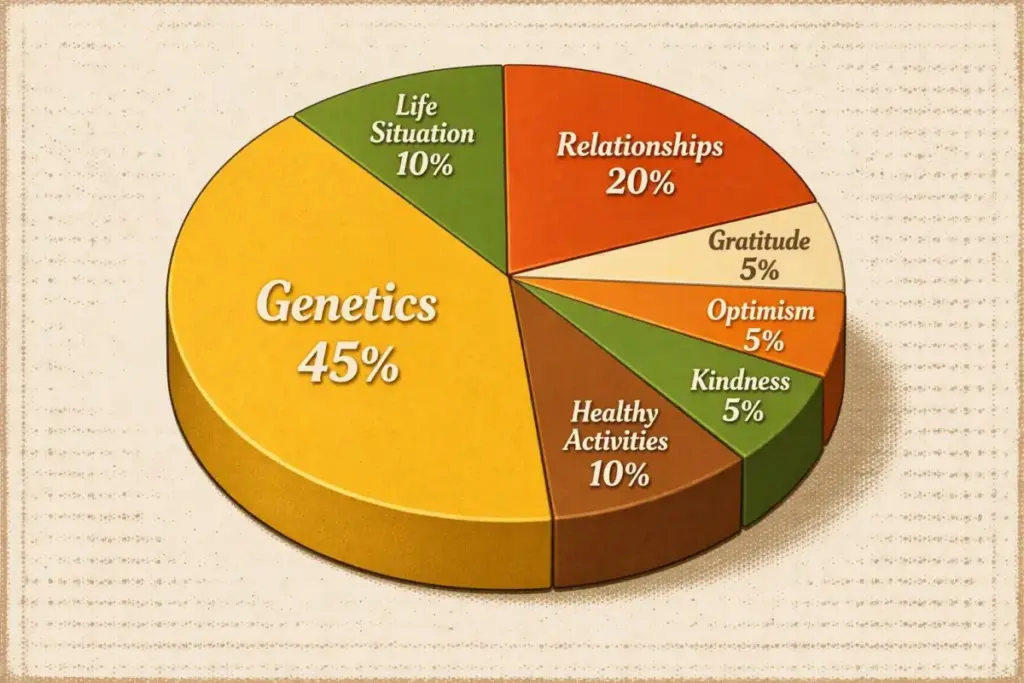
Beyond economic output, human happiness and well-being are largely determined by factors outside of financial wealth. While a baseline standard of living is necessary to cover physical needs, long-term satisfaction is closely tied to genetics, personal relationships, gratitude, optimism, and regular physical activity.

The persistence of financial anxiety, even among secure and retired individuals, points to a deeper psychological mechanism. Human beings evolved as danger-detection machines. In ancestral environments, identifying threats was essential for survival. In modern society, where immediate physical dangers like starvation or predators are largely mitigated for many people, the brain continues to seek out threats, shifting its focus to economic uncertainty, social standing, and eventually trivial concerns.
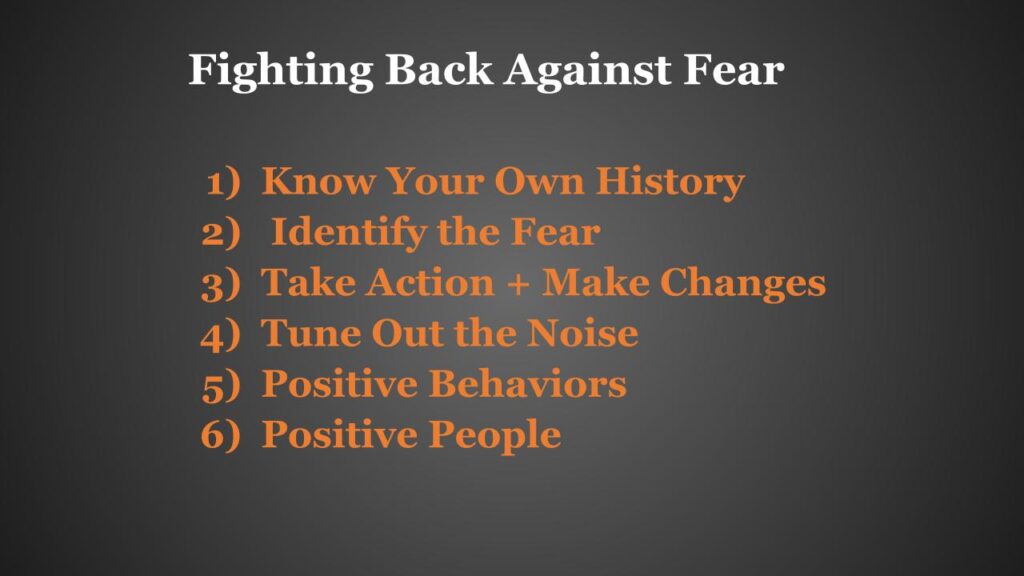
This evolutionary wiring creates a perpetual cycle of goalpost-moving when it comes to worry. Overcoming this background fear requires conscious self-awareness, an understanding of one’s personal and familial history with scarcity, and a deliberate reduction in exposure to sensationalized news diets. Taking constructive action and focusing on positive behaviors help replace abstract anxiety with practical resilience.

Everything is an Experiment: Viewing AI Through a Rational Lens
Approaching major life transitions and technological shifts through the framework of experimentation can fundamentally alter how individuals perceive uncertainty. Whether applied to career changes, relocations, or new investment eras, treating developments as experiments neutralizes visceral fear and replaces it with curiosity.
The current artificial intelligence boom can be viewed through this experimental lens. Rather than succumbing to doom-scrolling and fear narratives, understanding the underlying mechanics of AI reveals its potential as a powerful driver of efficiency—effectively functioning as a cognitive tool that enhances human productivity.

Like past technological revolutions, such as the internet and mobile computing, AI will inevitably displace certain routine tasks while simultaneously lowering service costs and catalyzing entirely new industries. While the economic rewards of such transitions often concentrate among enterprise owners and shareholders, the broader macroeconomic effect is an increase in societal productivity.

Ultimately, navigating modern economic anxieties requires distinguishing between legitimate threats and the evolutionary persistence of fear. By focusing on personal agency, continuous learning, and rational risk management, individuals can engage constructively with technological and market shifts, recognizing that long-term progress consistently lies on the other side of uncertainty.