


For many parents navigating the hectic rhythm of school days, morning and evening meal routines often demand a delicate balance between speed, practicality, and nutrition. Yet, every so often, a culinary creation emerges that manages to bridge the gap between absolute convenience and a quiet sense of domestic triumph. Buckwheat crepes occupy this rare space, serving as a dish that is both wonderfully practical to execute and possesses an air of effortless sophistication. Telling another parent that you regularly whip up fresh crepes for your children on a standard school day frequently elicits a familiar reaction of mild confusion and culinary awe.
It sounds remarkably fancy to the outside observer, but in everyday practice, crepes make an exceptional amount of sense for the busy parent who genuinely loves to cook. Contrary to common kitchen myths, specialized cookware is entirely unnecessary for the endeavor. There is no need to invest in a dedicated crepe pan or a wooden spreader; any standard nonstick skillet will do the job admirably. Furthermore, the cooking timeline is remarkably swift, with each individual pancake sizzling to golden perfection in barely a couple of minutes.
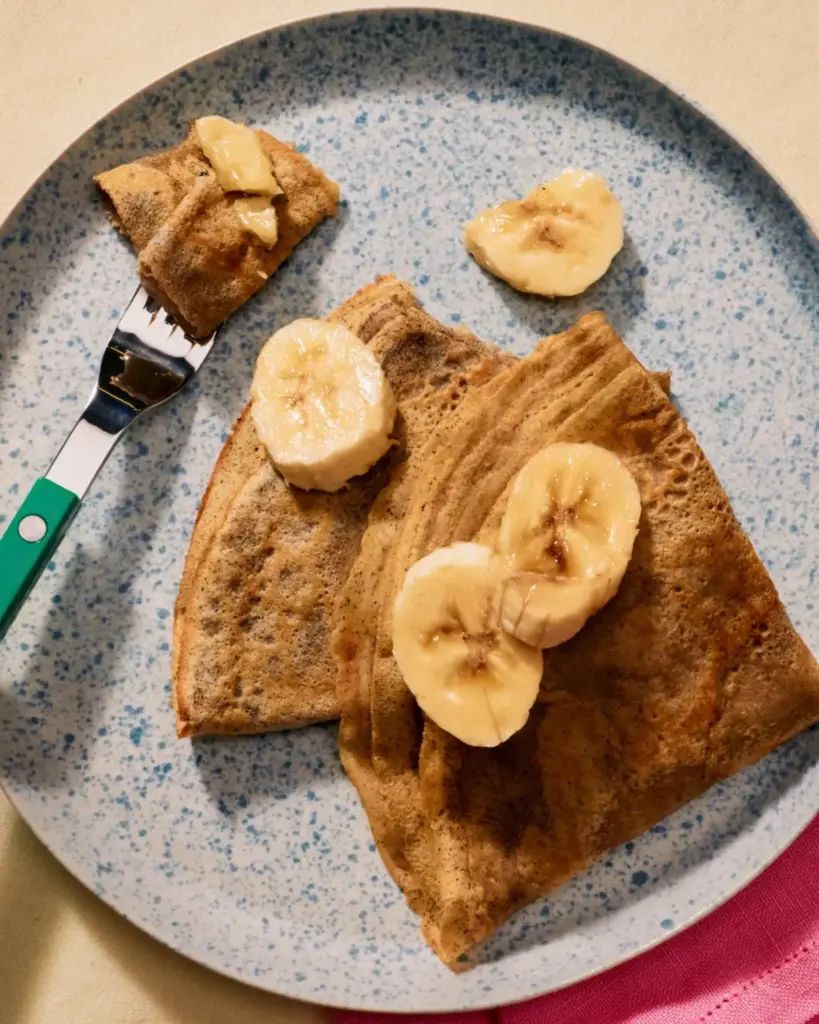
The preparation logistics are similarly forgiving for tight schedules. There is no strict requirement to make the batter far in advance or let it sit overnight. A brief, five-minute resting period is all that is necessary to allow the earthy buckwheat flour adequate time to properly hydrate. For ultimate convenience, once mixed, the batter holds up remarkably well in the refrigerator for up to three days, ready to be deployed at a moment’s notice. Because the batter is only barely sweetened, the resulting crepes possess a delightful versatility that effortlessly spans multiple meals across the day. They can easily skew savory when paired with a filling of melty, bubbling cheese or tender cooked vegetables, or pivot gracefully toward the sweet side with a topping of jammy, concentrated fruit.
Like countless parents striving to optimize the nutritional value of what they serve at home, the kitchen often becomes a laboratory for everyday wellness. Buckwheat, a pseudo-cereal known for its robust profile, stands out as an exceptional ingredient for family meals. It is naturally high in dietary fiber, dense with vital nutrients, and boasts a low glycemic index, making it a thoughtful choice for sustained energy. The distinct, earthy flavor of buckwheat is a particular favorite, especially when it interacts with butter browning in a hot pan, releasing a nutty aroma that elevates the entire dish.
The journey of the household crepe recipe involved a thoughtful experimentation with flour ratios. The batter relies on a careful blend of buckwheat and standard all-purpose flour, utilizing just enough gluten from the wheat to hold the delicate structure together cohesively. However, the recipe deliberately maintains a higher proportion of buckwheat, resulting in pancakes that are noticeably darker in appearance and significantly richer in flavor than a traditional, all-wheat French crepe.
What began as a clever way to feed a family during busy weekdays eventually transcended the domestic sphere. This specific recipe became such an undeniable household staple that it ultimately earned a permanent home on a professional menu. The children of the household became so enamored with the dish that they insisted it be featured on the brunch menu at Oberon, the restaurant located within Manhattan’s New Museum, where their parent serves as the Executive Chef. From a quiet weeknight family breakfast to a refined museum dining room, these versatile buckwheat crepes have proven that everyday practicality and culinary distinction can exist deliciously in the very same pan.