



A version of this post originally appeared in Eater Today, which spotlights the freshest news and stories from the food world every day.
“There’s a rock in the sink!” That was the prevailing takeaway last winter after the East Coast contingent of the newsletter’s writing team met for brunch at Flynn McGarry’s stylish, Scandi-inflected Gem Home in lower Manhattan. While the rest of the group waited eagerly for plates of Danish breakfast, Francky Knapp had shuffled off to the restroom, returning to the table with a palpable sense of excitement over an unexpected discovery. Naturally, curiosity won out, and a trip to inspect the find became mandatory. Occupying the entire industrial-style basin sat a substantial slab of stone, featuring a distinct patch of rust-colored mineral deposits right at its center where the cascading water hit. Weird! was the immediate internal reaction, before the observation was quickly pushed out of mind for months.
That initial encounter faded into memory until a subsequent meeting with a friend for coffee at the Greenpoint, Brooklyn, location of Rhythm Zero—an establishment that routinely evokes the serene atmosphere of an art museum rather than a standard neighborhood coffee shop. There, a large hunk of stone sat prominently in front of a massive mirror stationed near the counter. Yet another natural monolith imposed itself within the confines of the restroom, positioned strategically between the sink and the toilet, functioning almost as a natural catchment or absorption point for dripping hands making the brief trek toward the hand dryer. Encountering two distinct hospitality establishments featuring prominent, decorative rocks within a relatively short timeframe naturally invited a fundamental question: Is this curious design choice a mere coincidence, or a deliberate aesthetic affectation sweeping the local dining scene?
The inquiry deepened significantly upon stepping inside Pizza 4P’s, an ambitiously and intricately designed international restaurant import from Vietnam. For its Brooklyn debut, the establishment went so far as to transport six literal, unshaped boulders directly from a New Jersey stone wholesaler into the heart of the dining room. Discovering a third major venue embracing this raw geological motif signaled that something unmistakable was happening across the city’s design landscape.

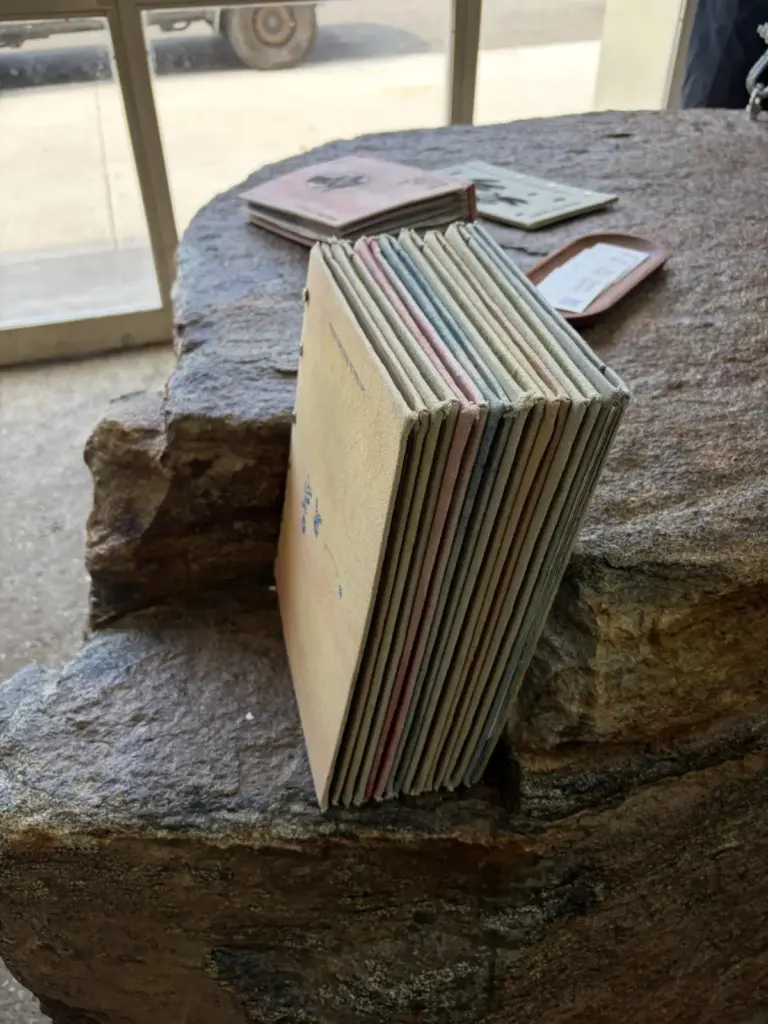
It is at Pizza 4P’s, which opened this past summer within a soaring, high-ceilinged industrial space in Brooklyn, that this emerging trend can be observed at its most extreme and structural level. Upon opening the front door, visitors are immediately greeted by a host stand that doubles as a massive, table-like boulder. The stone, which required a forklift to position properly, was specifically selected for this functional role due to its ideal waist height and a natural notch carved into its corner by the elements, making it a fitting receptacle for holding stacks of menus. An adjacent stone, noticeably lower and smaller in scale, serves duty as a rustic bench for diners waiting patiently for their tables to open up.
Four additional boulders erupt dynamically from various points within the room, fundamentally dictating the architectural layout of the spacious dining area by forcing a snaking, organic path through the floor plan. “After we found the stones, we changed the position,” global branding director Kazuya Kubota explained during a detailed tour of the space. Notably, none of the stones have been cut or polished into manufactured shapes; instead, every single one was hand-selected strictly for its pre-existing size and form, allowing the restaurant’s interior architecture to be custom-designed completely around them.
Some of these geological fixtures sprout thick metal support wires, engineering marvels that allow the massive weights to anchor and stabilize the wooden frames running along the walls, which in turn support cascading arrays of hanging plants. The single largest stone—weighing in at an impressive two tons toward the center of the dining room, with a dining table directly abutting its rugged surface—is comparable in sheer weight to the restaurant’s heavy-duty pizza oven, according to Kubota. Together with the abundant greenery, these colossal stones successfully imbue the otherwise stark industrial space with a compelling semblance of nature, effectively bridging the gap between urban Brooklyn grit and the pastoral, farm-fresh origins of the ingredients listed on the menu.
The motivations behind these raw earth installations vary by venue, rooted in distinct aesthetic philosophies. For Ivana Somorai, the owner of Rhythm Zero, the incorporation of heavy rocks was initially inspired by the subtle, deliberate use of natural materials found in traditional Japanese design. Explaining her vision via email, Somorai noted that she wanted to introduce a “natural, unexpected element” into the cafe’s minimalist interior.

In its original iteration, the Greenpoint location featured a collection of prominent rocks, minimal seating arrangements, and a towering tangerine tree. When Somorai later undertook an interior redesign to incorporate a large couch and expanded seating options, the heavy rocks were forced to stay put—primarily because moving them was rendered practically impossible due to their immense weight. “I knew they would not be leaving the space for a while,” Somorai wrote.
Over time, those immobile boulders organically transformed into a signature, memorable feature of the cafe. While each location in the growing chain maintains a distinct, highly stylish look, the presence of these stones left an indelible mark on the customer experience. The particular rock stationed beside the mirror “unexpectedly became a favorite sitting area for our regulars,” Somorai explains. “The rocks began as part of a specific design moment, but they ended up becoming part of the life of the cafe and the way people use the space.”
As for why the second rock ended up tucked away inside the confines of the restroom, the rationale was rooted entirely in subverting visitor expectations. It stands as perhaps the final feature one might anticipate encountering in a routine restroom visit. “I wanted people to be surprised when they opened the door: The bathroom is dark, and then there is this large rock. I wanted them to be like, ‘Why is there a rock here?’” Somorai wrote, prompting a knowing nod from anyone who has experienced the layout firsthand.
One can easily imagine that a similar desire to pique curiosity and disrupt spatial norms forms part of the creative rationale behind the design choices at Gem as well. While Flynn McGarry was unavailable for direct comment regarding the origin of the Gem stone—prompting a lighthearted internal quip from the reporting team—a representative for the chef and restaurateur noted via email that, to their recollection, “Gem Home, [the now-closed] Gem Wine, and I think Cove all had/have rocks in their restroom sinks.” This revelation serves to deepen the geographical footprint of the phenomenon while leaving lingering questions about the underground network of restroom geology.

For Pizza 4P’s, the presence of these massive boulders ties directly into a much broader, highly deliberate corporate philosophy. The international chain operates dozens of locations spanning multiple countries, and each individual venue is entirely unique. Their art, custom furniture, and overall spatial layouts are designed from scratch, meaning that heavy boulders anchoring a Brooklyn dining room do not translate to identical stone installations in Cambodia. Instead, each country’s outpost is guided by a specific, localized theme. In Indonesia, the operational ethos centers around biodiversity; in the United States, the concept revolves around the phrase “what the earth told me.”
In alignment with this guiding principle, the restaurant’s leadership team approached the selection of structural stones much in the same way a classical chef approaches sourcing raw ingredients, Kubota explains. The primary objective is to seek out something inherently beautiful directly from nature and then build a thoughtful culinary and architectural environment entirely around it.
Yet, design trends within a fast-moving metropolis are rarely static. On a more recent visit to Rhythm Zero in Greenpoint, the heavy rock that once stood guard outside the restroom had vanished entirely. The disappearance was the result of an even more recent round of interior renovations, which saw the stubborn stones relocated to the nearby expanse of Transmitter Park. Describing their final resting place, Somorai remarked simply that it felt like “where they belong, I guess.”