




For decades, domestic cats have carried a widespread reputation as solitary, low-maintenance companions capable of managing their own exercise and mental stimulation. Cat owners frequently invest in elaborate scratching posts, plush mice, and automated gadgets, assuming that a feline left to its own devices will naturally fulfill its physical and emotional needs. However, according to feline behavior specialists, this assumption overlooks one of the most vital components of feline welfare: interactive playtime guided directly by human caregivers.
Play is widely misunderstood across households. Too often, it is treated as a solitary activity that cats can handle independently, or as an occasional luxury that owners participate in only when schedule permits. For many pet parents, structured interactive play is not even on the radar. Yet, experts emphasize that interactive playtime is not an optional pastime; it represents a critical pillar of a cat’s overall physical and emotional health.
When companion cats are deprived of appropriate, structured outlets for their natural energy, a host of persistent behavioral problems can manifest. Pet owners often struggle with inexplicable bouts of destructive scratching, unprovoked aggression, chronic boredom, lethargy resembling feline depression, vocal attention-seeking behaviors, and midnight hyperactivity commonly referred to as "the zoomies." Feline behavior experts note that these issues rarely stem from spite or inherent behavioral flaws; rather, they are symptomatic of an unfulfilled biological drive.
At the core of effective interactive play lies the feline natural hunting sequence: stalk, chase, catch, eat, and rest. In the wild, every element of a feline’s physiological makeup—from acute sensory perception to rapid-twitch muscle fibers—is tuned to execute this predatory loop. Domestic life in an indoor environment removes the necessity of survival-driven hunting, but it does not diminish the internal neurochemical urge to complete the sequence. Interactive play bridges this gap by closely mimicking the hunting cycle.
Crucially, domestic cats do not require live prey to experience the full psychological benefit of the predatory routine. Pet parents can recreate this evolutionary loop by pairing a structured physical simulation with a tangible reward, such as offering a high-value treat immediately following a successful session or scheduling the play routine directly before a scheduled meal.
The defining factor that separates beneficial interactive play from a cat merely swatting at an inanimate object is the human participant. While a lone toy lying dormant on a carpet provides negligible cognitive stimulation, an attentive owner manipulating an object transforms the environment into an engaging, dynamic simulation of life. The human element introduces unpredictability, agency, and strategy, elevating physical exertion into holistic mental enrichment.
Structuring Interactive Play Sessions
Establishing a consistent, effective routine requires intentional planning regarding both timing and equipment. Experts recommend that caregivers engage their cats in at least two structured interactive play sessions per day. Generally, each session should last approximately 15 minutes, although this duration should be adapted to accommodate an individual cat’s unique age, physical health, stamina, and baseline interest level. While an energetic young cat might require several intense intervals, a senior or sedentary cat may benefit from slower, more deliberate pacing.
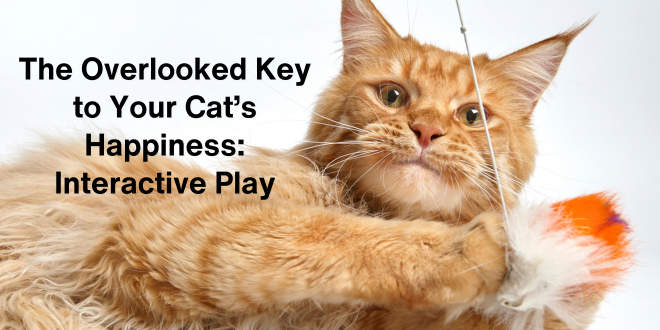
Equally important to the schedule is the selection of toys. Wand toys designed with a flexible line—frequently referred to as fishing-pole toys—are widely considered the gold standard for interactive engagement. Because these implements place the human at the control end, caregivers can realistically mimic the erratic, deceptive movements of small rodents or birds. The long wand allows the toy to dart, flutter, freeze, and scurry across the room, keeping the human’s hands at a safe distance and preventing accidental scratches or confusion between human skin and target prey.
Conversely, behavior specialists caution against reliance on common alternatives, most notably the handheld laser pointer. While laser lights remain an immensely popular shortcut for cat owners seeking quick entertainment, feline behavior author Pam Johnson-Bennett strongly advises against using them as a primary play device. The fundamental limitation of a laser beam is its lack of physical substance. A hunting feline requires the tactile sensation of feeling prey beneath its paws and inside its claws; the tactile feedback is what delivers the neurological satisfaction of a successful capture.
When a cat continuously pursues a red beam of light that vanishes into thin air or cannot be physically seized, the animal never achieves closure. This ongoing lack of physical capture can generate significant frustration, anxiety, and heightened agitation, often leaving the cat in an elevated state of stress rather than calm contentment. For owners who choose to incorporate a laser pointer, specialists advise using it only briefly at the initial stage of play to spark interest, followed immediately by transitioning the chase toward a tangible physical toy where the light can be directed, allowing the cat to conclude the pursuit with an authentic physical capture.
Technique: Simulating Real Prey
Effective interactive play relies heavily on human technique. How an owner manipulates the toy directly dictates the quality and psychological value of the entire session. A common mistake made by well-meaning owners is waving a wand toy frantically in the air or moving it rapidly back and forth in front of the cat’s face. In reality, actual prey rarely behaves in this manner. Frantic, relentless motion often overwhelms the cat, triggers confusion, or causes the animal to lose interest entirely.
To create an authentic simulation, caregivers should keep movements relatively low to the ground and incorporate deliberate pauses. Wand attachments should crawl, skitter, and hide behind furniture, around door frames, under rugs, or behind cardboard barriers. By intermittently concealing the toy, the owner encourages the cat to switch from an impulsive chase mode to a methodical stalking posture.

Pauses and stealthy retreats accurately reflect the natural behaviors of small animals attempting to survive. Observing a cat during natural hunting reveals that the vast majority of the predatory effort is mental strategy rather than continuous running. A feline spends significant time assessing distance, remaining perfectly still, calculating trajectories, and waiting for the optimal moment to shorten the gap between itself and its target.
By mirroring this patient rhythm during interactive play, owners engage their cat’s cognitive instincts in a controlled, deeply satisfying manner. The objective is not to run the animal to sheer exhaustion, but rather to facilitate the complete psychological experience: stealth, patient positioning, the calculated sprint within ambush distance, and the final, decisive strike.
Completing the Cycle
How an interactive play session concludes is just as critical as how it begins. Abruptly ending a game while a cat is operating at peak adrenaline can produce adverse behavioral repercussions, leaving the pet overstimulated, agitated, and searching for an alternative outlet for its pent-up energy.
Caregivers should systematically wind down the action as the session nears its conclusion. The toy should begin moving more slowly, making shorter runs, and exhibiting longer periods of stillness, simulating prey that has grown tired, weakened, or sustained an injury. This gradual deceleration gives the cat the visual cues needed to slow its physiological arousal, catch its breath, and prepare for a final, triumphant capture.
Allowing the cat to hold down and bite the toy at the end of the wind-down ensures the predatory loop is brought to a definitive, successful close. Once the physical toy is "caught," caregivers can finalize the instinctual cycle by introducing food. Because wild felines naturally feast on their prey and subsequently groom and sleep, offering a nutritious treat or serving an entire scheduled meal immediately after play perfectly reinforces this biological trajectory: hunt, catch, eat, and rest. Following this pattern ensures the cat transitions naturally from high-energy stimulation into deep, restorative relaxation.
The Broader Behavioral and Physical Benefits
Committing to a regular, structured routine of interactive play yields sweeping dividends for feline household harmony. As an enrichment tool, it stands as one of the most effective, non-invasive strategies for preventing and mitigating chronic behavioral disorders.

By providing an appropriate predatory target, structured play prevents redirected aggression, such as cats lunging at human ankles or ambushing other resident pets. It alleviates the mental stagnation that drives destructive clawing and unprovoked biting, while offering a therapeutic release for indoor stress and generalized anxiety. Furthermore, because it systematically expends stored energy and culminates in post-meal rest, evening interactive play sessions are renowned for resolving nighttime restlessness, allowing human households to sleep uninterrupted.
Beyond behavioral remediation, the practice profoundly strengthens the interspecies bond between cat and human. Interactive play builds communication and mutual trust, providing timid, insecure, or newly adopted cats with a safe platform to build environmental confidence. Physically, it promotes lean muscle tone, cardiovascular health, joint mobility, and healthy weight management in an indoor environment where obesity is a growing concern. Above all, it serves as an engaging, shared source of fun.
When executed consistently, interactive playtime ceases to be merely another chore on a pet owner’s daily checklist. Instead, it becomes a transformative instrument of enrichment, biological fulfillment, and proactive behavioral management that fundamentally enhances a cat’s quality of life.
Further Guidance on Feline Behavior
For cat parents navigating complex behavioral hurdles or seeking deeper insight into the nuances of feline communication, enrichment, and predatory instincts, extensive literature is available through Cat Behavior Associates. The practical applications of play therapy and feline environmental management are documented in depth throughout the work and published books of best-selling author and certified behavior consultant Pam Johnson-Bennett.