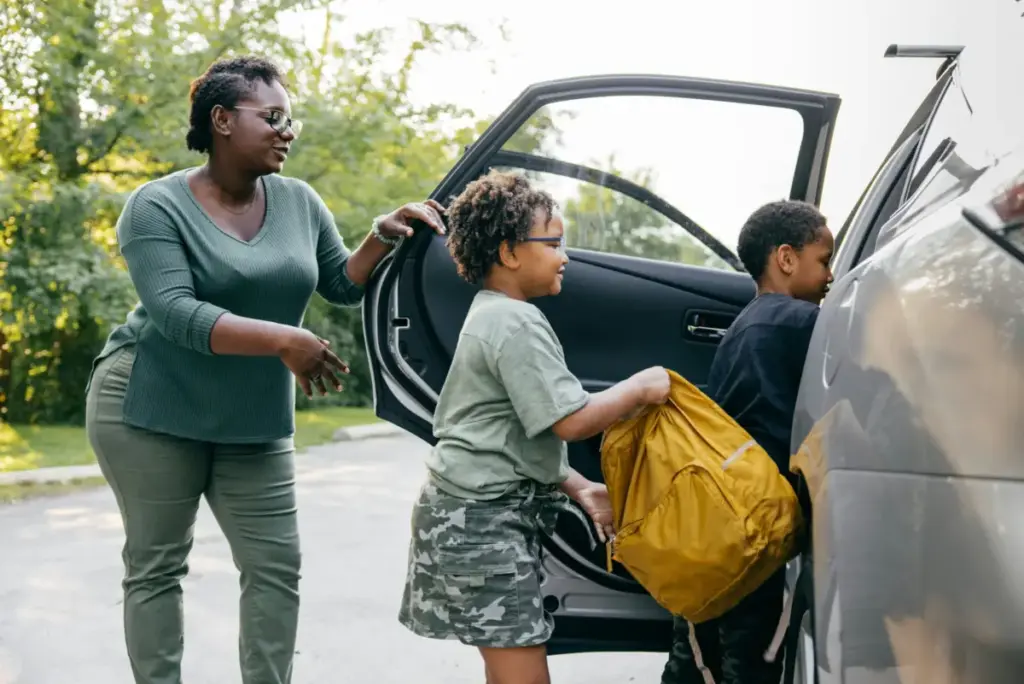
Every afternoon across the country, a familiar scene plays out in kitchens, living rooms, and cars during pickup. A child drops their backpack, takes a breath, and immediately begins detailing an intense social slight from earlier in the day. Perhaps another student took their fruit snacks at lunch, made a hurtful remark about their appearance, or pushed past them in the hallway. Yet, when parents inevitably ask the logical follow-up question—whether they told a teacher—the response is almost always a quiet shake of the head.
For parents, this dynamic can be deeply frustrating. No one wants to raise a child who is quick to tattle over every minor playground grievance, knowing full well that educators are already overwhelmed with heavy workloads and demanding classrooms. At the same time, watching a child struggle silently through social conflicts during the school day, only to unpack the emotional fallout hours later at the kitchen table, raises urgent questions about how children process stress and why they hesitate to seek help when it matters most.
Child development and mental health experts note that this behavior is remarkably common, particularly among younger children and elementary school students. Far from being an isolated quirk, the hesitation to report interpersonal conflicts to a teacher stems from a complex mix of emotional overload, social anxiety, and developmental maturity. Understanding why children choose silence at school and safety at home can help parents reshape how they respond, shifting away from immediate interrogation and toward genuine support.
According to Dr. Missy Kleinz, a licensed professional counselor, owner of Stardust Therapy, and creator of Big Feelings World, the underlying hesitation is rooted in the very human fear of vulnerability and judgment. Adults frequently struggle to ask for assistance in professional or social settings due to anxieties over how they will be perceived. Children experience these exact same pressures, albeit on a micro-scale suited to their environments.
In a school setting, a child often cannot predict how an authority figure will react, nor can they measure the immediate fallout of speaking up. The social risks can feel immense to a young mind: Will the other child become angry and retaliate? Will peers label them as tattletales? Will involving a teacher only make an already uncomfortable situation worse? At home, by contrast, the emotional landscape is vastly more predictable and secure.
When a peer makes a cutting comment or physically pushes past a child, the emotional impact can be overwhelming. Kleinz explains that children are frequently struck by a simultaneous wave of injustice, embarrassment, sadness, and confusion. In the immediate aftermath, a young student may experience complete emotional flooding, where feelings entirely override their capacity to process the event or find the words to articulate what they need.
Furthermore, children are still developing the cognitive tools required to analyze why a social interaction felt unfair or hurtful. By the time the school day ends and they return home to a parent, their nervous systems have had time to calm down. They have found the language to describe the event, and most importantly, they have reached a safe harbor. A child knows their parent, understands their predictable reactions, and trusts that sharing a painful experience will not result in unpredictable social consequences.
This perspective is echoed by Dr. Roseann Capanna-Hodge, a therapist, former school psychologist, and author of The Dysregulated Kid. Capanna-Hodge points out that children navigate an extraordinary number of cognitive, social, and environmental demands over the course of a single school day. When they finally cross the threshold of their homes and blurt out that a bad thing happened, it is frequently because their nervous systems have been in a state of chronic activation from the daily grind of school life.
In some cases, the reluctance to inform a teacher stems from the deeply personal nature of the grievance. Kleinz illustrates this point by recalling a conversation with her nine-year-old daughter regarding why a child might confide in a parent while deliberately avoiding a teacher. For instance, if a student is being teased by peers over a crush, the thought of an authority figure knowing about their personal romantic interests can feel completely mortifying. Rather than risk exposing a private vulnerability to an educator, a child would much rather metabolize the embarrassment within the safety of their family.
This raises a fundamental challenge for parents: how to teach children that it is acceptable—and often necessary—to speak up in the moment while reinforcing the reality that teachers are there to maintain a safe and supportive learning environment. Traditional parental instincts often lean toward immediate questioning, such as demanding to know why the child failed to report the incident right away. However, experts suggest that altering the script can yield far more valuable insights into a child’s inner world.
Instead of asking why a teacher was left out of the loop, Kleinz recommends exploring the barriers that stopped the child from speaking up in the moment by asking what made it difficult to use their voice. This inquiry opens the door to understanding whether the child simply froze, lacked the appropriate words, worried that they would not be believed, or felt uncertain about whether the situation warranted adult intervention. Following this with a collaborative question—such as whether the child simply wants a listening ear, help thinking through the situation, or guidance on what steps to take next—empowers the student to direct their own emotional recovery.
Before diving into problem-solving, validating the child’s emotional experience is crucial. Acknowledging that a situation felt invasive, annoying, or deeply unfair helps the child feel seen and understood. From there, parents can gently probe for more context by asking what happened right before the incident or what they believe motivated the other student’s behavior. These conversations quietly teach children cause and effect, encourage them to analyze complex social dynamics, and provide parents with the information they need to assess the situation.
When children report seemingly minor verbal jabs, such as a classmate mocking their physical appearance or personal habits, there is often an unspoken plea for guidance hidden beneath the surface. Capanna-Hodge notes that rather than addressing the child’s dilemma with direct advice or lecturing, parents can utilize a technique known as third-party discussion. By removing the immediate personalization of the conflict, children become significantly more receptive to hearing alternative ways to handle difficult social moments. Sharing a personal anecdote from childhood about experiencing a similar insult and choosing a lighthearted or defusing response helps normalize the experience and provides a practical script for future encounters.
At the same time, experts agree that parental intervention is entirely appropriate when reported behaviors cross the line into genuine bullying, cause a child to develop severe anxiety about attending school, or indicate a persistent inability to navigate routine social interactions. Rather than waiting for a minor disagreement to spiral into a full-blown crisis, establishing proactive communication with educators can make a profound difference. Capanna-Hodge emphasizes that teachers are generally eager to partner with families because they share the ultimate goal of seeing every student succeed academically and socially. Reaching out to ask about a child’s classroom standing, leadership skills, and peer relationships allows parents and teachers to address emerging struggles early.
When children experience persistent anxiety about approaching educators directly, parents and teachers can collaborate to design discreet support systems. Kleinz suggests implementing low-stakes communication signals that bypass the social friction of verbal reporting, such as a blank sticky note left on a teacher’s keyboard to quietly signal that a child needs a check-in. Systems like this ensure that vulnerable students receive the support and protection they require without exposing them to the fear of peer judgment.
Ultimately, the overarching objective is not to force children to handle every playground conflict completely on their own. Instead, the goal is to guide them gently toward emotional self-awareness, helping them identify their feelings, articulate their needs, and learn the art of self-advocacy with the steady backing of the adults in their lives.