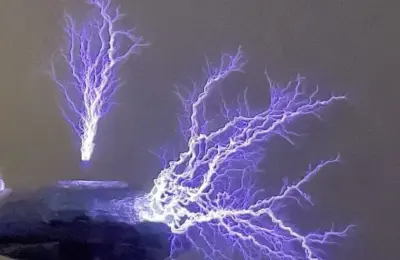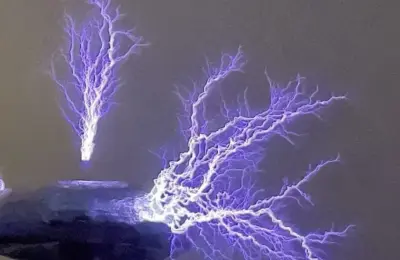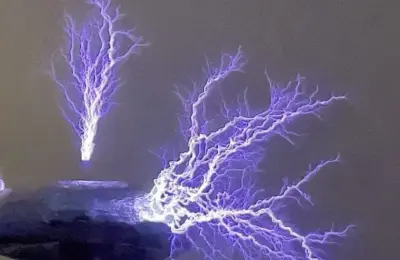



Brno is hitting its stride, and makers are leading the charge. Often playfully overshadowed by Prague as a smaller cousin that likes to joke it is merely a village, Brno pulses with an undeniable creative energy. Backed by a substantial local population and approximately 80,000 university students, the city serves as a uniquely fertile ground for technology, traditional craft, and hands-on experimentation. Young minds armed with big ideas and a healthy appetite for building have turned the region into a thriving hub for the modern maker movement.
Since its launch in 2019, Maker Faire Brno has expanded significantly. It now welcomes around 7,500 visitors and several hundred independent makers from across Czechia and neighboring regions. Fab Lab Brno has served as a vital cornerstone for this growth, partnering closely with the Make More team—the dedicated organization behind Maker Faires throughout the Czech Republic—to nurture the community one creator at a time. The momentum continues to build as Maker Faire Brno returns for its eighth edition, bringing together curious minds and seasoned engineers alike.

The venue itself plays an integral role in the event’s unique atmosphere. Hosted within Brno’s Exhibition Halls, the gathering benefits from striking architecture, soaring ceilings, floods of natural light, an on-site planetarium, a sprawling main hall, and countless architectural nooks and crannies to explore. Around every corner of the venue, visitors encounter curiosity in action, clever engineering feats, creative experiments, and serious maker talent that highlights the region’s technical depth.

The Heart of Czech Ingenuity: Prusa Research and the Maker Challenge
A driving force behind the nationwide explosion of Maker Faires across the Czech Republic, Prusa Research is once again channeling its distinctive maker spirit directly into Brno. As an international showcase for Czech ingenuity, Prusa’s integrated, in-house approach to manufacturing demonstrates what happens when hands-on creation is placed at the very heart of a business enterprise.

This year, the stakes are raised with a compelling incentive on the line: a brand-new Prusa 3D printer. Attendees are invited to take part in the official Maker Challenge, demonstrating how a clever idea and modern 3D printing techniques can give discarded everyday items a second life as useful, functional tools. For participants with the right blend of ingenuity and execution, the challenge offers a chance to head home with a powerful new tool to fuel their next major project. Those unable to attend the Brno event will have another opportunity to catch Prusa at Maker Faire Rome the following week.

Ten Projects Shaping the 2026 Lineup
Maker Faire is where the traditional boundaries separating engineering, art, science, and everyday problem-solving dissolve into collaborative exploration. The 2026 lineup in Brno captures this expansive spirit, featuring everything from custom 3D-printed audio equipment and DIY electronics to innovative methods for processing garden waste, accessible technology, and hands-on mechanical tinkering.

Among the standout exhibits is Acoustika 3D, a project titled SIMPLIXITY that answers what happens when a passion for Drum and Bass music meets advanced engineering and 3D printing. The custom-designed, 3D-printed loudspeaker allows visitors to inspect its internal components and understand how thoughtful enclosure design directly shapes acoustic performance.

In the realm where science and visual art intersect, maker Jan Grygerek presents Sublisica: From bubble to glass. Tiny frozen soap-bubble crystals form the foundation for a surprising fusion of photography, chemistry, and design. When off-the-shelf equipment proved inadequate for the task, Grygerek designed and built his own specialized engraving machine to preserve these fleeting, delicate patterns permanently on glass surfaces.

Addressing sustainability through local action, the Biouhel project demonstrates how piles of pruned branches from backyard gardens can be transformed into biochar. This porous, carbon-rich material helps agricultural and garden soil retain essential moisture and nutrients, turning ordinary yard waste into a valuable resource while offering long-term carbon-storage benefits.

Academic research meets public engagement inside Masaryk University’s computer science labs. By showcasing physical computing projects—such as a robot capable of drawing with a pen and a marionette controlled entirely by human movement—the university transforms abstract algorithms, robotics, and human-computer interaction into interactive experiences that visitors can see and manipulate firsthand.

For those interested in the raw materials of fabrication, 3Dfil.cz provides a comprehensive look at the modern print bed. The exhibit explores a vast array of materials, equipment, and finished examples spanning FDM, resin printing, and specialized high-strength industrial applications, giving enthusiasts a chance to compare technologies and gather inspiration.

Mechanical fundamentals take center stage in a dedicated interactive workshop focusing on bearings. Because skateboards, bicycles, and roller skates all rely on these small yet critical components, visitors are given the opportunity to practice removing and reinstalling bearings themselves, mastering the practical tools and techniques that keep everyday machinery rolling smoothly.

Addressing public safety and urban mobility, Brno University of Technology presents KAMaRAD, a prototype developed to assist vulnerable road users. Recognizing that standard cameras have limitations during poor visibility, the project combines conventional sensors with millimeter-wave radar to detect potential hazards and enhance safety for cyclists navigating shared spaces.

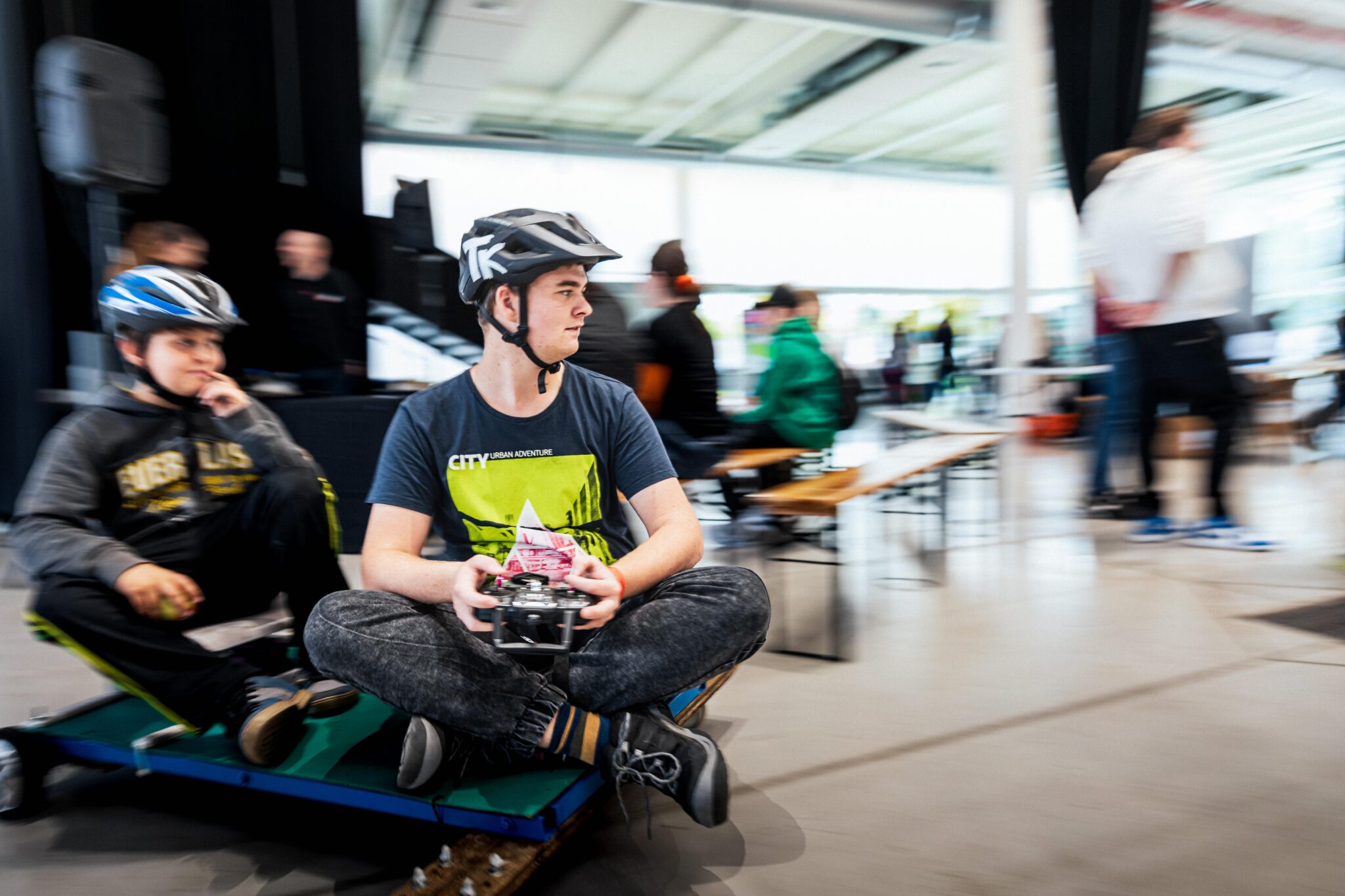
Traditional craft meets youthful ambition at Baťa Customs, where participants can build, sand, paint, and customize their own wooden gravity racers entirely without batteries. This mobile workshop highlights the enduring appeal of mechanical thinking and the simple satisfaction of constructing a functional toy that moves under its own momentum.

Sound and electronics merge in the RaveBOX project, part synthesizer and part sequencer. Designed to encourage open experimentation, the device invites users to twist knobs, construct rhythms, and discover unexpected sonic textures. What began as a casual electronics hobby project has evolved into an accessible musical instrument for anyone inclined toward creativity with a beat.

Further pushing the boundaries of digital manufacturing and aquatic engineering, a high-performance 3D-printed RC jet boat showcases advanced fabrication techniques. Powered by a water pump and jet system, the vessel combines mechanical components printed from durable engineering polymers with high-current power supplies and custom onboard telemetry controlled by an ESP32 chip. The system wirelessly transmits real-time GPS speed, battery voltage, and component operating temperatures back to the shore during testing.

Immersive Workshops and the Maker Stage
Maker Faire Brno extends far beyond static exhibitions, functioning primarily as an active environment where attendees can roll up their sleeves and build alongside experienced practitioners. The 2026 workshop program spans sessions ranging from quick thirty-minute introductions to deep dives lasting ninety minutes or more, catering to children, teenagers, adults, and families alike.

Activities range from space technology and robotics to experimental engineering and textiles. Beginners can design and print space-themed objects or explore the emerging field of ceramic 3D printing and parametric design. In the robotics and electronics sector, participants can build and program Otto robots, assemble combat robots, practice precision soldering, or experiment with advanced microcontrollers and development boards.

Space engineering concepts are brought down to earth through collaborative sessions with student groups such as YSpace, which assists participants in building working CubeSat models, and rocket team SoRC, which focuses on space-inspired design and fabrication. Meanwhile, younger visitors can construct and launch water rockets powered entirely by compressed air and water.

Smart device fabrication is represented by LaskaKit, where attendees assemble Wi-Fi-connected e-paper information displays, merging electronics and practical utility. Demonstrating that making is not restricted to rigid materials, the Nitlab workshop bridges textiles and technology by utilizing punch cards to control mechanical knitting machines, allowing participants to create custom-patterned scarves through analog ingenuity.

The broader festival environment also incorporates a dedicated Repair Zone, emphasizing the importance of the right-to-repair movement by demonstrating how broken household items can be restored to full functionality. Adjacent to the hands-on areas, the Maker Faire Brno stage hosts a diverse schedule of presentations, panel discussions, and live demonstrations. Saturday’s agenda features a 24-hour Student Hardware Hackathon, space exploration insights from ESERO Czech Republic, dramatic science experiments, and discussions on optimizing 3D printing and Arduino workflows. Prusa Research’s Maker Challenge presentations lead into explorations of atmospheric science and the mechanics of the aurora borealis. Sunday transitions into hackathon winner announcements, digital footwear design, student-built artificial intelligence projects, and an open microphone session where community members share their latest independent builds, concluding another successful celebration of grassroots ingenuity and shared knowledge.