


For many dog owners, administering daily health supplements becomes a recurring challenge when a pet consistently spits out hard tablets or leaves flavored chews untouched in their bowl. Liquid joint supplements have emerged as a practical alternative for households seeking to streamline this routine. However, selecting an appropriate liquid formula requires looking beyond the convenience of a bottle that pours rather than crunches. Evaluating a product involves examining active ingredient concentrations, reviewing scientific evidence behind specific formulas, measuring accurate volumetric servings, and calculating true daily costs.
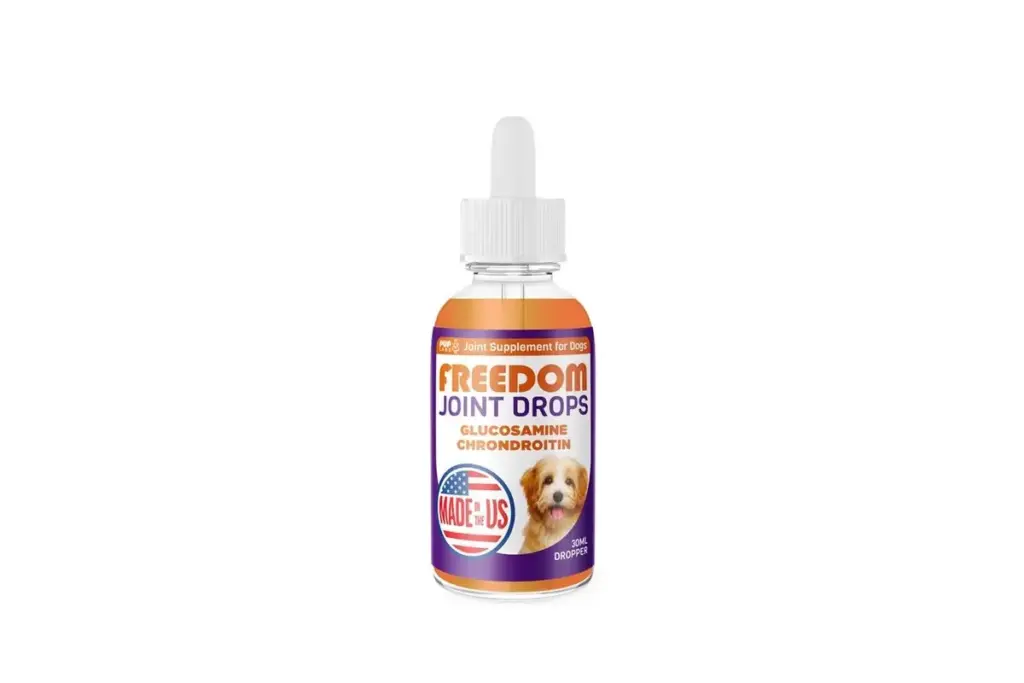
While liquid delivery systems can ease administration, the foundational value of any supplement depends on the quality and quantity of its ingredients. Using products such as Pup Labs Freedom Joint Drops as an example within the liquid category, owners can learn how to carefully evaluate supplement labels, verify dosing tools, and coordinate with veterinary professionals to support their dog’s long-term mobility.
When a Liquid Joint Supplement Fits Your Dog
Choosing a liquid joint supplement often begins with behavioral and practical considerations. A liquid format is particularly suitable for dogs that readily consume supplements when mixed directly into their daily food, compared to those that stubbornly reject standalone tablets or soft chews. It also offers a viable solution for pet owners who prefer measuring liquid volumes over splitting hard pills, provided the product includes a calibrated measuring tool that ensures consistent daily dosing.
However, format convenience does not entirely eliminate the challenge of palatability. A dog that dislikes the flavor of a specific liquid supplement may refuse its food altogether. Mixing a unpalatable liquid into an entire bowl of kibble can quickly turn a simple supplement issue into a broader problem of an unfinished dinner. For this reason, a truly effective choice is one that the dog consistently accepts and that the owner can accurately administer according to label instructions.
A sudden change in a dog’s willingness to eat chewable supplements also warrants careful observation. If a dog previously ate chewable joint supplements without hesitation but suddenly starts dropping them, avoiding them, or showing reluctance while chewing, owners should consult a veterinarian. Such shifts often indicate underlying dental pain, oral health issues, or jaw discomfort that require professional medical attention rather than a simple switch to a liquid formula.
Compare Ingredients and Amounts, Not Just the Liquid Format
Liquid joint supplements vary widely in their chemical compositions and ingredient concentrations. A bottle that prominently highlights a key ingredient on its front label does not automatically guarantee that the product delivers a clinically relevant amount in every serving. Furthermore, a longer list of inactive ingredients, herbal additions, or vitamins does not necessarily make a product superior to a simpler, highly concentrated formula.
To make a meaningful comparison between products, dog owners must look at the specific milligram amounts of key active ingredients provided per daily serving. For instance, when evaluating a powdered glucosamine supplement, an owner multiplies the listed milligrams of glucosamine per scoop by the number of scoops required daily. For a liquid supplement, the calculation involves multiplying the milligrams of active ingredient per milliliter by the total number of milliliters administered each day.
It is crucial to perform these calculations individually for each active component, such as glucosamine, chondroitin, or methylsulfonylmethane (MSM). The overall volume of a liquid bottle or the total weight of a powder scoop offers no clear information about the actual potency of the active ingredients inside. Consequently, comparing whole bottle volumes alone will not reveal which supplement provides the appropriate nutritional support for a dog’s specific needs.
Separate Ingredient Research from Formula Evidence
When evaluating supplement claims, pet owners should distinguish between research conducted on individual raw ingredients and scientific evidence supporting a finished, commercially available product. According to the Cornell University Riney Canine Health Center guide to joint supplements, scientific evidence varies significantly across common joint-support ingredients. Cornell identifies fish-derived omega-3 fatty acids as having particularly strong support in veterinary literature for supporting joint health. However, the presence of fish oil or omega-3s in a multi-ingredient liquid formula does not automatically guarantee that the overall product will produce identical results.
When reading supplement packaging, owners should evaluate claims carefully by separating ingredient-level research from product-specific testing. If a manufacturer cites scientific studies to support its product, owners should investigate whether those studies evaluated the exact finished formula in dogs, at the specific recommended serving size, and for the precise health outcomes being claimed. While scientific literature regarding an isolated ingredient provides helpful context, it cannot prove that every finished commercial product containing that ingredient will perform with equal efficacy.
Check the Complete Ingredient List
For dogs with known dietary sensitivities, food allergies, or specific health conditions, reviewing the complete ingredient panel is essential. Beyond the primary joint-support compounds, liquid supplements often contain flavorings, preservatives, stabilizing agents, and carrier liquids. Pet owners should never assume that a liquid product is shellfish-free, vegetarian, or hypoallergenic based solely on its liquid format or product name. Glucosamine, for example, is frequently derived from marine shellfish, which may pose issues for sensitive dogs.
Owners should contact supplement manufacturers directly to verify the exact source of active and inactive ingredients whenever dietary restrictions are a factor. Sharing the complete ingredient list with a veterinarian is especially vital if a dog is currently undergoing an elimination diet trial or managing chronic health conditions. Even a small daily liquid serving contributes to a dog’s total daily nutrient and allergen intake.
Read the Serving Directions in Milliliters
Accurate administration of liquid supplements depends on understanding volumetric units of measurement. Terms like "drop," "dropper," and "milliliter" represent distinct concepts and should not be used interchangeably. Milliliters measure liquid volume, whereas milligrams quantify the actual mass of an active ingredient within that volume. Neither the total capacity of a bottle nor an illustration of a dropper indicates the concentration of ingredients dissolved within the liquid.
When reading product directions, owners should first identify the recommended serving size expressed strictly in milliliters based on the dog’s body weight. Next, they should examine the supplied measuring tool—such as a calibrated dropper or syringe—to ensure it features clear, readable milliliter markings that match the required dose. Finally, owners should review the ingredient label to calculate the precise milligrams of active compounds delivered by that specific volumetric serving.
For small dogs requiring minimal liquid volumes, it is critical to confirm that the supplied measuring tool can accurately record small fractions of a milliliter. Attempting to estimate a fraction of an unmarked dropper introduces significant margin for error compared to filling a device to a clear, calibrated line. If the dosage instructions or measuring tools create ambiguity, owners should consult the manufacturer or their veterinary team for clarification.
Once the correct dosing procedure is established, keeping the instructions easily accessible ensures consistency across all household caregivers. Anyone responsible for feeding the dog should use the exact same measuring tool and administer the precise daily total. Additionally, rechecking the label when opening a new or replacement bottle is a necessary safety step, as packaging designs, dropper calibrations, or formula concentrations can change between production batches.
Calculate the Cost per Day for Your Dog
Evaluating the financial aspect of a liquid joint supplement requires looking beyond the initial purchase price of the bottle. Retail prices can be deceiving because different liquid formulations require vastly different daily volumetric servings. To determine the true cost of using a product, owners must first determine the exact daily serving size in milliliters required for their dog’s weight, then calculate how many days a single bottle will last.
The calculation process involves two straightforward arithmetic steps:
- Divide the total bottle volume in milliliters by the daily serving volume in milliliters to find the total number of days the bottle will last.
- Divide the total retail price of the bottle by the number of days the bottle lasts to calculate the exact daily cost of administration.
To illustrate how liquid volume and concentration impact daily expense, consider a descriptive comparison between two non-existent, hypothetical test examples created purely to demonstrate mathematical principles.
Suppose Example A is sold in a 60-milliliter bottle priced at $36, with a labeled daily serving of 1 milliliter for a given dog. Dividing 60 milliliters by 1 milliliter per day yields 60 days of use. Dividing the $36 bottle price by 60 days results in a daily operating cost of $0.60 per day.
In contrast, suppose Example B is sold in a larger 120-milliliter bottle priced higher at $48, but has a lower active concentration that requires a daily serving of 3 milliliters for the same dog. Dividing 120 milliliters by 3 milliliters per day yields only 40 days of use. Dividing the $48 bottle price by 40 days results in a daily operating cost of $1.20 per day.
In this scenario, Example B contains twice as much total liquid as Example A, yet it runs out much faster and costs twice as much per day to administer. However, a lower daily cost does not automatically mean Example A provides superior active ingredients or clinical value. A product requiring a smaller volume due to higher concentration may save money, but concentrated formulas must still be evaluated based on total milligram content and veterinary recommendations.
Owners should also base their cost calculations on the actual purchase model they intend to use. When evaluating subscription options, it is important to distinguish initial promotional discounts from recurring standard prices and to verify auto-ship delivery schedules. Factoring in recurring shipping fees and taxes ensures an accurate assessment of total household expenditure over time.
Where Freedom Joint Drops Fit
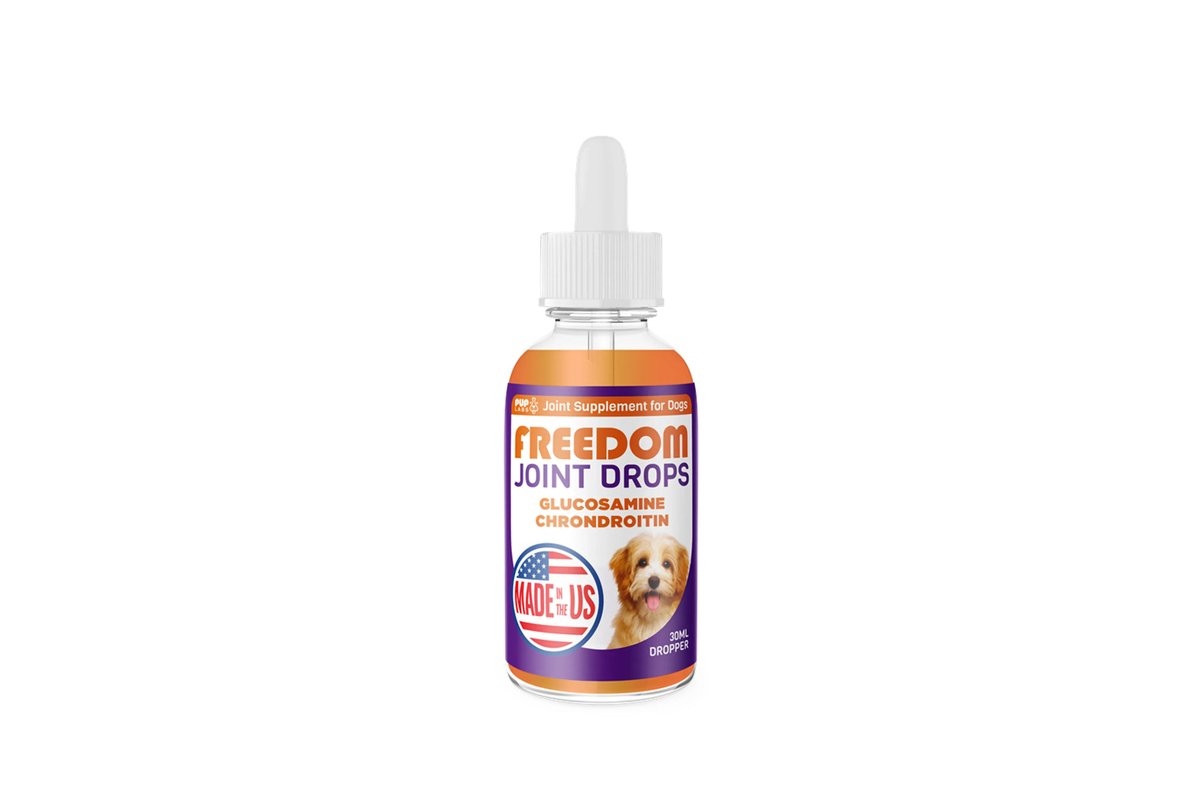
Pup Labs Freedom Joint Drops provides a practical illustration of how liquid joint supplements are packaged and administered in the consumer market. The product is packaged in a 30-milliliter dropper bottle designed for easy administration directly into a dog’s regular food or drinking water. This liquid format offers an accessible delivery option for pets that consistently resist traditional chewable treats or hard tablets.
Before introducing Freedom Joint Drops or any similar supplement into a pet’s diet, owners should review the product’s full ingredient panel and dosage guidelines with a veterinarian. Matching the recommended milliliter dose to the dog’s specific weight and confirming the markings on the included dropper ensures safe and effective use. Knowing the required daily volume allows owners to use the bottle’s 30-milliliter total capacity to calculate how long one bottle will last and evaluate multi-bottle or subscription purchasing options.
Applying a consistent evaluation routine—reading active ingredient amounts per milliliter, checking measuring accuracy, and determining daily cost—helps pet owners assess whether Pup Labs Freedom Joint Drops or another liquid product aligns with their dog’s health requirements. Additional resources, such as Petful’s detailed review of Pup Labs, Petful’s comparative analysis of dog dental powders versus dental chews, and WebVet’s comprehensive guide to canine prebiotics, offer broader context on how various canine wellness products fit into overall care routines.
Build a Routine Your Dog Will Actually Follow
Establishing a successful supplement routine relies on consistency, precise administration, and clear observation. When a product label explicitly permits mixing a liquid supplement with food, offering the supplement in a small portion of food first ensures the dog consumes the entire dose before receiving the remainder of its meal.
Pet owners can establish an effective daily routine by incorporating several practical management habits:
- Measure the exact daily volume using the calibrated tool provided with the product rather than guessing or using household spoons.
- Mix the measured liquid into a small, enticing portion of food that the dog is guaranteed to finish completely.
- Verify that the dog has consumed the entire initial portion before offering the rest of the daily meal.
- Keep other household pets away during feeding to prevent cross-consumption of the supplemented food.
- Store the supplement bottle strictly according to label storage instructions, keeping it sealed tightly and out of reach of children and animals.
Attempting to administer liquid supplements via a shared water bowl creates significant measurement challenges. In multi-pet households, it is impossible to determine how much supplement an individual animal ingests from a common water source. Even in single-dog households, dogs rarely finish an entire bowl of water in a single day, leaving an unknown quantity of the supplement behind. Pet owners should consult their veterinarian to determine which administration method provides the most reliable daily dosing routine.
If a dog leaves a portion of a supplement-treated meal unfinished, owners should avoid guessing how much liquid was lost and adding extra doses. Instead, they should seek guidance from their veterinary team on how to manage partial doses and follow the manufacturer’s specific directions regarding missed or incomplete servings.
When to Involve Your Veterinarian
If a dog displays mobility changes such as stiffness, difficulty rising, or limping, the first step should always be a comprehensive veterinary evaluation. Structural joint issues, soft tissue injuries, and neurological conditions can present with similar outward signs, and starting a supplement trial should never delay professional medical diagnosis for a dog experiencing pain or functional impairment.
Veterinary guidelines, including recommendations from the Cornell University Riney Canine Health Center, emphasize involving a veterinarian prior to starting any joint supplement program. A veterinarian can integrate dietary supplements into a broader, holistic management plan that may include weight control protocols, controlled physical activity, and prescribed medications.
Pet owners should bring the supplement bottle or clear photographs of the full label panel to their appointment, along with a complete list of all other medications, vitamins, and dietary products the dog receives. This enables the veterinarian to screen for potential ingredient overlaps, verify correct dosing levels, and confirm that the supplement is appropriate for the dog’s medical history.
What are the Side Effects of Liquid Glucosamine?
According to guidance from VCA Hospitals regarding glucosamine and chondroitin supplementation in dogs, these compounds are generally well-tolerated but can cause mild gastrointestinal side effects. Potential adverse reactions include increased gas, loose stools, and mild stomach upset. Delivering these active ingredients in a liquid format does not eliminate the potential for digestive irritation, and multi-ingredient formulas may contain additional herbs or additives that provoke individual sensitivities.
If a dog exhibits new digestive symptoms, lethargy, or behavioral changes after starting a liquid joint supplement, owners should pause administration and contact their veterinarian. Furthermore, if a dog’s mobility deteriorates or if signs of joint pain increase, owners should seek prompt veterinary advice rather than independently increasing the daily supplement dose. Retaining the product packaging allows the veterinary team to inspect the exact formulation, batch details, and active ingredient amounts given to the pet.
How Liquid Formulas Fit the Wider Joint-Supplement Choice
For pet owners whose dogs willingly accept multiple supplement formats, comparing liquids against soft chews, powders, and tablets provides a broader perspective on long-term joint care. Vetstreet’s comprehensive guide to dog joint supplements offers a detailed overview of various product types and active ingredients across the market. Using a structured evaluation checklist alongside that general overview helps owners evaluate both the clinical suitability and practical feasibility of liquid choices.
Ultimately, there is no single supplement format that works best for every dog or household. A suitable product combines an appropriate ingredient profile with transparent label details and an easy-to-use delivery method. By carefully calculating ingredient concentrations, verifying precise liquid measurements, analyzing real daily costs, and working in close partnership with a veterinarian, pet owners can establish a practical joint-care routine tailored to their dog’s individual needs.