
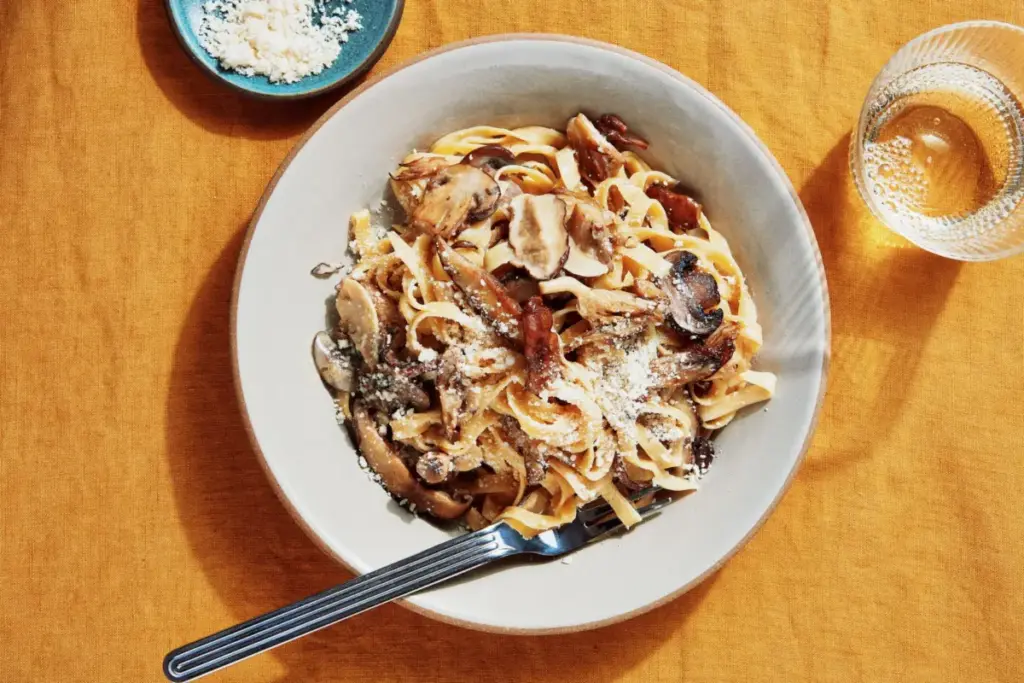
The secret to the dish’s depth lies in a careful combination of miso, Parmesan cheese, and a subtle touch of soy sauce. Together, these ingredients form an umami-rich foundation that magnifies the natural flavors of the mushrooms. Rather than creating a heavy, weighed-down dish, the recipe achieves a luscious coating for the noodles that feels balanced and comforting, making it an ideal choice for weeknight dinners or weekend gatherings as temperatures begin to drop.
Achieving success with this particular style of pasta requires attention to a few specific techniques, starting with the choice of noodles. While virtually any variety of pasta can technically be used, egg-based noodles stand out as the superior complement to the sauce. Specifically, egg fettuccine nests—such as those produced by accessible and widely available brands like Rummo and De Cecco—offer a texture that holds the creamy sauce exceptionally well. Furthermore, these nests boast a distinct advantage in the kitchen by cooking far faster than standard straight-cut pasta, nearly matching the speed of fresh pasta alternatives.
Another critical consideration involves the preparation of the mushrooms, a step that challenges conventional culinary wisdom. While standard cooking advice often warns against salting mushrooms too early in the cooking process to prevent them from releasing their moisture prematurely, this recipe embraces early seasoning. Applying just a bit of salt right at the start acts as a catalyst, encouraging the mushrooms to release their water much faster. This initial step is essential for ultimately achieving those coveted crisp, browned edges that add both texture and visual appeal to the dish. Cooks need not be alarmed when encountering a pool of liquid at the very beginning of the cooking process; this is entirely expected, and the key is simply to allow the liquid to evaporate completely as the cooking continues.
Managing the pasta water also plays a pivotal role in the final success of the dish. The recipe stresses the importance of reserving plenty of the starchy water left over from boiling the noodles, as this liquid is critical for adjusting the consistency of the sauce. For optimal results, transferring the al dente noodles directly from the pasta pot into the skillet is recommended. This method allows any residual water clinging to the noodles to carry over into the sauce, while also ensuring that the valuable cooking liquid is not accidentally discarded down the drain.
The focus on comforting mushroom dishes aligns with a broader seasonal shift toward rich, warming meals as autumn progresses. Culinary platforms and food publications have increasingly turned their attention to hearty alternatives that celebrate seasonal produce and pantry staples. Among the related fall favorites frequently highlighted alongside creamy mushroom pasta are weeknight pumpkin chili, a twist on mushroom soup, and bold reinterpretations of classic dishes like mushrooms au poivre. These offerings reflect a growing appetite for inventive home cooking that bridges the gap between everyday simplicity and restaurant-quality flavor, giving home cooks plenty of inspiration as the seasons change.