


For many modern desktop 3D printing enthusiasts, moisture management has quietly evolved from an afterthought into an essential operational discipline. Filament drying—the process of actively removing ambient water vapor absorbed by hygroscopic thermoplastics before they hit the extruder nozzle—is a crucial factor in achieving pristine surface finishes, reliable layer adhesion, and consistent mechanical properties. Recently, this necessity has sparked a wave of aftermarket hardware innovations designed to integrate directly with automated multi-color and multi-material systems, eliminating the friction of managing separate standalone drying units.
Among the latest contenders in this space is the Sunlu AMS Lite Filament Heater, an aftermarket accessory engineered specifically to upgrade the Bambu Lab AMS Lite system. Priced at $130 and manufactured by Sunlu, a prominent name in 3D printing consumables and accessories, the device promises to keep filament bone-dry both before and during active print jobs. For users heavily invested in Bambu Lab’s ecosystem, particularly owners of the popular Bambu Lab A1 and A1 Mini setups paired with the AMS Lite, the proposition of a unified, heated enclosure that maintains the same desktop footprint is undeniably appealing.
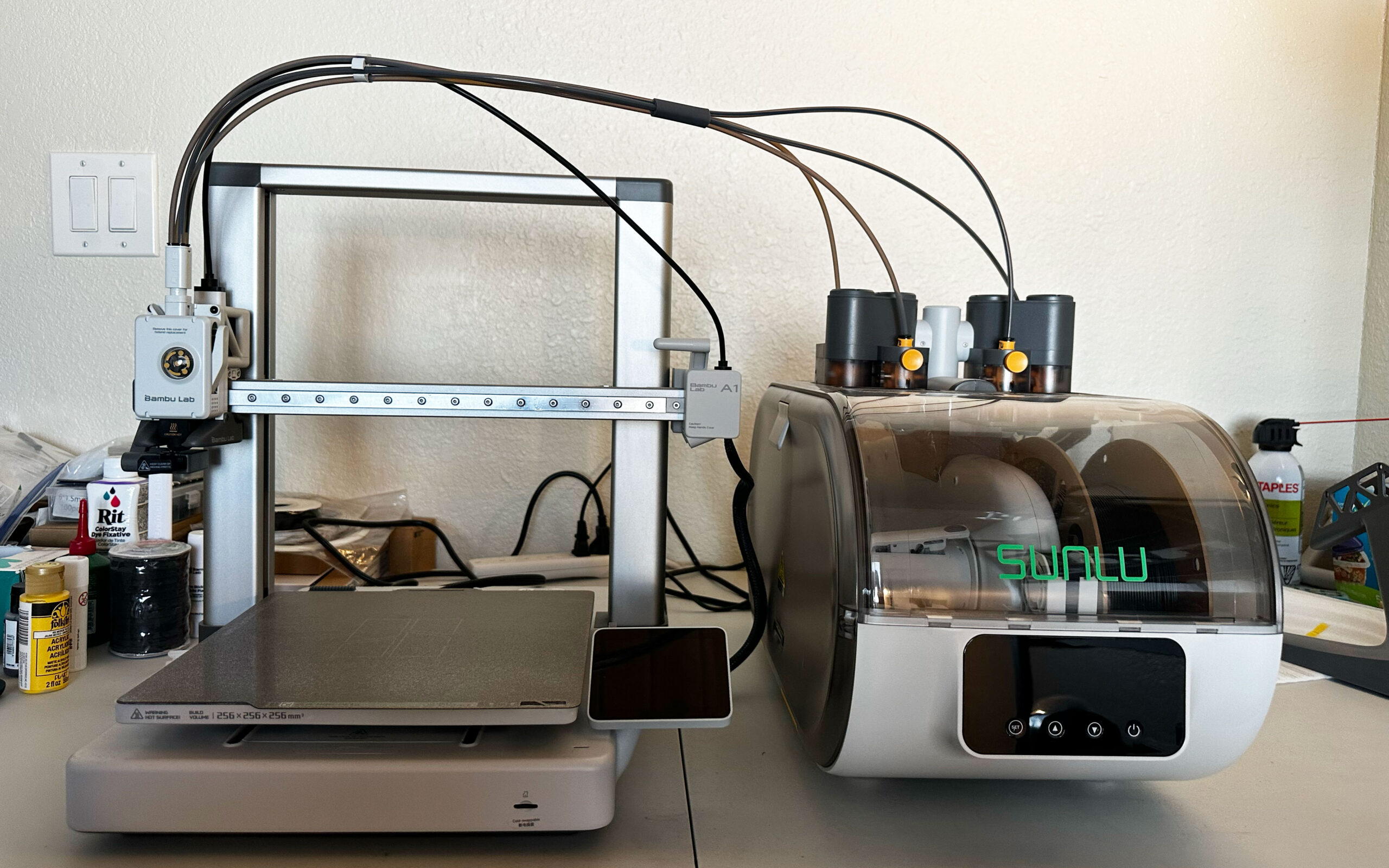
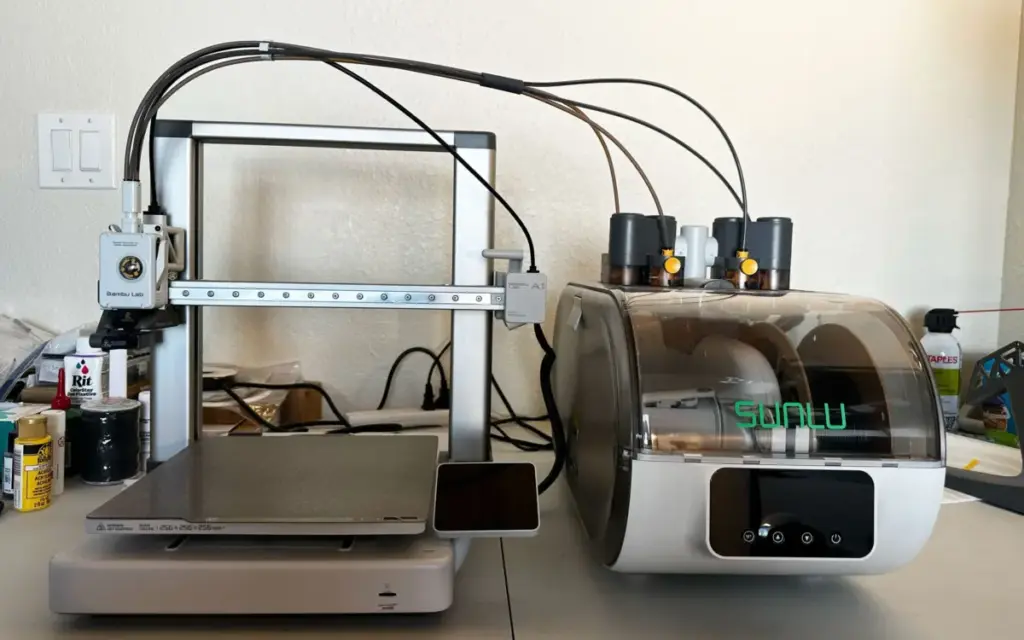
Unlike traditional standalone heating cabinets or separate dry boxes that require users to manually transfer spools back and forth, Sunlu’s AMS Lite Heater is designed to integrate intimately with Bambu’s existing hardware. Rather than sitting entirely separate on a workbench, the heater module effectively modifies the architecture of the AMS Lite itself. This design approach creates a fully enclosed environment capable of active thermal management while maintaining the core functionality of the multi-material feeder.
However, the installation process requires a certain level of technical comfort. While initial impressions suggest a straightforward assembly, the reality involves breaking down the core structure of the AMS Lite and integrating the Sunlu heating unit directly into its middle section. In practice, this procedure requires swapping out several screws and connecting a pair of internal wires. Despite the daunting nature of splitting apart a proprietary multi-material feeder, the actual mechanical modification takes only a modest amount of time.
The integration retains key structural conveniences of the original hardware. The modified AMS Lite continues to draw power directly from the 3D printer itself, allowing users to execute standard print jobs with the heating elements turned off, or to run the heater independently while the printer is completely powered down. Aside minor alignment quirks—such as a couple of screw holes that do not perfectly line up on the first attempt and a somewhat fussy plastic cover that must be replaced—the final assembly results in a surprisingly sleek and integrated desktop footprint.

When it comes to operational performance, the Sunlu unit offers robust environmental controls tailored to a wide variety of engineering and hobbyist thermoplastics. The device features six dedicated preset temperature and humidity profiles optimized for PLA, PETG, TPU, ABS, PA (Nylon), and PC (Polycarbonate). In addition to these presets, users can manually configure target temperatures ranging from 35 degrees Celsius to 70 degrees Celsius, alongside humidity thresholds adjustable between 25 percent and 50 percent.
The onboard timer defaults to an initial six-hour heating cycle. Once this primary drying window elapses, the system intelligently switches back on whenever ambient humidity rises above the target value, bringing the internal environment back down to the specified baseline. During active operation, the exterior chassis remains warm to the touch, but safely below burning temperatures, and successfully prevents thermal bleed into the surrounding room environment. Furthermore, the internal fans and heating mechanisms operate quietly, making the unit unobtrusive in a home office or workshop setting.
Evaluating the tangible impact on print quality often depends heavily on the user’s local geographic climate. In regions with exceptionally dry atmospheric conditions, such as the San Francisco Bay Area, the immediate visual improvements on standard prints may be subtle. However, users operating in high-humidity coastal or tropical environments are likely to experience much more dramatic benefits, particularly given that the Sunlu heater continues its drying operations concurrently with active printing, preventing moisture re-absorption mid-job.

Ergonomically, the physical integration introduces a few minor spatial considerations that operators must accommodate on their workstations. Because the filament spools are housed within the newly enclosed structure, users must leave adequate clearance to the sides of the machine to load and remove filament spools. The hinged doors of the heater require sufficient room to fold downward. Due to the relatively short length of the stock Bambu PTFE guide tubes, accessing the specific loading door closest to the printer can become slightly awkward, occasionally requiring the user to rotate the entire combined unit to achieve comfortable access.
Another critical operational consideration involves the nature of multi-material printing and spool management. Because multiple filament spools are housed and heated together inside a shared thermal chamber, the unit may present challenges for users who prefer to keep widely differing polymer types loaded simultaneously. Different engineering and aesthetic materials demand drastically different glass transition and drying temperatures. For instance, maintaining a spool of PETG at its recommended elevated drying temperature within the same enclosed space could potentially cause a loaded spool of low-temperature PLA to soften, warp, or fuse together if both materials are subjected to the same heat profile concurrently.
Despite these minor spatial and material-management caveats, the Sunlu AMS Lite Filament Heater proves to be a clever, highly functional accessory for compatible Bambu Lab setups. It delivers reliable thermal performance, intuitive preset controls, and seamless power integration without expanding the physical footprint required by the original A1 and AMS Lite combination. For desktop 3D printing enthusiasts grappling with persistent humidity issues and looking to streamline their multi-material workflow, Sunlu’s specialized upgrade offers a compelling, purpose-built solution.