

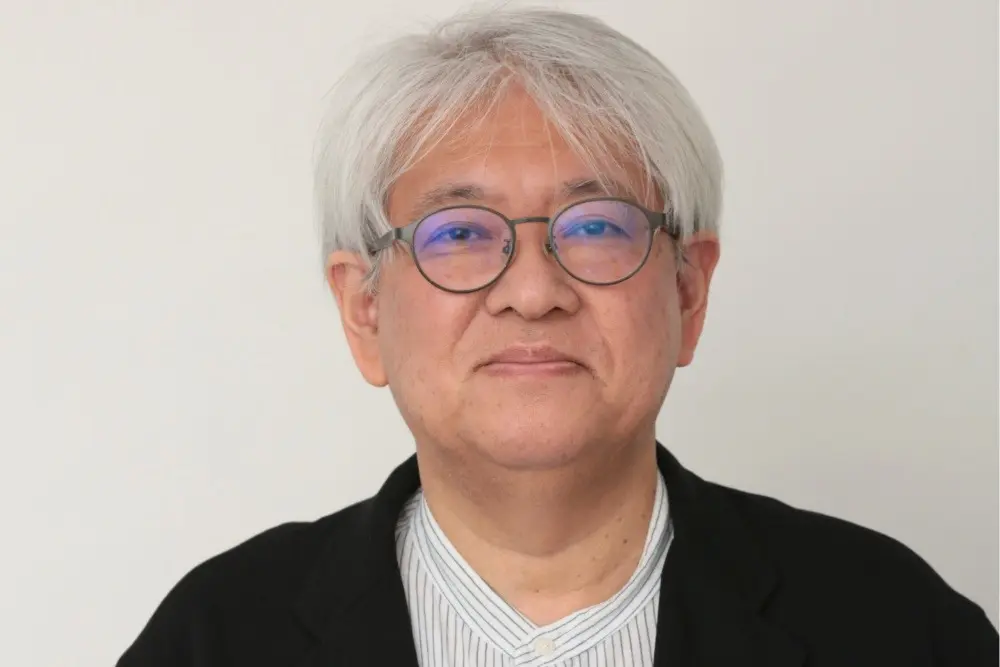
The striking absence of a robust Chinese presence on the international film festival circuit this year is symptomatic of a broader transformation taking place within the mainland’s entertainment industry. According to Ichiyama Shozo, the programming director of the Tokyo International Film Festival, a potent combination of star-driven box office flops, a noticeable slowdown in financial investment, and a heavily complicated censorship apparatus has fundamentally altered how mainland Chinese cinema interacts with the global stage.
Speaking with Variety, Ichiyama provided a candid assessment of the current structural challenges facing Chinese filmmakers and producers, offering a stark contrast to the boom years that defined the industry a decade or two prior. "In the past, casting a star in the leading role could guarantee a certain degree of success, but this year, many films featuring star actors have flopped at the box office," Ichiyama told Variety.
Beyond the unpredictable nature of contemporary ticket sales, the programming veteran pointed to a wider tightening of capital. Investment has visibly decelerated across the sector, while an increasingly complex and opaque censorship process has left numerous completed titles sitting indefinitely on shelves, unable to secure release dates or travel to international showcases. In Ichiyama’s view, these combined pressures help explain why mainland China’s footprint on the global festival circuit has grown notably faint, marking a sharp departure from its previous era of high-profile dominance.
Reflecting on his extensive history collaborating with prominent Chinese-language auteurs such as Hou Hsiao-hsien and Jia Zhangke, Ichiyama observed that the mainland industry shifted dramatically in the mid-2000s. As China’s broader economy experienced a massive boom, multiplexes proliferated rapidly in urban centers, and box office projections soared. During that golden window, even independent projects completely devoid of marquee star power were often able to secure reasonable production budgets within China. Today, however, that reliable financial ecosystem has grown vastly more precarious.
In stark contrast to the turbulence on the mainland, Taiwan’s cinematic ecosystem appears comparatively steady and resilient. Ichiyama notes that while Taiwan has always contended with a relatively small domestic market, a robust and diverse network of public support mechanisms and institutional funding continues to keep local production active and steady, shielding Taiwanese filmmakers from the volatile commercial shifts experienced by their mainland counterparts.
Turning to the wider international programming trends shaping the Tokyo International Film Festival this year, Ichiyama pointed out that the current lineup is heavily marked by narratives engaging with historical events, including stories deeply rooted in the realities of war. Among these selections is Samuele Rossi’s Competition entry, Even If Hell Came, a gripping feature that chronicles the harrowing experiences of a young Italian partisan holding out in the alpine wilderness during the bitter winter of 1944.
"I believe this reflects a global trend, as symbolized by the films dealing with the Second World War that were screened at this year’s Cannes Film Festival," Ichiyama explains. In his view, contemporary filmmakers are increasingly looking backward at historical conflicts and past traumas as a deliberate narrative lens through which to examine a modern world that feels progressively fractured and divided.
Maintaining Tokyo’s Distinct Identity on the Festival Circuit
The Tokyo International Film Festival maintains rigorous standards for its core Competition section, requiring at all costs at least an Asian premiere for every selection. However, the programming team continuously pushes for coveted world premieres, typically landing a balanced fifty-fifty split between the two categories. Furthermore, the festival strives to ensure that roughly half of the fifteen films featured in Competition originate from Asia, reflecting its deep commitment to regional storytelling.
When curating the slate, emerging directors who are widely expected to shape the future trajectory of world cinema are granted priority over established names, though veteran auteurs are by no means excluded from consideration. This year’s lineup successfully bridges the generations, welcoming celebrated veterans such as Garin Nugroho with Red Before Dawn, Milcho Manchevski with Sister Brother Manhole Cover, and Bahman Ghobadi with Trees Are Watching. Notably, Ichiyama highlights that these veteran directors are not resting on their laurels; rather, their latest selections demonstrate a conscious artistic reach for something markedly different from their earlier bodies of work.
"We hope that our competition will serve as a platform for discovery," Ichiyama notes, emphasizing the festival’s core mission to unearth fresh artistic voices.
The domestic selections in the Competition section—which feature compelling works like Ikeda Akira’s The Canary’s Lullaby and Yamamoto Akira’s The Intertwining—are presented alongside vibrant titles featured in the Nippon Cinema Now section. Ichiyama describes the creators behind these particular Japanese films as artists who may lack widespread international recognition at present, but who undeniably deserve a global audience.
Meanwhile, the Japanese titles featured in the prestigious Gala Selection operate under vastly different commercial pressures. Films such as opening night attraction Sukiyaki by Zeze Takahisa, Yamazaki Takashi’s blockbuster-scale Godzilla Minus Zero, and Sode Yukiko’s poignant All the Lovers in the Night successfully navigate higher budgets and heavy commercial demands while fiercely retaining a distinct auteur sensibility.
"This demonstrates that the current state of Japanese cinema is in a very healthy condition. I think there are a surprisingly large number of talented filmmakers in Japan," Ichiyama says, praising the creative vitality of his home country’s film community. However, he is quick to point out that significant structural hurdles remain. "The immediate challenge is to provide support for films by young directors, many of which are produced on a very low budget. While support for Japanese cinema has increased in various forms over the past few years, support for low-budget films is still insufficient."
Closing the Gap on Industry Infrastructure
Reflecting on the historical landscape of international film festivals prior to his tenure as programming director, Ichiyama points out that the Tokyo International Film Festival previously lacked two crucial pillars that many major festivals worldwide routinely offered: robust backing for film production and dedicated educational programs designed to train the next generation of industry talent. In his view, the Busan International Film Festival was the pioneering trailblazer in Asia, serving as the first regional event to successfully introduce both components.
In recent years, Tokyo has made concerted efforts to close that institutional gap and bolster its support for the cinematic ecosystem. Last year, the festival inaugurated the Asian Students’ Film Conference, an initiative dedicated to screening compelling student works produced across East and Southeast Asia. Building upon that momentum, this year’s edition introduced the TIFF Work-in-Progress program, a targeted initiative designed to assist Japanese films that are actively seeking completion funding to cross the finish line.
Despite these meaningful strides, Ichiyama is realistic about the long road ahead for the institution. "Of course, this is not yet enough," he concedes, acknowledging the ongoing work required to elevate the festival’s supportive infrastructure.
Looking toward the horizon, Ichiyama outlines the primary objective for the event over the coming years, noting that the overarching task for the next half-decade will be to take this proactive, supportive approach further and firmly cement Tokyo’s role as a vital incubator for cinematic talent across Asia and the world.