
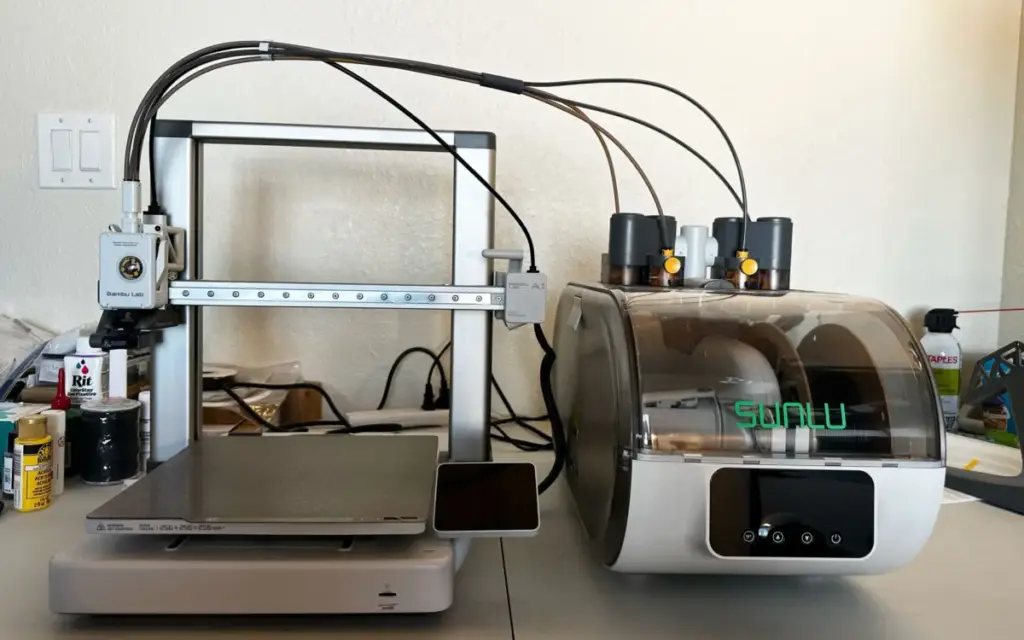
For many desktop 3D printing enthusiasts, moisture management is a silent battle that often goes unnoticed until a print fails. While dedicated standalone filament drying cabinets have long been available on the market, integrating drying directly into a multi-material ecosystem has been a trickier challenge. Addressing this niche, manufacturer Sunlu has introduced the AMS Lite Filament Heater, priced at $130, which is specifically designed to upgrade and enclose Bambu Lab’s popular multi-material unit. As users of printers like the Bambu Lab A1 and AMS Lite know, keeping hygroscopic filaments dry is essential for achieving pristine layer adhesion and surface finishes, making this hardware integration an intriguing proposition for the desktop workspace.
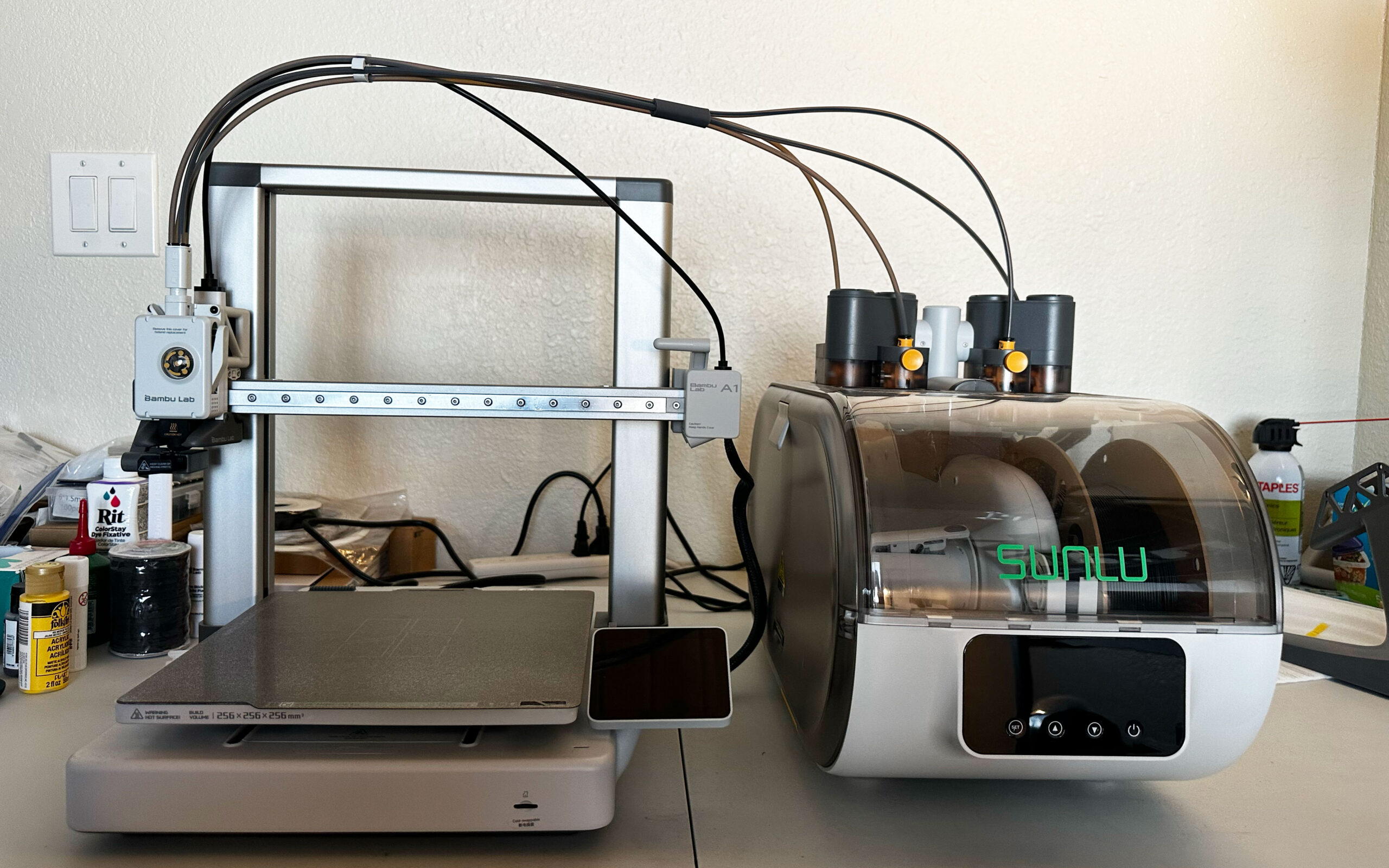
Unlike traditional standalone drying boxes that require users to move spools back and forth between a separate heater and the printer, Sunlu’s AMS Lite Heater integrates directly with Bambu’s hardware. The result is a fully enclosed AMS Lite setup capable of actively drying filament both before a print job starts and continuously throughout the printing process. For users venturing into moisture control for the first time, the concept of a heated multi-material holder sounds seamless, though the physical implementation requires a bit of mechanical intervention right out of the box.
The assembly process initially appears straightforward, but it quickly reveals a more hands-on nature as users realize they must effectively split the AMS unit apart and sandwich the Sunlu heating module directly in the middle. In practical terms, however, the procedure is less intimidating than it sounds, requiring only the replacement of a few specific screws and the plugging in of two internal wires. Cleverly, the modified AMS retains its power connection through the printer itself. This means operators can run print jobs without activating the heater, or conversely, run the heater independently while the printer is entirely powered down. Despite minor tolerances where a couple of screw holes did not quite line up perfectly, alongside a slightly fussy replacement plastic cover, the final product yields a remarkably cohesive and elegant desktop integration.

Operationally, the Sunlu unit offers a comprehensive suite of environmental controls tailored to modern engineering and common hobbyist materials. The interface features six distinct preset temperature and humidity configurations optimized for PLA, PETG, TPU, ABS, PA (Nylon), and PC (Polycarbonate). In addition to these presets, users can manually dial in temperatures ranging from 35 degrees Celsius to 70 degrees Celsius, while adjusting target humidity levels between 25 percent and 50 percent. A built-in timer defaults to a standard six-hour heating cycle. Once this initial period lapses, the unit intelligently switches back on whenever ambient humidity rises above 50 percent, working autonomously to return the enclosure to the user’s target value. Throughout testing, the chassis remained comfortably warm to the touch without posing any burn risks, and crucially, it did not bleed significant heat out into the surrounding workspace, operating with a notably quiet demeanor.
When evaluating real-world print quality improvements, the benefits can vary significantly depending on geographic location and local climate conditions. Operating out of the relatively arid San Francisco Bay Area, testers observed that print quality saw no dramatic, night-and-day leaps forward, primarily because atmospheric moisture had not been a chronic obstacle to begin with. However, makers residing in humid, coastal, or tropical environments are expected to extract substantially more utility from the system, particularly given that the enclosure actively combats moisture re-absorption while the printer is actively pulling filament off the spools.

At the same time, the physical footprint and workflow around the machine introduce a few minor operational quirks that users must accommodate. Because the filament spools are loaded into individual bays, operators will want to ensure there is adequate physical clearance on the sides of the machine. The hinged doors of the heater need ample space to fold downward for loading and unloading spools. Due to the relatively short length of the standard Bambu PTFE guide tubes, testers frequently found themselves physically rotating the entire combined unit just to access the specific side facing directly toward the printer.
Another important consideration involves the shared thermal environment of the enclosure. Because all loaded filament spools are enclosed and heated simultaneously within the same shared space, the system may present challenges for multi-material workflows that utilize vastly different polymers at the same time. Different materials require vastly different glass transition and drying temperatures; heating a spool of high-temperature PETG to its ideal drying threshold, for instance, could potentially soften or fuse a neighboring spool of standard PLA if both materials happen to be loaded into the machine concurrently.

Despite these workflow caveats, the Sunlu AMS Lite Heater stands out as a clever, purpose-built hardware addition. It delivers targeted thermal management, robust preset options, and quiet day-to-day operation while preserving the fundamental desktop footprint of the original Bambu Lab A1 and AMS Lite combination.