

A minimally invasive medical procedure designed to target abnormal blood vessels in the knee could provide long-lasting relief for millions of people struggling with osteoarthritis, according to new research. The technique presents a potential alternative for patients who have exhausted traditional treatments but wish to avoid or are medically ineligible for joint replacement surgery.
In a comprehensive study involving 194 patients, researchers discovered that a specialized treatment utilizing tiny particles designed to dissolve within hours was strongly associated with substantial reductions in chronic knee pain and notable improvements in overall mobility. Crucially, these clinical benefits persisted for a minimum of 12 months, with 80% of patients evaluated at the one-year follow-up reporting clinically meaningful pain relief that significantly impacted their day-to-day lives.
The innovative approach, known medically as genicular artery embolization, is designed to interrupt the cycle of inflammation and abnormal blood vessel growth that heavily contributes to chronic discomfort in arthritic joints. Rather than surgically replacing the damaged knee joint with artificial components, interventional radiologists utilize a thin catheter to deliver microscopic particles directly into specific, localized blood vessels feeding the area of distress.
The findings, published in the prominent medical journal Radiology, suggest this sophisticated technique could carve out a vital treatment option for patients caught in a therapeutic gap—those for whom conventional conservative measures no longer work, yet joint replacement remains an unviable path due to personal preferences or underlying medical conditions.
Why Knee Arthritis Is So Difficult To Treat
Osteoarthritis stands as the world’s most prevalent form of arthritis and remains a leading global cause of physical disability. According to data from the World Health Organization, knee osteoarthritis alone affects more than 365 million adults worldwide, creating an immense burden on healthcare systems and individual quality of life.
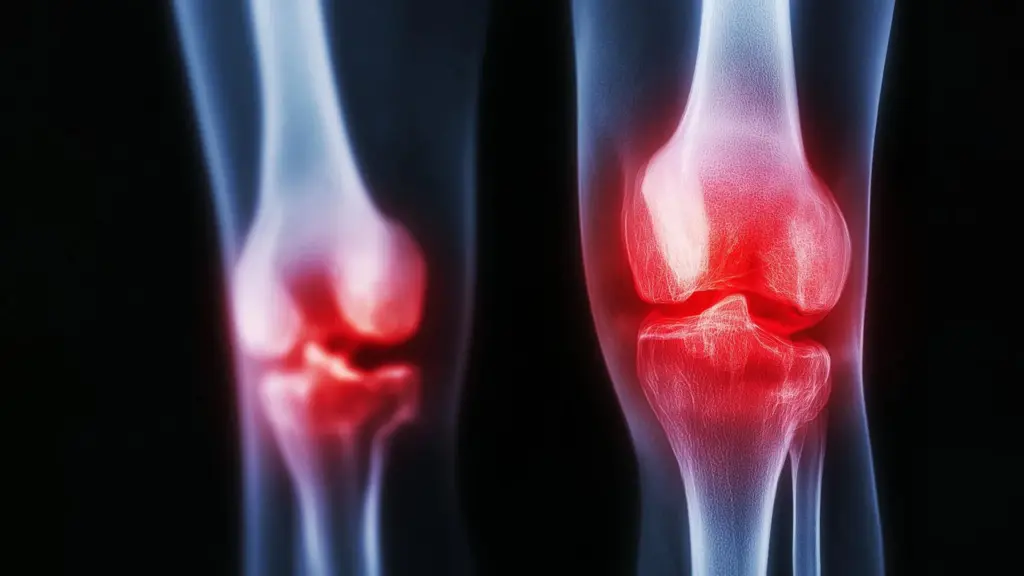
The degenerative condition develops progressively as cartilage—the smooth, protective tissue that cushions the ends of bones within a joint—gradually wears away. However, modern medical understanding recognizes that osteoarthritis involves far more than isolated cartilage damage. Chronic inflammation within the joint capsule, structural changes in surrounding soft tissues, and an increased sensitivity of pain-signaling nerves all coalesce to produce persistent, debilitating discomfort.
For countless individuals, the physical consequences extend far beyond occasional joint aches. Routine everyday activities such as walking, climbing stairs, engaging in light exercise, or simply standing for extended periods can become increasingly formidable challenges.
Standard clinical management typically begins with conservative measures, including physical therapy, targeted anti-inflammatory medications, and therapeutic injections administered directly into the affected joint. When these approaches eventually stop providing adequate relief, orthopedic specialists often recommend knee replacement surgery. Yet, despite its high success rate, major surgery is neither clinically appropriate nor personally desirable for every patient.
"For many patients with knee osteoarthritis, there is a real treatment gap today," said Dr. Florian Nima Fleckenstein, deputy head of Interventional Radiology Campus Mitte at Charité – Universitätsmedizin Berlin. "Conservative measures such as intra-articular injections no longer provide sufficient relief, but joint replacement is not an option for medical or personal reasons."
A Different Way To Fight Knee Arthritis Pain
The emerging treatment being investigated approaches knee osteoarthritis from an entirely different directional paradigm. Instead of focusing exclusively on repairing or replacing damaged cartilage inside the joint capsule, genicular artery embolization targets the pathological proliferation of abnormal blood vessels that develop around an inflamed joint.
These abnormal vessels frequently form within and around the synovium, which is the delicate membrane lining the interior of the joint. As these vessels multiply—a state known medically as hypervascularity—they actively contribute to localized inflammation and stimulate the growth of sensory nerves heavily involved in transmitting pain signals to the brain.
Genicular artery embolization is meticulously engineered to interrupt this destructive biological feedback loop by selectively reducing blood flow through these abnormal vessels while carefully preserving the normal, healthy circulation required by the rest of the knee.
During the procedure, an interventional radiologist inserts a thin catheter into a peripheral artery and guides it carefully toward the targeted blood vessels supplying the knee. Tiny particles are then injected to block selected vessels, with the primary goal of dampening inflammation and extinguishing the pathway of pain.
The technique is formally referred to as superselective embolization because physicians specifically target tiny, localized arteries rather than blocking general blood circulation throughout the entire joint structure. Furthermore, the entire intervention is performed without requiring an open surgical incision or the installation of mechanical joint replacements.
Researchers have previously investigated various agents for this process, including both temporary blocking substances and permanent microscopic particles. Each historical approach carried potential drawbacks, particularly regarding how precisely the particles could be delivered and how long they lingered inside the delicate vascular network.
For this specific study, the research team examined rapidly resorbable, gelatin-based microspheres. These precisely sized, spherical particles are engineered to dissolve completely within a matter of hours, cleverly combining the safety advantages of temporary agents with the controlled, predictable delivery characteristics of permanent microspheres.
"GAE is a whole new treatment regimen that targets abnormal hypervascularity around the joint and, in turn, modulates the pathological neurovascular environment," Dr. Fleckenstein explained, highlighting the complex interactions between abnormal blood vessels and local pain-signaling nerves.
"By reducing both inflammation and pain, GAE with resorbable microspheres may be the first procedure that alters the course of the disease, slowing its progression," he added.
Despite this optimistic outlook, whether the procedure can definitively alter or slow the natural progression of osteoarthritis remains an open scientific question. Although reducing localized inflammation could theoretically influence the underlying disease trajectory, the current study did not definitively demonstrate that genicular artery embolization actively prevents ongoing cartilage deterioration or reverses existing structural joint damage.
Nearly 200 Patients Underwent the Procedure
To rigorously evaluate the clinical safety and efficacy of this approach, researchers conducted a prospective, single-center study involving 194 patients suffering from refractory, osteoarthritis-related knee pain. The study cohort included 114 women and 80 men, with a median age of 69 years and a median body mass index of 28.4, reflecting a realistic cross-section of patients typically affected by the condition.
Crucially, all participants had continued to experience severe symptoms despite undergoing at least three months of conventional care, including structured physical therapy, oral anti-inflammatory medications, and various therapeutic joint injections.
"We believe these results carry real weight because they come from real-world data," Dr. Fleckenstein noted. "With this broad, inclusive study design, our participants are exactly the patients that physicians encounter every day in their practices."
The clinical procedures were performed between July and November 2024. Notably, 45 participants, accounting for 23% of the total group, suffered from advanced osteoarthritis affecting both knees and consequently received two separate treatments, with the second knee procedure performed within four weeks of the first.
In total, the research team successfully carried out 239 genicular artery embolization procedures.
Physicians utilized real-time X-ray imaging, known clinically as fluoroscopy, to guide the microscopic catheter and accurately deliver the dissolving particles to the precisely targeted arteries. All 239 procedures achieved technical success, confirming that the intended abnormal blood vessels were successfully treated in every instance.
The associated safety profile was similarly encouraging. No moderate or severe adverse events were recorded during the evaluation period, and mild, temporary complications occurred in only 6.7% of the total procedures performed.
These minor issues were transient, including brief skin discoloration near the treated anatomical area and a single superficial collection of blood, known as a hematoma, near the catheter insertion site. Every reported side effect resolved spontaneously without leading to any lasting medical complications.
Knee Arthritis Pain Dropped and Stayed Lower for a Year
The investigative team closely monitored patient pain levels, physical movement capabilities, and overall quality of life prior to the treatment and at several predefined intervals afterward. Formal clinical assessments were systematically conducted at six weeks, three months, six months, and 12 months post-procedure. Additionally, an independent orthopedic surgeon evaluated patients in person during the six-month follow-up visit.
Participant retention remained remarkably high throughout the duration of the study. Follow-up completion rates reached 94% at six weeks with 183 of 194 patients reporting, 89% at three months with 172 patients, 89% at six months with 171 patients, and 79% at the 12-month mark with 154 patients successfully evaluated.
The single most striking finding of the investigation was the profound and sustained reduction in reported knee pain among participants.
Utilizing the Numeric Rating Scale, a standardized zero-to-ten measure of subjective pain intensity, median pain scores dropped sharply from a baseline score of 7 before treatment down to 4 after just six weeks. By the six-month evaluation point, the median pain score had declined further to 3, and crucially, it remained steadfast at that low level during the 12-month follow-up assessment.
That positive trajectory represents a pain reduction of more than 50% compared to the original baseline median score, with therapeutic benefits that clearly endured a full year following a single minimally invasive session.
"In our cohort, we saw a significant drop in pain and a significant increase in function, including sports and recreation and daily activity," Dr. Fleckenstein said. "Most importantly, their quality of life significantly increased."
Patients Also Reported Better Mobility and Quality of Life
The clinical improvements observed in the study extended far beyond simple pain reduction. Researchers utilized the Knee Injury and Osteoarthritis Outcome Score, a comprehensive, standardized questionnaire designed to evaluate how structural knee problems impact daily symptoms, physical mobility, recreational pursuits, and overall life quality.
Across all five distinct clinical categories assessed by the questionnaire, patients reported meaningful, measurable progress during the year following their embolization procedure.
Median scores evaluating routine daily activities increased significantly from 53 up to 71.5, strongly suggesting that basic functional movements such as walking across a room or climbing a flight of stairs became noticeably easier. Scores measuring participation in sports and recreation climbed from an initial 15 to 36, indicating substantial improvements in more physically demanding recreational hobbies.
Scores measuring specific osteoarthritis symptoms rose from 51 to 68, while the dedicated pain category improved from a baseline of 44 to 65, on a scale where zero represents extreme knee pain and 100 indicates an entirely pain-free joint.
Quality of life scores also increased substantially, rising from a modest baseline of 19 before treatment up to 40 after 12 months of post-procedural recovery.
To determine whether these numerical changes were large enough to matter in a practical sense to patients, researchers applied established clinical thresholds known as the minimum clinically important difference. Previous scientific literature has identified a reduction of at least 2.0 points on the Numeric Rating Scale and an increase of at least 10 points in the Knee Injury and Osteoarthritis Outcome Score categories as true meaningful improvements.
In simple terms, these thresholds distinguish changes that are readily noticeable in daily life from minor statistical fluctuations that carry little practical significance. At the 12-month evaluation point, an impressive 80% of participants who completed the pain assessment successfully exceeded this clinically meaningful improvement threshold.
"Our study demonstrates that GAE using rapidly resorbable gelatin-based microspheres is a safe, minimally invasive therapy that provides meaningful pain relief and functional improvement in participants with osteoarthritis-related knee symptoms for at least 12 months," Dr. Fleckenstein emphasized. "By embolizing the pathological vessels, we’re able to normalize the vessel structure—and, in turn, the neuronal structure of the knee."
What Other Studies Reveal About Knee Artery Embolization
The new findings add important weight to a rapidly growing body of clinical literature investigating whether intentionally blocking abnormal knee blood vessels can deliver safe, sustained relief from osteoarthritis symptoms.
A randomized study published in Clinical Radiology provided encouraging comparative data, evaluating genicular artery embolization combined with standard care against standard care alone in a group of 50 patients. After one year of observation, pain scores had improved by 72.7% in the embolization group, compared to just 24.2% in the standard care control group, with treated patients also reporting superior overall knee function.
However, that particular study utilized polyvinyl alcohol particles rather than the rapidly dissolving gelatin microspheres examined by Fleckenstein’s research team. It also notably lacked a sham procedure control group, making it challenging to completely separate the direct physical effects of the treatment from the psychological expectations of the patients.
Other recent research has raised important questions regarding how much of the observed clinical improvement is directly caused by the physical embolization process itself.
A randomized, sham-controlled study published in European Radiology followed 58 patients over a 12-month period. Interestingly, both the active genicular artery embolization group and the sham treatment control group experienced sustained reductions in pain over time, but researchers found no statistically significant difference between the two cohorts. Furthermore, magnetic resonance imaging examinations failed to identify a significant reduction in joint inflammation directly attributable to the embolization procedure.
Similarly, an evidence analysis published in the European Journal of Radiology examined 22 separate studies encompassing a total of 633 patients. Although patient pain scores routinely improved substantially following the intervention, the authors found no statistically significant advantage over sham procedures when the results from three rigorous randomized trials were pooled together.
A separate comprehensive analysis evaluating 45 studies with a combined total of 2,205 patients similarly documented widespread improvements in pain and functional mobility, yet judged the overall certainty of the supporting evidence to be low or very low due to methodological limitations across existing trials.
Taken together, these varied findings suggest that while genicular artery embolization is consistently associated with promising clinical improvements—particularly within observational study designs—more rigorous, blinded, and controlled clinical trials remain necessary to definitively establish how much direct therapeutic benefit stems specifically from blocking the targeted blood vessels.
Could This Treatment Help Patients Avoid Knee Replacement?
Despite remaining scientific uncertainties, medical specialists and clinical researchers are increasingly exploring genicular artery embolization as a viable therapeutic option for patients who possess limited alternative choices for managing their chronic conditions.
In a formal position statement, the Society of Interventional Radiology expressed support for offering the procedure to appropriately selected patients whose osteoarthritic symptoms persist despite diligent conservative management, placing particular emphasis on individuals who are medically unable to undergo major joint surgery or who actively wish to delay knee replacement.
The professional society also underscored the critical importance of specialized procedural training, careful patient selection protocols, and ongoing clinical trials to further establish the long-term safety and overall effectiveness of the technique.
The investigation led by Dr. Fleckenstein provides particularly valuable clinical data concerning the use of rapidly resorbable gelatin microspheres. Encompassing nearly 200 participants, it represents the largest published clinical trial investigating this specific material approach at the time of its release.
Nevertheless, because the study did not include an untreated or sham-controlled comparison group, it cannot definitively prove how much of the observed patient improvement resulted directly from the physical intervention versus other factors. Additionally, the research team did not evaluate whether the treatment successfully slows progressive cartilage loss or permanently prevents patients from eventually requiring joint replacement surgery in the future.
Longer follow-up timelines and larger, highly controlled randomized trials will ultimately be essential to determine the true durability of the clinical benefits, identify which specific patient profiles respond best, and clarify whether dissolving particles offer distinct clinical advantages over alternative embolization materials.
For patients whose persistent knee arthritis continues to interfere heavily with everyday life despite trials of medication, physical therapy, and targeted injections, the approach nonetheless represents an increasingly studied and compelling possibility.
"This lets us speak about safety and efficacy with real confidence," Dr. Fleckenstein concluded. "For the right patient, it can mean lasting relief from a single, minimally invasive procedure—a meaningful new option between injections and joint replacement."