
Few culinary combinations evoke as much comforting nostalgia in the American South as the rich, harmonious pairing of nuts and sugar. While countless variations exist across regional cookbooks and holiday tables, Oklahoma nut candy holds a particularly cherished place in the hearts of confection enthusiasts. Often referred to by its historic moniker, Aunt Bill’s Brown Candy, this rich, fudgy confection boasts a flavor profile strikingly similar to a traditional praline, yet possesses a unique, velvety texture all its own. Long established as an old-school staple served throughout Oklahoma and neighboring Southern states during the winter holidays, this historic treat continues to captivate modern home cooks and candy makers alike with its deceptive simplicity and sophisticated depth of flavor.
The lineage of this iconic holiday sweet traces its origins back nearly a century. First appearing in print in 1936 within the pages of a local Oklahoma newspaper, the original recipe quickly gained traction among homemakers looking for impressive yet accessible confections to share with family and friends. Over the decades, as the recipe passed down through generations, various modern cooks and bakers introduced minor modifications. However, the foundational blueprint of the confection has remarkably remained unchanged. At its core, Aunt Bill’s Brown Candy relies on a robust combination of heavy cream, a dual-nut profile typically featuring both walnuts and pecans, and a handful of reliable pantry staples that come together through careful temperature management and patience.
Achieving the signature velvety texture and complex flavor of authentic Oklahoma nut candy requires a delicate balance of technique and timing, nuances that culinary experts and recipe developers continue to emphasize. According to specialty food publications and modern recipe testing, the secret to a superior finish lies in how the sugar is initially handled. Rather than rushing the process, culinary professionals recommend cooking down the sugar very slowly on low heat to develop a deeper flavor profile before introducing additional ingredients. This careful initial melt paves the way for the subsequent incorporation of heavy cream and more granulated sugar, after which the heat is gradually increased. A precise touch of baking soda is then whisked in, followed closely by rich butter and aromatic vanilla extract, all of which contribute to the candy’s luxurious mouthfeel and decadent aroma.
Temperature management remains perhaps the most critical factor in successful candy making, and Oklahoma nut candy is no exception. If the bubbling sugar and cream mixture is allowed to become overly hot, the chemical structure shifts, causing the batch to harden into a brittle consistency rather than retaining the desired fudgy, praline-like chew. Furthermore, experienced recipe developers advise allowing the cooked mixture to rest for approximately twenty minutes before the nuts are finally folded in. This resting period helps stabilize the confection, ensuring that the nuts are evenly distributed and suspended within the dense, creamy matrix without sinking or altering the cooling process.
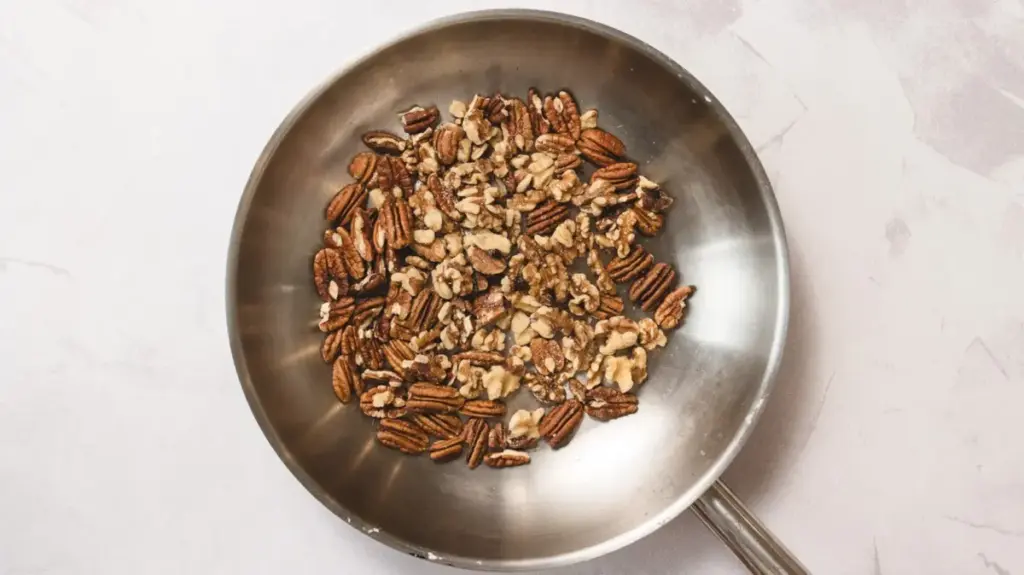
Equally important to the final outcome is the preparation of the nuts themselves. Toasting the nuts is considered an essential step by culinary experts, as the dry heat intensifies their natural oils, deepens their earthy flavor, and imparts a satisfying crunch that contrasts sharply with the smooth candy base. This toast is ideally performed in a dry skillet on the stovetop over medium heat for about five minutes, or until the nuts become deeply fragrant and take on a rich, golden-brown hue. Home cooks can choose to execute this step either before beginning the candy-making process or while waiting for the hot sugar mixture to complete its crucial twenty-minute resting period, effectively utilizing downtime in the kitchen.
While traditional variations strictly adhere to walnuts and pecans for their rustic depth, the foundational versatility of the recipe allows for subtle adaptations. Confectioners looking to experiment can easily substitute alternative nuts depending on personal preference or pantry availability. Peanuts and almonds offer a wonderful, robust crunch, while more decadent options like macadamia nuts or hazelnuts introduce a luxurious, buttery twist that elevates the traditional profile. Once the mixture is fully combined and rested, it is poured, carefully spread, and left to cool in a lined baking pan for at least a few hours before being sliced into neat, rustic squares.
The resilient nature of Oklahoma nut candy also contributes to its enduring popularity as a holiday gift and make-ahead treat. Because of its sturdy composition, the confection maintains its quality and freshness when stored properly. Placed in an airtight container, the candy can remain fresh in the refrigerator for up to two weeks, or stored safely in the freezer for a couple of months without losing its characteristic texture or flavor.
When executing the recipe, culinary purists stress the importance of adhering to specific ingredients, noting that granulated sugar is essential; substituting brown sugar will inadvertently alter the structural texture of the finished product. Similarly, while heavy cream provides the optimal richness, standard milk can serve as a functional substitute for those working with what they have on hand. For those inclined to put a modern spin on the historic recipe, several minor enhancements can be integrated without straying too far from the classic spirit of the treat. Drizzling melted chocolate over the top of the set candy instantly mimics the beloved flavor profile of a caramel chocolate turtle, while a dusting of cinnamon or nutmeg introduced to the nuts offers a festive, aromatic holiday twist.
Additionally, a subtle touch of salt can be utilized to further accentuate the natural sweetness of the confection. This can be achieved by incorporating a pinch of salt directly into the mixture alongside the baking soda, or by scattering a light dusting of flaky sea salt across the surface just before the candy sets. Despite these modern inclinations for culinary creativity, culinary historians and traditionalists often argue that the true charm of Oklahoma nut candy lies precisely in its rustic, old-fashioned simplicity. The appeal of Aunt Bill’s Brown Candy is rooted in its mid-century origins and unpretentious presentation, suggesting that bakers might reserve their more complex culinary experiments and elaborate innovations for classic fudge recipes, old-fashioned toffee, or other beginner-friendly confections, allowing this historic Southern holiday staple to shine in its original form.