



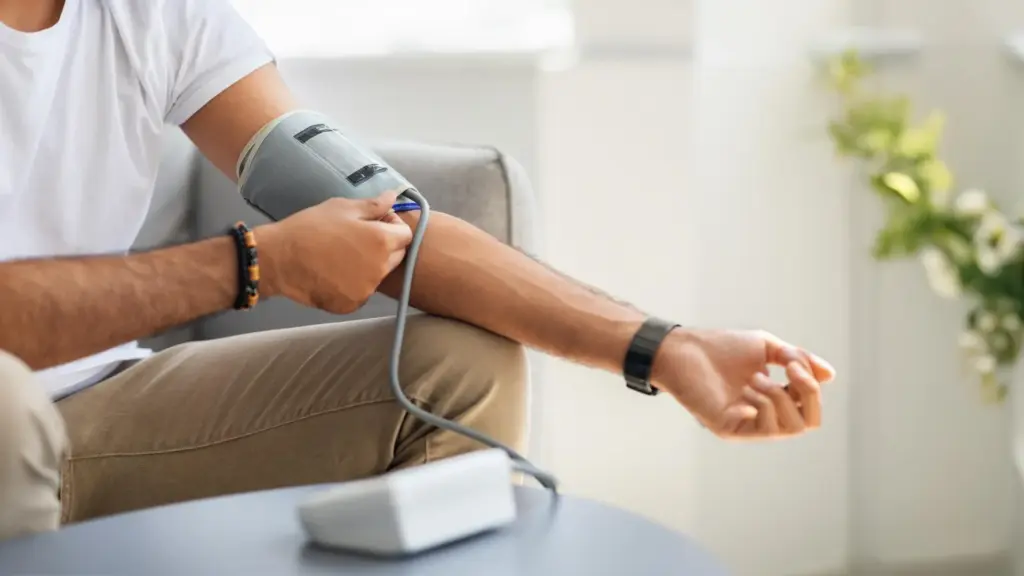
A groundbreaking study led by researchers at Johns Hopkins Medicine suggests that something as routine as how a patient positions their arm during a standard blood pressure check can meaningfully skew the final reading. According to the findings, common arm positions frequently used during clinical screenings can make a patient’s blood pressure appear significantly higher than it actually is in reality. This overestimation carries profound clinical implications, potentially contributing to incorrect diagnoses of hypertension and leading to unnecessary medical interventions or heightened patient anxiety.
In a detailed report on the research, published in the prominent medical journal JAMA Internal Medicine, a team of investigators sought to evaluate and compare three distinct arm positions commonly observed in healthcare settings: an arm properly supported on a desk, an arm resting casually on the patient’s lap, and an unsupported arm hanging limply at the patient’s side. The results of the comparative analysis were striking. Resting the arm on the lap increased systolic pressure—the upper number in a standard blood pressure reading—by nearly 4 mmHg. Even more concerning, allowing the arm to hang unsupported at the side increased systolic pressure by nearly 7 mmHg, demonstrating that posture plays an unexpectedly large role in vascular measurement.
Arm Position Can Make a Major Difference
The empirical results show definitively that arm positioning makes a "huge difference" in obtaining an accurate and reliable blood pressure measurement, according to Dr. Tammy Brady, M.D., Ph.D. Dr. Brady serves as the vice chair for clinical research in the Department of Pediatrics at the Johns Hopkins University School of Medicine. In addition to this role, she is the medical director of the pediatric hypertension program at Johns Hopkins Children’s Center, the deputy director of the Welch Center for Prevention, Epidemiology, and Clinical Research, and the senior author of the published study.
The researchers emphasize that these empirical findings powerfully reinforce existing clinical recommendations. Current medical guidelines explicitly call for a patient’s arm to be firmly and securely supported on a desk, table, or another stable surface during any blood pressure measurement. Despite these long-standing guidelines, deviations in busy clinical environments remain surprisingly common.
According to data compiled by the American Heart Association, nearly half of all adults in the United States suffer from elevated blood pressure. A clinical diagnosis of high blood pressure is made when the measured force of blood flowing through the body’s blood vessels is persistently higher than what is generally considered normal, which averages around 120/80 mmHg. If left untreated over time, high blood pressure can silently damage the cardiovascular system, significantly increasing a person’s risk of suffering a heart attack, stroke, or other serious and potentially fatal cardiovascular complications.
Hypertension is notoriously known as a silent condition because it frequently produces few or no noticeable symptoms in the individuals who have it. This lack of overt warning signs makes early, consistent, and accurate screening during routine medical office visits an absolutely vital part of managing the condition and safeguarding long-term health. In many cases, once a diagnosis is accurately established, blood pressure can be effectively controlled through manageable lifestyle changes. These often include weight loss, the adoption of healthy dietary patterns, and regular physical exercise, alongside targeted medical treatments utilizing a wide variety of available prescription medications.
How Blood Pressure Should Be Measured
The latest clinical practice guidelines issued by the American Heart Association outline several mandatory steps specifically intended to improve measurement accuracy in medical settings. These foundational steps include using an appropriately sized cuff matched to the patient’s arm dimensions, ensuring the patient’s back is fully supported against a chair, keeping the feet flat and firm on the floor with the legs uncrossed, and positioning the arm correctly. Specifically, the midpoint of an adjustable blood pressure cuff should align precisely with the patient’s mid-heart level while the entire arm rests stably on a desk or table surface.
Despite the clarity of these recommendations, the Johns Hopkins researchers note that blood pressure is still frequently checked under suboptimal conditions. For instance, patients are often evaluated while sitting on an examination table with little or no physical support for their arms. In some clinical encounters, a busy clinician might attempt to hold the patient’s arm steady, while in other scenarios, the patient simply rests the arm limply in their lap while waiting for the automated cuff to inflate and deflate.
To investigate the genuine impact of these variations, the Johns Hopkins research team enrolled 133 adult participants between August 9, 2022, and June 1, 2023. The demographic makeup of the study cohort included 78% Black participants and 52% female participants, providing a diverse sample. Participants ranged in age widely from 18 to 80 years old. These individuals were randomly assigned to one of six different study groups that varied strictly in the precise chronological order in which the three seated arm positions were tested during their evaluations.
All measurements for the study were systematically collected during a single, controlled clinic visit occurring between the hours of 9 a.m. and 6 p.m. To mimic real-world conditions and prepare the participants properly, a specific protocol was followed before any blood pressure was recorded. Participants were first instructed to empty their bladders and then walk briskly for two minutes. This short walk was specifically designed to simulate the typical experience of walking into a busy clinic or medical office immediately prior to a health screening. Following the walk, the participants rested quietly while seated for five minutes, ensuring both their backs and their feet were fully supported to stabilize their baseline hemodynamics.
Each study participant wore an upper arm blood pressure cuff carefully chosen in accordance with the specific size of their upper arm. Researchers utilized a validated digital blood pressure device to collect three distinct sets of three individual measurements, allowing a brief 30-second resting interval between individual readings to ensure consistency and prevent vascular fatigue in the limb.
Researchers Carefully Controlled Each Measurement
To maintain rigorous scientific standards, researchers removed the blood pressure cuff entirely after completing each group of three consecutive readings. Following this removal, participants were required to walk for another two minutes and then rest quietly for an additional five-minute period. During the course of the exact same visit, every single participant completed a fourth set of three measurements while their arm was maintained in the ideal, recommended position of being supported squarely on a desk. This additional, standardized set of readings was deliberately included by the research team to account for the well-documented, natural biological variation that commonly occurs between successive blood pressure measurements in any human subject.
Every single measurement throughout the trial took place within a controlled, quiet, and private clinical setting to minimize external stressors that could artificially raise blood pressure. Furthermore, participants were strictly instructed to remain completely silent—refraining from speaking with the researchers—and were prohibited from using their mobile phones or other electronic devices while their blood pressure was actively being checked.
The compiled results demonstrated unequivocally that two arm positions frequently witnessed in routine clinical practice—resting the arm on the lap or leaving it unsupported and hanging at the side—produced substantially higher blood pressure measurements than the gold-standard recommended position of supporting the arm firmly on a desk.
Specifically, resting the arm on the lap systematically overestimated systolic blood pressure, which is the top number of a reading representing the force of blood flow when pumped directly out of the heart, by an average of 3.9 mmHg. Furthermore, this suboptimal lap position also overestimated diastolic blood pressure, which is the bottom number representing the constant pressure in the arteries while the heart rests between successive beats, by an average of 4.0 mmHg.
Allowing the arm to remain unsupported at the side produced an even more dramatic and concerning difference in the recorded numbers. In this unsupported posture, systolic blood pressure was overestimated by a substantial 6.5 mmHg, while diastolic blood pressure was similarly overestimated by 4.4 mmHg.
A Difference Large Enough to Affect Diagnosis
The clinical implications of these discrepancies are far-reaching, particularly when considering how diagnostic thresholds are established in modern medicine.
"If you are consistently measuring blood pressure with an unsupported arm, and that gives you an overestimated BP of 6.5 mmHg, that’s a potential difference between a systolic BP of 123 and 130, or 133 and 140—which is considered stage 2 hypertension," explains Sherry Liu, M.H.S., an epidemiology research coordinator at the Welch Center for Prevention, Epidemiology, and Clinical Research within the Department of Epidemiology at the Johns Hopkins Bloomberg School of Public Health, as well as a co-author of the study.
This means that a patient with normal or mildly elevated blood pressure could easily be misclassified as having stage 1 or stage 2 hypertension simply due to the physical posture of their arm during the screening process, opening the door to unnecessary anxiety, follow-up testing, and pharmacological treatment.
The investigators note an important methodological caveat regarding their work, pointing out that these specific findings may apply exclusively to blood pressure measurements taken using modern automated electronic devices. Consequently, the results may not necessarily extend identically to readings collected using alternative types of traditional blood pressure equipment, such as manual sphygmomanometers operated by human ears and stethoscopes.
Nevertheless, Dr. Brady stresses that the findings clearly demonstrate why practicing clinicians must pay closer attention to detail and strictly follow recommended measurement procedures during every patient encounter. Beyond the clinical environment, she also emphasizes that individual patients must take an active role in their healthcare, noting that people "must advocate for themselves in the clinical setting and when measuring their BP at home" to ensure their numbers are accurate and reliable.
Along with Dr. Brady and Sherry Liu, the collaborative team of authors from Johns Hopkins included Di Zhao, Ahmed Sabit, Chathurangi Pathiravasan, Junichi Ishigami, Jeanne Charleston, Edgar Miller III, Kunihiro Matsushita, and Lawrence Appel.
Financial backing for this important medical study was provided by Resolve to Save Lives, an initiative funded heavily by Bloomberg Philanthropies, the Bill and Melinda Gates Foundation, and Gates Philanthropy Partners, which itself operates with support from the Chan Zuckerberg Foundation.