

When examining the landscape of Black women’s breast health, medical statistics rarely offer a hopeful narrative. According to data from the National Breast Cancer Foundation, Black women are diagnosed with breast cancer at a younger median age of 60, compared to 62 for white women. Furthermore, they face a 38% higher likelihood of dying from the disease and register the lowest survival rates across every known stage of breast cancer. Approximately one in five Black women diagnosed with breast cancer learn they have triple-negative breast cancer (TNBC), an aggressive and hard-to-treat form of the disease that disproportionately affects them more than any other racial or ethnic group.
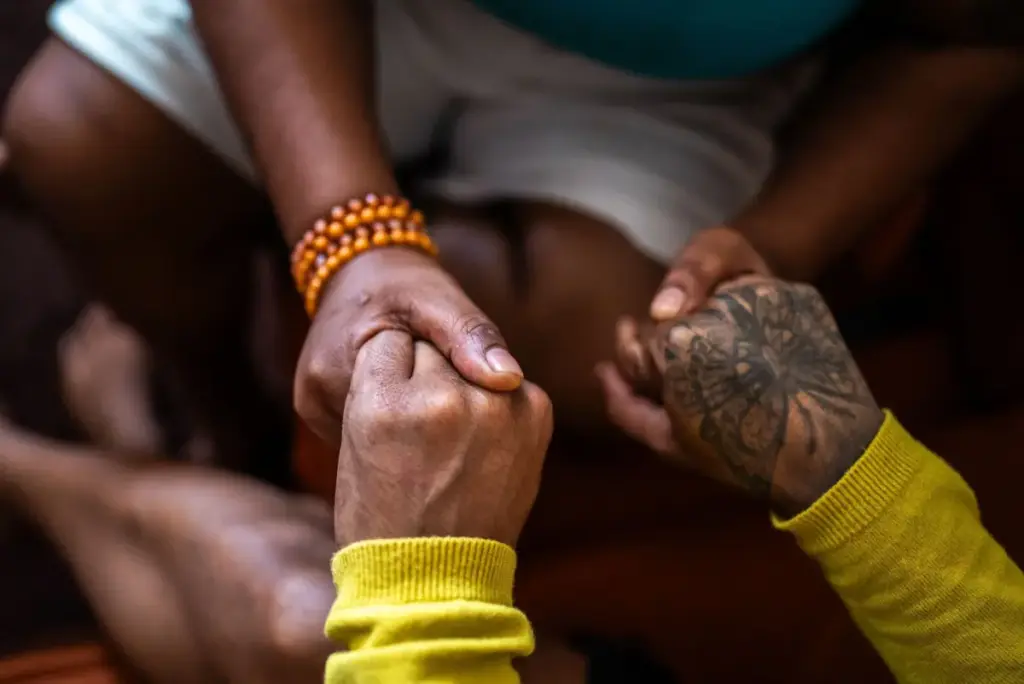
Yet, numbers can never fully capture the human reality behind a diagnosis—the late-night phone calls, the impromptu head-shaving gatherings, the emotionally heavy therapy sessions, or the profound moment a mother looks into the eyes of her children and decides they are reason enough to fight. Black women have consistently been far more than a data point, a truth powerfully reflected in how they confront, survive, and rebuild their lives after a breast cancer diagnosis.
Thirteen Black women have stepped forward to share their stories, refusing to be reduced to a mere statistic. These individuals represent a diverse array of careers, families, humor, faith, rage, and joy whose encounters with breast cancer transformed them in ways both devastating and profound. By forging their own paths through treatment and beyond, they have constructed something that medical data cannot quantify: a resilient community, a renewed sense of purpose, and a hard-won blueprint for survival that they are actively passing down to every woman who follows.

1. "I put my boxing gloves on and fought with everything I had."
Monique Bass, 53, had always maintained a proactive approach to her health. As a single mother of twin sons and a grandmother of four, she began scheduling annual mammograms at the age of 40. However, it was a self-exam performed while lying in bed at age 47 that altered the trajectory of her life. She discovered an abnormal lump that immediately felt wrong.
Over the next three years, Bass underwent three tissue biopsies of the lump, each returning benign results. While medical professionals advised continued monitoring, Bass pushed back against the wait-and-watch approach. The lump was visibly growing, and she trusted her body enough to know something was amiss. She insisted on a lumpectomy to remove and test the tissue. The subsequent diagnosis revealed stage 1 invasive ductal carcinoma, an aggressive form that mandated immediate chemotherapy.
Bass received the news while sitting in a car wash. Remembering the moment, she describes feeling as though she had entered another dimension, noting that never in a million years did she expect to hear a cancer diagnosis. The timing compounded the difficulty, occurring in 2020 at the height of the global COVID-19 pandemic, which forced her to navigate much of her medical journey in isolation. Compounding the emotional weight, she was simultaneously undergoing a divorce. Her rigorous treatment plan encompassed four rounds of doxorubicin, four rounds of paclitaxel, and 21 radiation sessions. While losing her hair proved to be one of the most difficult hurdles, she noted a positive outcome when it grew back with renewed vitality after treatment concluded.
Throughout the ordeal, her faith served as a steady anchor. Following her recovery, Bass established "What’s Behind the Bra?", a New Jersey-based nonprofit organization that distributes comfort care packages to breast cancer patients year-round and hosts a weekly Sunday night podcast under the same name.

2. "I surrounded myself with love and laughter."
Jaqueline Beale, 64, grew up in a family intimately familiar with cancer, including her mother, who had battled breast cancer. Consequently, when she detected a lump during a self-exam at age 40, the discovery did not come as a total shock. Although initial sonograms and mammograms appeared clear, the persistent physical sensation prompted Beale to pursue a biopsy.
When the radiologist called with the results—stage 1 breast cancer confined to the site of origin—the background noise of a busy New York street was clearly audible as he attempted to hail a taxicab while delivering the diagnosis, advising her to quickly secure a breast surgeon. Despite the blunt delivery, Beale maintained a sense of humor that sustained her throughout treatment. She emphasized the importance of surrounding herself with laughter and love, explicitly asking her family to bring levity into the room.
3. "What once felt like the end became the beginning of something greater."
Annita White, 51, was five months overdue for her routine mammogram. Juggling responsibilities as a single mother to two boys, a higher education administrator, and a first-year PhD student, she consistently found more pressing demands on her time. When she finally completed the screening, she expected a standard notification letter confirming normal results. Instead, she received an urgent phone call regarding a previously undetected mass.
By the time her biopsy results arrived, White already sensed the outcome. A technician had remarked on the unusual hardness of the mass, and White felt the reality of the diagnosis before it was formally spoken. The confirmation arrived the following day. Following the news, she experienced a wave of profound despair, questioning her ability to endure the road ahead.

The subsequent phase proved grueling, involving chemotherapy alongside the loss of her breasts and her thick hair. Experiencing baldness and bodily changes left her feeling deeply vulnerable, driven primarily by the fear of running out of time to watch her sons grow into men and eventually meet her grandchildren. Her faith met her precisely in her distress, carrying her through her darkest season. Three years later, White is cancer-free, has completed her doctoral studies, and serves as a member of the African American Breast Cancer Alliance survivor network, where she shares her story to inspire others.
4. "The clouds are moving. The sun has decided to show itself."
Marylande Regis, 38, had lived in her new Georgia home for just four months when her life shifted abruptly. A registered nurse, real estate professional, wife, and mother of three, she had recently stopped breastfeeding her nine-month-old when she located a lump. Because the infant had never latched properly on that side, her initial inquiry to an on-call medical provider was dismissed as a likely clogged milk duct, with assurances that she was too young for serious concern.
Regis refused to accept the dismissal and made a follow-up inquiry, prompting another OB-GYN to schedule an immediate office evaluation. Within two weeks, she received a diagnosis of aggressive stage 2B, BRCA1-positive breast cancer at age 36. Within another two weeks, the initial finding had progressed from one tumor and one affected lymph node to three tumors and four impacted lymph nodes.
Her subsequent treatment spanned roughly 18 months, encompassing six months of chemotherapy, a bilateral mastectomy, six weeks of radiation, a total hysterectomy to eliminate estrogen production, and breast reconstruction. Throughout the process, she leaned on her family, including her mother—who relocated to assist permanently—and her husband, Kory, who remained steadfast through appointments and simultaneous job losses. Today, Regis focuses on the milestones of her children, finding renewed strength in everyday moments.

5. "Sickness had never been my world."
Judy Fambrough-Billingsley, 75, had lived a life entirely untouched by serious illness. A naturalized American citizen born in Germany, she walked three miles daily, swam laps, participated in Zumba classes, and played soccer for three decades without ever smoking, drinking, or requiring daily medication.
When she first felt a lump, and another six months later, she initially dismissed them, especially given a clean mammogram earlier that year. However, as the masses grew and multiplied, she sought medical evaluation, resulting in a surprising cancer diagnosis that introduced her to an entirely unfamiliar world of prescriptions and clinical procedures. Drawing on her upbringing during the Civil Rights Era—where her parents were active NAACP members and she served in the Student Nonviolent Coordinating Committee—she approached the diagnosis with the same fighting spirit she had applied to civil rights activism throughout her life.
6. "I was so used to always being the strong one."
Taylor Johnson was approaching 30 when she discovered a lump on her left breast. As a mother and content creator, she consulted her primary care physician, who recommended imaging tests. Initially denied a mammogram due to her age, she advocated for herself, secured a biopsy instead, and received a diagnosis of stage 2 triple-negative breast cancer.
Navigating six months of chemotherapy alongside upcoming surgery and radiation, Johnson focused on maintaining stability for the sake of her five-year-old daughter. While the process challenged her lifelong self-image as the unwaveringly strong provider, the outpouring of support from family, weekly prayer networks, and her medical team at the Mayo Clinic in Arizona helped sustain her through the treatment phases.

7. "I wanted to feel supported through it, not just survive it."
Jessica Ncube, 41, built a professional and personal life around caring for others as a licensed clinical social worker and mental health practice co-owner. Her diagnosis was identified quietly through a routine mammogram, presenting no prior physical symptoms.
Following unclear margins after an initial lumpectomy, Ncube elected to undergo a double mastectomy with reconstructive surgery. Acknowledging the grief accompanying such bodily changes, she had to unlearn the ingrained expectation placed on Black women to remain perpetually resilient without requiring support. Embracing softness and allowing herself to receive care redefined her understanding of strength.
8. "Cancer doesn’t define you. You define you."
Ameiko Newman, 40, discovered her breast cancer unexpectedly after being rushed to the hospital for severe abdominal pain. At the time, her life was marked by stress and uncertainty, but the diagnosis paradoxically provided her with clear direction and motivation.
Currently undergoing weekly chemotherapy and immunotherapy, Newman combines her faith with a newfound advocacy mission. Recognizing the specific needs of patients experiencing hair loss, she rebranded her business and began designing specialized headwear and scarves tailored for cancer patients, emphasizing that individuals retain the power to define their own identities independent of illness.

9. "I shifted to being overly optimistic."
Charlotte Connor, 38, discovered a lump in her breast shortly after undergoing a breast augmentation procedure at age 30. Initial medical consultations minimized her concerns due to her youth, and follow-up examinations over the subsequent year failed to catch the rapid growth of the mass. By the time a biopsy was performed, the tumor had tripled in size, resulting in a diagnosis of stage 2A ductal carcinoma.
Choosing to remain calm, Connor deliberately adopted an optimistic outlook, driven largely by the desire to model resilience for her young daughter. Supported by a close circle of friends and family who organized a head-shaving party, she navigated treatment by focusing resolutely on recovery and the future.
10. "We have been through challenges our whole lives. This is just one more."
In 1999, Donna Culmer received a clean mammogram, only to discover a stone-sized fibrocystic lump a few months later. Subsequent imaging revealed an unrelated, non-palpable stage 1 cancer on her left side at age 46, while she was serving as a Navy instructor training personnel working alongside Marines.
Enduring four months of difficult chemotherapy and a subsequent mastectomy, Culmer relied heavily on a strong support system that included her father and her local church community. Reflecting decades later at age 73, she emphasizes that Black women possess a generational resilience equipped to handle major life adversities.

11. "Therapy fortified me to get through cancer."
At age 26, Patricia Fox discovered a sudden lump in her right breast overnight. Initial medical opinions suggested the mass was likely a cyst attributed to dense breast tissue, and providers initially hesitated to pursue further testing. Trusting her intuition, Fox insisted on a biopsy, which confirmed estrogen receptor-positive stage 2A breast cancer.
The psychological toll of the diagnosis eventually led Fox to seek professional mental health support. Working with a therapist helped her process the trauma of the diagnosis and address behavioral patterns in her life. Recognizing the cultural stigma surrounding mental health in the Black community, she has since made it her mission to advocate for therapy as an essential tool for coping with chronic illness.
12. "I turned to prayer to remain calm."
Annette Colden, 63, confronted breast cancer screening after losing her sister to the disease following a prolonged battle that included cervical and breast cancer diagnoses. Her sister had extracted a promise that Colden would maintain her routine mammograms.
After initial monitoring of a suspicious spot yielded inconclusive reassurances from providers, Colden pursued follow-up evaluations due to her internal intuition. At age 42, she was diagnosed with stage 0 breast cancer. Leaning heavily on her faith and framing her journey as a partnership with a higher power, she subsequently dedicated her time to supporting other patients through Roswell Park Comprehensive Cancer Center, offering round-the-clock comfort and practical assistance to those navigating treatment.

13. "I quit my life and started a new one as an advocate."
Ricki Fairley, 69, was in airport security for a business trip when she received a phone call notifying her of a peanut-sized cancerous lump. Initially attempting to delay the news until after her trip, she was subsequently diagnosed with aggressive stage 3A triple-negative breast cancer at age 55.
The diagnosis served as a catalyst for a complete life restructuring. During her first year of treatment—which included a double mastectomy, chemotherapy, and radiation—Fairley resigned from her job, initiated a divorce, sold her home, and founded a new company to eliminate sources of chronic stress in her life. When she later faced a metastatic recurrence with a discouraging prognosis, she secured a second medical opinion, successfully beat the cancer a second time, and ultimately co-founded The Black Breast Cancer Alliance to work toward reducing mortality rates among Black women.