


When the author walked into her six-week postpartum checkup following the birth of her second child, she was, by all accounts, a wreck. Like countless mothers of newborns, she was severely underslept and overtouched, yet she intuitively knew there was a much deeper problem beneath the surface of typical exhaustion. She tossed and turned through the night, paralyzed by relentless worries about her baby, spent her afternoons teetering on the edge of panic attacks, and was even irrationally convinced that she had developed a dangerous blood clot in her leg.
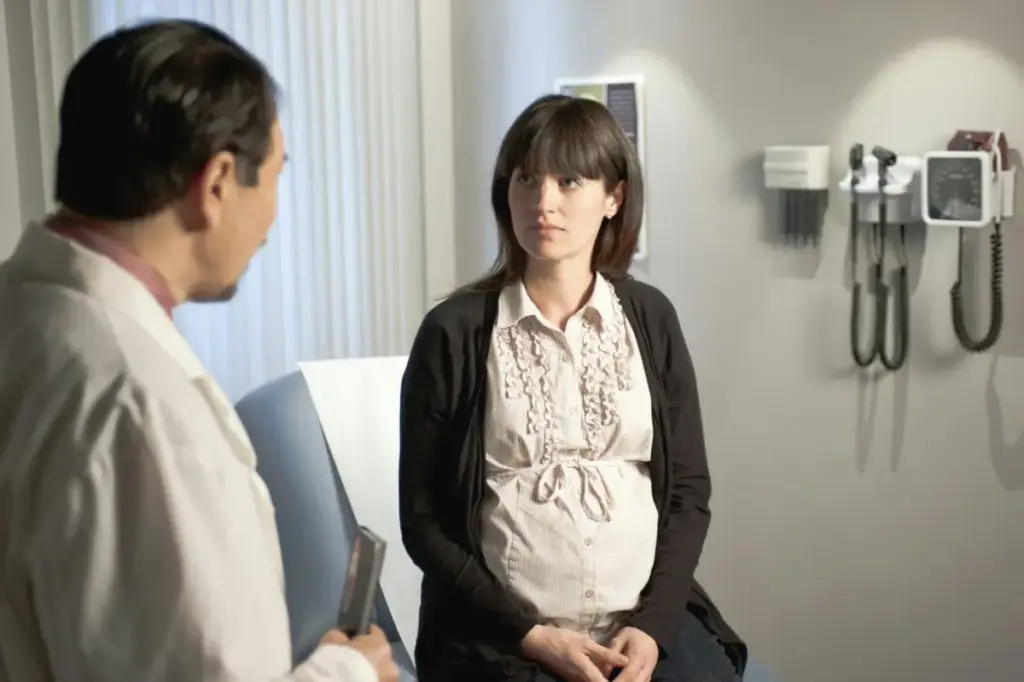
When she finally voiced these terrifying symptoms to her doctor, the response was dismissive. The physician noted that she had scored a little high on her mental health screening form, but quickly brushed it aside. "This is the time when baby blues are really tough. Try to focus on sleeping and eating well as much as you can," the doctor advised.
She was left utterly stunned. Walking out of the medical office, she felt significantly more lost and isolated than when she had first walked in. Was this truly just the standard, harmless suite of baby blues? Was she simply not strong enough mentally or emotionally to handle the reality of being a mother of two children?
Realizing she desperately needed help, she ultimately took matters into her own hands. She did what millions of women across the country are routinely forced to do in order to secure the basic health care they desperately need: she became her own fierce advocate. She spent hours researching potential care options and cold-calling medical offices until someone finally took her harrowing symptoms seriously. It turned out she was suffering from a severe case of postpartum anxiety, which had been dangerously amplified by a previously undiagnosed form of obsessive-compulsive disorder. She finally received the proper care she required, but only because she independently tracked down and secured an exceptional perinatal mental health specialist on her own.
This alarming personal ordeal is far from an isolated incident. A landmark report recently released by the prominent public opinion firm Gallup, in collaboration with Pivotal—a philanthropic organization founded by Melinda French Gates—reveals a staggering gender disparity in modern medicine. According to the data, 51% of women report being minimized, misdiagnosed, or outright ignored by their healthcare providers, a stark contrast to the 39% of men who report similar experiences. Furthermore, over the past five years, a remarkable 42% of women stated that they had to actively and aggressively advocate for their own health, compared to just 26% of men who faced the same burden.
For medical professionals working on the front lines of patient care, these sobering statistics come as no surprise. Jennifer Gularson, PA-C, IFMCP, a board-certified physician assistant at the Osteopathic Center for Healing in Maryland, notes that the systemic failure of the medical establishment is a daily reality in her practice. "Honestly, none of this surprises me," Gularson says. "By the time many women come to me, they’ve already seen two or three clinicians looking for answers. A lot of them have been dealing with symptoms for months, even years, and still don’t have a clear explanation for what’s happening to them."
Why the system often fails women
To understand why modern medicine so frequently lets women down, experts point to deep-seated historical gaps in scientific research and medical education. For much of recent history, women were routinely overlooked, minimized, or excluded entirely from clinical trials designed to advance medical understanding, pharmaceuticals, and clinical practices. It was not until 1993 that the U.S. Congress finally passed a federal law mandating the inclusion of women in clinical research studies.
"Women’s health has been understudied for a long time, and that shapes both the evidence we have and how clinicians are trained," Gularson explains. "We’re still living with the consequences of an evidence base that wasn’t built around women’s bodies."
As a prime example of this systemic failure, Gularson points to perimenopause and menopause, stages of life that affect every single woman who lives long enough to experience them. "Many clinicians got very little training on this stage of life, and the thinking on hormone therapy and other treatments has kept evolving," she notes.
This profound gap in clinical knowledge frequently prevents medical professionals from recognizing that a wide array of overlapping symptoms—such as poor sleep, mounting anxiety, persistent brain fog, joint pain, low libido, and irregular menstrual periods—might all be deeply interconnected parts of a single underlying condition. Instead, Gularson explains, this is where women begin to feel profoundly minimized. They walk into a clinic presenting five or six complaints that seem completely unrelated to an untrained eye, and each complaint is either handled entirely separately or dismissed with assurances that all standard lab work looks normal.
Compounding the problem of clinical knowledge gaps is the persistent issue of whether medical providers actually believe their female patients. Unfortunately, implicit biases remain deeply embedded across the entire healthcare landscape, and the historical dismissal of women’s health concerns as mere "hysteria" still lingers in the undertones of daily clinical conversations and patient care. Experts emphasize that this systemic disbelief is especially pronounced and dangerous for women of color.
When women fail to receive the timely, accurate care they desperately require, their entire life experience suffers a profound toll. The Gallup and Pivotal survey revealed that 42% of women, compared to 35% of men, report that over the past five years, their unmanaged or mishandled health issues have actively kept them from doing everything they wanted to do in their personal and professional lives.
What moms say about their health experiences
The consequences of misdiagnosis and medical dismissal can be uniquely hazardous for mothers, largely because the demands of modern motherhood make it exceedingly difficult to access medical care in the first place. According to the survey data, women with children were significantly more likely to report that they skipped or delayed seeking necessary health care due to mounting family responsibilities than women without children, at 18% versus 12%.
Melinda French Gates highlights the immense societal pressure placed on mothers and how their own well-being is invariably the first thing to be sacrificed. "Every mom knows the juggling it takes to be at school drop off, succeed at work, and get everyone to that day’s soccer practice or appointment or birthday party. But we don’t talk enough about how the ball that usually gets dropped is hers—her health, her needs," Gates tells Motherly. "One in six women in our survey said they’ve had to delay their own care because they needed to spend that time caring for their families. That’s a stark reminder that, for women, giving care and getting care are deeply connected, and that, as a country, we need to do better for women on both fronts."
Kara Kushnir, LCSW, PMH-C, a psychotherapist and the founder and clinical director of A Work of Heart Counseling in New Jersey, echoes these observations from a mental health perspective. "Moms find themselves exhausted, navigating a system that feels like a confusing web full of red tape, so many give up," Kushnir says.
Gularson adds that the delicate postpartum period is a prime window of vulnerability where women frequently experience minimizing behaviors from providers that actively discourage them from seeking additional care. "For newer moms, postpartum symptoms get brushed aside constantly. Exhaustion, anxiety, not feeling like yourself, it all gets written off as ‘that’s just having a baby,’" she explains.
This casual dismissal during the postpartum period can carry fatal consequences. According to data from the Centers for Disease Control and Prevention, more than 67% of all pregnancy-related deaths occur after the day a baby is born, with the vast majority of those tragic deaths taking place between one week and one full year postpartum.
How to advocate for your health
For generations, many women have been implicitly or explicitly taught from a young age to remain quiet, agreeable, and accommodating in formal settings, a conditioning that often prevents them from pushing back against dismissive authority figures in white coats. Medical and mental health experts agree that it is high time to shed that conditioning.
"If you feel dismissed, tell your provider, ‘I feel like you’re dismissing what I’m telling you.’ If you feel rushed or unheard, say that too," Gularson advises patients navigating difficult appointments.
Kushnir emphasizes the importance of relentless persistence, sharing her own harrowing personal journey. It took her three years of seeing three different endocrinologists to finally secure an accurate diagnosis for a severe thyroid disorder and an underlying autoimmune condition that her previous medical providers had initially misdiagnosed as mere anxiety, sleep deprivation, and a simple weight problem. "If you do not feel well, don’t stop asking for labs, scans, or another provider," Kushnir urges.
To combat the exhaustion and intimidation inherent in navigating uncooperative medical systems, Kushnir suggests bringing a trusted family member or close friend to medical appointments. These support figures can serve as vocal advocates while the patient is weighed down by the physical and emotional toll of their symptoms. "Bring someone who can reinforce your messaging and help ask questions when you feel tired, worn down, or unheard," Kushnir says. "We were never meant to do this alone, and historically, women get things done when they work together."
What’s next for women’s healthcare?
Motivated by a desire to fundamentally transform this landscape, Gates commissioned the recent Gallup survey because she firmly believes that universal access to quality health care is the absolute bedrock of women’s entire societal well-being and autonomy. "I want to make sure women can do anything they want to do in society. But if that’s the goal, you actually have to go all the way back and start with their health, because women have to be well to do well," Gates stated in a recent interview with Forbes. Demonstrating her deep commitment to this mission, Gates has personally invested more than $600 million in targeted funding for women’s health initiatives over the past two years alone.
Despite the systemic hurdles that remain deeply entrenched, healthcare experts are cautiously optimistic about the trajectory of future improvements. "This is an exciting time for women’s health," Gularson says. "There’s a spotlight on issues that just wasn’t there before. More research is getting funded, there’s more public attention, and women themselves are getting louder about what they need."
While patients wait for broader medical research, institutional funding, and clinical training programs to fully catch up to the reality of women’s biological needs, experts maintain that women must continue to speak out collectively about their lived experiences. At the very least, they are now doing so in solidarity, building a powerful cultural momentum. "We’re normalizing conversations earlier generations couldn’t have," Gularson points out. "I think that’s going to lead to better care for women."