



For more than seven decades, medical professionals and oncologists have relied on the chemotherapy drug 6-thioguanine (6-TG) to treat patients diagnosed with leukemia. While its clinical effects and overall impacts within the human body are well-documented through decades of medical practice, researchers have continued striving to uncover the deeper molecular intricacies that dictate why certain cells succumb to the drug’s toxicity while others manage to survive and withstand its effects.
Now, an international research collaboration has identified an unexpected player in this cellular drama: a protein known as NUDT5. The discovery sheds new light on the mechanisms governing drug resistance and opens up fresh avenues for understanding how therapies interact with cancer cells at the most fundamental level.
The breakthrough was achieved by a multidisciplinary team of scientists based at the CeMM Research Center for Molecular Medicine of the Austrian Academy of Sciences. They collaborated closely with research groups across several esteemed institutions, including the University of Oxford, the Weizmann Institute of Science, and the University of Dundee. Together, these researchers set out to map out the precise molecular network that dictates cell sensitivity and resistance to thiopurine medications like 6-TG.
This latest finding builds directly upon recent scientific work originating from the Kubicek and Huber laboratories, which was published in the journal Science in 2025. That prior investigation revealed that NUDT5 possesses a critical role inside living cells that operates entirely independently of its traditional enzymatic activity. Rather than serving strictly as a chemical catalyst meant to drive specific biochemical reactions, NUDT5 can also act as a physical molecular scaffold. In this capacity, it helps organize and structure broader cellular metabolism, a function that extends far beyond standard catalytic expectations.
As the research teams continued exploring the characteristics of NUDT5, it became increasingly apparent that this unusual structural function plays a pivotal role in determining how cells react when exposed to 6-TG.
"We initially expected that NUDT5 would influence 6-TG through its enzymatic activity," says co-first author Tuan-Anh Nguyen, a researcher from CeMM. "Instead, we found that inhibiting the enzyme had little effect. What mattered was whether the protein itself was present."
Removing NUDT5 Changes the Drug Response
The traditional approach to pharmaceutical research involving enzymes typically centers on designing drugs that block or suppress the chemical reactions those enzymes are meant to catalyze. Naturally, the research team wanted to discover whether suppressing NUDT5 through conventional means would similarly alter the biological effects of 6-TG on treated cells.
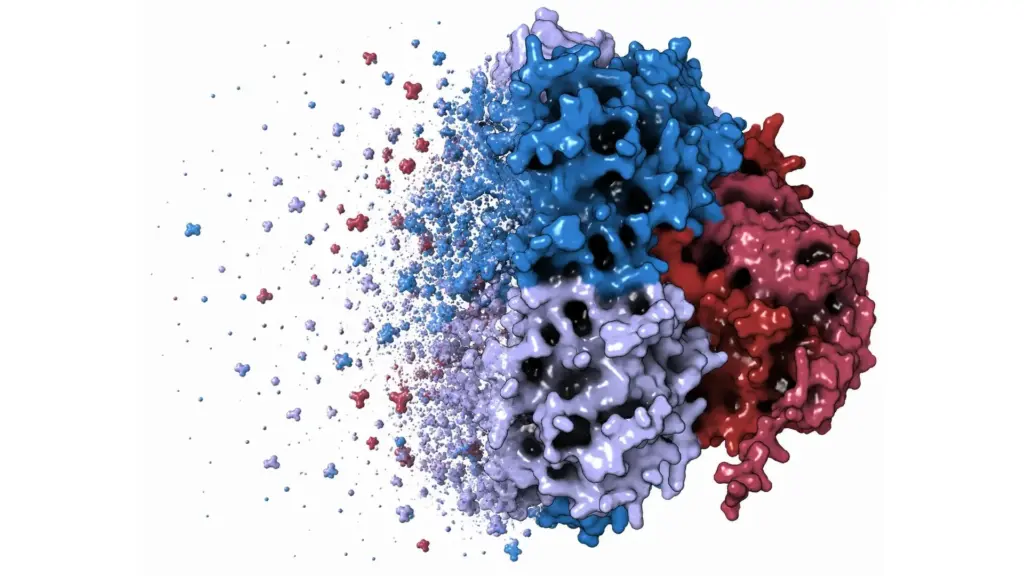
To test this hypothesis thoroughly, the scientists utilized an innovative and emerging experimental strategy known as targeted protein degradation. Instead of simply obstructing a protein’s active site to temporarily halt its enzymatic function, this advanced methodology induces the cell’s natural disposal machinery to eliminate the target protein altogether, wiping it clean from the cellular environment.
"We developed a cell-based platform to accelerate the discovery of NUDT5 degraders. This platform helped guide the medicinal chemistry efforts that ultimately produced dNUDT5, our most active degrader," said Anne-Sophie Marques, a first author of the research paper whose dedicated work at the University of Oxford contributed significantly to the findings.
A comprehensive medicinal chemistry program spearheaded by the Huber laboratory at the University of Oxford successfully yielded a collection of highly selective NUDT5 degraders. Alongside these powerful molecules, the researchers also engineered matched control compounds capable of binding securely to NUDT5 without triggering the destruction of the protein itself.
Armed with these custom-designed tools, the team systematically compared the biological outcomes produced by these novel molecules against the effects of conventional NUDT5 inhibitors.
The resulting divergence in cellular behavior was stark and unmistakable. Merely blocking the enzymatic activity of NUDT5 did not meaningfully alter how cells responded to the presence of 6-TG. However, completely removing NUDT5 from the cellular interior yielded a dramatically different outcome: it actively shielded and protected the cells from the severe toxic effects of the leukemia drug. Subsequent genetic experiments corroborated these findings, pointing unfailingly to the same conclusion.
"Chemical degraders give us a way to separate what a protein does as an enzyme from what it does as a physical presence in the cell," explains Professor Kilian Huber from the Centre for Medicines Discovery at the University of Oxford, who served as a co-corresponding author of the study. "In this case, that distinction was decisive: removing NUDT5 revealed biology that conventional inhibitors missed."
A Hidden Function Beyond Enzyme Activity
The cumulative results of the study indicate that NUDT5 modulates cell sensitivity to thiopurine drugs through a distinct mechanism that completely bypasses its catalytic activity. In practical terms, studying solely what the enzyme accomplishes from a purely chemical standpoint is insufficient for explaining its profound influence on 6-thioguanine.
"As the results came in, it became immediately clear that the dNUDT5 was protecting cells from 6-thioguanine toxicity in a dose-dependent manner. That was an incredibly exciting moment," noted Ludwig Bauer, another first author of the paper, reflecting on the team’s initial data analysis.
During their investigations, the researchers also uncovered an intriguing biochemical connection between NUDT5 and another protein designated as NUDT15. The scientific community was already aware that NUDT15 plays a major role in governing how human patients metabolize and respond to thiopurine medications.
Intriguingly, the data suggests that these two related proteins exert opposing regulatory effects on cellular sensitivity.
While the functional loss or reduction of NUDT15 typically renders cells significantly more sensitive to 6-TG, reducing the levels of NUDT5 produces the exact opposite reaction, driving cells toward increased resistance against the treatment. These findings strongly imply that the two proteins influence thiopurine drug responses through entirely separate pathways that can push cells in contrasting biological directions.
"Our results show that proteins can have important biological functions that are completely independent of their enzymatic activity," says corresponding author Stefan Kubicek, a Principal Investigator at CeMM. "By removing NUDT5 rather than simply inhibiting it, we were able to uncover a hidden layer of biology that helps determine how cells respond to a clinically important drug."
A New Window Into Leukemia Drug Response
While the discoveries made by the international consortium do not immediately translate into a brand-new clinical treatment regimen for patients today, they reveal a previously unrecognized biological mechanism that helps regulate the efficacy of a foundational leukemia medication.
By definitively demonstrating that NUDT5 influences 6-TG sensitivity through a non-catalytic, structural function, the research provides a vital foundation that may ultimately assist scientists in understanding why clinical responses to thiopurine treatments vary so widely among individual patients. Furthermore, the study serves as a compelling demonstration of how targeted protein degradation can illuminate biological functions that remain entirely invisible when researchers rely exclusively on traditional, small-molecule enzyme inhibitors.
This extensive collaborative research effort was made possible through financial backing and grants provided by the European Research Council under the European Union’s Horizon 2020 research and innovation program. Additional support came from the Austrian Science Fund, the Vienna Science and Technology Fund, the Marie Skłodowska-Curie Actions Postdoctoral Fellowships program, the Innovative Medicines Initiative 2 Joint Undertaking, the Wellcome Trust, Merck Sharp & Dohme Corp., and Janssen Pharmaceutica NV.