



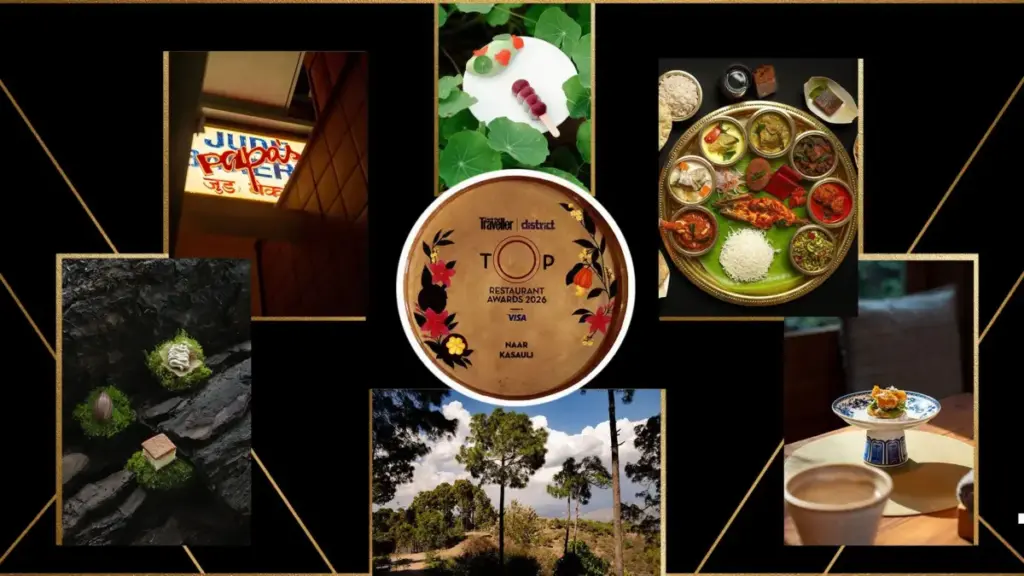
The Indian dining and bar landscape has officially reached a new milestone. The results of the seventh annual Condé Nast Traveler x District Top Restaurant Awards, powered by Visa, were revealed during a glamorous ceremony at The Grand Hyatt in Bambolim, Goa. The newly released ranking of the top 50 restaurants across the country serves as a definitive barometer of India’s culinary evolution, tracking how chefs, bartenders, and restaurateurs are shaping the way the nation eats and drinks today.

This year’s list captures a fascinating dynamic of continuity and change, most notably highlighted by a shifting geographic balance. For the first time, Goa has matched Mumbai’s historic dominance, with both regions placing 13 restaurants each among the top 50. This surge cements Goa’s status as a mature, year-round culinary destination rather than a seasonal holiday detour. Bengaluru follows closely with six entries, while Chennai and Kolkata maintain strong presences with four restaurants apiece. New Delhi claims three spots, Shillong doubles its footprint with two, and a final five positions are distributed across Kasauli, Hyderabad, Jaipur, Gurugram, and Karaikudi.

The rigorous selection process behind these rankings involves an extensive shortlist curated by Condé Nast Traveler of over 1,000 restaurants from across the country. A dedicated jury of 105 prominent tastemakers—including food critics, writers, chefs, fashion designers, and artists—underwent a strict two-phase private voting process. Deloitte Touche Tohmatsu India LLP served as process advisors, ensuring regional diversity and screening jurors for conflicts of interest to guarantee a balanced national perspective.

The Top Destinations Defining Indian Dining in 2026
At the very pinnacle of this year’s list is NAAR, located on the edge of a cliff near Darwa village in Kasauli, Himachal Pradesh. Founded by Chef Prateek Sadhu, the 16-seat restaurant operates out of a cluster of wood and slate huts. Sadhu and Chef Kamlesh Negi cook over a juniper-smoked hearth, drawing inspiration from the six distinct seasons of the Himalayas. NAAR’s ascent to the number one spot crowns a daring venture that Sadhu once famously described as jumping without a parachute.

Mumbai maintains a fierce presence near the top of the list, led by veteran institution The Table at number two and the ultra-exclusive, 12-seater Papa’s at number three. Headed by Chef Hussain Shahzad, Papa’s continues to upend fine-dining conventions with a playful 12-course menu that ranges from a Kashmiri Wellington to char siu pork housed inside a modak.

In Bengaluru, FarmLore secured the fourth position. Set across 37 acres of mango and coconut groves, the restaurant utilizes ingredients harvested directly from its surrounding landscape under the direction of Chef Johnson Ebenezer. Meanwhile, Kolkata’s Sienna Calcutta rounds out the top five, continuing its mission to spotlight Bengal’s land, produce, and people through creative cafe fare like bhetki à la Kiev made with radhuni butter.

Further down the list, iconic establishments and contemporary challengers alike push culinary boundaries. Izumi’s Goa outpost at Botanique in Assagao brings rigorous Japanese techniques to an indoor-outdoor setting, while New Delhi’s trailblazing Indian Accent continues to redefine modern Indian cuisine at The Lodhi. In Goa’s Anjuna, Bomras marks 16 years of contemporary Burmese cuisine under Chef Bawmra Jap, and Chennai’s Avartana at the ITC Grand Chola reimagines traditional South Indian flavors through multi-course tasting formats.

The top ten is completed by Mumbai mainstays The Bombay Canteen and Masque, the latter of which has recently unveiled a dramatic redesign in its Shakti Mills location under Chef Varun Totlani, featuring an open kitchen and an extensive 10-course foraging-led menu.

A Diverse National Tapestry
As the list extends through its remaining positions, the sheer variety of culinary expressions across India becomes apparent. From modern Italian and Spanish-influenced bistros like Americano and La Loca María in Mumbai, to innovative Japanese-Indian fusions like INJA in New Delhi, the country’s dining ecosystem is more experimental than ever before.

Regional comfort and heritage traditions also hold a firm grip on the national consciousness. Establishments such as Amar Khamar and Rannaghor in Kolkata celebrate forgotten heirloom grains and micro-regional Bengali techniques, while Theta Theta Telugu in Hyderabad and Kappa Chakka Kandhari in Chennai honor southern culinary roots through meticulous research and authentic preparations.

In the northeastern hills, Shillong’s Rynsan and Nonna Mei showcase indigenous Garo, Khasi, and Jaintia ingredients in thoughtful dialogue with contemporary techniques, demonstrating how far regional food movements have traveled. Meanwhile, beverage-forward concepts and hybrid spaces like Grumps in Goa, For the Record-Vinyl Bar, and Kolkata’s cocktail-focused Nutcase Etc. prove that India’s nightlife and bar culture are evolving with equal creativity.

As the industry looks ahead, the 2026 rankings reflect a culinary community deeply rooted in local provenance yet fearlessly forward-looking, signaling an exciting chapter for gastronomy across the subcontinent.